Online Orders and Unmonitored Injections
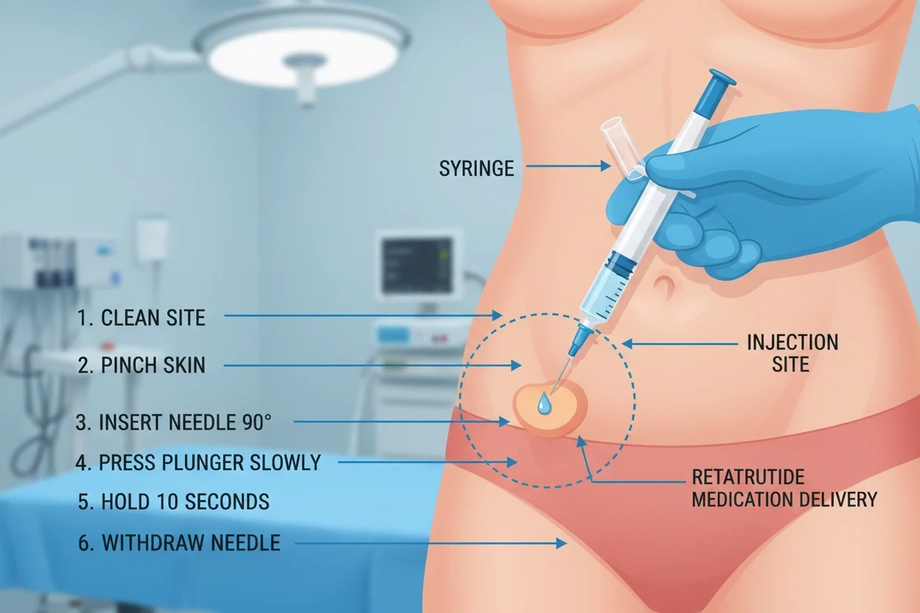
On a Friday morning in late November, F, a 23-year-old man from Jakarta Selatan, sat with his e-commerce delivery. He had purchased a bottle of Retatrutide for 1 million IDR based on online articles from Reddit and GLP-1 forums. He was not in a clinic, and he did not have a prescription. He was preparing to inject himself. F belongs to a growing wave of consumers turning to the grey market for weight loss solutions. They bypass hospitals and rely on social media, online pharmacies, and direct sellers to obtain experimental drugs.
Contents
Retatrutide, often called Reta, is a triple receptor agonist. It targets GLP-1, GIP, and glucagon receptors in the body. While semaglutide and tirzepatide are already approved, retatrutide remains in Phase 3 clinical trials. It is not yet fully approved by major regulatory bodies like the FDA. The drug is designed to reduce appetite and slow gastric emptying, which is the rate at which food leaves the stomach. The glucagon component helps the body break down stored fat for energy.
From articles online, whether from Reddit or GLP-1 forums. I bought it on one of the e-commerce platforms for 1 million,
F told the press during an interview. He started his regimen in late September and continued into early November. His goal was not just to lower the number on the scale, but to reduce fat mass while keeping muscle mass. He used a body composition scale at his gym to track changes. He also monitored his strength during workouts to ensure he was not losing muscle. His weight dropped from 75 kg to 71 kg, a loss of 4 kg. However, the process changed how he felt about food.
The Physical and Mental Dilemma of Slower Digestion
The most noticeable effect for F was the slowing of digestion. The food stayed in his stomach for a long time. This created a specific dilemma. When he was with friends and wanted to eat, his stomach felt full. If he forced himself to eat, the food sat heavy in his gut and caused pain. This created a mental friction. It was not a clinical mental illness, but a psychological strain related to eating.
It's like you are with friends and you want to eat, but you are already full. The food in your stomach has not been digested yet. So you want to force yourself to eat, but your stomach hurts. That is where it affects your mental state,
F explained the sensation. He described the relationship with food as poor or strained. Eating became a limited activity. He could only eat small amounts. When he did eat too much or consumed alcohol, his body reacted with nausea, vomiting, stomach pain, and diarrhea. The hangover also lasted longer than usual. These side effects are common in this class of drugs, which work by keeping the stomach empty for longer.
After 10 weeks, F decided to stop taking the drug. He paused for nearly a month. His relationship with food became more flexible again, although his weight did not drop as quickly as it did while on the medication. His experience highlights a key issue with grey market sales. Consumers are managing their own doses and side effects without medical supervision.
Background and Body Dysmorphia
F's history with obesity adds context to his decision. He previously weighed 105 kg. He experienced obesity and felt tired from strict healthy living rules. He also suffered from body dysmorphia, a condition where a person becomes obsessed with perceived flaws in their appearance. He felt constant dislike for his body. The desire to change his shape drove him to try the new drug.
I was a bit afraid at first, but I think it is just my body dysmorphia. I used to be obese, my weight was 105. After that, I just hated it always,
F said. He viewed the 10-week period as a trial and error phase. He acted as his own researcher. The results were clear in terms of weight, but the cost was the discomfort of eating. This personal case study illustrates the broader trend. Many people are self-medicating with compounds that are still experimental.
Doctor's Warning on Safety and Long-term Use
Medical professionals are urging caution. Dr Ardian Sandhi Pramesti, a clinical nutritionist, notes that retatrutide is still in Phase 3 trials. This means long-term safety is not yet guaranteed. Many countries have not yet approved the drug for general sale. Consequently, sales are heavily concentrated in the grey market. Oversight is difficult because the supply chain is decentralized.
Medication is still a tool, and do not ignore consulting a doctor, and especially a specialist,
Dr Ardian advised. He suggested changing lifestyle habits as the primary solution for obesity. This includes adjusting diet, increasing physical activity, and improving sleep quality. He emphasized that medical consultation is crucial. Relying solely on online purchases without professional guidance can be risky.
Legal Status and the Grey Market
The legality of retatrutide is complex. Selling the drug is generally considered illegal in many jurisdictions because it is not yet approved. The drug is classified as unapproved. However, buying the drug is not technically illegal for consumers. The FDA has issued warnings to sellers, but it has limited power to stop individual buyers. Many sellers label the product as a research peptide or not for human consumption to exploit this gray area.
In India, the situation is similar. A case in Kanpur involved Shikhar Singh, who sold the drug online under the brand name Peptigrid. Officials conducted a decoy operation and purchased the product. It came with a detailed instruction manual for self-injection. This proved the product was marketed for human use. The sale violated the Drugs and Cosmetics Act of 1940. The investigation is ongoing to trace the source of the drug.
Risks of Self-Administration
Without medical supervision, consumers face several risks. Dosing is not standardized. The safety of compounded versions is uncertain. Counterfeit drugs are a concern. The internet is a resource but also a dangerous place for health information. Desperation leaves individuals vulnerable to predatory wellness industry promises. The risks include increased heart rate, elevated liver enzymes, and kidney concerns.
Early trials show impressive benefits. Participants taking the 12 mg dose lost about 24% of their body weight by week 72. The results were consistent. Over 58% of participants achieved at least a 20% reduction in body weight. The drug is also being evaluated for cardiovascular health, sleep apnea, fatty liver disease, and chronic kidney disease.
Looking Ahead
The TRIUMPH trial program is concluding in mid-2026. This will provide more clarity on safety. Experts estimate the first potential FDA approval for obesity and type 2 diabetes treatment in late 2026 or early 2027. Until then, the grey market will continue to thrive. Consumers like F will keep purchasing through e-commerce platforms, managing their own health outcomes.
The Bottom Line
- F, a 23-year-old from Jakarta, lost 4 kg using grey market Retatrutide for 1 million IDR without a doctor.
- Retatrutide is a triple receptor agonist in Phase 3 trials, not yet fully approved, with sales mostly in the grey market.
- Slower digestion causes a mental dilemma, making eating with friends difficult due to fullness and pain.
- Dr Ardian Sandhi Pramesti advises lifestyle changes and medical consultation over unmonitored self-administration.
- Selling the drug is illegal in many places, but buying it is not banned, leading to a booming online market.
- Early trials show up to 24% body weight loss, but long-term safety and dosing remain uncertain.
- Indian authorities are investigating sellers like Shikhar Singh for violating drug laws through online channels.