A banned list for anyone over 40
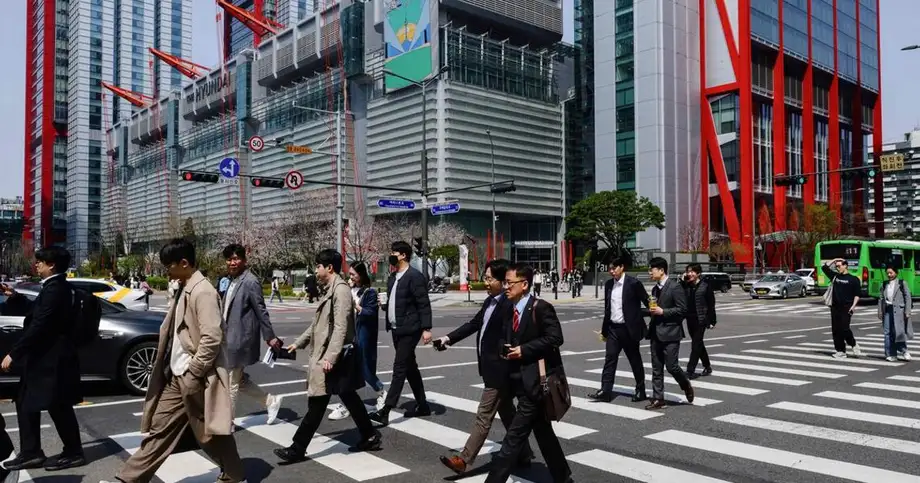
SEOUL. A hooded sweatshirt, a miniskirt, a pair of Crocs, an iPhone and a weekend in Seongsu-dong share an odd distinction this winter: all of them appear on a list of things people aged 40 and older are supposedly no longer allowed to wear, carry or visit.
Contents
- A banned list for anyone over 40
- How a marketing compliment turned into a jeer
- Why the iPhone ended up in the crosshairs
- What it feels like to be 41 and fashionable
- The income gap sitting under the jokes
- How wide the divide looks in the numbers
- How the story unfolded
- Age order, social media and the newsroom
- The mild winter forecast caught in the crossfire
- What researchers suggest instead
- Key Points
Since late November, versions of that list have spread through Instagram and Korean online communities, often next to images created with artificial intelligence that show a man in his 40s in a Supreme cap, an oversized logo T-shirt, shorts frayed at the thigh, high Nike socks and a bright orange iPhone 17. One post uploaded to an online community on Nov 22 passed 610,000 views within a day and had collected about 570 comments by Nov 23.
The items multiplied as the list travelled. Beyond hoodies, miniskirts, Crocs, Ugg boots, Uniqlo, tote bags, iPhones, Seongsu-dong and the Hyundai Seoul department store, a winter edition added RRL caps, C.P. Company, Stone Island, Levi's, Salomon, Porter bags, the Japanese label Mihara Yasuhiro and brand pop up shops. Clothing, a phone and a neighbourhood ended up on the same page, which is why the argument has moved well past fashion.
Reactions split three ways. Some commenters called the posts a mockery of an entire age group, saying that judging what a person wears, which phone they hold and where they spend a Saturday stirs hostility between generations. Others said the lists are jokes and that adults who take them seriously look worse than the joke. A third group argued the real target is behaviour: men in their 40s who flirt with women half their age or pull rank on younger colleagues.
No retailer, district office or employer has issued any such ban. The lists are posts, and a high view count records curiosity, not agreement.
How a marketing compliment turned into a jeer
The word at the heart of the fight began as praise. Trend analyst Kim Yong-sub coined young forty in November 2015 in his book Life Trend 2016 to describe Generation X, the people born between the early 1970s and early 1980s who were then turning 40.
Previous generations focused more on family and kids and basically had no life for themselves. But Generation X was different. They saw their 40s as a time they could still dream and do things for themselves. I created the term to reflect that change.
His coinage described consumers who were attentive to their health, comfortable with new technology and willing to spend on themselves. It took hold as South Korea's median age passed 40 and companies went looking for a label for the country's new centre of gravity. Kim said people in their 40s had stopped being "on the verge of old age" and were now "at the centre of society".
The analytics platform SomeTrend counted 104,160 online mentions of young forty over the past year. Of those, 55.9% carried negative associations, against 37.6% positive and 6.5% neutral, and many appeared beside the words old and disgusting. An offshoot known as sweet young forty now labels men in their 40s who make advances on women in their 20s.
Hankook Research measured how the label lands. In a survey of 1,000 adults conducted from Feb 6 to 9, 85% said they had heard the term. Among those, 50% viewed it negatively and 32% positively. Asked what image it brings to mind, 49% chose people in their 40s acting younger than their age, 48% chose people copying the fashion, hobbies and culture of younger generations, and 41% chose people who act young while asserting authority. Among men aged 18 to 39 who knew the term, 63% saw it negatively.
Why the iPhone ended up in the crosshairs
Apple released the iPhone 17 in September 2026, and a device long treated as a young person's accessory was recast as the ultimate young forty prop. A Gallup Korea survey in July mapped the shift. iPhone use among people in their 40s rose 12 percentage points in a year, after fewer than one in five in that age group owned one two years earlier. Samsung still leads overall, 67% to Apple's 31%. Among 18 to 29 year olds the movement ran the other way: iPhone use slipped 4 points to 60% while Galaxy gained 6 points to 40%.
Jeong Ju-eun, a member of Gen Z, described the people behind the memes as "trying too hard to look young" and as people who "refuse to accept that time has passed".
Mockery has reached the share price. Hoka, a running shoe brand that grew quickly among runners in their 20s and 30s, saw its growth stall just as middle aged men adopted it.
Daishin Securities analyst Yu Jung-hyun drew a direct line between taste and trading.
I don't mean to mock ajeossi. But the stocks of both Hoka and On Running slowed once the brands became associated with an older crowd.
Ajeossi is the ordinary Korean word for a middle aged man, and it carries the same mild condescension as uncle in English when applied to a stranger.
What it feels like to be 41 and fashionable
Ji Seung-ryeol, 41, posts mirror selfies on Instagram and wears Nike Air Jordans and Stüssy T-shirts. He said he was bewildered to learn that men his age had become a punchline.
I'm just buying and wearing things I've liked for a long time, now that I can afford them. Why is this something to be attacked for?
His own record complicates the idea of a generation that had it easy. He lived through the Asian financial crisis as a teenager, then sent 60 to 70 job applications in his 20s before one succeeded. People his age, he said, "had very little to enjoy growing up, and only began to enjoy things later, as adults".
At work he sits between two management cultures, one that ran what he called a strict chain of command in which people did what they were told, and a younger one that asks why.
We're a generation that has experienced both cultures. We feel caught in between.
That position once looked like an advantage. Ji now holds back from socialising with younger colleagues, fearing the label kkondae, the Korean word for a rigid and condescending elder, or young forty.
These days, I hardly organise drinking gatherings. I try to keep conversations focused on work or career concerns, and only share personal stories when discussions naturally deepen.
Kang, another 41 year old who describes himself as fashionable, sees something plainer underneath the jokes.
As you get older, longing for youth becomes completely natural. Wanting to look young is something every generation shares.
Kim Yong-jun, a 41 year old accountant, laughed the list off because the look it describes is not his; he said he does not wear T-shirts with big logos. A man in his middle 40s, who asked not to be named, conceded that some people should dress their age, then added that mocking people for trying is bitter, and that everyone in their 20s and 30s will grow old too.
On Naver's Branded Community fashion forum, shoppers started asking whether their favourite labels counted as young forty brands, some with a crying emoji. One wrote that fashion should be ageless. Another said it was upsetting that a style followed for years, and finally affordable, had turned into a meme.
The income gap sitting under the jokes
Money is never far from the argument. The median monthly income of male wage earners in their 40s stood at 4.69 million won in 2024, according to wage figures cited in Korean coverage of the row. A median marks the middle of a range rather than an average, so it says nothing about any one person's savings or property.
Psychologist Oh Eun-kyung read the anger as a reaction to relative advantage. Younger South Koreans face steep house prices and fierce competition for jobs, while the cohort ahead of them bought homes during a property boom. She called people in their 40s "the generation that made it through just before the door of opportunity closed".
They are seen not simply as individuals with personal tastes, but as symbols of privilege and power. That's why the energy of mockery is focused on them.
The same logic explains why a hoodie and a department store ended up on one list: both read as markers of a group that can afford to consume conspicuously, whether or not the individual wearing the hoodie can.
How wide the divide looks in the numbers
Hankook Research's 2026 survey on generational perceptions, released on Nov 29, put the mood in figures. Of 1,000 adults nationwide, 83% said conflict between generations is serious and 74% said they had experienced it themselves. Talking with younger people is difficult for 44%, and working with them is difficult for another 44%. Older people are hard to talk to for 38% and hard to work with for 39%.
Just over half, 53%, said another generation views their own age group negatively. Among respondents in their 40s, 50% felt judged, and 62% of those named people in their 20s as the most negative. Respondents aged 18 to 29 pointed instead at people in their 50s (40%) and 40s (35%).
Effort was seen as scarce in both directions. Only 19% of respondents in their 40s said younger generations try to understand middle aged and older people, and only 18% of respondents aged 18 to 29 said older people try to understand them.
How the story unfolded
- November 2015: Kim Yong-sub publishes Life Trend 2016 and introduces the term young forty.
- July 2026: Gallup Korea records a 12 point rise in iPhone use among people in their 40s over a year.
- September 2026: Apple releases the iPhone 17 and the phone's image changes.
- Nov 22, 2026: A post carrying the banned list appears in an online community and passes 610,000 views within a day.
- Nov 23, 2026: The Korea Meteorological Administration issues a mild winter outlook, and the list keeps spreading.
- Nov 29, 2026: Hankook Research releases its generational perceptions survey as Korean outlets report the row in force.
Age order, social media and the newsroom
Korean social order gives the mockery its edge. Age, even a gap of a single year, shapes how people address each other, who pours the soju at a dinner and which way a glass is turned when drinking before a senior. A decade ago the word kkondae served as the catchall for elders who enforce that order. Lee Jae-in, a sociology professor at Korea University's Sejong campus, points to the platforms where those rules now collide.
The old pattern where different generations consumed separate cultural spaces has largely disappeared.
He said social media now places several generations in the same room, where tastes that once stayed apart are compared directly. A 2025 survey of 1,000 adults by the Korea Press Foundation's Media Research Center found that 82.3% called generational conflict serious and 74.1% said news coverage encourages it. Coverage was judged helpful for understanding another age group by 66.8%, but only 47.4% said it builds bonds between generations.
The Korea Labor Force Development Institute for the Aged reached a related conclusion in the winter 2025 issue of its statistics review. Repeated use of a generational label fixes an age group into a single image and makes the distance between generations look wider than it is.
The mild winter forecast caught in the crossfire
Timing added a strange twist. On Nov 23, as the list passed hundreds of thousands of views, the Korea Meteorological Administration published its three month outlook for December 2026 to February 2027 and forecast temperatures above the seasonal average with more rain and snow than usual.
El Niño sits behind the forecast. The agency reported that the sea surface temperature in its monitoring zone was 2.6°C above average last month, the highest on record for that month, and expects a strong El Niño to peak in December. December and February each carry a 50% chance of above average temperatures, against 40% for near normal and 10% for below, with normal ranges of 0.5 to 1.7°C and 0.6 to 1.8°C. January is less settled: 40% near normal, 40% above and 20% below the usual -1.5 to -0.3°C, with cold air liable to push down from the north.
Cho Ik-hyun, head of the agency's climate prediction division, said the Barents Sea holds the least sea ice on record and the Kara Sea the second least, conditions that favour a large high pressure system east of the Ural Mountains and can send cold continental air south.
Rain and snow are expected to be above normal in December and February, with a 40% chance in each, while January has a 50% chance of staying near normal. Normal precipitation is 19.8 to 28.6 mm in December, 17.4 to 26.8 mm in January and 27.5 to 44.9 mm in February. Drought remains a concern: national precipitation from May 19 to Nov 18 reached 835.5 mm, or 82.6% of the normal 1,009.2 mm, and 33 cities and counties were in meteorological drought on Nov 18. The capital region, Gangwon and North Jeolla have received about 70% of their usual rain, and the agency warned that drought may persist in the capital region and parts of Gangwon.
A warm winter makes a hoodie or a miniskirt sensible clothing, which is part of why the list reads so strangely to people who dress for the temperature rather than for their birth year.
What researchers suggest instead
Lee Ha-na, a research professor at Ewha Womans University's Institute for Age Integration and Aging Society, traced the drift of the vocabulary in Life and Work in an Aging Society, the journal of the Korea Labor Force Development Institute for the Aged, in its winter 2025 issue.
Expressions such as kkondae, MZ generation and young forty are turning into the language of prejudice that ties a particular age group to a fixed image.
Lee proposed that newsrooms and platforms write guidelines to cut language that ridicules or caricatures a generation. She argued that youth employment, a higher retirement age and welfare financing belong to society as a whole rather than to the account of any single cohort.
Kim Yong-sub, who started the phrase, worries about where it has gone. He doubted that Gen Z cares much about the meme at all, suggesting the jokes may come from people in their 30s and 40s who are being sensitive. He added a warning about what happens if the ridicule keeps circulating and younger users learn it.
The cycle of mocking entire generations will only go on.
Key Points
- A list of items people aged 40 and older should supposedly avoid, from hoodies and miniskirts to iPhones and Seongsu-dong, spread on Instagram and online communities from Nov 22.
- One post passed 610,000 views within a day and drew about 570 comments by Nov 23.
- The term young forty was coined by trend analyst Kim Yong-sub in November 2015 in Life Trend 2016 to praise Generation X consumers, and has since turned into a taunt.
- SomeTrend counted 104,160 mentions of the term in a year, 55.9% of them negative.
- iPhone use among people in their 40s rose 12 percentage points in a year, while use among 18 to 29 year olds fell 4 points to 60%, according to Gallup Korea.
- Hankook Research found 83% of 1,000 adults call generational conflict serious and 74% have experienced it.
- Only 19% of respondents in their 40s said younger generations try to understand them, and 18% of 18 to 29 year olds said the same of older people.
- The Korea Meteorological Administration forecasts a milder, wetter winter from December to February, with January the least predictable month.
- Researchers propose media guidelines against generational caricature and treating jobs, retirement age and welfare as shared problems.