System Activates Across the Nation
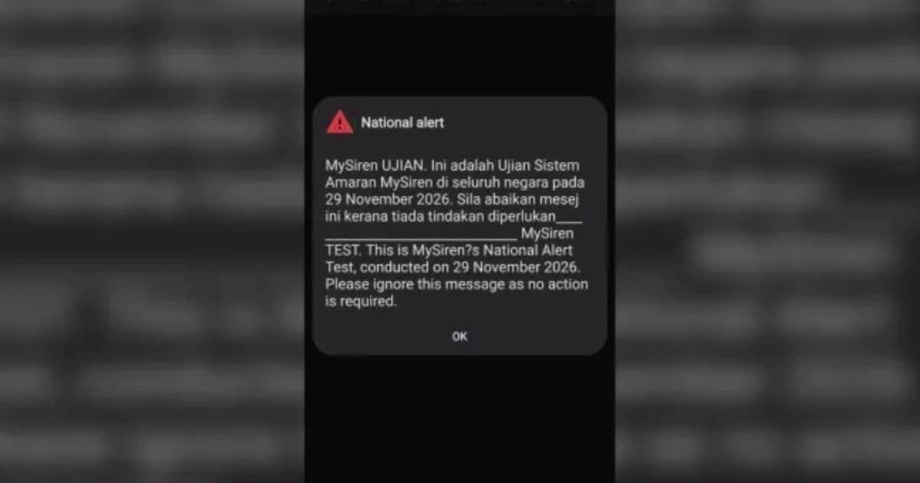
At 10.10am on 29 November 2026, a distinct, loud siren cut through the morning air from Kuala Lumpur to Tawau. Mobile phones lit up with a bilingual alert reading "MySiren UJIAN" and "MySiren TEST." This was the first nationwide test of Malaysia's National Early Warning System, a RM200 million infrastructure project designed to replace or supplement SMS and siren networks with instant digital alerts.
Contents
Communications Minister Datuk Seri Fahmi Fadzil initiated the alert from the Special Malaysia Disaster Assistance and Rescue Team (SMART) headquarters in Puchong. He confirmed that the signal traveled through Cell Broadcast System technology, reaching compatible phones almost simultaneously. The exercise, which ran from 10.10am to 10.30am, proved that the government could broadcast emergency warnings to the public without relying on mobile data or requiring users to install a specific application.
How Cell Broadcast Differs from Traditional Methods
MySiren does not function like a standard text message. While SMS sends a message to a specific phone number and consumes data, Cell Broadcast transmits the alert through radio equipment on telecommunications towers to all phones within a specific geographic area. This method ensures that even if a network is congested with users, the alert still gets through.
Fahmi emphasized that the system does not collect personal data from users. It simply broadcasts the information to devices that are within the coverage zone. The technology works over 4G and 5G networks and requires no app installation or user registration. To receive the alerts, users must ensure their phone operating systems are updated. The minimum requirements include an iPhone 11 or newer running iOS 27.2 or later, Android 12 or later, or Huawei devices running EMUI 16 or later.
The alert sounds are designed to be unmistakable. Many users described the sound as a loud, jarring siren that draws immediate attention. This is particularly useful during disasters that occur at night or while people are sleeping, a gap that traditional SMS systems often leave open.
Public Reactions to the Nationwide Exercise
The immediate feedback from the public was overwhelmingly positive, despite some initial startled reactions. Residents in flood-prone areas saw the system as a vital tool for early warning. Zahariah Abd Hamid, 45, from Yan, Kedah, noted that a devastating flash flood in 2021 caught her community off guard. She stated that MySiren could provide the early warning needed to prepare and save property.
In Alor Setar, Muhammad Syahir Ibrahim, 27, felt the simultaneous alert sound while exercising with friends. The sudden noise drew their attention to the message on their screens. Similarly, in Selangor, cleaner Kamsiah Mat Ali, 59, appreciated the clear siren. She noted that while short message notifications were common, the loud siren was a new and effective addition for the community.
Students and young professionals also responded well. Aisyah Halim, 20, a student at Universiti Pendidikan Sultan Idris, described the initiative as a positive step. She suggested that the government specify disaster levels and categories to trigger the siren, which would help avoid confusion and panic among first-time users.
Addressing Concerns in Rural and Remote Areas
The test highlighted the system's reach into rural and interior areas. Fahmi cited feedback from Padang Besar in Perlis, Pulau Sebatik, and Tawau in Sabah, where alerts were received almost simultaneously. The government plans to assess coverage in the interior of Sabah and Sarawak more closely, especially in areas with gaps in telecommunications.
Fahmi confirmed that the government will not rely solely on MySiren. Alternative methods such as sirens installed by the Department of Irrigation and Drainage (JPS), SMS alerts from the National Disaster Management Agency (NADMA), and mobile public address units from the Information Department will continue to support the digital system. This multi-channel approach is crucial during power outages that disrupt telecommunications towers.
Reports indicated that the system could also be used for targeted warnings, such as missing person cases and neighborhood emergencies. Discussions are underway for a memorandum of understanding between the Malaysian Communications and Multimedia Commission (MCMC) and the Royal Malaysia Police (PDRM) to expand the system's utility beyond just disaster management.
Future Plans and Annual Testing
Fahmi announced that the National Disaster Management Agency and the MCMC will organize annual nationwide tests. These exercises will likely take place in October, designated as Disaster Preparedness Month. The first Sunday of the month has been proposed as the testing date, although this has not been finalized.
The annual test will help Malaysians familiarize themselves with the distinctive warning sound and the alert mechanism. Fahmi noted that the system operates around the clock and can be used to warn residents near rivers when water levels rise above the danger mark during the northeast monsoon.
He also mentioned that the system can send warnings in multiple languages if proposals are made to do so. The government is studying the results of today's test to identify any blind spots in coverage and will prepare a Cabinet note to present the findings to the government.
Key Requirements for Users
To ensure they can receive MySiren alerts, users are advised to update their mobile phone operating systems and check their emergency alert settings. The following table outlines the minimum requirements for device compatibility.
Apple iPhones: iPhone 11 or newer with iOS 27.2 or later.
Android Phones: Android 12 or later.
Huawei Devices: EMUI 16 or later.
Users do not need to download a separate MySiren app. The alerts appear natively on the phone screen with a loud siren sound. The system sends a clear message stating that it is a test or an emergency alert, telling recipients to ignore the message if no action is required.
The Bottom Line
MySiren successfully completed its first nationwide test on 29 November 2026.
The RM200 million system uses Cell Broadcast technology to send alerts without using mobile data.
Alerts reached phones in Padang Besar, Pulau Sebatik, and Tawau almost simultaneously.
The government plans annual tests in October to familiarize the public with the system.
Users need updated phones but no app installation to receive alerts.
Alternative warning methods like JPS sirens and NADMA SMS will continue to support the digital network.