Five days before trial, a resolution to bring Duterte home
Rodrigo Duterte is due in court on Monday, November 30, when the International Criminal Court in The Hague opens his formal trial on three counts of crimes against humanity involving murder and attempted murder, charges tied to the killings carried out during his drug war. Five days before that date, two of his closest allies in the Philippine Senate asked the government of President Ferdinand Marcos Jr. to stop helping the case at all.
Contents
- Five days before trial, a resolution to bring Duterte home
- What Resolution 797 asks the government to do
- Why the senators say the ICC lost its authority
- The Shenzhen declaration the resolution leans on
- Bato dela Rosa and the manhunt
- What the Supreme Court actually ruled
- Four justices wanted the arrest itself judged
- The Senate President wants to read it first
- What is still open
- Key Points
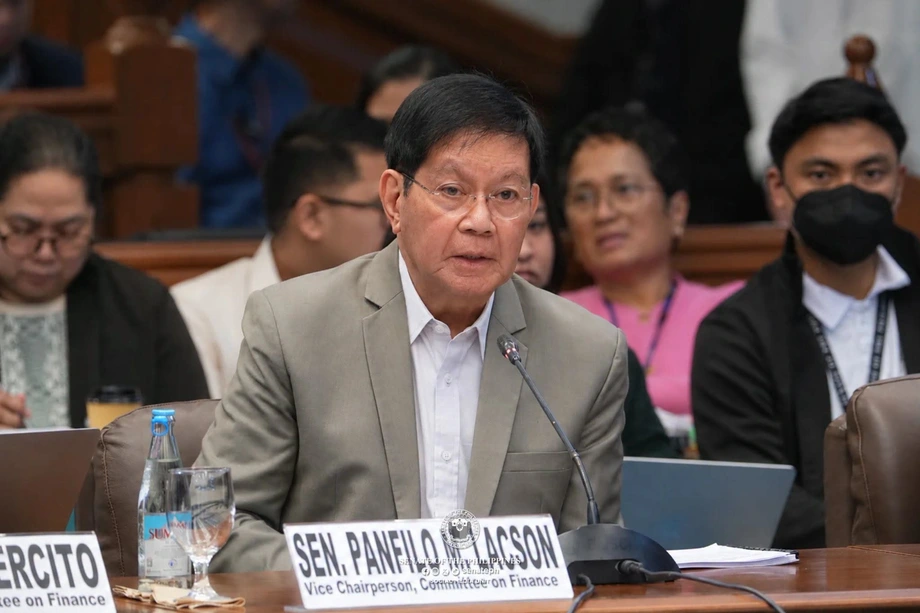
Senate Resolution 797, filed on November 25 by Senators Imee Marcos and Robin Padilla, calls on the executive branch to end all cooperation with the ICC, to use every legal and diplomatic route to secure Duterte's release and his return to Manila, and to drop the effort to arrest Senator Ronald 'Bato' dela Rosa, whom the court has named as a co-perpetrator in the same campaign. Dela Rosa has not been seen in public since May.
Malacañang answered on Sunday with a reminder of who the senators work for. Palace Press Officer Undersecretary Claire Castro told reporters that their duty runs to the whole country rather than to one man and his circle.
"Huwag [nila] kalimutan na ang pinagsisilbihan nila ay ang buong sambayang Pilipino at hindi si Dating Pangulong Duterte lang o ang mga co-perpetrators niya sa extrajudicial killings." (They should not forget that they are serving the entire Filipino nation, and not just former President Duterte or his co-perpetrators in extrajudicial killings.)
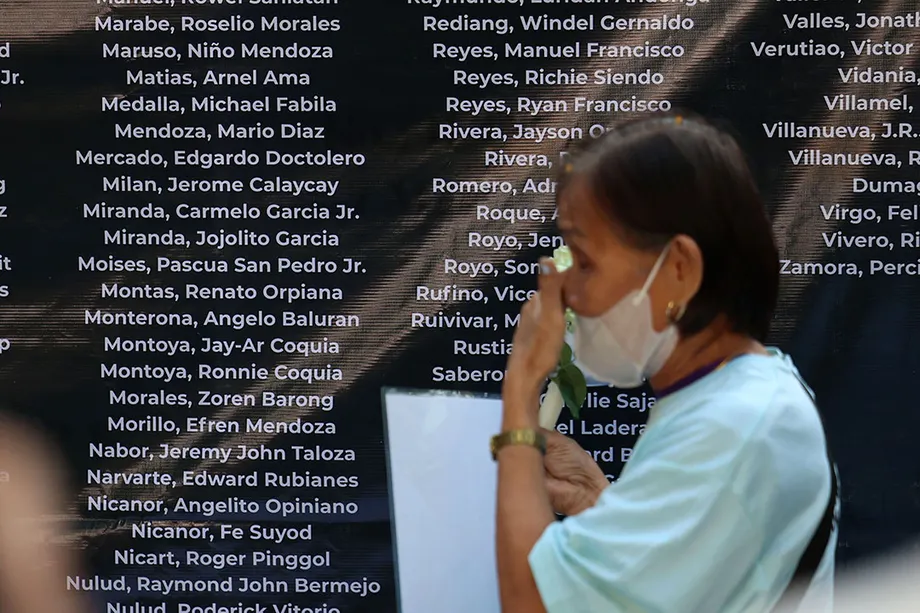
Castro said the families of people killed in the drug war, many of them poor and still waiting for a court to hear them, belong in this debate as much as the former president does. She asked the two senators not to involve the entire country in an effort to shield a friend or an idol.
"Kung anuman ang saloobin nila, huwag idamay ang buong Pilipinas. Sa tunay na hustisya makakamit ang totoong katahimikan at pag-usad sa buhay at hindi sa pagtatakip ng kasalanan ng kaibigan o ng kanilang poon." (Whatever their sentiments may be, they should not drag the entire Philippines into it. True peace and progress are achieved through genuine justice, not by covering up the sins of a friend or their idol.)
What Resolution 797 asks the government to do
The measure is short on ceremony. It asks President Marcos Jr. to stop cooperating with the tribunal, to pursue Duterte's release from the court's detention unit in Scheveningen and his repatriation to the Philippines, and to call off any move to serve the ICC warrant on dela Rosa. The senators filed it two days after the Supreme Court threw out the habeas corpus petitions of Duterte's children, and it frames the whole dispute as a question of who gets to judge crimes committed on Philippine soil.
Its own wording puts the case this way:
(T)he pursuit of justice and accountability must remain consistent with the Constitution, the protection of fundamental rights, and the sovereign right of the Philippines to administer justice through its own institutions, without foreclosing accountability for crimes punishable under Philippine law.
The resolution adds that continued cooperation with the ICC "must therefore be reassessed in light of the country's withdrawal from the Rome Statute, the constitutional mandate to uphold national sovereignty, and the principles articulated in the Heads of State Declaration toward Peace". A Senate resolution states the sense of the chamber. It does not bind the executive branch, change any law or order anyone released.
Why the senators say the ICC lost its authority
Marcos and Padilla rest much of their case on one date: March 17, 2019, when the Philippines' withdrawal from the Rome Statute, the treaty that created the ICC, formally took effect. Duterte gave notice in March 2018, a month after the court's prosecutor opened a preliminary examination into the drug war killings. ICC rules put a gap of a full year between notice and exit, a waiting period designed to stop a state from walking out the moment it learns it is under scrutiny. The exit became final in March 2019.
The court reads the same history differently. Its Appeals Chamber upheld in April its jurisdiction over killings committed while the Philippines was still a state party, and the tribunal has kept the case alive on the argument that its preliminary examination began before the withdrawal. The Philippine Supreme Court has also held, in an earlier ruling, that leaving the treaty did not erase the country's obligations for acts committed while it was a member.
Padilla and Marcos add a constitutional argument, saying that refusing to reassess cooperation disregards Article II of the Constitution, the article that sets out national sovereignty and an independent foreign policy. Their claim is that the Philippines can prosecute its own citizens for crimes committed at home, and that handing Duterte and dela Rosa to a court based in the Netherlands amounts to giving up that right.
The Shenzhen declaration the resolution leans on
On November 19, 2026, six days before the resolution was filed, US President Donald Trump, Russian President Vladimir Putin and Chinese President Xi Jinping met in Shenzhen, China, and issued what the senators call the Heads of State Declaration toward Peace. The communique has four points. It affirms that "the principle of state consent and respect for immunities of State officials are of paramount importance" and states that the ICC and similar tribunals "must not abuse their jurisdiction".
The three leaders are the permanent members of the United Nations Security Council, and their agreement on anything is rare enough that Marcos treated it as the heart of her argument.
Washington, Moscow, and Beijing rarely agree on anything, but they agree that the ICC cannot overreach. If the three most powerful nations on earth can say it, why can't Manila?
Two of those governments have their own dealings with the court. Putin is the subject of an ICC arrest warrant, and a tribunal examination of alleged crimes by American soldiers in Afghanistan was halted earlier this month. Marcos put the stakes in plainer language.
We are not a province of The Hague. A former president was handed over, and now a sitting senator is being hunted for a court we already left. That is not justice. That is surrender.
Bato dela Rosa and the manhunt
Dela Rosa is the former national police chief who ran the drug war on the ground, and the court named him as Duterte's co-perpetrator for crimes against humanity over a campaign that killed thousands of people, most of them from poor communities. He left the Senate premises on May 14 after agents of the National Bureau of Investigation tried to serve the ICC warrant, and has stayed out of public view since. A nationwide search is under way, with a bounty of 50 million pesos on his head.
For the two senators, the pursuit of a sitting legislator is the sharper grievance. Their resolution asks the government to discontinue any effort to arrest and surrender him, arguing that a warrant from a court the country has left cannot be executed by Philippine police. The events behind the dispute stretch across eight years.
- March 2018: Duterte announces the Philippines will leave the Rome Statute, a month after the ICC opens a preliminary examination into the drug war killings.
- March 17, 2019: The withdrawal takes effect after the treaty's waiting period of one year.
- March 11, 2025: Duterte is arrested in Manila without a warrant issued by any Philippine court.
- March 2025: He is turned over to ICC custody in The Hague.
- April 2026: The ICC Appeals Chamber upholds the court's jurisdiction over killings committed before the withdrawal.
- May 14: Dela Rosa leaves the Senate premises as NBI agents move to serve the warrant and disappears from public view.
- November 16, 2026: Associate Justice Amy Lazaro-Javier retires from the Supreme Court at the mandatory age of 70.
- November 19, 2026: Trump, Putin and Xi issue the declaration in Shenzhen.
- Late November 2026: The Supreme Court dismisses the habeas corpus petitions of Duterte's children as moot.
- November 25, 2026: Senate Resolution 797 is filed.
- November 30, 2026: Duterte's trial is scheduled to open in The Hague.
What the Supreme Court actually ruled
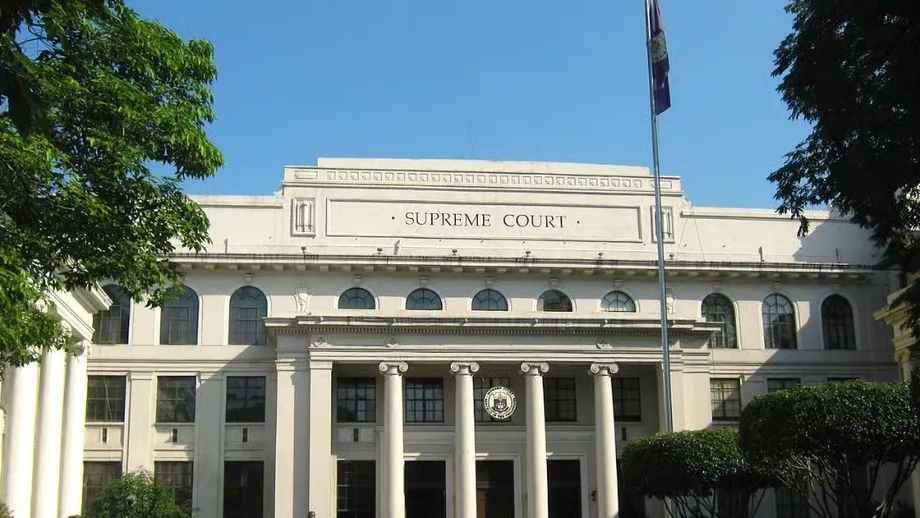
Duterte's children, Davao City Rep. Paolo Duterte, Davao City Mayor Sebastian Duterte and Veronica Duterte, filed consolidated petitions for a writ of habeas corpus, the old legal order that compels authorities to produce a detained person and explain why that person is being held. The Supreme Court dismissed the petitions in a 9-4 decision written by Associate Justice Japar Dimaampao. The writ, the majority held, is a domestic remedy enforceable only inside Philippine territory, and the former president is in the custody of an international court in the Netherlands. That made the petitions moot.
The court added a clarification that matters for everything that follows. Dismissing a petition because it is moot does not amount to a finding that the arrest and transfer were legal. Anyone claiming a constitutional violation, or seeking to hold officials liable, must raise it in a separate proceeding.
Four justices wanted the arrest itself judged
Associate Justice Amy Lazaro-Javier disagreed with the reasoning in an opinion that ran to 20 pages. Philippine courts cannot force an international tribunal to hand back a detainee, she wrote, and the petitions still deserved a ruling because they questioned what Philippine law enforcement and executive officials did at home, which is a different question from what the ICC did afterwards.
Declaring Duterte's arrest and surrender unconstitutional would establish the legal parameters that must guide the Executive's subsequent actions concerning the former president.
Lazaro-Javier proposed a practical step. If the court ever finds the arrest unconstitutional, the government should say so to the ICC through a note verbale, the formal written note that foreign ministries use to communicate official positions. She argued that the executive branch's refusal to ask for Duterte's return is itself open to judicial review. Associate Justice Ramon Paul Hernando backed the diplomatic note, saying the government must make clear to the tribunal that the country's highest court has ruled on questions of sovereignty and due process. The other dissenters were Henri Jean Paul Inting and Antonio Kho Jr. Lazaro-Javier retired on November 16, 2026, and her opinion was released with the ruling.
The Senate President wants to read it first
Senate President Sherwin Gatchalian said on Saturday that he had not yet gone through the resolution and would not commit the chamber before checking it, speaking in a radio interview.
Hindi ko pa nabasa yung resolution... Kailangan mabasa nang mabuti at tignan natin yung konteksto ng sitwasyon.
He added that the Senate would also look at the legal side of the situation. His main concern was timing: the alleged crimes date from the years when the Philippines was still a member of the court.
Unang-una, itong mga nangyari ay noong kasali pa tayo sa ICC. Kaya may ganoon na konteksto na dapat nating mapag-aralan.
Gatchalian's caution leaves the resolution without a schedule. No committee hearing has been announced, and the Senate has set no date for a vote. The chamber's calendar now competes with a trial opening in The Hague.
What is still open
Malacañang has not said whether it will act on any of the three requests in the resolution, and the ICC has not commented on it. Dela Rosa's whereabouts remain unknown to the public, and no date has been given for any court action on the legality of Duterte's arrest, which would have to come through a separate case. Lazaro-Javier's idea of a note verbale to the tribunal remains a proposal by a justice who has left the bench.
The hearings before the ICC are the fixed point. Duterte has been held in The Hague since March 2025, and prosecutors will open their case on three counts of crimes against humanity at a trial set for November 30. Whatever the Senate decides, the judges in that room will be working from the Rome Statute, the treaty the Philippine Senate now wants Manila to treat as a closed chapter.
Key Points
- Senate Resolution 797, filed on November 25 by Imee Marcos and Robin Padilla, asks the government to stop cooperating with the ICC and bring Rodrigo Duterte home.
- It also asks the executive to drop efforts to arrest Senator Ronald 'Bato' dela Rosa, wanted by the court and out of public view since May 14.
- Malacañang, through Press Officer Undersecretary Claire Castro, said the senators should serve the Filipino people rather than Duterte or his co-perpetrators in extrajudicial killings.
- The senators invoke the Philippines' withdrawal from the Rome Statute, which took effect on March 17, 2019, and a declaration by Trump, Putin and Xi issued in Shenzhen on November 19, 2026.
- The ICC Appeals Chamber upheld its jurisdiction in April over killings committed while the Philippines was a state party.
- The Supreme Court dismissed the habeas corpus petitions of Duterte's children in a 9-4 ruling, while stating that mootness does not validate the arrest.
- Four justices dissented, and retired Justice Amy Lazaro-Javier proposed a diplomatic note verbale to inform the ICC of any finding that the arrest was unconstitutional.
- Senate President Sherwin Gatchalian has not read the resolution and has set no hearing or vote.
- Duterte's trial on three counts of crimes against humanity is scheduled to begin on November 30 in The Hague.