Prime Minister Orders Factory Closures and Prosecutions
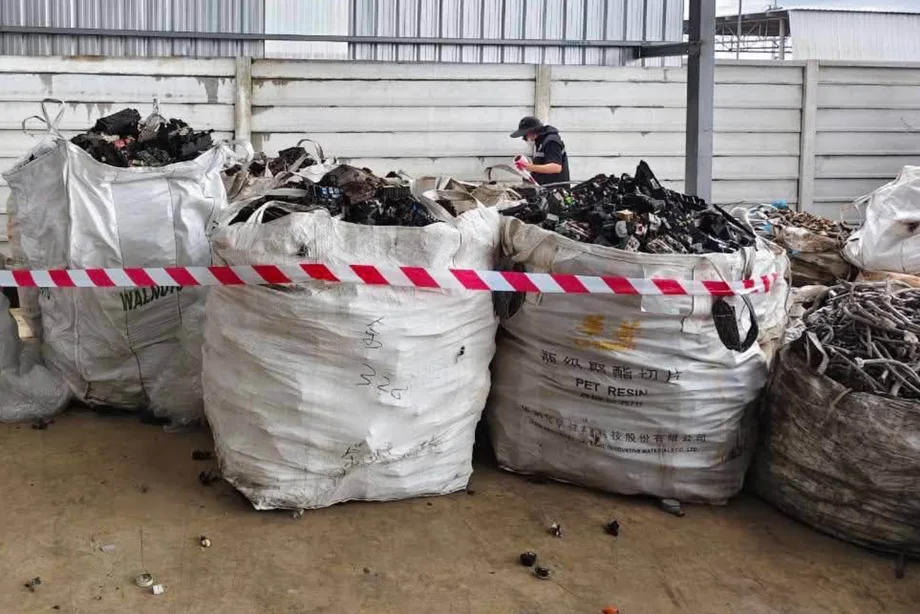
Prime Minister Anutin Charnvirakul has ordered the immediate closure of illegal electronic waste factories in Prachin Buri province, promising to prosecute everyone involved from factory owners to state officials who turned a blind eye. Speaking on his programme Talk with Prime Minister Anutin, he described the conditions found at the sites as worse than expected. During a visit to Si Maha Phot district on November 24, inspectors discovered that operators were recovering valuable metals like copper and aluminium while disposing of the rest improperly.
Contents
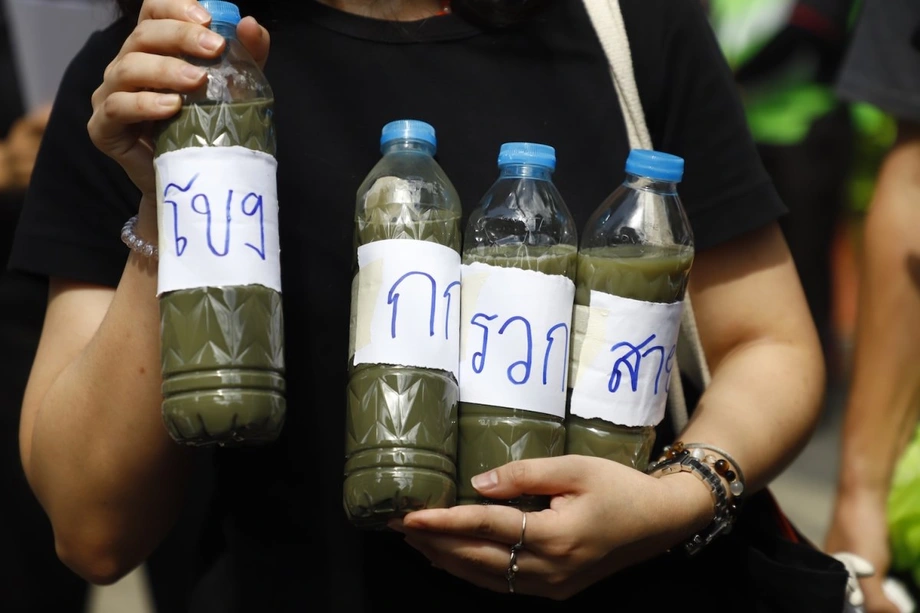
Anutin, who also serves as interior minister, highlighted that inspectors found only two licensed factories among the seven in the area he visited. He revealed that some of the leftover waste had been ground up, mixed with soil, and handed to villagers under the pretence that it could be used as fertiliser. This practice was a cost-cutting measure, as sending waste to proper landfills or incinerators costs significantly more.
We are taking it, grinding it down, and mixing it with soil, then giving it to the villagers. Isn't this terrible?
The prime minister emphasized that waste operators are responsible for the material from the point they receive it through to final disposal. He noted that some operators had set up genuine businesses to act as a cover, while others imported waste that arrived in shipping containers, sometimes pressed into large blocks too big to hide easily.
Investigations Reveal Widespread Fraud and Corruption
Anutin called for the prosecution of owners, shareholders, directors, and operators. He has asked the Department of Special Investigation (DSI) to handle the matter as a special case, which includes looking into possible corruption by state officials. He stated that such large-scale illegal operations could not survive without the help and knowledge of government officials.
The government is examining how the factories were licensed and overseen, as well as which local agencies are responsible. Anutin also announced that changes to ministerial regulations would allow the interior minister to act faster in such cases. He confirmed that foreign nationals found guilty of serious crimes would face deportation, while those who had acquired Thai citizenship would be dealt with under the relevant nationality laws.
Officials are currently reviewing the validity of land title documents for the factories, as some were found operating on subleased land or within national reserved forests. The Ministry of Industry has frozen new recycling licenses and launched nationwide inspections across 3,049 waste facilities to prevent similar issues in other provinces.
Specific Factories and Financial Links Under Scrutiny
During the site visit, officials inspected the M.Y. Metal Company, a facility operating in a national reserved forest area. The inspection found that the factory, which had been granted a licence in 2018, was continuing operations despite suspension orders. The facility spanned 77 rai and was found to be processing scrap metal, electrical wires, and electronic parts without proper permission.
Investigators are also looking into complex corporate structures. One Thai national was identified as a shareholder in nearly 18 companies with foreign names, raising questions about nominee arrangements used to hide true ownership. Banks have been asked to trace financial transactions to establish whether foreign investors were using Thai nominees to evade regulations. The DSI is examining 915 suspect containers, which held cargo weighing more than 13,393 tonnes with a recorded value exceeding THB338 million.
The DSI accepted the matter as Special Case No. 162/2026, assigning it to the Natural Resources and Environment Case Division. The investigation covers offences under the Hazardous Substances Act 1992, the Customs Act 2017, the Export and Import of Goods Act 1979, the Anti-Money Laundering Act 1999, and the Factory Act 1992.
Health and Environmental Impact on Local Communities
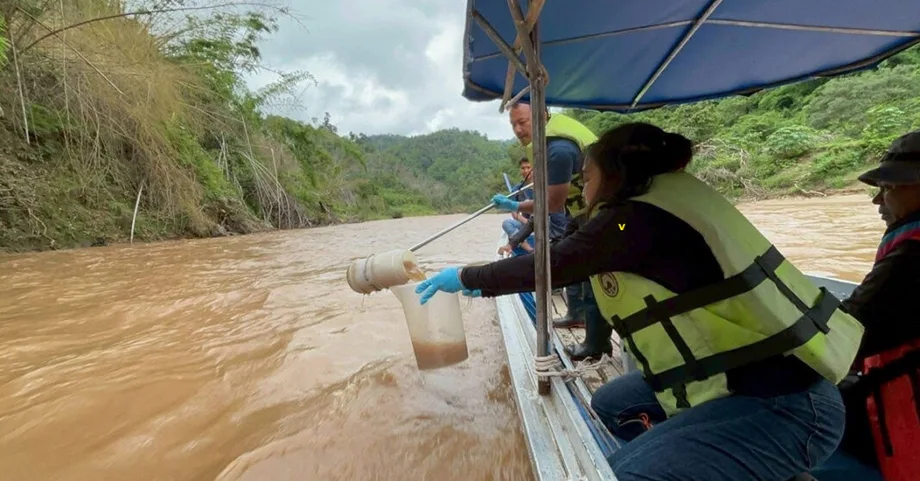
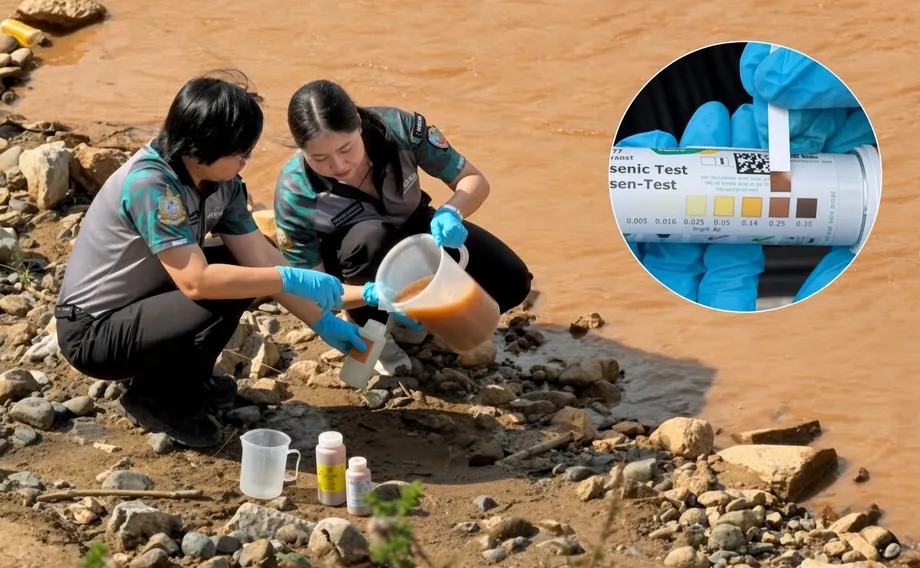
The contamination in Prachin Buri has had a tangible impact on residents. The Department of Disease Control reported that of 613 people screened, 116 reported symptoms such as rashes and blisters, which were attributed to prolonged contact with contaminated floodwater. Local clinics have recorded rising complaints of respiratory irritation and foul-smelling well water.
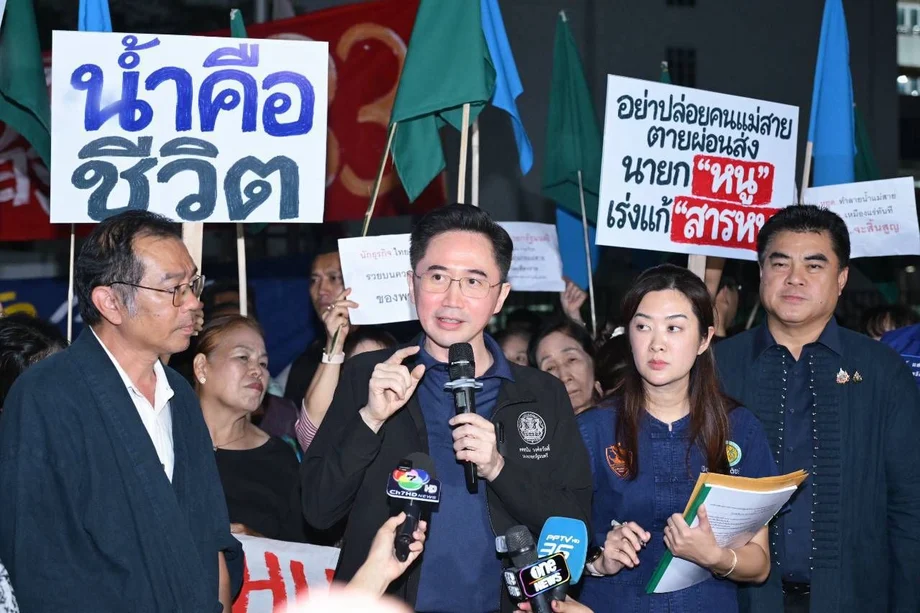
Environmental advocates warn that slow bureaucratic sampling threatens legal accountability. Without rapid soil and water chain-of-custody records, prosecutors struggle to prove which upstream plant generated the toxins dumped in rural ditches. Residents have submitted a petition with three key demands: immediate license revocation for the factories, safe removal of hazardous waste, and an exemption for Prachin Buri from the Eastern Economic Corridor zone to prevent further industrial encroachment.
Adisorn Lakonburee, a local resident, stopped netting fish in the waterways as dark chemical films and acrid fumes blanketed his village. The contamination risks extending to groundwater aquifers and orchards, affecting both agricultural productivity and public health across eastern and central Thailand.
Coordinated Task Forces and Legal Reforms
Thailand has established three task forces to tackle the illegal e-waste imports and disposal crisis. The Enforcement and Pollution Response team, led by the Industry Ministry, is inspecting high-risk factories. The Import and Export Controls team, led by Customs, is examining cargo movements and closing loopholes. The Stronger Legal Measures team is reviewing legislation to propose tougher penalties and asset seizure powers.
Anutin stated that the government would not allow the business to continue while owners went to jail. He confirmed that the government would take responsibility for the costs of accelerating the disposal of hazardous waste. The ministry has seized assets at the sites, which will be sold off to compensate affected residents.
Furthermore, the prime minister mentioned plans to ban the export of chemicals used to process ore from Myanmar by late November, addressing another source of cross-border pollution. He also held talks with Chinese leaders regarding mineral products, ensuring that Thai industry is not unfairly blamed for issues with foreign suppliers.
Key Points
- Prime Minister Anutin ordered seven Prachin Buri e-waste factories to close, finding only two were properly licensed.
- Operators were found grinding waste, mixing it with soil, and selling it to villagers as fertiliser to cut disposal costs.
- The DSI accepted the case as a special case to investigate potential corruption among state officials.
- Inspectors discovered that waste was often falsely declared and imported in large, hard-to-hide containers.
- Residents are suffering from skin rashes and respiratory issues linked to contaminated water and soil.
- Government task forces are examining financial records to identify foreign nominees and hidden shareholders.
- New ministerial rules will allow for faster deportation of foreign nationals and revocation of citizenship for serious offenders.