A Survivor in the Room as the Court Read Its Verdict
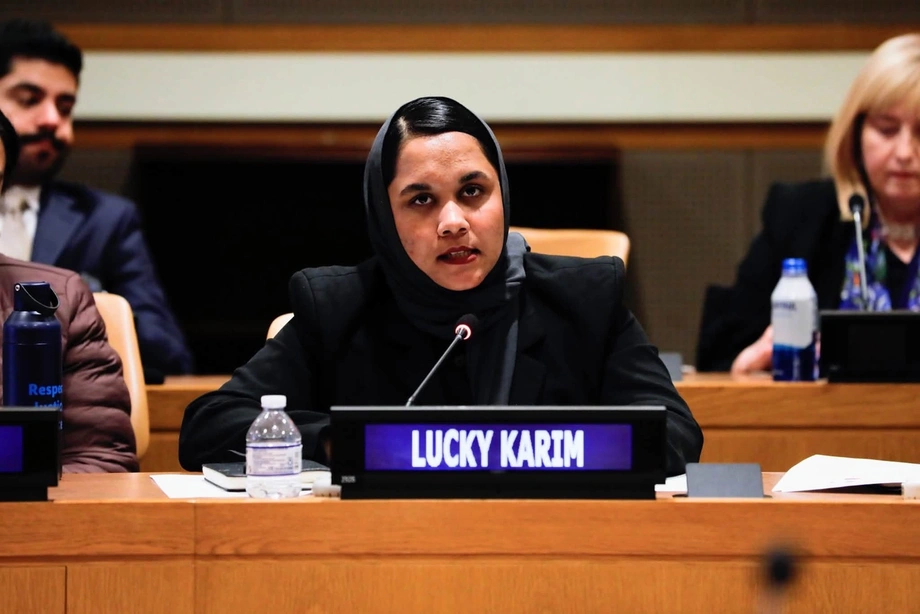
Lucky Karim was 14 when she crossed from Myanmar into Bangladesh in 2017. Nine years later, on 19 November 2026, she sat in the Great Hall of Justice in The Hague as the president of the International Court of Justice, Yuji Iwasawa of Japan, read a judgment of 191 pages finding that Myanmar had committed genocide against the Rohingya.
Contents
- A Survivor in the Room as the Court Read Its Verdict
- What the Judges Found in Northern Rakhine State
- The Orders Myanmar Must Now Carry Out
- A Junta That Says It Will Pick and Choose
- Bombs Fall a Week After the Judgment
- The Case in Dates
- ASEAN Counts the Cost of Staying Close
- Seoul Asked to Stop Lending the Junta a Stage
- What Changes for the Refugees in Cox's Bazar
- A Judgment Without a Police Force
- Key Points
The court ruled by nine votes to six. In 80 years of history the ICJ had never held a state responsible for committing genocide, and the case before it had been brought by The Gambia, a West African country with no direct link to the crimes, which filed under the 1948 Genocide Convention on 11 November 2019.
Karim founded the group Refugee Women for Peace and Justice and has a memoir, Born Lucky, due in autumn 2027. She spent years in the camps of Cox's Bazar before resettling in the United States, and she said the verdict belonged to the people she left behind there.
Personally, as someone who survived genocide in 2017, who was one of the fortunate millions to escape and spend many years in the camps as a refugee, being in the courtroom in person to witness this historic moment and hear the verdict read out by the president of the court was deeply emotional and personal.
The bench also found that Myanmar failed to prevent genocide and failed to punish those responsible, which are separate breaches of a treaty that binds every party to act against the crime. The judgment is final, binding on the two countries and cannot be appealed.
What the Judges Found in Northern Rakhine State
Iwasawa set out the case in a reading that lasted three hours. The court examined operations by Myanmar's security forces and other state bodies in three townships of northern Rakhine State and found they carried out acts banned by Article II (a), (b) and (d) of the Genocide Convention: killing members of a protected group, causing serious bodily or mental harm to them, and imposing measures intended to prevent births within the group.
The Court finds that Myanmar's security forces killed thousands of Rohingya civilians, perpetrated widespread acts of sexual violence, as well as acts of extreme violence against children, and attacked fleeing Rohingya as they sought to flee in large numbers to Bangladesh.
The court put the death toll at about 10,000. More than 700,000 Rohingya fled to Bangladesh, and the case record counts arrivals above 730,000. Nearly 400 villages, roughly 40 per cent of the almost 1,000 villages in the three townships, were partly or wholly destroyed, and the clearing of the ground was followed by rapid building of security posts, new villages and other civilian structures.
Rape and other sexual violence against women and girls carried particular weight. Judges found that such violence caused serious bodily and mental harm, contributed to measures intended to prevent births and helped establish genocidal intent. The killing of infants pointed the same way.
Proving intent is the hardest part of any genocide case, because governments rarely leave a written plan to destroy a people. The court held that the scale, the pattern and the targeting of the Rohingya, including attacks on children and on people trying to flee, allowed only one reasonable reading. It rejected Myanmar's claim that the operations were a lawful answer to an armed insurgency, and it rejected forced displacement as an explanation for the conduct.
Witnesses from the villages of Min Gyi, Chut Pyin and Maung Nu testified, and a witness called by Myanmar described an attack in which Rohingya insurgents from the Arakan Rohingya Salvation Army killed about 100 civilians. The insurgent raids of 25 August 2017, which killed more than a dozen security personnel, are part of the record and do not by themselves make the response lawful. Aid group Médecins Sans Frontières estimated that at least 6,700 Rohingya were killed in the first month of violence alone, based on surveys of refugees in Bangladesh.
The ruling also gives victims of genocide and other grave crimes a precedent to cite in their own cases, Human Rights Watch said in the Human Rights Watch statement. Its senior international justice counsel, Maria Elena Vignoli, said:
The landmark International Court of Justice ruling is long-awaited recognition of the suffering the Rohingya have endured from Myanmar's military.
The Orders Myanmar Must Now Carry Out
The obligations that follow from the judgment begin with the law itself. Myanmar must stop any violations that continue, pass legislation giving the convention full effect at home, investigate anyone reasonably suspected of prohibited acts, prosecute and punish them where the evidence warrants, and guarantee that the conduct will not be repeated.
Restitution covers what was taken. Myanmar must let Rohingya return safely, voluntarily and with dignity to their places of residence, reunite families split by displacement inside the country and abroad, return or replace collective property, help families search for the disappeared and bury their dead, provide physical and psychological rehabilitation, and protect the community from persecution and discrimination. Compensation covers harm that restitution cannot repair, with the amount and the mechanism to be settled in a later phase of the case.
The court set no schedule for the return of refugees. It gave Myanmar two years, until November 2028, to report on the measures it has taken, and the orders on return and reparations set goals rather than dates. Eleven other parties to the convention intervened on limited questions of interpretation, and the court's answers on those points bind them too.
The secretary general of the United Nations, António Guterres, welcomed the outcome and tied it to the wider problem of unchecked power in Myanmar.
It is a demonstration of international justice and a reaffirmation that impunity for such horrific acts must not stand.
The court has no police and no power to seize assets, so enforcement depends on governments. The Gambia can ask the Security Council to recommend or decide on measures, where vetoes are likely to limit action, and the council was due to meet privately on 7 December at Britain's request with French support. The United Kingdom expelled Myanmar's defence attaché and sanctioned five senior military figures. The UN human rights chief, Volker Türk, urged states to stop sending weapons, jet fuel and goods that can serve both civilian and military uses.
Rights groups that have followed the case want the pressure to reach the International Criminal Court, the only tribunal that can try individuals for these crimes. In the FIDH statement, its president Alexis Deswaef said:
This historic judgment is a key milestone towards justice for the Rohingya. States and intergovernmental bodies, including the UN General Assembly and the UN Security Council, must now act to ensure its full implementation without delay.
A Junta That Says It Will Pick and Choose
Myanmar's foreign ministry answered on 20 November, saying the judgment came as a great disappointment, stressing that it was not unanimous and insisting the 2017 operations were counterterrorism. Its statement referred to the Rohingya as Bengalis, a label that implies they are migrants from Bangladesh. President Min Aung Hlaing, who commanded the army during the crackdown and took power in the 2021 coup, told a cabinet meeting on 25 November that Myanmar would take the actions appropriate for a responsible country but would not comply with requirements it considered inappropriate, a position he set out in his conditional response to the ruling. He gave no list of the orders he intends to reject.
The six judges who voted against the majority did not agree among themselves. Only Judge Xue Hanqin of China found Myanmar not guilty on every charge, so the government's use of the split to argue that the decision was unfair overstated the dissent.
On 29 November, four days after that cabinet meeting, hundreds of nationalists marched through Bago in central Myanmar, waving national and Buddhist flags and led by monks in saffron robes. From a stage near the Shwe Maw Daw Pagoda, the activist Amat Dain rejected the finding in the language of religion.
If they are saying Theravada Buddhist Myanmar committed genocide, are they saying our religion is genocidal?
The monk Wirathu, once described by Time magazine as the Buddhist bin Laden, told the crowd the court was meddling in Myanmar's sovereign affairs and called it the International Court of Jihad. He said the judges had been manipulated and were bullying smaller countries.
Are we the ICJ's slaves or something? Don't we have our own rulers, our own masters, our own country?
Wirathu was jailed on sedition charges under Aung San Suu Kyi's government and released, cleared of all charges, months after the 2021 coup. Suu Kyi remains detained. A woman in the crowd, who declined to be named, said she could not accept the verdict because she believed the court was preparing to let destroyers into the country.
Bombs Fall a Week After the Judgment
Four airstrikes in three days killed more than 60 people in the week after the ruling, according to witnesses and rescue workers. On Saturday 28 November a strike hit a wedding venue in Moe Bye district in the northeast, where two displaced people were preparing to marry. The head of the Nway Oo Yaung Chi Foundation, which works with displaced people, put the toll at 21 dead, five of them children, and more than 40 wounded, and said a second bomb fell after rescuers arrived.
A witness described reaching the scene before the rescue teams.
I found 17 dead bodies. I was shocked and didn't know who to rescue first.
In western Rakhine State a market in Mrauk-U was hit in a separate strike the same day. Hla Maung Oo, who heads a local funeral organisation, said nine people had died. Hla Than Aung, 62 and displaced, pulled his 17-year-old daughter from the debris but could not get her to hospital in time.
As I ran carrying my daughter, I had only one thought, to save her life. Now she is gone, and there is little meaning in the fact that I am still alive.
The same day, according to the National Unity Government, a combined bomb, artillery and drone attack on a school and monastery in Magway region killed 20 civilians, including women and children, and nine members of the People's Defence Forces. A teacher told AFP the bomb fell where parents had gathered to collect their children after hearing an aircraft.
The Case in Dates
- 25 August 2017: Arakan Rohingya Salvation Army raids on security posts, followed by military clearance operations in northern Rakhine State.
- 11 November 2019: The Gambia files its case at the ICJ under the Genocide Convention.
- January 2026: Three weeks of hearings, including testimony from survivors of Min Gyi, Chut Pyin and Maung Nu.
- 19 November 2026: The court finds Myanmar responsible for genocide by nine votes to six.
- 25 November 2026: Min Aung Hlaing says Myanmar will reject parts of the ruling it considers inappropriate.
- 29 November 2026: Nationalist rally in Bago, and the last of four airstrikes in three days that killed more than 60 people.
- 7 December 2026: The Security Council holds a private meeting on the judgment.
- 1 January 2027: Singapore begins its year as ASEAN chair.
- November 2028: Deadline for Myanmar's report on restitution and compensation.
ASEAN Counts the Cost of Staying Close
The 49th ASEAN Summit in Manila, held days before the ruling, kept Myanmar's representation restricted to officials who hold no political posts, even as some members pushed for calibrated re-engagement with the administration Min Aung Hlaing installed after elections in late 2025 and early 2026. A day before the judgment he told parliament he disagreed with recent ASEAN statements and would review Myanmar's engagement with the bloc, then said the country would respect the ASEAN Charter.
Seven of the bloc's members, Singapore among them, are parties to the Genocide Convention and carry a duty to prevent genocide. Indonesia, Thailand and Brunei are not. Thailand's foreign minister said before the verdict that he did not expect it to disrupt re-engagement, and afterwards described the case as a legal matter between Myanmar and the court. The Philippines, the outgoing chair, issued a national statement saying ICJ decisions must be respected without calling on Myanmar to comply, and Malaysia followed.
Singapore takes the chair on 1 January 2027. Its foreign ministry said it respects the judgment and is studying it, expressed deep concern about the plight of the Rohingya and repeated its call for conditions allowing safe, voluntary and dignified repatriation. Prime Minister Lawrence Wong said engagement has to work in both directions, and Naypyidaw signalled in August that it saw no need for a special envoy during Singapore's year.
The ruling does not compel the bloc to act. It changes the price of business as usual, as Moe Thuzar of the ISEAS Yusof Ishak Institute argues in her analysis of ASEAN. The test in 2027 is whether Myanmar's answer to the court counts as progress under the Five-Point Consensus, a question that will divide members bound by the convention from those that are not, and from those leaning towards re-engagement such as Thailand and Cambodia.
Return is blocked by facts on the ground as much as by law. Fighting between the military and the Arakan Army, which now controls most of Rakhine State, rules out early repatriation, and the junta has promised to bring people back only as and when situations permit. ASEAN statements still avoid the word Rohingya at Myanmar's insistence, though they have carried paragraphs on Rakhine State since 2017.
Seoul Asked to Stop Lending the Junta a Stage
Korea's Justice Party called on the government and entertainment companies to stop cultural exchanges with Myanmar's military, arguing that Korean pop culture is being used to make the junta look accepted abroad. Spokesman Jung Jae-hwan pointed to two official engagements.
The Myanmar military has widely publicized the fact that it was invited to an international tourism industry workshop supported by Korea's Ministry of Culture, Sports and Tourism in 2021, and that it hosted a cultural exchange event organized by the Seoul Metropolitan Government this September.
The party also cited media reports that a Korean entertainment agency is working with a Myanmar organiser suspected of links to the military on a New Year's Eve event, without naming the companies. Myanmar film company Shwe Nadi Shwe Yi has announced that Suho, leader of the K-pop group EXO, will perform at a New Year's Eve event in Yangon. His agency, SM Entertainment, has not issued a statement on the performance.
The party's argument rests on the idea that recognition is a resource. A junta shut out of summit meetings and targeted by Western sanctions can still present a concert or a city exchange as proof that foreign partners accept it. After a judgment that names genocide, the party says, those events carry a different meaning.
What Changes for the Refugees in Cox's Bazar
Bangladesh hosts about 1.2 million Rohingya refugees in camps around Cox's Bazar, and about 1.3 million Rohingya remain displaced across South and Southeast Asia. Some 520,000 still live in Myanmar. A verdict does not move any of them. Khalilur Rahman, president of the UN General Assembly, made his visit to Camp 4 in Kutupalong the next day, telling tens of thousands of refugees gathered on a football field that the court had spoken their name.
Karim argues that any deportation now carries a new legal meaning, and that governments sending people back are answering a question they have not asked.
Any state that deports our people back to Myanmar after this court verdict is sending them directly into the hands of the genocidal perpetrator that committed genocide against us in 2017 after decades of systematic discrimination.
Three needs come first, she said: steady funding from donor countries for food and essential programs, safety inside the camps, and a seat for refugees in every decision about their future. Bangladesh, which opened its border in 2017 and has hosted the community for nearly a decade, needs coordination with donors to keep rations and protection coming.
Return also depends on rights the judgment orders but cannot deliver on its own. Wai Wai Nu, executive director of the Women's Peace Network, said the court had settled a long official denial.
For decades, the Burmese military tried to erase our identity, deny our existence, and dismiss our suffering.
A 1982 citizenship law left most Rohingya stateless, and any return that does not restore nationality, freedom of movement, schooling and livelihoods would put people back in the position that preceded the violence.
A Judgment Without a Police Force
In November 2024 the prosecutor of the International Criminal Court applied for an arrest warrant against Min Aung Hlaing over the deportation and persecution of the Rohingya between August and December 2017, charges of crimes against humanity rather than genocide. An application is not a conviction, and the ICC has no police of its own, so arrests depend on states willing to act.
A 2018 UN fact finding mission named six senior commanders for investigation, among them Min Aung Hlaing and his deputy Soe Win. The UN Independent Investigative Mechanism for Myanmar has spent years collecting and storing evidence for future trials. Diplomacy has run alongside. Min Aung Hlaing visited Russia in 2021, 2022 and 2025, and after taking the presidency in April 2026 travelled to China, India, Laos, Thailand and Russia before going to Malaysia in October.
In October 2026 the US ambassador to the UN, Mike Waltz, publicly attacked ad hoc Judge Navi Pillay, saying she intended to lower the legal threshold for genocide in the Myanmar case, and referred to US sanctions against ICC officials. Rights groups condemned the pressure on judges. Washington said after the ruling that it was studying the decision, and Beijing voiced concern about the court overreaching.
The reasoning is expected to matter beyond Myanmar. South Africa's case against Israel, filed in December 2023, rests on the same convention, and the Myanmar judgment gives judges a recent example of how intent can be read from a pattern of conduct rather than from a written order.
Key Points
- The ICJ ruled on 19 November 2026 by nine votes to six that Myanmar committed genocide against the Rohingya in northern Rakhine State in 2017.
- Judges found breaches of Article II (a), (b) and (d) of the Genocide Convention, plus failures to prevent and to punish genocide.
- Myanmar must investigate and prosecute suspects, pass implementing legislation, allow safe and voluntary return, restore property and pay compensation, with the amount set in a later phase.
- Myanmar must report to the court by November 2028.
- About 10,000 Rohingya were killed and more than 700,000 fled to Bangladesh, where about 1.2 million remain.
- Min Aung Hlaing says Myanmar will reject parts of the ruling it considers inappropriate.
- Nationalists protested in Bago on 29 November, and four airstrikes in three days killed more than 60 people that week.
- Seven ASEAN members are bound by the Genocide Convention, and Singapore chairs the bloc from 1 January 2027.
- Korea's Justice Party wants cultural exchanges with the junta stopped, including an announced New Year's Eve performance by EXO's Suho in Yangon.