Samsung Electronics is being discussed as a second manufacturer for the next server processors from Amazon Web Services and Google, a role that would put the Korean company into a market Taiwan Semiconductor Manufacturing Company has supplied almost alone. Industry sources said on Nov. 29 that Samsung is a candidate to build Graviton 6, AWS's in-house server CPU, and Axion 3, Google's counterpart, both designed around Arm architecture.
Contents
Amazon and Google are expected to keep TSMC for their first shipments. Samsung would more likely begin taking volume orders in 2028, once development of the process it would use is finished. A 2nm node, one generation ahead of the 3nm process behind today's parts, is the technology under discussion for both chips. None of the three companies has confirmed an order, a negotiation or a choice of node.
The prize is large. TSMC held 72.5 percent of the contract chipmaking market in the second quarter of 2026, according to the research firm TrendForce, while Samsung Foundry held 5.9 percent. Server CPU contracts from two of the world's largest cloud providers would give Samsung the anchor customer it needs to justify the factories it has built for its most advanced work.
Samsung has been telling investors that such orders are already arriving. Its Oct. 29 results release said order wins continue to centre on 2nm customers in high performance computing, including major hyperscalers the company did not name. In July it expanded a partnership with Broadcom covering chips built on 2nm and finer nodes. Its first 2nm node has been in mass production since 2025.
Two Chips Designed In House, Built Outside
Graviton is the processor AWS designs for its own data centers, part of a wider effort by cloud companies to cut what they spend on silicon bought from other firms. Amazon said Graviton 5 became generally available on June 10, 2026, on its EC2 M9g and M9gd instances, with 192 cores in a single package on a 3nm process and up to 25 percent better compute performance than the previous generation. The announcement did not name the factory that makes it.
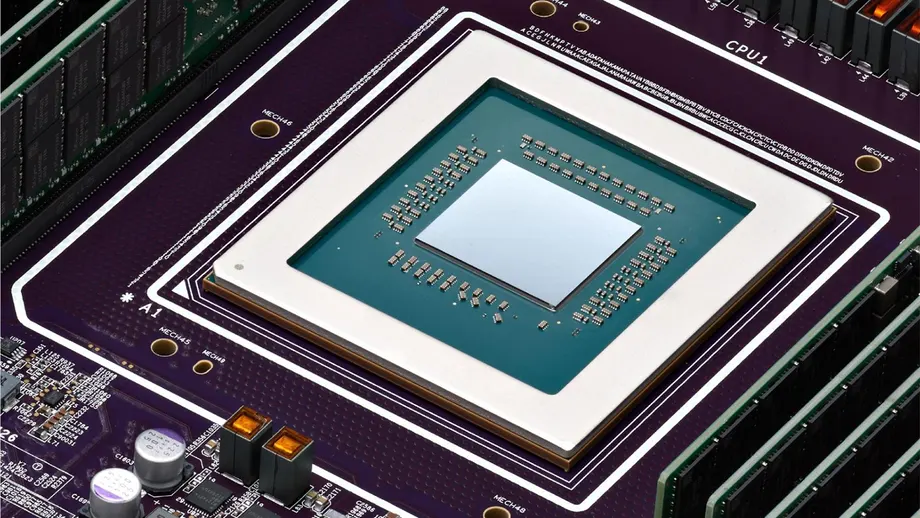
Google's Axion line follows the same logic. Axion 2 is ramping at TSMC alongside Graviton 5, and both are queuing for the same 3nm wafers as Nvidia's Vera CPU, a processor Nvidia built to act as the host chip in machines organised around its accelerators. A server CPU is the manager of a machine: it runs the operating system, feeds data to the accelerators and handles the work that cannot be split across thousands of parallel cores.
For the next generation, both Amazon and Google are reported to be looking past 3nm to 2nm, where more transistors fit on the same area of silicon. The two parts are expected as early as the second half of 2027. Samsung's own volume shipments would come about a year later, which is the gap that makes this story about supply rather than about a signed contract.
The Design Software Link That Points to Samsung
Cadence Design Systems, which sells much of the software used to lay out advanced chips, said in September that Amazon's chip unit Annapurna Labs is using its tools to design the next Graviton processor. Samsung works closely with Cadence on advanced nodes so that Arm server chips can be built once they are designed. Industry sources point to that shared tool chain as one reason a Samsung bid could fit with Amazon's plans.
Electronic design automation is the layer between a drawing of a chip and a factory that can print it. Engineers use it to place billions of transistors and to check that a layout will survive the etching steps at a given node. When a design house and a foundry work from the same tool chain, a part can move to a second factory with fewer surprises in the transfer, which is what makes the Cadence statement relevant to a supply decision.
Why TSMC Cannot Simply Say Yes
TSMC's difficulty is arithmetic. Brokerages estimate that unmet demand for its 3nm wafers will reach about 600,000 wafers in 2026, and that a roughly 40 percent expansion of 3nm capacity next year will not close the gap. Nvidia alone is forecast to take 55 to 60 percent of that output, which leaves 40 to 45 percent for every other customer. Tesla's AI5 chip has already run into capacity limits on the same lines.
JPMorgan has estimated that Nvidia is 22 percent of TSMC's 2026 sales, a reminder that the accelerator business is not the only thing filling the foundry's order book. Cloud companies that once treated TSMC as their only option are now testing whether a second supplier can be qualified in time for products that must ship in 2027.
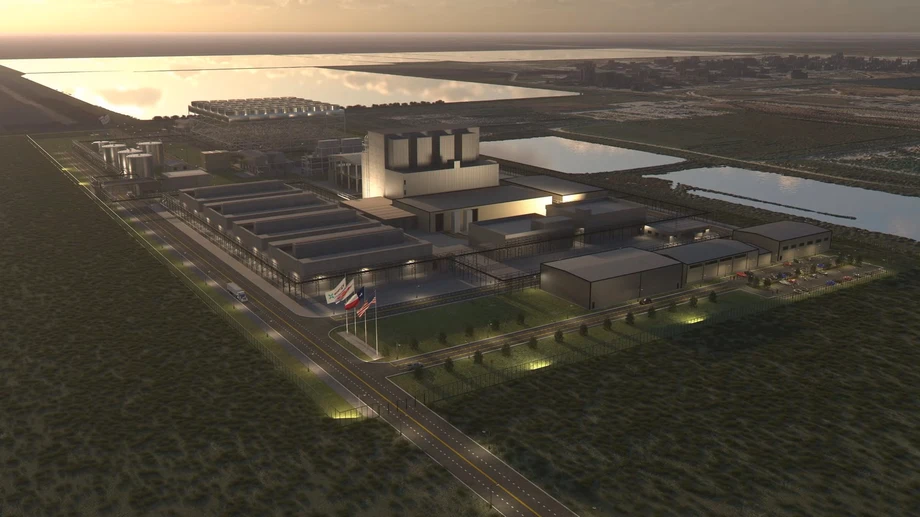
Capacity is being added. TSMC is building in Arizona under a plan valued at $265 billion and has filed for a $22.6 billion campus in Texas that would make 2nm chips. Those plants take years to reach volume, which is why the shortage is expected to persist through next year instead of fading.
Agentic AI Puts the CPU Back in the Rack
The squeeze on server processors has a cause that would have seemed odd two years ago: artificial intelligence systems now need more of the ordinary computing that CPUs provide. TrendForce expects the ratio of CPUs to AI accelerators in AI servers to narrow from about 1 to 8 to somewhere between 1 to 1 and 1 to 2, a shift that multiplies the number of host processors needed for a given amount of accelerator capacity.
Agentic AI explains the change. A system that answers a question in one pass leans on graphics processors. An agent that writes and runs code, queries databases, browses the web and coordinates other applications spends much of its time on the tasks a CPU handles. TrendForce expects server processor shipments to grow 31 percent in 2026 and by more than 40 percent in 2027.
Samsung's Yield Question
Samsung's obstacle is not demand but the quality of its output. Press reports earlier this year put yields on its 2nm process at about 60 percent, a figure that has not come from Samsung and that the company has not updated publicly. Building a server CPU with 192 cores or more is harder than building a phone processor, because a single defect across a larger piece of silicon can ruin the part.
Estimates circulating in the industry put growth in Samsung's 2nm orders at about 130 percent in 2026. The company's 2nm work already reaches beyond logic chips: it has built a custom HBM4E base die for Meta, a piece of silicon that sits under stacked memory. In a recent reorganisation Samsung put its memory business under a single chief and added a team focused on logic for HBM.
What Samsung would gain from a Graviton or Axion order is a reference customer at the frontier. Foundries win the next round of business by pointing to the hardest chips they have shipped, and a processor with 192 cores built on 2nm for a hyperscaler would be exactly that argument.
What Is Not Known Yet
No company has commented on the report. It gives no order size, price, wafer count or confirmed node for either chip, and it does not say whether Samsung would make Graviton 6, Axion 3 or both. The 2nm choice is described as under discussion, not settled.
The dates in the account are expectations rather than announcements:
- June 10, 2026: Graviton 5 becomes generally available on EC2 M9g and M9gd instances, with 192 cores on a 3nm process.
- September 2026: Cadence says Annapurna Labs is using its tools to design the next Graviton.
- Nov. 29, 2026: industry sources name Samsung as a possible second supplier for Graviton 6 and Axion 3.
- Second half of 2027: the two chips are expected to launch.
- 2028: Samsung volume shipments are expected to begin.
The next signals would be a chip announcement from AWS or Google Cloud that names a foundry, and Samsung's next results release, where it may again describe its 2nm order book. Arm, whose designs both chips are built on, has reported data center royalties doubling, a measure of how much custom silicon the cloud companies are now commissioning.
Key Points
- Industry sources said on Nov. 29 that Samsung is a candidate second manufacturer for AWS Graviton 6 and Google Axion 3, both built on Arm architecture.
- Both chips are expected as early as the second half of 2027, with Samsung volume orders more likely from 2028 and first shipments going to TSMC.
- A 2nm node is the process under discussion, one generation ahead of the 3nm used for Graviton 5, which launched on June 10, 2026 with 192 cores and up to 25 percent better compute.
- Cadence said in September that Amazon's Annapurna Labs is designing the next Graviton with its tools, and Samsung works closely with Cadence on advanced nodes.
- Brokerages estimate about 600,000 wafers of unmet 3nm demand at TSMC in 2026, with Nvidia taking 55 to 60 percent of output and a 40 percent capacity expansion failing to close the gap.
- TrendForce expects the CPU to AI accelerator ratio in AI servers to narrow from 1 to 8 to between 1 to 1 and 1 to 2, with server processor shipments up 31 percent in 2026.
- Samsung held 5.9 percent of the foundry market in the second quarter of 2026 against TSMC's 72.5 percent, and its 2nm yields were reported at about 60 percent earlier this year.
- No company has confirmed an order, the node choice or any talks, and no order size or wafer count has been disclosed.