Regret, and a Promise for Next Year
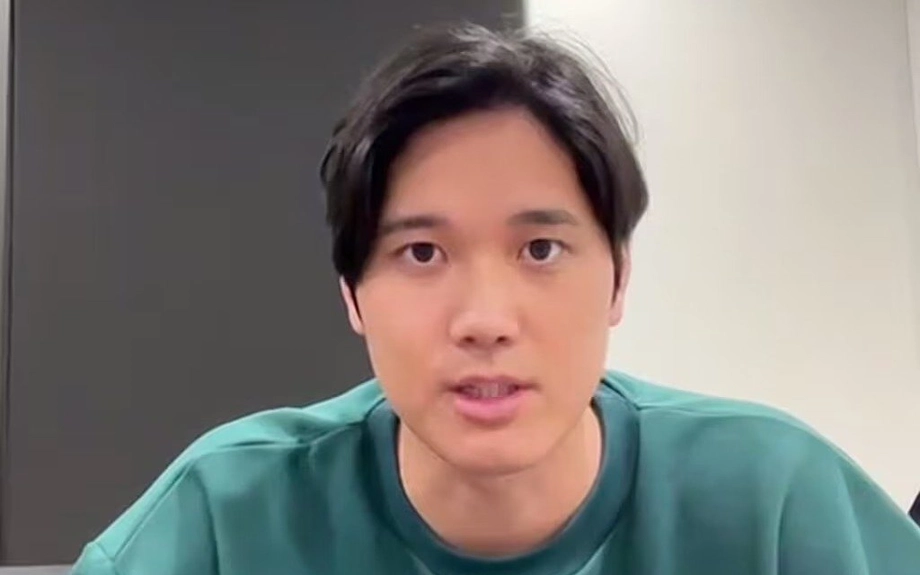
Shohei Ohtani gave his 2026 season a verdict in two words. Speaking to Japanese media in an online interview on Wednesday, the Los Angeles Dodgers star said he carries regret about a year in which injuries took away his pitching and his team lost its shot at a third consecutive World Series title.
Contents
- Regret, and a Promise for Next Year
- A Season That Started Like the Best of His Career
- The Body Broke Down, and No One Could Name the Cause
- A Timeline of a Season That Slipped Away
- How the Dodgers Managed His Health, and What They Regret
- The Two-Way Question Refuses to Disappear
- The Hardest Math: When Should a Pitcher Start Throwing?
- A Labor Deadline That Could Wreck the Plan
- Why the Dodgers Now Need Him on the Mound
- Surgery, Age and a Body in Its Thirties
- A Wider View From Tokyo
- Key Points
"Of course I feel regret," Ohtani, 32, said. "I want to make the most of this offseason and make up for this season's frustrations next year."
The disappointment has a shape. Ohtani made his final pitching start on July 3. His bat slowed in September and then went cold in October. Milwaukee swept the Dodgers in four games in the National League Championship Series, ending a run of two straight titles and closing Ohtani's 10th season in Major League Baseball without the ring he wanted.
The year matters for more than its numbers. It leaves a four-time MVP, a franchise built around him and a labor deadline on Dec. 1 facing a single question the Dodgers must answer this offseason: how to get Ohtani to October healthy enough to pitch and hit at the same time.
A Season That Started Like the Best of His Career
For six weeks, 2026 looked like the year Ohtani would finally assemble a full two-way season. He opened in the Dodgers rotation and was close to untouchable, recording a 0.74 earned run average over his first 10 starts. An ERA measures earned runs allowed per nine innings, so 0.74 means he was surrendering well under one run a game.
The finish told a different story. Ohtani went 8-2 with a 1.79 ERA in 14 starts, striking out 95 batters across 85 2/3 innings. His last four starts, all made with an inflamed left knee, produced a 4.38 ERA. Then the pitching stopped altogether.
At the plate he stayed productive by ordinary standards and disappointing by his own. Ohtani hit .275 with 30 home runs, 81 runs batted in and an .889 on-base plus slugging mark in 135 games. Those 30 homers were his fewest in a full season since 2019, and his average, on-base percentage and OPS were his lowest since 2022.
The postseason exposed the damage. Ohtani batted .192 with a .323 on-base percentage and a .308 slugging percentage across eight games, with one home run and one stolen base. In Game 4 of the NLCS at Dodger Stadium on Oct. 15, he hit a three-run homer that gave Los Angeles a 4-0 lead. Milwaukee scored six unanswered runs and won 6-4 to complete the sweep.
The Body Broke Down, and No One Could Name the Cause
Ohtani's record of complaints for 2026 reads like a list of separate problems that arrived together: inflammation in his left knee, soreness in his right biceps, and discomfort and inflammation in his neck. He consulted several doctors. None could point to a single trigger.
"It's difficult to specify," Ohtani said of the cause, adding that it is hard to attribute his injuries to any one factor.
The knee was serious enough for the Dodgers to give him a lubricant injection during the All-Star break. The biceps pain arrived in the middle of swings, at the start and at the end. Early September brought a stay on the injured list, and he returned to a lineup that needed him without the timing that had made him the most feared hitter in the sport.
The trough was brutal. Ohtani went 6 for 49, and a run of 110 plate appearances without a home run stretched from August into October, the longest power drought of his career. The Dodgers kept him in the lineup for Game 3 of the NLCS against Milwaukee anyway, and he entered that game with three singles in 20 postseason at bats.
A Timeline of a Season That Slipped Away
- October 2024: a subluxation of his left shoulder during the World Series requires rehabilitation.
- November 2025: the Dodgers beat the Blue Jays in seven games in a World Series that stretched into November, then came a shortened offseason that included the World Baseball Classic.
- Spring 2026: Ohtani opens the season in the rotation and posts a 0.74 ERA across his first 10 starts.
- July 3, 2026: his final pitching appearance of the season.
- Sept. 8, 2026: he is missing from the lineup for the sixth time in seven games because of right arm discomfort; the club places him on the injured list days later.
- Oct. 15, 2026: his three-run homer gives Los Angeles a 4-0 lead in Game 4; Milwaukee wins 6-4 and sweeps the series.
- Nov. 25, 2026: Major League Baseball files a lawsuit seeking court approval for a potential lockout.
- Dec. 1, 2026: the collective bargaining agreement between owners and the players' union expires.
What stands out across those dates is how little uninterrupted baseball Ohtani has played. He has not completed a full season as a two-way player since 2023.
How the Dodgers Managed His Health, and What They Regret
Dave Roberts, the Dodgers manager, spent September answering questions about a player he could not keep on the field. On the Tuesday night before a Sept. 8 home game against Cincinnati, he was definitive about the next day's lineup: "He'll be in the lineup tomorrow." When the lineup was posted on Wednesday afternoon, Ohtani was absent again.
Ohtani had gone 0 for 3 with a walk on Monday in his first game back after four days of rest, and told the staff he did not feel right after one swing. Roberts learned of the setback only after he had spoken to reporters.
The concern is that after four days off, to then take four at-bats and feel something in an at-bat where we can't keep going forward, that's disappointing. But that's kind of where we're at. And I think we're of the mind to give him today off, and anything should be on the table moving forward, as far as what gets him to be the best version of himself in September.
Asked whether the answer could be the injured list, Roberts said it could. A 15-day assignment at that point would have kept Ohtani out until Sept. 23, with less than a week of the regular season left for him to find his swing. Looking back, the manager said he wished he had acted sooner, when the pain first appeared. "I would love to go back and put him on the IL," Roberts said, before conceding what the club already knew. "Is he going to be 100% by the end of this season? No."
The Two-Way Question Refuses to Disappear
At the end-of-season media session in October, an American reporter asked Ohtani whether he intended to keep pitching and hitting in 2027, and he looked genuinely surprised by the question. Follow-up questions suggested he should concentrate on hitting.
On Wednesday he answered the underlying question directly. "That's the position where I can help the team the most and make the best use of my strengths," he said of the dual role. On the night the Dodgers were eliminated in Milwaukee, he had put it more simply: "I intend on doing everything."
His reasoning is practical as well as personal. Ohtani believes the two-way job is also the best arrangement for the club, not simply the one that suits him. The Dodgers have backed that plan publicly, though the cost of backing it badly was visible all autumn: a player who could not pitch and could barely hit when the games mattered most.
The Hardest Math: When Should a Pitcher Start Throwing?
Building a pitcher up for a season normally follows a calendar. The 2027 calendar is blank. Ohtani and the Dodgers have several plans on the table, including delaying his return to the rotation and spreading his starts across the season, and they have settled on none of them.
"It's not good to stop playing too much, and there is also a risk in playing too much," Ohtani said. "The club and I both have several plans."
The asymmetry between the two halves of his job is what makes the decision hard. A hitter benefits from starting early. A pitcher who finishes his buildup and then waits accumulates fatigue and risks injury. "As a batter, the earlier you get ready the better," Ohtani said. "As a pitcher, wasted time results in unnecessary fatigue piling up. That's the hardest part in making decisions."
He has also warned against solving the problem by pitching less. "It's not ideal for a pitcher to make too few appearances, but pitching too often would be risky," he said. The target the player and the club share is not Opening Day but October. "Our shared view is that I need to be in good condition heading into October," Ohtani said. "The real battle is in October, so whether I can get there in the right spot is the battle ahead."
A Labor Deadline That Could Wreck the Plan
The collective bargaining agreement between Major League Baseball and the players' union expires on Dec. 1, and owners could lock players out as early as Dec. 2 if no new deal is reached. On Nov. 25, the league filed a lawsuit seeking court approval for a potential lockout. During a lockout, players on 40-man rosters are barred from team facilities and from working with team coaches, trainers and doctors. Owners are pushing for a salary cap, which the union opposes.
For a pitcher rebuilding an arm, that is not an abstract dispute. A lockout would leave Ohtani managing his own throwing program without the staff that monitors him, which is the situation he described when asked about the talks.
If there is a wasted period, fatigue from unnecessary pitching practice would build up. That is a tricky point.
His approach for now is to stay close to ready without overcommitting. "It's important to get myself into shape and ready for the season at any time, to a degree," he said. "Nothing has been decided at this point. The team has several plans, and I have several plans, and we're figuring out what's best."
Why the Dodgers Now Need Him on the Mound
The club's leverage in this negotiation with its own star has thinned. When Ohtani went down in 2026, Los Angeles covered the hole by acquiring Tarik Skubal from the Detroit Tigers in August. Skubal then agreed to a contract with the New York Mets worth $450 million over nine years.
No ace of that caliber is expected to be available at the 2027 trade deadline. That leaves the Dodgers counting on Ohtani to lead a rotation alongside Yoshinobu Yamamoto and Blake Snell, and to carry an offense built around Mookie Betts, Freddie Freeman and Max Muncy, a group whose championship window is tied to how many prime seasons remain.
Andrew Friedman, the Dodgers' president of baseball operations, has said the club intends to limit Ohtani's regular season innings so he stays strong into October, a plan the player has accepted. The risk runs in both directions: cut his workload too far and he may not be stretched out for the starts the postseason demands.
Surgery, Age and a Body in Its Thirties
Immediately after the elimination in Milwaukee, Ohtani left the door open to an operation. "Hard to tell at this point," he said through translator Will Ireton. "It's something that's going to be analyzed, discussed over the offseason, and see if that's a viable thing to do."
The Dodgers have since ruled out surgery, and the plan is rest rather than surgery, with Ohtani expected to arrive at spring training at full strength. Friedman has been explicit about the club's expectation. "I'm not only expecting him to pitch, we're excited about him pitching," he said at an October press conference.
Ohtani's history explains the caution. He had Tommy John surgery in 2018 and a revision procedure with an internal brace in 2023, and he will turn 33 during the 2027 season. Asked what the year had taught him, he said the lesson had not yet taken shape. "I haven't been able to really come to grip in terms of what I've learned overall this season," he said. "It's something that I'm going to kind of go back to the drawing board in terms of treatment, training program, and see what I can come up with for next season."
A Wider View From Tokyo
Ohtani's interview ranged beyond his own body. He said he had stayed in contact with two Japanese rookies who made an immediate mark in 2026: Munetaka Murakami, who hit 35 home runs for the Chicago White Sox, and Kazuma Okamoto, who hit 33 for the Toronto Blue Jays.
"I was in contact with them. It would have been great if they could win the Rookie of the Year," Ohtani said. "I'm sure they're aiming to win some titles going forward."
He was more guarded about Shoki Oda, a high school pitching star who declared his wish to move to the United States and was then taken with the first pick of Japan's draft by the Yomiuri Giants. Ohtani, who once planned to go straight to MLB out of high school before joining the Nippon Ham Fighters, declined to advise him. "I was thinking about what to do with my two-way style too, so it's not necessarily the same situation," he said. "I cannot comment while not knowing what he wants to do."
Key Points
- Shohei Ohtani said he feels regret about 2026 and wants the offseason to make up for it in 2027, his 10th season in Major League Baseball.
- He went 8-2 with a 1.79 ERA in 14 starts, striking out 95 in 85 2/3 innings, and did not pitch after July 3 because of left knee inflammation and right biceps soreness.
- He hit .275 with 30 home runs, 81 RBIs and an .889 OPS in 135 games, then batted .192 in eight postseason games.
- Milwaukee swept the Dodgers in four games in the NLCS, winning Game 4 by 6-4 after Ohtani's three-run homer had given Los Angeles a 4-0 lead.
- Ohtani said doctors could not specify the cause of the inflammation and that he is committed to remaining a two-way player.
- The Dodgers have ruled out offseason surgery and plan several options for his 2027 pitching load, with no schedule finalized.
- The collective bargaining agreement expires Dec. 1, and a lockout as early as Dec. 2 would bar him from team facilities and staff.
- Tarik Skubal's $450 million move to the Mets over nine years leaves the Dodgers depending on Ohtani as a frontline starter.