Japan Turns a Difficult Night in Lebanon Into Control of Group F
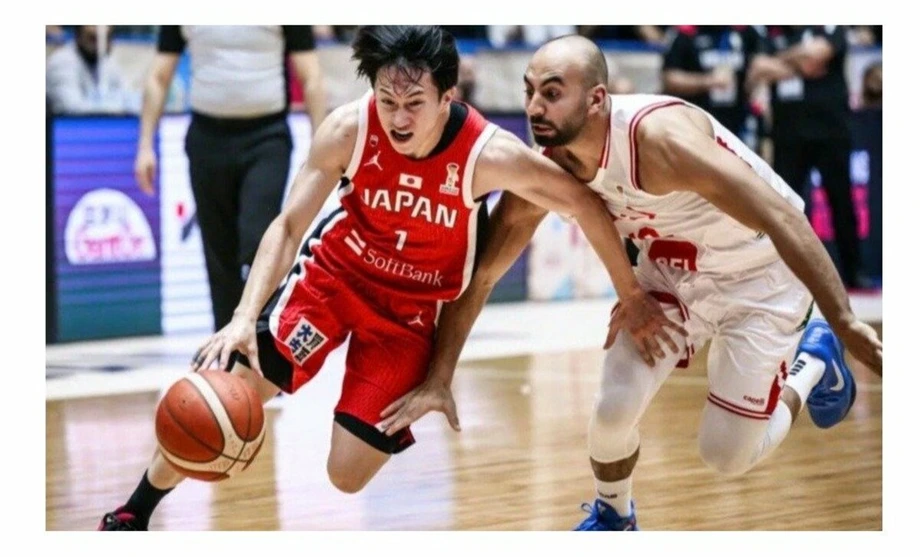
Japan's men's basketball team moved to the brink of the 2027 FIBA Basketball World Cup on November 26, overcoming a deficit of 14 points to beat Lebanon 86-82 away from home. Japan, ranked 22nd in the world, trailed the 33rd ranked host 51-38 at halftime before winning the second half 48-31. Josh Hawkinson led all players with 24 points and 15 rebounds as Japan improved to seven wins and two losses in Group F.
Contents
- Japan Turns a Difficult Night in Lebanon Into Control of Group F
- How Japan Erased a Deficit of 14 Points
- Hawkinson and Hiejima Supply Different Kinds of Leadership
- Lebanon's Missed Shots Are Only Part of the Explanation
- A First Start Helps Cover Japan's Missing Stars
- What the Group F Standings Show After Window 5 Opens
- Saudi Arabia Ends a 33 Year Wait Against China
- How the Remaining World Cup Places Are Decided
- What Comes Next for Japan and Its Rivals
- What to Know
The reward could arrive quickly. If Japan wins away to Qatar at 22:00 Japan time on November 29, it will secure a third consecutive World Cup appearance with two group games still remaining. Lebanon dropped to six wins and three losses, surrendering first place after entering the game above Japan in the standings.
The setting made the comeback especially valuable. Lebanon had won 10 of its previous 11 home games in World Cup qualifying and held a 5-1 historical advantage over Japan before this meeting. That run included a victory by 16 points at the 2025 FIBA Asia Cup. Japan also played without Rui Hachimura and Yuki Kawamura, while an injury kept Yuta Watanabe out of the roster of 12 players.
How Japan Erased a Deficit of 14 Points
Japan made the brighter start, using an early 10-0 scoring run to unsettle the host. Lebanon answered with extraordinary shooting from distance, making its first seven attempts from beyond the arc. The host won the opening quarter 26-22, then took the second 25-16. Japan's largest deficit arrived during that second quarter, and its 13 point disadvantage at halftime reflected how difficult Lebanon's offense and defensive pressure had become to handle.
The third quarter changed the game's rhythm. Japan outscored Lebanon 23-15, reducing the margin to 66-61 entering the final period. Stronger defense limited Lebanon to 15 points in the quarter, while Japan began finding better shots against the host's switches. A switch occurs when defenders exchange assignments to respond to an offensive screen; it can create confusion for the attacking team, but it can also produce favorable matchups when the offense reads it well.
Japan completed the turnaround with a 25-16 fourth quarter. Makoto Hiejima scored five points during a decisive 7-0 run that put Japan ahead 75-70 with 5:20 remaining, a lead it did not relinquish. With 1:18 left and Japan leading by three, Yudai Baba blocked an attempt from beyond the arc and immediately scored on the resulting fast break. Lebanon had scored 51 points in the first half but managed only 31 after it.
Hawkinson and Hiejima Supply Different Kinds of Leadership
Hawkinson gave Japan its statistical foundation, adding two steals and two blocks to his 24 points and 15 rebounds. His return also restored a player who can operate near the basket or move outside and shoot. That role is often called a stretch five: a center whose shooting draws an opposing big defender away from the basket and creates room for teammates. Takumi Saito contributed 10 points, eight assists and two steals, Hiejima scored 10, Baba added nine, and Koya Kawashita finished with eight points and six rebounds. Avi Koki Schafer was also among the players involved in Japan's final push.
Dai Oketani, Japan's head coach, had identified Hiejima's ability to penetrate defenses as a reason for bringing the veteran guard back. His comments appeared in FIBA's game report, which highlighted the 36-year-old's influence during the closing minutes.
Of course, we're counting on Hiejima's trademark ability to attack the paint.
Hiejima had spoken before the window about the particular danger of playing in a loud visiting arena. His explanation closely matched what happened in Lebanon, where Japan absorbed the host's early surge and eventually interrupted it.
There's a unique atmosphere when you play away games, and if you allow the opposition to build momentum, things can reach a point where there's no coming back."
"I want to make sure that doesn't happen, or even if it does, I want to be the one who can break their momentum.
Lebanon's Missed Shots Are Only Part of the Explanation
Lebanon's shooting collapse was striking. After beginning with seven consecutive successful attempts from distance, the host made only two of its next 21. That removed a major source of points, but Japan still had to produce 48 points in the second half and defend a team that continued to create extra opportunities close to the basket.
Lebanon held a 14-4 advantage in second chance points, which are scored after a team regains possession through an offensive rebound. Japan therefore could not attribute its recovery to dominating every extra possession. Hawkinson's 15 rebounds helped limit damage and provided stability, but the team also needed scoring from several players and timely defensive plays from Hiejima and Baba.
Oketani said Lebanon's switches had prevented Japan from organizing its offense effectively in the first half, while steals and accurate outside shooting strengthened the host's position. He credited Japan's improved response to those switches and its collective defense after halftime. Hawkinson similarly pointed to the team's defensive concentration, its persistence as both sides tired and its ability to finish the game without being unsettled by the crowd.
A First Start Helps Cover Japan's Missing Stars
Kawashita made his first start for the national team and immediately provided energy. The Ryukyu Golden Kings center scored Japan's opening basket with a dunk after receiving a pass from Yudai Nishida, then added another dunk during an early surge that produced a 12-4 lead. At 204 centimeters and 117 kilograms, he also gave Japan the size needed to defend Lebanon's interior players.
At 28, Kawashita has already experienced an eventful season. He helped Nagasaki win the B.League championship last season before moving to Ryukyu, then fractured his right wrist during World Cup qualifying in July. The injury kept him out of the league's opening games in September, and he made his return in mid-October. Against Lebanon, he collected the second highest rebound total on Japan's team but also accumulated four fouls. He said he had been nervous about starting, felt he had performed his role and still needed to correct details on both offense and defense before facing Qatar.
Watanabe's absence followed an injury reported during training shortly before the window. Hachimura and Kawamura were also not in the playing group, while Keisei Tominaga, Baba and Hiejima were included in the roster. Hachimura still followed the result from afar. After the game, he published a post containing no words, only a huffing face and a Japanese flag, prompting an enthusiastic response from supporters.
What the Group F Standings Show After Window 5 Opens
Teams receive two standings points for a victory and one for a defeat. Japan consequently has 16 points from nine games, one more than Lebanon. The complete Group F picture after the three opening games of the window is:
- Japan: seven wins and two losses, 16 points, with a scoring difference of +134.
- Lebanon: six wins and three losses, 15 points, with a scoring difference of +116.
- South Korea: five wins and four losses, 14 points, with a scoring difference of +16.
- China: five wins and four losses, 14 points, with a scoring difference of +21.
- Saudi Arabia: four wins and five losses, 13 points, with a scoring difference of -24.
- Qatar: four wins and five losses, 13 points, with a scoring difference of -67.
Japan has scored 814 points and conceded 680 across its nine games, while Lebanon has scored 799 and conceded 683. South Korea sits above China because it won both meetings between the teams, which takes priority over China's better cumulative scoring difference. The classification rules use standings points first, results between the tied teams second, scoring difference third and total points scored fourth.
South Korea strengthened its position by beating Qatar 74-52 away from home, leading for most of the game and winning by 22 points. Qatar's place in the World Cup itself is already secure because it is the host. Its results still affect the group, but its qualification does not depend on finishing above Japan, Lebanon, South Korea or China.
Saudi Arabia Ends a 33 Year Wait Against China
Saudi Arabia produced the group's other major surprise, defeating China 82-80 after 15 changes of the lead and 11 tied scores. China entered the game ranked 30th, while Saudi Arabia was 65th. The result was Saudi Arabia's first victory over China in a major FIBA competition since 1993, ending a wait of 33 years. It had lost the previous six meetings, including a 93-88 defeat at the 2025 Asia Cup, and held only one win in eight major competition meetings before this game.
Mohammad Alsuwailem led Saudi Arabia with 20 points, four assists and two blocks. The 208 centimeter frontcourt player made 75 percent of his attempts inside and finished with an efficiency rating of +27, a statistical measure combining a player's positive and negative contributions. Khaled Gabar scored 15 points, Marzouq Almuwallad added 13 from the bench, and Mohammad-Ali Abdur-Rahkman and Ali Shubayli each scored 12.
China missed 14 consecutive attempts from distance at one stage and allowed Saudi Arabia to score 48 points before halftime. Center Zhou Qi was disqualified in the third quarter after striking Alsuwailem in the face with an elbow. Saudi Arabia, which entered the window averaging 76.4 points per game and ranked fourth among the Asian qualifiers in accuracy on shots worth two points, made 61.9 percent of its attempts inside the arc. Late free throws finally settled the contest and lifted the Saudis to four wins, keeping their qualification hopes alive.
How the Remaining World Cup Places Are Decided
The global qualifying competition involves 80 national teams and will determine 31 of the 32 places at the World Cup. Qatar receives the other place automatically as host. The draw was held in Doha on May 13, 2025, and games are spread across six windows from November 2025 through March 2027, allowing players to join their national teams during breaks in their club seasons.
The Asian competition began with the 16 teams that reached the 2025 FIBA Asia Cup. Twelve advanced to the second round and were divided into Groups E and F, carrying their first round results with them. They play each other home and away. Seven places are available through Asian qualifying alongside Qatar's automatic berth, so every position near the top of Group F carries practical value.
Window 5 runs from November 23 to December 1, 2026, and the final window is scheduled for February 22 to March 2, 2027. Australia has already qualified from Group E. Elsewhere in the world, Turkey secured its place through European qualifying on August 31, and Canada qualified through the Americas on November 26. Qatar's host place was confirmed on April 28, 2023.
What Comes Next for Japan and Its Rivals
Japan's immediate task is clear: beat Qatar and turn first place into a confirmed World Cup berth. Qatar arrives at the game with four wins and five losses after its heavy defeat by South Korea, but Japan will again be playing away. A Japanese victory would settle qualification before the final window. A defeat would leave the team waiting, with its remaining listed fixtures scheduled for February 26 and March 1.
The next games in Group F will also affect Lebanon, South Korea, China and Saudi Arabia:
- November 29 at 22:00 Japan time: Qatar hosts Japan, with qualification at stake for the visitor.
- November 30 at 01:00 Japan time: Saudi Arabia faces South Korea.
- November 30 at 04:00 Japan time: Lebanon meets China.
- February 22 to March 2, 2027: the sixth and final qualifying window takes place.
The Lebanon result has given Japan control of its own qualification route. Hawkinson supplied the scoring and rebounding base, Hiejima stopped the host's momentum, Baba delivered the late defensive play and Kawashita helped cover an injury absence. Reproducing that shared effort against Qatar would allow Japan to enter its final two fixtures with its World Cup place already secured.
What to Know
- Japan beat Lebanon 86-82 after trailing by 14 points and facing a 51-38 deficit at halftime.
- Japan won the second half 48-31, with Josh Hawkinson recording 24 points and 15 rebounds.
- Makoto Hiejima scored five points in the 7-0 run that produced a 75-70 lead with 5:20 left.
- Japan leads Group F with seven wins and two losses, while Lebanon is second at six wins and three losses.
- A win away to Qatar on November 29 would secure Japan's third consecutive World Cup appearance.
- Saudi Arabia beat China 82-80 for its first major FIBA competition victory over China since 1993.
- South Korea defeated Qatar 74-52 and moved above China through its two victories in their meetings.
- Seven Asian qualifying places are available in addition to Qatar's automatic place as World Cup host.