A record breaking starter who became a championship closer
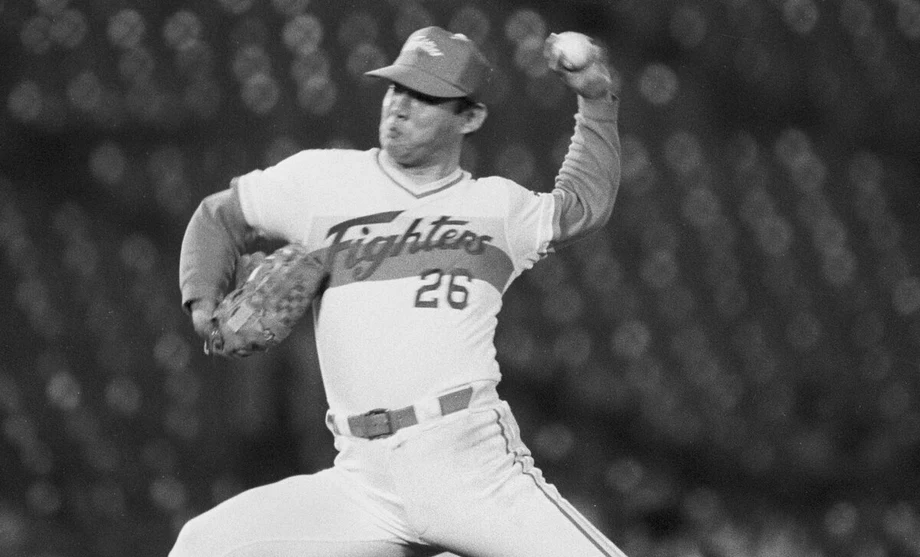
Yutaka Enatsu, whose 401 strikeouts for the Hanshin Tigers in 1968 remain Nippon Professional Baseball's record for a single season, has died at 78. The Golden Players Club announced his death on November 17, 2026.
Contents
- A record breaking starter who became a championship closer
- From a school pitcher to Hanshin's young ace
- How Enatsu reached 401 strikeouts
- Nine straight strikeouts and a home run finish
- Health problems and a new job under Katsuya Nomura
- The 21 pitches that secured Hiroshima's title
- A career rebuilt across five clubs
- An American attempt and a complicated retirement
- A final book and a return to Koshien
- Key Points
Enatsu died at a Tokyo hospital early that morning. He had been hospitalized since September after his longstanding diabetes worsened. His career stretched across 18 Japanese professional seasons and five clubs, producing 206 wins, 158 losses, 193 saves and a 2.49 earned run average.
Those figures describe two different kinds of greatness. At Hanshin, Enatsu was a starting pitcher who could dominate opponents for an entire game. Later, he became a specialist in protecting narrow leads, helping Hiroshima win consecutive Japan Series championships in 1979 and 1980 and Nippon Ham capture the Pacific League pennant in 1981.
His most famous performances were unusually vivid: nine consecutive strikeouts in an All-Star game, an extra innings no-hitter decided by his own home run, and a championship escape remembered simply as Enatsu's 21 Pitches.
Enatsu finished with 2,987 strikeouts, fifth on NPB's career list. His two league Most Valuable Player awards, earned in different leagues and with different clubs, reflected how successfully he rebuilt his career after leaving Hanshin.
From a school pitcher to Hanshin's young ace
Enatsu grew up in Amagasaki, Hyogo Prefecture, where his powerful pitching attracted attention while he attended Sonoda Junior High School. He became the ace at Osaka Gakuin University High School from his first year, although he never appeared in the national high school tournaments at Koshien.
Hanshin selected him in the first round of the 1966 draft, and he began his professional career in 1967. His route into professional baseball was through high school, with a possible move to Tokai University giving way to the Tigers opportunity.
The teenager immediately became a major contributor. In his first season, he won 12 games and struck out 225 batters. Alongside Minoru Murayama, he gave Hanshin a formidable pitching partnership against rivals including the Yomiuri Giants.
Enatsu's fastball attracted attention, but precise control also shaped his success. That combination let him challenge powerful hitters directly, especially the Giants' Sadaharu Oh, whose encounters with the young left hander became a defining rivalry.
How Enatsu reached 401 strikeouts
Enatsu's second season produced 25 wins, 12 losses, a 2.13 ERA and 401 strikeouts across 329 innings. He won his first league wins title and the 1968 Sawamura Award, which recognizes an outstanding starting pitcher.
The strikeout total was 176 higher than his rookie figure of 225, an increase of about 78 percent. He averaged almost 11 strikeouts for every nine innings in 1968. A strikeout removes a batter without requiring a fielder to catch or throw a batted ball, making that level of dominance especially valuable to a pitcher.
On September 17, 1968, against Yomiuri at Koshien, Enatsu pursued Kazuhisa Inao's existing season record of 353 strikeouts. He struck out Oh to tie it, then retired the next eight batters without a strikeout before facing Oh again.
Enatsu struck out Oh a second time to claim the record. He continued adding to the total until it reached 401, a figure that still stands at the time of his death.
His success at Hanshin extended beyond that season. He won two league wins titles and six strikeout titles during his years with the Tigers, pairing sustained production with individual performances that became part of Japanese baseball history.
Nine straight strikeouts and a home run finish
In the first All-Star game of 1971 at Nishinomiya Stadium, Enatsu started for the Central League and struck out all nine batters he faced over three innings. Hanshin catcher Koichi Tabuchi, his regular partner, was behind the plate.
Every out Enatsu recorded came by strikeout. His All-Star appearances across 1970 and 1971 also included a run of 15 consecutive strikeouts, extending the achievement beyond the famous nine batter performance.
On August 30, 1973, he produced a different kind of complete performance against the Chunichi Dragons at Koshien. Neither team scored through the regulation nine innings, so Enatsu had to continue pitching to keep his no-hitter alive.
In the 11th inning, with the game still scoreless, Enatsu hit a home run to end it. A walk-off home run gives the home team an immediate victory because the visiting side has no remaining chance to answer.
Enatsu remains the only NPB pitcher to complete a no-hitter in a game that went to extra innings. On that occasion, he supplied both the pitching that kept Chunichi scoreless and the hit that finally secured the win. His career batting totals included 128 hits, seven home runs and 52 runs batted in.
Health problems and a new job under Katsuya Nomura
Enatsu's years of long outings also included serious health difficulties. He experienced circulatory problems and heart disease during his playing career, and later accounts described episodes that interrupted games.
One particularly severe outing came against Chunichi on September 26, 1970. After allowing a second inning infield single to Morimichi Takagi, Enatsu retired 34 consecutive batters. He suffered what was described as a heart attack in the 13th inning, briefly crouching on the mound before continuing.
In the 14th, Tatsuhiko Kimata hit his 166th pitch for a home run. Enatsu had allowed only two hits but took the loss as Hanshin fell 1–0. The game captures both his extraordinary endurance and the physical strain accompanying it.
Enatsu moved to the Nankai Hawks for the 1976 season. Under manager and catcher Katsuya Nomura, he subsequently accepted a different assignment: relief pitching, with responsibility for the closing stages of games.
Nomura encouraged Enatsu to see the change as an opportunity to reshape the sport. The Nankai manager urged him:
Let's start a revolution in baseball!
In 1977, Enatsu recorded 19 saves and won the best relief pitcher award. A closer enters near the end of a game to protect a lead. Enatsu helped establish the value of assigning that responsibility to an elite specialist rather than expecting the starting pitcher to finish.
The 21 pitches that secured Hiroshima's title
Enatsu joined Hiroshima for the 1978 season and became central to its championship team the following year. In 1979, he became the first relief pitcher to win a league MVP award.
His defining appearance came in Game 7 of the 1979 Japan Series against the Kintetsu Buffaloes. Hiroshima held a one run lead in the final inning when Enatsu faced a crisis: the bases were loaded and nobody was out.
All three bases being occupied meant Kintetsu could tie the game with a runner advancing home and potentially win it with another following. Enatsu needed three outs while protecting the narrowest possible margin.
He escaped without allowing a run. During the sequence, he recognized and countered a squeeze bunt attempt, in which a batter tries to tap the ball into play while a runner races home from third base.
The 21 pitches Enatsu threw in that inning preserved Hiroshima's victory and delivered the Japan Series championship. Writer Junji Yamagiwa later captured the episode in his celebrated account, Enatsu's 21 Pitches, helping make the inning one of Japanese baseball's most enduring stories.
Hiroshima won the Japan Series again in 1980. Enatsu then moved to Nippon Ham, where he helped secure the 1981 Pacific League pennant and won another MVP award. He became the first player to receive league MVP honors in both the Central and Pacific leagues.
A career rebuilt across five clubs
Enatsu's move into relief changed the shape of his career rather than bringing it toward an immediate end. He reached 200 career wins in 1982, joined the Golden Players Club and continued to collect saves with Nippon Ham.
His career followed this sequence:
- 1967–1975: Pitched for Hanshin, setting the season strikeout record and producing his famous All-Star and no-hitter performances.
- 1976–1977: Played for Nankai and developed into a specialist relief pitcher under Nomura.
- 1978–1980: Helped Hiroshima win consecutive Japan Series titles.
- 1981–1983: Played for Nippon Ham, winning the 1981 Pacific League MVP award.
- 1984: Played his final Japanese professional season with Seibu.
- 1985: Attended Milwaukee Brewers spring training but did not make the major league Opening Day roster.
Enatsu's 829 appearances included both long starts and shorter relief assignments. His 2.49 career ERA means he allowed an average of 2.49 earned runs for every nine innings pitched, with runs resulting from certain fielding errors excluded.
His honors included two wins titles, one best ERA title, five best relief pitcher awards and the Sawamura Award. Those achievements show the breadth of a career that moved from overpowering hitters at the start of games to controlling tense situations at the finish.
An American attempt and a complicated retirement
Enatsu left Japanese professional baseball after the 1984 season. In January 1985, supporters organized a farewell event at Ipponsugi Baseball Stadium in Tama, Tokyo. He then pursued a final playing opportunity in the United States.
At 36, he attended Brewers spring training in February. He missed the Opening Day roster and chose not to continue his attempt through the minor leagues, ending his playing career.
Enatsu subsequently worked as a baseball commentator and analyst. His retirement also included a serious criminal case: he was arrested in 1993 on suspicion of possessing stimulants and received a prison sentence.
He later returned to public baseball work, including appearances as a temporary coach at Hanshin's spring training camps in 2015 and 2016. His instruction focused on fundamentals, from playing catch carefully to controlling pitches low and away from a batter.
A final book and a return to Koshien
Enatsu remained connected to former teammates and Hanshin supporters as his health declined. On April 25, 2025, he appeared in a wheelchair at Koshien during an event marking the Tigers' 90th anniversary.
Near the mound, he stood and mimed a pitching motion with Tabuchi catching and former Hanshin star Masayuki Kakefu at the plate. The appearance brought together players closely associated with different chapters of the club's history.
On May 15, 2026, his 78th birthday, Enatsu published Enatsu's Last Testament with nonfiction writer Takaran Matsunaga. The book revisited his records, rivalries, conflicts, mistakes and the people who supported him.
His legacy rests on an unusual combination: a season record still standing decades later, championship success in a new role, and individual moments whose stories remain as memorable as their statistics. The 401 strikeouts, nine consecutive All-Star strikeouts and 21 championship pitches each capture a different part of the pitcher he became.
Key Points
- The Golden Players Club announced Yutaka Enatsu's death on November 17, 2026. He was 78.
- His 401 strikeouts for Hanshin in 1968 remain NPB's record for a single season.
- He struck out nine consecutive All-Star batters in 1971 and threw an extra innings no-hitter in 1973, winning it with his own home run.
- After becoming a relief specialist, he helped Hiroshima win the 1979 and 1980 Japan Series and Nippon Ham win the 1981 Pacific League pennant.
- He finished with 206 wins, 193 saves, a 2.49 ERA and 2,987 strikeouts across 829 appearances.