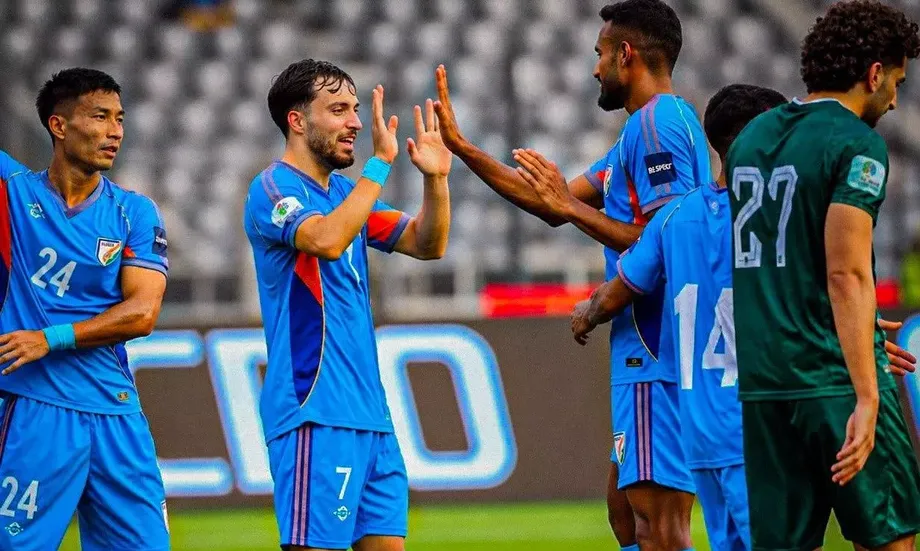
Dhaka final brings two different chances to make history
India will pursue a record 10th South Asian Football Federation Championship title against Pakistan at the National Stadium in Dhaka on Tuesday, November 17, 2026, in the first senior SAFF final between the two countries. Kickoff is scheduled for 19:30 Indian Standard Time, or 8pm in Bangladesh, with streaming on the Veto app.
Contents
- Dhaka final brings two different chances to make history
- India's record sets a demanding target
- How India held off Bhutan
- Pakistan beat the hosts with a late finish
- What changed after the 3-2 group match?
- Two coaches focus on their own strengths
- India manage a smaller pool of players
- The rivalry in numbers and earlier finals
- The route to Tuesday's title match
- Key Points
India have won the previous two editions, in 2021 and 2023, but have never lifted the trophy in three successive tournaments. Pakistan have already reached new territory: after four previous semifinal appearances, they will contest the senior championship final for the first time.
The All India Football Federation sets out the schedule and India's title record in its final match preview. Its November 17 date differs from the November 14 date given in one semifinal account, which also described the final as taking place on Tuesday.
Both finalists advanced on Saturday by a single goal. India beat Bhutan 2-1 after establishing an early lead, while Abdul Samad's strike in the 86th minute earned Pakistan a 1-0 victory over hosts Bangladesh.
India also won the teams' Group B meeting 3-2 on November 5. The rematch presents a different challenge, however, because Pakistan have since added five players based abroad. India coach Naushad Moosa must prepare for that stronger squad while managing limited player availability of his own.
India's record sets a demanding target
India's nine titles came in 1993, 1997, 1999, 2005, 2009, 2011, 2015, 2021 and 2023. The AIFF says India finished among the top two in 14 of the previous 15 editions, missing the final only in 2003. That is a place in the top two in about 93 per cent of those tournaments.
The championship record makes India the established regional power. A victory in Dhaka would add a new achievement to that history: three consecutive titles, rather than another pair of successive wins.
Pakistan's progress has followed a different course. Their most recent semifinal appearance before this tournament was in 2018. Beating Bangladesh has taken them beyond that previous limit and given coach Nolberto Solano's team a chance to win the country's first senior SAFF title.
India's experience of winning the competition and Pakistan's opportunity to claim it for the first time create different pressures. Moosa's players are defending a long record of success, while Solano's side are trying to turn a breakthrough appearance into a trophy.
How India held off Bhutan
Vishnu PV put India ahead in the ninth minute of their semifinal. He moved in from the left side of the penalty area, played the ball through a defender's legs and finished into the far corner with his right foot.
Captain Chinglensana Singh Konsham doubled the advantage in the 27th minute. Bhutan failed to clear a corner, and the Indian defender reacted to the loose ball with a volley.
The Asian Football Confederation's semifinal match report records how Bhutan recovered three minutes after halftime. Ghencho Gyeltshen found Kinzang Tashi at the far post, where Tashi scored to reduce the deficit.
The goal was initially ruled out before a video assistant referee review awarded it. India later had a penalty decision overturned following another review. VAR, the system through which officials check video footage of certain major decisions, was in use for the knockout rounds.
India protected their remaining advantage to reach the final, but the match again required them to defend a lead under pressure. Their two early goals provided the cushion; Bhutan's response made the second half more demanding.
Pakistan beat the hosts with a late finish
Bangladesh controlled 62 per cent of possession in the other semifinal, but Pakistan produced more shots on target. The hosts, led by Hamza Choudhary, struggled to turn their longer spells with the ball into a goal.
Pakistan's decisive moment arrived in the 86th minute. Abdul Samad, also identified as Abdul Samad Arshad, created room inside the penalty area, shifted onto his left foot and shot towards the near side of the goal. The ball went underneath the goalkeeper.
The finish rewarded a Pakistan side that had stayed in the contest while Bangladesh had more of the ball. Possession measures how much time a team controls the ball; shots on target show how often it directs an attempt into the goal or forces a save. Pakistan led in the latter measure and supplied the only goal.
Bangladesh's exit also changed the setting for the final. Ticket prices were reduced by a factor of five after the hosts were eliminated. No exact ticket amounts were given, but the reduction made admission substantially cheaper for spectators attending the India versus Pakistan match.
What changed after the 3-2 group match?
India took a 3-0 lead in the November 5 meeting through two goals from Suhail Ahmad Bhat and one from Manglenthang Kipgen. Pakistan then scored twice in stoppage time, including an overhead kick from Alamgir Ghazi, leaving India to protect a one goal margin.
Pakistan's late rally in Dhaka exposed the importance of the closing minutes. India had done enough attacking work to win, but Pakistan's response reduced a comfortable lead to a tense finish.
Solano said Pakistan had arrived after a difficult journey and had lacked adequate training before that match. He accepted that his players started slowly and lacked concentration during the first half, while pointing to their improvement after the interval.
Pakistan subsequently beat Maldives 3-0 before overcoming Bangladesh. Five players based abroad joined ahead of the knockout rounds: captain Abdullah Iqbal, Easah Suliman, Adil Nabi, Ali Akbar Khan and Abdul Samad Arshad.
Their arrival gave Pakistan more choices across the team. Iqbal and Suliman strengthened the defensive options, Nabi added a creative midfield option, and Ali Akbar and Abdul Samad increased the attacking choices. Abdul Samad's semifinal winner supplied the most direct contribution.
The tournament falls outside a FIFA international window, a period set aside for national team matches when clubs generally must release eligible players. Outside those dates, national coaches can face greater difficulty assembling their preferred squads.
Two coaches focus on their own strengths
Pakistan coach Nolberto Solano said his team respected India but wanted to concentrate on executing its own plan. At the press conference before the final, he described preparation as a matter of understanding both teams rather than being distracted by the occasion.
You know how they play. The most important thing is to focus on ourselves, on what we want to do, because we know our strengths and how we can hurt India.
Moosa also expects a changed contest. The India coach said Pakistan's additional players and their opportunity to study the group match required fresh preparation.
I expect a very different game. Pakistan look a very different side from the one we faced in the group stage, with a few players having joined them.
Moosa has identified India's speed and agility as possible advantages. He has also rejected describing his squad as a B team, arguing that the players have earned their place in the final through their performances.
India's clearest task is to combine that attacking pace with steadier defending. Pakistan scored twice late in the group meeting, and Bhutan reduced a two goal deficit in the semifinal. Both matches gave Moosa concrete reasons to focus on concentration after taking the lead.
The India coach named those areas directly in his assessment before the final.
At the same time, there are areas we need to improve, particularly our defensive organisation, concentration throughout the 90 minutes and our decision-making in crucial moments.
India manage a smaller pool of players
Moosa said India had been left with 17 outfield players, meaning players other than goalkeepers, after departures, injuries and availability problems. That limits his choices for changing the team and sharing the workload.
Players with India's senior squad in New Zealand were unavailable to reinforce the group in Dhaka. Three Mumbai City players who had left after the opening match were also unavailable. Moosa said he had directed the squad towards finding solutions with the players present.
Recovery has therefore been central to India's preparation between the semifinal and final. Moosa said the staff were balancing rest, suitable training workloads and tactical work, while asking the players to remain calm and confident.
Pakistan captain Abdullah Iqbal has likewise urged his teammates to keep their approach familiar despite the scale of the opportunity. He said the players should follow Solano's instructions and support one another.
It's a final, a big game, but we have to take it like any other game. Focus on the plan the coach has set for us, help each other out on the pitch and perform as usual. Nothing extra.
The final starting lineups have not been announced. Those selections will show how both coaches balance recent performances, fitness and the demands of facing an opponent they played less than two weeks earlier.
The rivalry in numbers and earlier finals
The AIFF lists 30 senior internationals between India and Pakistan before this final: 17 India wins, four Pakistan wins and nine draws. India therefore account for about 57 per cent of the victories across all 30 meetings, compared with about 13 per cent for Pakistan, with 30 per cent drawn.
Within the SAFF Championship, India have won eight of their 10 meetings, Pakistan one, with one draw. Pakistan's sole victory came in 2003, when they won 1-0. That was also the only edition in which India missed the final.
The countries have contested two previous SAFF men's age group finals. Pakistan won the 2011 under 16 final 2-1 in Kathmandu. India won the 2023 under 19 final 3-0, with Kipgen scoring twice.
Kipgen is part of the current India squad and also scored in this tournament's group victory over Pakistan. He brings a direct connection between that earlier youth final and Tuesday's senior title match.
The route to Tuesday's title match
India and Pakistan began the tournament against each other and will finish it the same way. Pakistan's recovery from defeat and India's progress through two narrow victories have brought them back together with the championship at stake.
- November 5: India defeated Pakistan 3-2 in Group B after taking a 3-0 lead.
- November 8: Pakistan beat Maldives 3-0 to advance from the group.
- November 14: India defeated Bhutan 2-1, while Pakistan beat Bangladesh 1-0 in the semifinals.
- November 17: India and Pakistan are scheduled to contest the final at 19:30 IST, or 8pm in Dhaka.
Indian viewers can watch through the Veto app. No live television broadcast in India was listed. On the field, India will seek a 10th title and a first run of three consecutive championships, while Pakistan will try to complete their first senior SAFF final appearance with a first trophy.
Key Points
- India face Pakistan at Dhaka's National Stadium on Tuesday, November 17, 2026.
- Kickoff is at 19:30 IST, equivalent to 8pm in Bangladesh, with streaming on Veto.
- India are seeking a record 10th SAFF title and their first three consecutive tournament wins.
- Pakistan reached their first senior SAFF final by beating Bangladesh 1-0 through Abdul Samad's late goal.
- India won the group meeting 3-2, but Pakistan have since added five players based abroad.
- India advanced with a 2-1 win over Bhutan and are managing a squad with 17 outfield players.