A country leaves the list it joined in 1971
Laos stopped being a least developed country on 24 November 2026, 55 years after it joined the United Nations category in 1971, becoming the first nation in Southeast Asia and the ninth in the world to leave it.
Contents
- A country leaves the list it joined in 1971
- Three tests, and the scores that cleared them
- Poverty, power sockets and classrooms
- The long road from the caves of Viengxay
- Who is left on the list, and who goes next
- The bill for losing the label
- Debt does not graduate with the label
- China's weight in the transition
- Twenty two actions and a steering committee
- What changes for a family in Savannakhet
- Why Cambodia is watching closely
- Key Points
The change came under a General Assembly resolution adopted exactly five years earlier, on 24 November 2021, which approved the graduation and gave Vientiane a preparatory period of five years instead of the usual three. The longer window reflected the country's heavy debt load and the disruption caused by COVID-19.
Laos first cleared the thresholds at the 2018 triennial review and met all three criteria again in February 2021, holding them since. Anouparb Vongnorkeo, the deputy foreign minister, and Bakhodir Burkhanov, the UN resident coordinator in Laos, called the result the culmination of decades of sustained economic and social progress in a joint opinion article published by the UN country team.
"Our journey does not end with graduation; rather, it marks the beginning of a new chapter as we navigate the transition period through 2029," the two officials wrote.
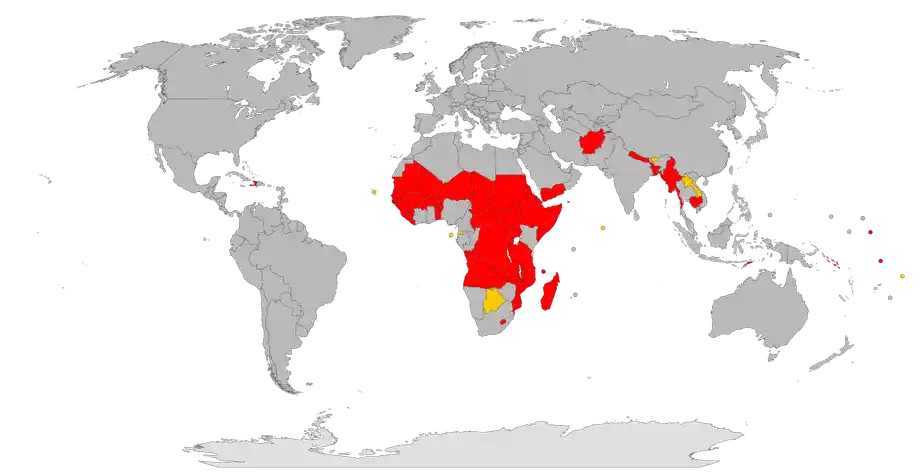
Forty-three countries remain in the category, three of them inside ASEAN: Cambodia, Myanmar and Timor-Leste.
Three tests, and the scores that cleared them
The General Assembly created the label in 1971 to identify economies held back by structural obstacles rather than by policy alone. Entry and exit are measured on the same three indicators, with a higher bar for leaving so that gains hold.
- Income is gross national income per person, averaged over three years. A country joins the list below $1,088 and graduates above $1,306.
- Human assets cover nutrition, child and maternal health, schooling and adult literacy. A score below 60 puts a country on the list; above 66 takes it off.
- Economic and environmental vulnerability weighs unstable farm output and exports, concentrated export earnings, the handicap of a small economy and the share of the population displaced by natural disasters. Above 36 means inclusion, below 32 means graduation.
Laos averaged $2,503 in national income per person over 2020 to 2022, close to double the $1,306 minimum. It scored 74.8 on human assets and 29.8 on vulnerability in the 2024 review, both with room to spare. A lower vulnerability score means a country is less exposed to shocks.
Poverty, power sockets and classrooms
Poverty fell from 46 percent in 1993 to about 15 percent. Electricity reached nearly every household, rising from 42.6 percent of the population in 2000 to close to 100 percent in 2022. Adult literacy climbed from under 70 percent to 87.5 percent, and literacy among young people is now above 90 percent.
Far more children reach their fifth birthday. Deaths of children under five fell from more than 100 per 1,000 live births in 2000 to around 40 in 2022, according to the figures released with the graduation.
Growth did most of the lifting. The economy expanded by an average of 5.6 percent a year between 2015 and 2025, taking income per person to nearly $3,000 and life expectancy to about 70 years. In 1950, before the war that shaped modern Laos, literacy was around 18 percent, income per person was about $318 and few people lived past 40.
The long road from the caves of Viengxay
When the UN's Committee for Development Planning compiled the first list in 1971, it placed Laos among "the least developed among developing countries". The country was then split by war. The royal government held roughly a third of the territory and about two thirds of the population along the Mekong valley, while the Pathet Lao controlled the rest from a base at Viengxay, a network of more than 400 caves that housed up to 20,000 people.
Bombing during that period ran at the rate of a planeload every eight minutes at its peak. Tens of thousands died, and unexploded ordnance still contaminates farmland in several provinces, keeping some land out of production and injuring farmers decades later.
The Lao People's Democratic Republic was proclaimed on 2 December 1975. Reconstruction was slow, complicated by insurgency, a brief border conflict with Thailand and the collapse of Soviet aid. A further 10 to 15 percent of the population, about 360,000 people over two decades, left, many for Thailand.
In 1981, then prime minister and party general secretary Kaysone Phomvihane closed his memoir with a promise about the country's future.
The work of the people of Laos in defending their country and building socialism will triumph!
The date chosen for graduation carries its own meaning. 24 November falls inside the That Luang Festival, which marks 460 years since the original construction of the national shrine in Vientiane. The capital recorded 2.2 million visitors in 2025, and the country received more than four million international arrivals.
Who is left on the list, and who goes next
Laos is the ninth country to leave. Botswana went first in 1994, followed by Cabo Verde in 2007, Maldives in 2011, Samoa in 2014, Equatorial Guinea in 2017, Vanuatu in 2020, Bhutan in 2023 and São Tomé and Príncipe in 2024, according to the UN LDC Portal.
Solomon Islands leaves in 2027. Bangladesh, Nepal, Cambodia and Senegal follow in 2029, with Cambodia's date fixed at 19 December 2029 by a General Assembly resolution adopted in December 2024.
Myanmar has no confirmed date. The Committee for Development Policy, which reviews the list every three years, deferred a decision to its 2027 triennial review, where it will also reassess Comoros, Rwanda, Uganda and Tanzania. Timor-Leste, once on the graduation track, no longer meets the criteria.
Dhaka and Kathmandu asked for more time and received extensions of three years. Nepal's prime minister, Balendra Shah, used his first bilateral trip abroad to seek a package of about $2 billion from India, including concessional loans for infrastructure and grants to rebuild after floods. Bangladesh cited cyclone and flood damage and the slow diversification of its garment exports.
The bill for losing the label
Least developed status brings three advantages: duty free and quota free entry to markets such as the European Union, loans on softer terms than commercial lenders offer, and technical help reserved for the poorest countries. Each is now on a withdrawal schedule.
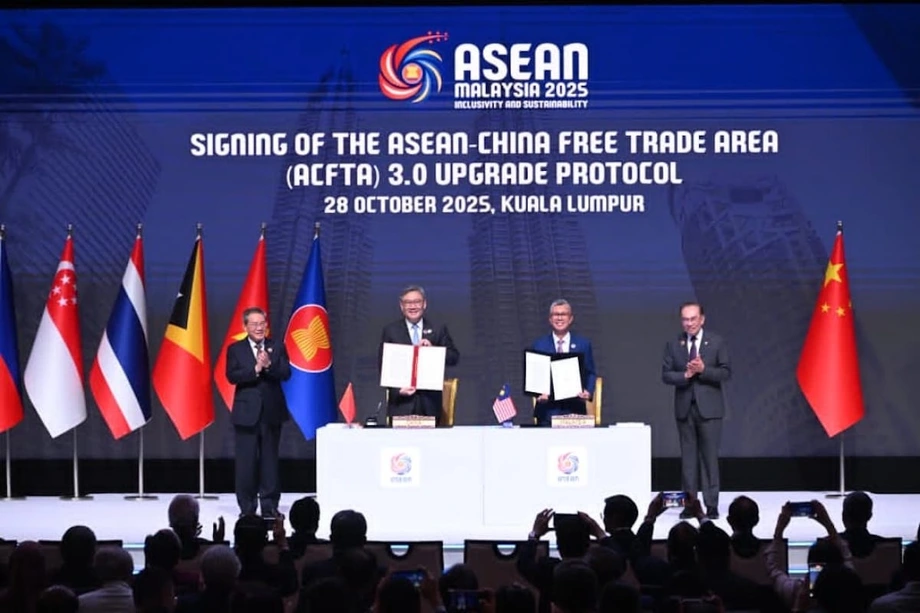
The government's annual report on the transition estimates that tariffs on Lao goods will rise from 0.3 percent to 4.1 percent across 24 markets, and that exports could fall by 7.3 percent if nothing offsets the change. Ministries have been told to use free trade agreements, including the upgraded ASEAN-China pact, to redirect shipments and to widen the range of products sold abroad.
The sharpest exposure is in garments sold to the European Union, where duty free entry under the Everything But Arms scheme continues for three years after graduation. Vientiane is working towards GSP+, an EU arrangement that grants lower tariffs to countries which ratify and enforce conventions on human rights, labour, the environment and good governance.
Transition terms have already been secured at the World Trade Organization and under the EU scheme, and the Ministry of Industry and Commerce approved a trade plan in September 2024 titled "Guidance for Lao PDR's Smooth LDC Transition: Priority Actions in Trade and Trade-Related Areas 2024-2030". About two thirds of Lao exports go to ASEAN members and other free trade partners and should keep duty free access.
Maldives offers a warning. Tuna exports to the EU fell sharply after its graduation in 2011 ended tariff exemptions, and the government leaned on tourism and transport to replace the lost income.
Debt does not graduate with the label
The government puts public debt at 88 percent of GDP, down from slightly above 100 percent in 2023, helped by revenue of around 19 to 20 percent of GDP and a fiscal surplus of about 2.3 percent of GDP in 2024. The World Bank estimates public and publicly guaranteed debt at about 87 percent of GDP in 2025.
Interest is the squeeze. Debt payments absorbed 16 percent of government spending in 2025, more than the 10 percent shared by health and education. Total debt service is projected at about 13 percent of GDP, and close to 48 percent of foreign public debt was owed to China in 2024.
Growth slowed to 4.8 percent in 2025 while average inflation eased to 7.7 percent. The World Bank's October 2026 outlook has growth at 4.1 percent for 2026 and inflation at 8.3 percent, which means prices are expected to rise faster than the economy expands.
Fiscal tightening has kept a worse outcome at bay. Stricter spending control, higher revenue and reforms at customs and dry ports have created limited space for priority investment, and the railway corridor and logistics upgrades have begun to cut trade costs.
China's weight in the transition
Trade between China and Laos grew 19 percent to $9.8 billion, and Chinese investment reached $2.2 billion in 2025, making China the largest foreign investor. Potash, wood pulp, paper and farm goods dominate the flow south.
Manothong Vongsaid, the deputy minister of industry and trade, said graduation opens a new era after decades in which growth leaned on mineral exports and large infrastructure projects. The government now wants processing at home: manufacturing, farm products turned into packaged goods, tourism and logistics, rather than selling raw material.
Boten, the northern border town, has Chinese funded towers that would stand out even in Vientiane, a sign of where capital is flowing. Manothong said the country is studying entry into GSP+ and will lean on free trade agreements with China and ASEAN to hold markets after the transition ends. He added that dealing with the changes will take time and that support from partners such as Japan remains important.
Norihiko Yamada, a deputy director general at the Japan External Trade Organization, said China is essential as a destination for Lao farm exports and that Vientiane needs even closer economic ties with Beijing. The railway from Kunming to Vientiane anchors the plan, with the government hoping for farm processing and logistics parks along the corridor.
Twenty two actions and a steering committee
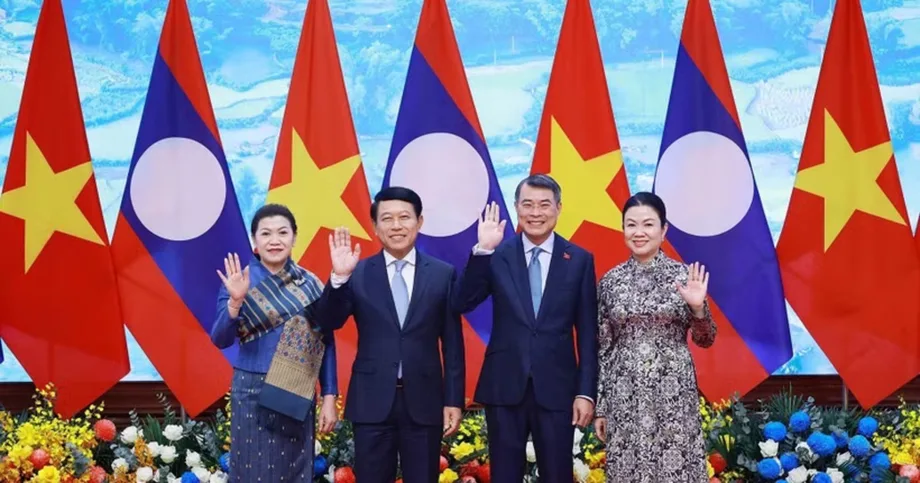
A national steering committee created by Decree 40/PM and chaired by the deputy prime minister, who is also foreign minister, coordinates the transition. Its smooth transition strategy has four pillars and nine policy areas, folded into the 10th National Socio-Economic Development Plan for 2026 to 2030. A readiness assessment carried out in 2025 examined the macroeconomic, social, institutional and vulnerability dimensions of the change and fed into both documents.
Then prime minister Sonexay Siphandone ordered ministries on 6 August to carry out 12 actions to soften the impact. The wider plan lists 22 actions across four priorities: public finances, trade and investment, jobs and skills, and climate and disaster readiness.
Targets are steep. The government wants average growth of 6 percent or more a year from 2026 to 2030 and upper middle income status by 2035, with income per person of $4,600 to $5,000. The opinion article by the deputy foreign minister and the UN coordinator set the horizon for that status at 2055 instead, a reminder that the two timetables in circulation are a decade apart.
At the annual round table meeting in Vientiane on 19 November, co-chaired by Deputy Prime Minister and Finance Minister Santiphab Phomvihane and Mr Burkhanov, participants signed the Vientiane Declaration III, a partnership compact for 2026 to 2035 that embeds the transition strategy and the graduation commitments. Santiphab called for stronger coordination, strategic mobilisation of resources and continued partnerships, while agencies and donors stressed the need to widen the funding base as official development assistance shifts.
What changes for a family in Savannakhet
Phouphet Kyophilavong, a professor of economics and business management at the National University of Laos, said the change is good for the country because it raises its standing abroad and lifts investor confidence.
He warned that the government will have to work harder to contain the costs: higher capital costs, higher interest rates and a possible fall in official development assistance.
The United Nations Development Programme has flagged that concessional loans from Japan and South Korea could come on less favourable terms and that access to the LDC Fund may end. Grants and technical assistance reserved for the category will be phased out, most World Bank and UN programmes are expected to continue, and some bilateral lenders may ask for more.
Small firms face the sharper edge. Export markets demand food safety, environmental and labour standards that many family businesses cannot yet document, and credit for upgrading equipment is scarce. Support for local suppliers, export certification, logistics and digital systems is among the measures the UN Conference on Trade and Development has urged the government to fund.
For a household, the test is whether the transition produces better paid work. The label never set anyone's wage. The jobs created in processing, tourism and freight will.
Why Cambodia is watching closely
Laos' exit started an argument in Cambodia, where social media users weighed whether leaving the list in 2029 is worth the loss of preferences that come with it. Hun Sen has spoken of benefits in keeping the status while the country prepares for the change.
The two neighbours are on different clocks. Cambodia's departure is set for 19 December 2029, three years after Laos began its own transition, and its garment sector is far larger, which makes the expiry of duty free access to Europe a heavier question there than in Vientiane.
Across the region, exporters outside the big preferential arrangements face pressure to cut costs and raise productivity to hold market share, a theme running through ministerial meetings on the Trans-Pacific trade pact hosted by Vietnam, of which Laos is not a member.
Key Points
- Laos left the UN least developed country list on 24 November 2026, 55 years after joining in 1971, the first graduation in Southeast Asia and the ninth worldwide.
- A General Assembly resolution of 24 November 2021 approved the move and allowed a preparatory period of five years instead of three.
- Laos recorded income of $2,503 per person, a human assets score of 74.8 and a vulnerability score of 29.8, all better than the graduation thresholds.
- Poverty fell from 46 percent in 1993 to about 15 percent, electricity access from 42.6 percent in 2000 to nearly 100 percent in 2022, and adult literacy from under 70 percent to 87.5 percent.
- Tariffs on Lao goods are expected to rise from 0.3 percent to 4.1 percent in 24 markets, with an estimated 7.3 percent export loss if unmitigated.
- Public debt stands at 88 percent of GDP, down from above 100 percent in 2023, while interest payments take 16 percent of spending against 10 percent for health and education together.
- China is the largest investor with $2.2 billion in 2025, trade reached $9.8 billion, and nearly 48 percent of foreign public debt was owed to China in 2024.
- Cambodia, Myanmar and Timor-Leste remain the only ASEAN members on the list, with Cambodia due to graduate on 19 December 2029.