A Milestone Crossed at 2:09 P.M.
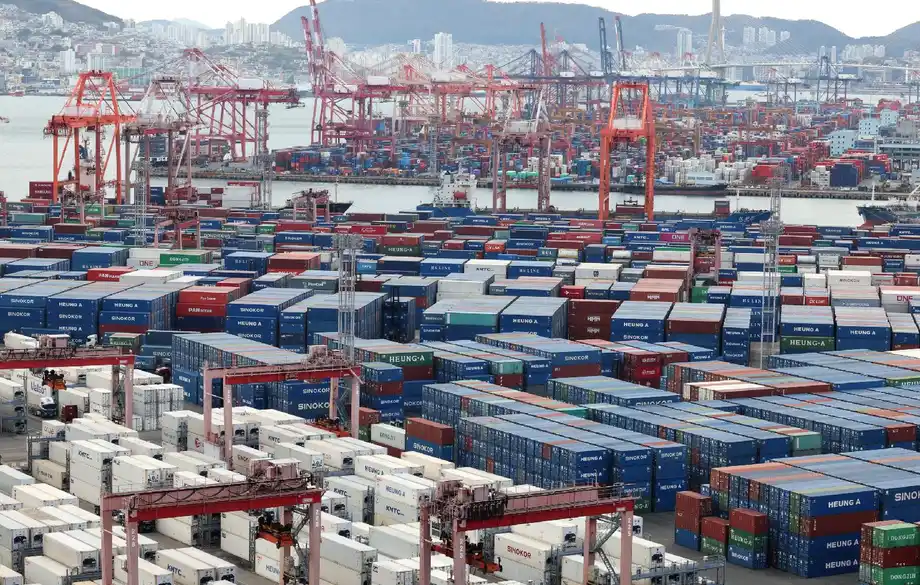
South Korea's cumulative exports passed $1 trillion at 2:09 p.m. on November 19, according to the Ministry of Trade, Industry and Energy and the Korea Customs Service. The country is the fourth to reach the mark in a single year, after the United States, Germany and China, and it got there one year after exports first cleared $700 billion. In 1995 South Korea sold $100 billion of goods abroad; measured from 1948, when the first trade statistics were compiled, exports have grown more than 36,000 fold.
Contents
- A Milestone Crossed at 2:09 P.M.
- Why Germany Is the Closer Comparison
- What the Price Effect Looks Like in One Chip Contract
- Oil, Cars and the Same Gap Outside Chips
- Nineteen Products Korea Wants to Move to Number One
- Tax Windfall, Lending Limits and a Concentration Alert
- What the Government Says It Will Do
- The Boom Has Not Reached Every Household
- 2027: An Export Economy That Is Half Chips
- Key Points
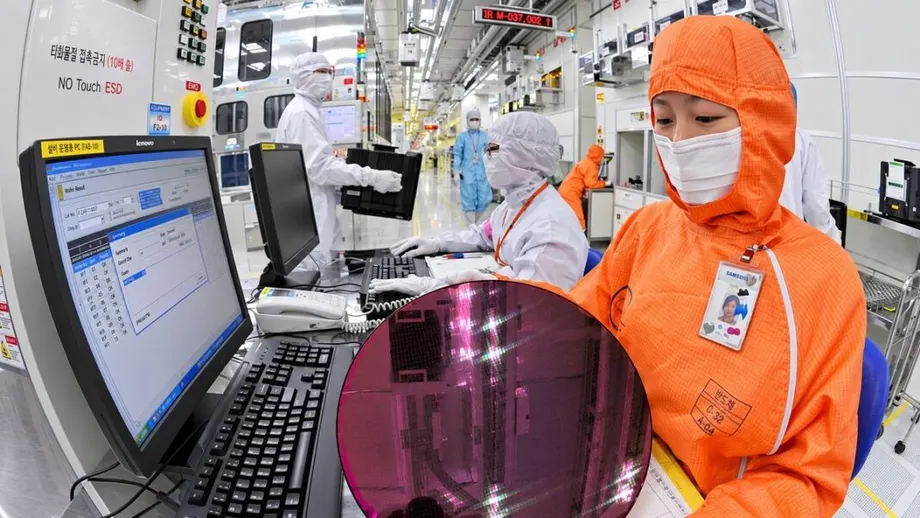
The engine was memory. Semiconductor shipments reached $397.7 billion in the first ten months of 2026, and in October alone they were $56.44 billion, up 259.4% from a year earlier and close to half of everything the country sold overseas. On November 27, the Korea Institute for Industrial Economics and Trade (KIET), a state research institute, published a report titled "Korea's $1 Trillion Export Era: Sustainability Assessment and Policy Challenges". Its finding is uncomfortable. The milestone was built on rising chip prices rather than on selling more goods, and the structure that produced it is more fragile than the headline suggests.
KIET put the policy choice plainly in the report.
The policy goal should focus not on reducing export concentration itself, but on making Korea's export structure less vulnerable to semiconductor price shocks.
Concentration tightened through the year. Semiconductors were 35.5% of total exports in the first quarter, 41.4% in the second and 46.4% in the third. In October the share reached 48.9%, and over January to October it stood at 42.7%, against 24.4% for all of 2025 and a five year average of about 20%.
Why Germany Is the Closer Comparison
The report compares Korea's climb with two earlier members of the club. Germany crossed $1 trillion in 2006 on the back of a strong euro, which inflated the dollar value of goods whose volumes had barely changed. China crossed in 2007 after joining the World Trade Organization and multiplying factory output. KIET calls Germany's path price driven and China's volume driven, and places Korea with Germany.
- Germany: $1 trillion in 2006, helped by euro appreciation between 2002 and 2008
- China: $1 trillion in 2007, driven by export volumes after WTO accession
- Korea: $1 trillion on November 19, 2026, driven by memory chip prices
Speed separates Korea from both. The United States took six years to move from the $700 billion range to $1 trillion, Germany three and China two. Korea needed one. What happened afterwards differs as well. China's exports fell 15.9% in 2009 during the global financial crisis and surpassed their precrisis level the following year, helped by volume based competitiveness. Germany's growth slowed as digital transformation lagged and Chinese manufacturers closed the technology gap, and the number of German products ranked first in world export markets fell from 688 in 2020 to 520 in 2024. From the year each reached the milestone through last year, Chinese exports grew an average of 6.5% a year and German exports 2.5%.
Japan shows a third outcome. It reached $822.6 billion in 2011 and never advanced, held back by a shift of production overseas and delays in the digital transition. Korea's own count of world number one export items was 81 in 2024, unchanged from 2020, while China added 264 and Germany and Japan lost 168 and 41.
What the Price Effect Looks Like in One Chip Contract
The contract price of a mainstream memory chip tells the story. A general purpose DDR5 16 gigabit DRAM module cost $50 in October, up from $8.7 a year earlier. Rising sales of high bandwidth memory (HBM), the stacked chips used in AI servers, lifted average export prices further.
October exports totaled $115.28 billion, up 93.7% from a year earlier and the second largest monthly figure on record after September's $120.9 billion. Of the $55.9 billion increase in October, about $39.3 billion, or 70.2%, came from memory chips. DRAM exports in the first nine months reached $169.7 billion, up 369%. NAND flash exports were $19.2 billion, up 321.1%. System semiconductors, the logic chips used in processors and sensors, grew 13.1% to $40.57 billion, roughly one twenty eighth of the DRAM growth rate.
A KIET calculation shows how much rides on price. Holding chip volumes and all other exports at October levels while cutting average chip prices by 10% would shrink total exports by about 4.9%. For the full year the institute expects goods exports of $1.1566 trillion, $447.3 billion more than last year, and attributes about $220 billion of that increase, close to half, to higher prices.
Two official indexes make the same point. In October the export value index rose 107.6% from a year earlier while the export volume index rose 43.9%.
Oil, Cars and the Same Gap Outside Chips
Price effects are not confined to semiconductors. Oil product exports earned 80% more in October than a year earlier even as volumes fell 7.5%, because supply concerns in the Middle East pushed the export price per tonne up 94.5% to $1,323. Petrochemical export value rose 27.5% while volumes fell 6.8%. Car exports fell 29.8% in August and 5.5% in September.
Concentration rose accordingly. The top ten export items were 50.2% of total exports in 2024, when the same measure was 28.5% for Germany and 27.4% for China, and 52.4% in 2025. In the first nine months of 2026 the figure reached 66%, and the top ten exporting companies passed 60% of shipments for the first time. On a four digit customs classification, DRAM modules overtook passenger cars to become the second largest export item, and three of the top five items are memory related.
Some broadening is under way. Exports outside semiconductors rose 20.2% in January to October, the fastest pace in nearly 20 years, and sales by small and medium sized companies reached $107.6 billion, a record and the fifth straight year above $100 billion. The Ministry of Trade, Industry and Energy added electrical equipment, nonferrous metals, agricultural and fishery foods, cosmetics and household goods to its list of key export items in May, taking it from 15 to 20. Those five groups sold $19.52 billion abroad in the third quarter, up 17.8% from a year earlier, yet their combined value equaled 13.2% of semiconductor exports in the quarter, down from 21% in the first quarter, because chips grew faster still.
Nineteen Products Korea Wants to Move to Number One
KIET's answer is not to shrink chips but to grow things beside them. Its researchers screened products with exports above $100 million in 2024 whose world ranking sat between second and tenth and had improved across three counts, in 2020, 2022 and 2024. Nineteen items passed, all outside semiconductors, and several already rank third.
- Tanks and armored vehicles: exports rose from $180 million in 2020 to $1.365 billion in 2024, and the world rank from sixth to third
- Mixing and crushing industrial machinery: $225 million to $518 million, rank fifth to third
- Light oils and preparations: sixth in the world
- Automotive drive shafts: sixth
- Combustion engine forklifts: rank ninth to sixth
Support would be shaped by the gap to the world leader. Where Korean goods sell at a higher unit price than the leading country's, the emphasis would be on opening new markets; where the price is lower, on improving quality. Two larger sectors get the same treatment. In automobiles, support would shift toward parts for electric and autonomous vehicles. In shipbuilding, it would favor vessels powered by liquefied natural gas and ammonia, with finished goods and core parts helped together so Korean suppliers grow alongside the yards.
Lee Won-bok, an associate research fellow at KIET, described the selection logic in an interview with MTN, a business broadcaster.
There are items competing hard in the global market right now. This is the moment to choose which ones to back by weighing the gap with the number one and the unit price each one commands.
The report also builds in an exit. Support ends when a product reaches first place worldwide, and a product that fails to improve its rank within three years has its support reviewed.
Tax Windfall, Lending Limits and a Concentration Alert
Money is the other half of the proposal. KIET wants a rule written in advance that sends part of the extra corporate tax collected during the chip boom to equipment and supply chain investment in major non-semiconductor products, before the revenue is absorbed elsewhere. It also wants policy lenders' ceilings for non-semiconductor equipment finance tied to concentration measures such as the chip share of exports, so that as exports become more concentrated, other industries automatically gain more room to borrow.
A monitoring system would flag danger early. The institute proposes publishing a set of indicators at regular intervals, including the semiconductor share of exports and the gap between export value and export volume, and issuing a "concentration alert" when a threshold is crossed. It adds a caution about how such numbers can mislead. A new world number one product looks like diversification, yet if that product rides the same cycle as chips, concentration has actually increased.
What the Government Says It Will Do
Trade Minister Kim Jung-kwan marked the milestone at Sun Kwang New Container Terminal at Incheon New Port, calling the run from $100 million of exports in the 1960s to $1 trillion a history of building one miracle on another. He also named the risk.
We must ensure that the blessing of AI semiconductors does not become a curse.
Kang Gam-chan, director general for trade and investment at the ministry, told reporters in Sejong that AI driven chip demand was the main factor behind the milestone. He pointed to eight categories that set records in January to October: semiconductors, petroleum products, computers, nonferrous metals, electrical equipment, biotechnology, cosmetics, and agricultural and seafood products.
To address the concentration of exports in semiconductors, we need to foster promising sectors such as consumer goods, defense and nuclear power, while expanding domestic investment in future strategic industries such as biotechnology.
President Lee Jae Myung used a social media post to set a wider test for the number, saying the achievement should improve people's lives and be shared by large and small companies and by the capital region and the provinces. His administration plans a 162.3 trillion won ($121.94 billion) Future Response Fund to direct excess tax revenue from the chip boom toward growth industries, young people, regional development and education. The country's six largest business groups issued a joint statement welcoming the milestone and calling for a cycle in which exports lead to domestic investment and jobs.
The Boom Has Not Reached Every Household
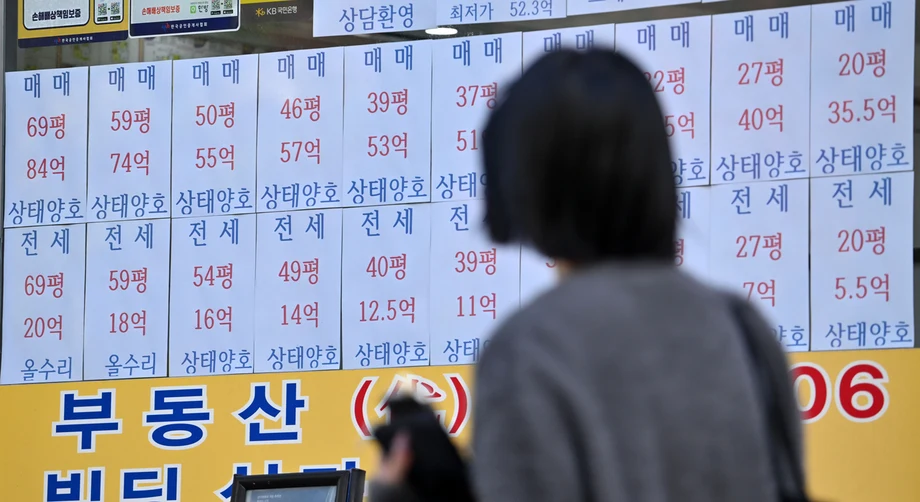
Domestic indicators have not followed exports upward. The corporate loan delinquency rate at major banks reached 0.49% at the end of the third quarter, the highest since mid 2017, and the rate for small and medium sized enterprises climbed to 0.6%. The retail sales index fell 0.5% in the third quarter from a year earlier, the first contraction in five quarters. Kang acknowledged the structure behind the gap, noting that gains sit with large companies and do not always reach their partners.
Trade with China shows the same split. South Korea swung to a surplus there through October, but the shortfall in goods outside chips widened, extending the pattern seen after last year's non-semiconductor deficit with China. Chips accounted for roughly 63% of Korean exports to China, with the sector generating a surplus of $84.8 billion on its own over the ten months.
2027: An Export Economy That Is Half Chips
A separate KIET outlook, published on November 23, projects exports of $1.3202 trillion next year, up 14.1%, which would keep the country above $1 trillion for a second year. Semiconductor exports are forecast to rise 29.9% to $669 billion on AI demand, while growth outside chips falls from 19.7% this year to 1.5%. The chip share would go from 24.4% in 2025 to 44.5% this year and 50.7% in 2027, crossing half of all exports. Growth is expected at 33.9% in the first half and a 0.7% contraction in the second, when base effects and a memory price correction bite.
Sector forecasts divide sharply. Refining is seen falling 10.8% and petrochemicals 3.0% as oil prices ease, automobiles 1.3% on overseas production shifts and Chinese competition, and home appliances 2.4% on U.S. tariffs. Shipbuilding is forecast to rise 24.1% on deliveries of vessels ordered at high prices, information and communications devices 18.3% and biohealth 12.0%. Gross domestic product is projected to grow 3.5%, below this year's 3.7%.
Kwon Nam-hoon, president of KIET, told a briefing at the Government Complex in Sejong that the expansion led by chips would carry into next year while risks for other core industries could return.
Strong semiconductor-led growth will continue next year, but the structural risk factors facing other core industries, such as automobiles, machinery, steel, refining and petrochemicals, could reemerge depending on changes in domestic and global economic conditions.
Lee, the KIET researcher, expects memory prices to turn down around 2028 as supply expands, which would hit not only DRAM but solid state drives and the testing equipment sold to chipmakers. Without volume growth outside chips, annual exports could slip back below $1 trillion.
Key Points
- South Korea passed $1 trillion in annual exports at 2:09 p.m. on November 19, the fourth country to do so after the United States, Germany and China
- KIET's November 27 report says the surge was price driven: chip prices, not volumes, did most of the work
- Semiconductors were 48.9% of exports in October, up from 35.5% in the first quarter
- About half of this year's $447.3 billion export increase, roughly $220 billion, came from higher prices
- The top ten export items reached 66% of shipments in January to September, against 28.5% for Germany and 27.4% for China in 2024
- KIET proposes using part of the chip boom's excess corporate tax for equipment and supply chain investment outside chips
- Nineteen non-semiconductor products, including tanks and armored vehicles, industrial machinery and drive shafts, are named as candidates to reach world number one
- KIET forecasts exports of $1.3202 trillion in 2027, with semiconductors at 50.7% of the total and growth outside chips at just 1.5%