A Father in Kathmandu, a Son in Portugal
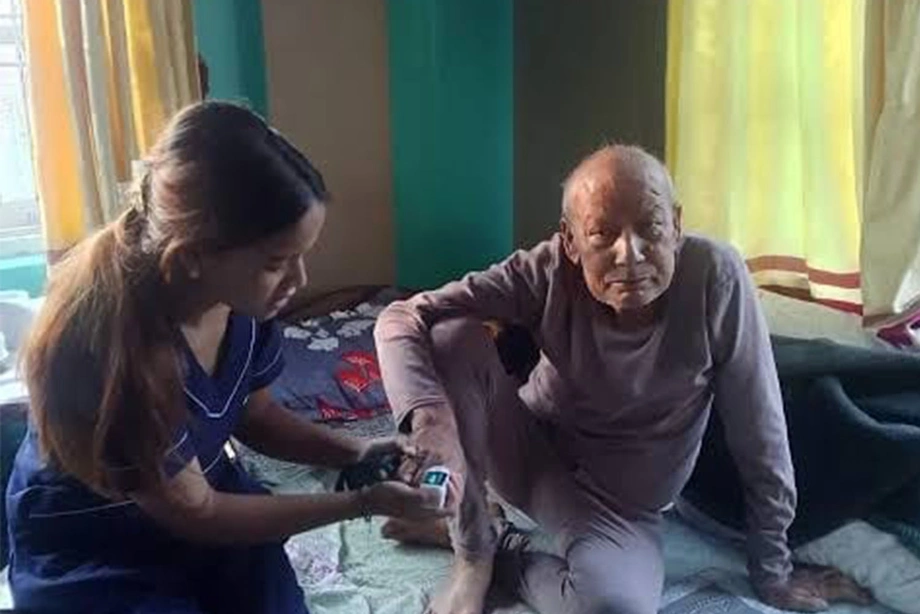
Amit and Maina, a couple from Kirtipur working in Portugal, used to worry constantly about Amit's elderly father in Kathmandu. He lives alone with diabetes and high blood pressure, and they could not easily check whether he had taken his medicines or kept track of his several prescriptions. Regular updates now reach Amit's phone, giving the family a way to follow his condition from another continent.
Contents
- A Father in Kathmandu, a Son in Portugal
- What a Night of Care Really Involves
- The Business Behind a Booking
- Video Consultations Reach Migrants and Villages
- An Expanding Field of Providers
- Why Families Can No Longer Do All the Caring
- Registered Companies, but No Dedicated Health Regulator
- An Old Drugs Act, a Daraz Warning and a 2026 Draft
- Why Health Data Needs Its Own Protection
- What to Know
A caregiver uses a mobile app to record the father's blood pressure, heart rate, body temperature and medication schedule. Amit can see the information through an online dashboard as it is entered. Amit, Maina and Pragya, another client described below, are identified by pseudonyms to protect their privacy.
Their arrangement illustrates two forms of digital healthcare gaining ground in Nepal. Telemedicine connects patients with doctors through video calls, while home care sends doctors, nurses or trained caregivers to patients. Platforms including Hamro Patro, Aashirbad Care, Health at Home, NepMeds and Mero Doctor now provide combinations of consultations, sample collection, nursing and assistance with daily needs.
The services are changing care work as well as healthcare. Looking after older relatives, long treated mainly as unpaid work performed by women in families, is becoming formal employment. For Nepalis working or studying abroad, it also offers a practical way to arrange support for parents who remain at home.
What a Night of Care Really Involves
Srijana Basnet, who lives in Chhauni, Kathmandu, cares for an elderly couple in Lalitpur through Aashirbad Care. She previously ran a clothing shop, but sold it after losses during the COVID-19 pandemic and completed three months of international caregiver training. Her husband works in Europe and her son studies in Kathmandu.
Basnet works from 7pm to 8am, a shift lasting 13 hours, supporting an 82-year-old man with depression. She keeps him company, reassures him, administers medication and helps him move. She says the work has changed her own circumstances as well as those of the family employing her.
I had only looked after my own family before. I was nervous about caring for someone else's, but the family's support helped me settle into the job. It has also given me financial independence.
She says she becomes attached to the people she supports and tries to care for them as she would her own parents. Her pay is Rs90 an hour. She considers the night work especially demanding when patients have depression or dementia, and says caregivers deserve better pay, safety and respect.
Pragya, a chartered accountant whose brother lives in Australia, turned to Aashirbad Care when her father was admitted to Bir Hospital. He has been paralysed from the waist down for 13 years, and the family needed someone to remain with him overnight. Her mother stayed on the first night because Pragya was uneasy about leaving him with a stranger.
Pragya described how the family's initial caution gave way to a routine shared with the attendant.
My mother stayed with him on the first night. But the caregiver was kind and professional, and my father soon felt comfortable. Now, the caregiver stays with him at night while my mother takes over during the day.
The Business Behind a Booking
Rohit Rawat, a doctor at Patan Academy of Health Sciences, founded Aashirbad Care with colleagues. The company has 50 trained caregivers and arranges shifts lasting four, eight or 12 hours. Its app lets caregivers update health records and vital signs, while GPS records attendance. Rawat says demand has risen sharply for hospital attendants and for collecting blood, stool and urine samples from older people living in apartments.
Most bookings come from Nepalis in the United States, Australia, Dubai and other Gulf countries arranging care for parents in Kathmandu. Aashirbad Care is registered with the Office of the Company Registrar and its ward office, and has a permanent account number for tax administration. It also plans to open a caregiver training centre, seeing potential in the silver economy, meaning businesses that serve older people.
Clients pay Rs100 an hour for basic care and as much as Rs150 for specialised services such as tube feeding and dementia care. At the basic rate, a shift of eight hours costs Rs800. Repeated every day for 30 days, it costs about Rs24,000 a month. At the specialised rate, the same schedule would cost Rs1,200 a day or Rs36,000 over 30 days.
Those sums help explain why the market is driven largely by urban families with sufficient income and relatives earning abroad. Basnet's stated wage of Rs90 an hour and the company's starting client charge of Rs100 are separate figures, one describing her pay and the other the price of a basic booking.
Video Consultations Reach Migrants and Villages
Hamro Patro launched its healthcare service in 2021 during the pandemic. Sujata Gautam, its head of health services, says more than 600 specialist doctors registered with the Nepal Medical Council are affiliated with the platform. Nepali workers in South Korea, Malaysia and the Gulf use it to consult doctors in Nepal, often because language barriers and medical costs make treatment abroad difficult.
Gautam said an average of 100 patients a day consult doctors directly by video. She also gave a monthly figure of 40,000 to 45,000 patients for video consultations, without explaining how the daily and monthly activity measures were compiled.
Group consultations cost Rs750. Individual doctors charge between Rs500 and Rs2,500, receiving 70 percent of the fee while the platform retains 30 percent. Encrypted consultations let users seek advice without revealing their identities, a feature Gautam says is useful for mental health conditions, sexually transmitted infections and skin problems that people may hesitate to discuss openly.
A single video conference can also bring together relatives overseas, parents in a village and a doctor in an urban centre. Gautam cites a pharmacy owner in Jajarkot who connects patients with doctors where local medical professionals are unavailable. She described the company's pharmacy network in her own words.
We work with 30 to 40 pharmacies in Kathmandu to arrange medicine delivery. We are also developing a similar network with pharmacies in rural areas, allowing them to connect patients with doctors through video consultations.
That arrangement can extend access, but it also creates a possible conflict of interest. A pharmacy helping to arrange a consultation may later sell the recommended medicines, giving it a financial interest in sales. Health ministry officials say transparent rules are needed to protect patients and maintain the quality of care.
An Expanding Field of Providers
Health at Home predates the current app boom. Cardiac surgeon Bishal Dhakal founded it in 2009 to provide consultations, nursing, laboratory sample collection, physiotherapy and other services at home, especially for older people and those with chronic conditions. He describes a model combining digital bookings and video assessments with treatment delivered in person. Mero Doctor, Doctors on Call and other apps have also emerged, while hospitals are building their own digital services.
Another provider, CareNest Nepal, says on its official company page that it has served more than 500 families, works with more than 50 verified nurses and provides more than 10 types of service, with support available around the clock. These are figures published by the company. It says its staff are registered with the Nepal Medical Council and have their backgrounds checked.
CareNest lists elderly care, cancer patient care, nursing, overnight assistance, baby care and patient caregiving. Its services also include NG feeding care, meaning feeding through a nasogastric tube that passes through the nose to the stomach. Customers can arrange care by the hour, day, week or month.
The company says it started because a health system centred on hospitals left older people, patients recovering from surgery and those with chronic illnesses without enough support at home. It also points to family caregiver exhaustion and anxiety among Nepalis living abroad. It promises backup staff, personalised care plans, transparent and competitive prices, and a response to consultation requests within four hours, although these remain company commitments rather than industry standards.
Why Families Can No Longer Do All the Caring
Patricia Fernandez-Pacheco, country representative for UN Women Nepal, argues that migration, urbanisation and an ageing population are reshaping the family structures that traditionally supplied care. The 2021 census counted more than 2.19 million Nepalis living abroad, over 80 percent of them men. That means more than four in five people in that overseas population were men, often leaving fewer adult relatives available to support older people at home.
She treats investment in care systems as an economic necessity as well as a social policy, and sees a role for digital platforms in connecting families with services.
While technology is not a substitute for human care, it is helping ease some of the time and mental pressures caregivers face every day.
Kathmandu Metropolitan City is testing a public response alongside the private market. Acting Mayor Sunita Dangol says its caring city programme includes free legal aid, self defence training for girls and multipurpose care centres. Drawing on her mother's experience, she says women often receive inadequate guidance about the physical and psychological effects of menopause, prompting a city awareness campaign.
The city has prioritised digital health and telehealth in its budget as mobile connectivity expands. Dangol says it is open to partnerships with private companies, but wants clear rules for their services.
In ward 6, the city and UN Women Nepal are piloting an Integrated Care Delivery Model under the Empowered Women, Prosperous Nepal project. Operating guidelines and a financing plan are already in place. The pilot brings public planning into a field where app companies have so far moved faster than national regulation.
Registered Companies, but No Dedicated Health Regulator
Dr Samir Kumar Adhikari, assistant spokesperson at the Ministry of Health and Food Safety, says Nepal has no laws, working procedures or institutional framework specifically to register and regulate online pharmacies, digital home care businesses or startups recruiting caregivers. Procedures exist for telemedicine between hospitals run by public institutions, but private health apps and home care services lack an equivalent policy framework.
Adhikari supports the convenience of the technology while warning that medicines, supplements, patient information and care quality all need oversight.
We support the use of technology, but strong regulation and oversight are needed to prevent misuse in the online sale of medicines, nutraceuticals and other health products, as well as in caregiver services. Protecting patient data and ensuring service quality under the Privacy Act are equally important, particularly when apps collect sensitive information such as vital signs, GPS locations, medical histories and video recordings.
Nutraceuticals are products such as supplements that are marketed for health benefits. They sit alongside medicines and other health products in the ministry's concerns about online sales.
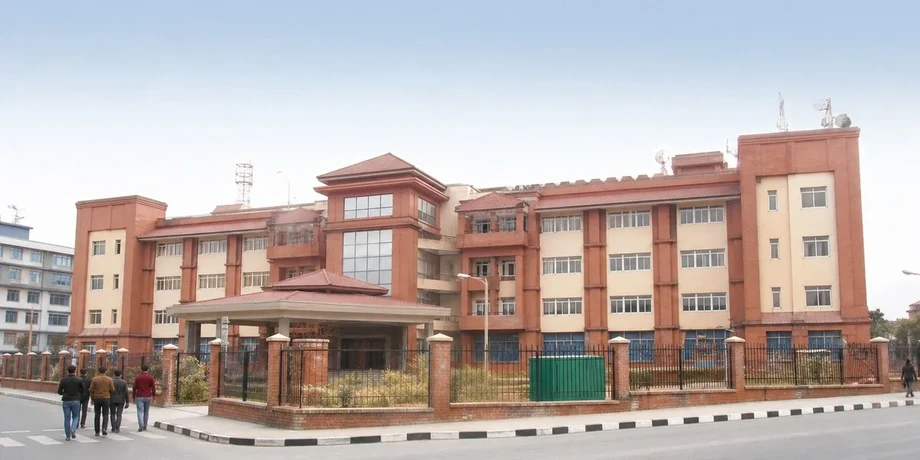
A digital health company can currently register as a private limited company with the Office of the Company Registrar, list healthcare coordination or technology among its activities, register with a ward office and obtain a permanent account number. No specialised regulator then sets standards for online consultations, caregiver recruitment, service quality or fees.
Existing responsibilities are divided among several bodies. The Department of Drug Administration oversees medicines and medical products. The Department of Health Services handles preventive, curative and promotive healthcare. The National Public Health Laboratory licenses and monitors laboratories, while district health offices regulate clinics. Digital healthcare platforms have yet to come under the dedicated oversight of any of them.
An Old Drugs Act, a Daraz Warning and a 2026 Draft
Bharat Bhattarai, director general of the Department of Drug Administration, says gaps in the law and limited institutional capacity have obstructed effective oversight. The existing Drugs Act, nearly 48 years old, contains no clear provisions for online services. The department has submitted a draft Medical and Health Materials Act 2026 to the health ministry, including a provision for guidelines on online sales and distribution.
Shambhu Sah, head of the department's inspection division, says the growth of online medicine orders makes both access and regulation necessary. He described a recent case involving listings on the ecommerce platform Daraz.
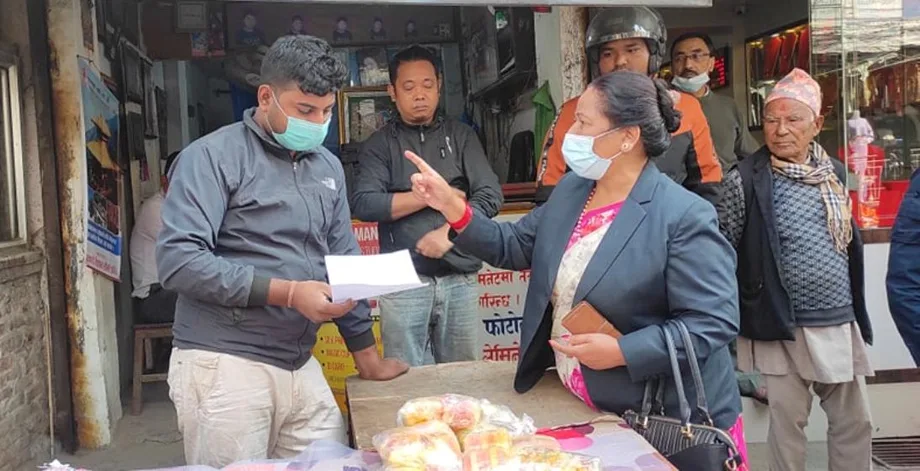
Recently, we found unauthorised advertisements and sales of medicinal products and oils on Daraz. We called in the platform's legal representative and directed the company to put in place a system to immediately identify and remove such listings.
Section 19 of the existing Drugs Act prohibits the promotion or advertisement of medicines without permission from the department. Bhattarai says staffing and capacity remain constrained, but his department is preparing guidelines and procedures while exploring ways to prevent malpractice.
No date has been announced for approval of the draft act, publication of final guidelines or creation of a dedicated regulator for digital care. Until then, company registration and the older rules governing individual products or institutions do not amount to a single system for supervising the services described by patients, caregivers and platform operators.
Why Health Data Needs Its Own Protection
Flo, a widely used app for tracking menstrual cycles, was found to have shared information about users' cycles, pregnancy plans and sexual health with Facebook, Google and other marketing and analytics companies. In 2021, the US Federal Trade Commission directed Flo Health not to share users' health data with third parties and to undergo an independent privacy audit.
BetterHelp, an online mental health counselling service, shared customers' email addresses, IP addresses and sensitive questionnaire information with Facebook, Snapchat and Pinterest for advertising. An IP address is a numerical identifier associated with a device's internet connection. In 2023, the Federal Trade Commission ordered BetterHelp to pay $7.8 million for refunds to affected users.
Investigations into free health apps have also found tracking tools known as pixels. A pixel can be a small piece of code that records what a user does and sends information to another company. A menstrual start date or pregnancy test result entered into an app can therefore become data used to target advertisements for medicines, contraceptives or other health products.
Those cases involved companies outside Nepal. The local concern arises from the information Nepali services already handle: vital signs, medical histories, consultation videos and GPS attendance records. Proposed amendments are intended to give regulators clearer authority before similar abuses can occur.
- 2009: Bishal Dhakal founded Health at Home, combining remote contact with care delivered at home.
- 2021: Hamro Patro launched its healthcare service, and US regulators took action against Flo Health over health data sharing.
- 2023: US regulators ordered BetterHelp to pay $7.8 million for affected users.
- 2026: The Department of Drug Administration submitted the draft Medical and Health Materials Act 2026 to the health ministry.
For families such as Amit's, the immediate benefit is already tangible: a phone can show whether an elderly father's medicines and vital signs have been recorded. The unresolved questions concern who licenses the service, what training and pay caregivers should receive, how pharmacies and doctors should manage conflicts of interest, and what legal control patients have over the data generated by that care.
What to Know
- Aashirbad Care has 50 trained caregivers and charges Rs100 to Rs150 an hour, depending on the service.
- Basic home care for eight hours every day costs about Rs24,000 over 30 days, limiting access for many households.
- Hamro Patro says more than 600 specialist doctors are affiliated with its video consultation platform.
- More than 2.19 million Nepalis were living abroad in the 2021 census, increasing demand for care arranged across borders.
- Nepal has no dedicated regulator for private digital health apps, online pharmacies or caregiver businesses.
- The draft Medical and Health Materials Act 2026 includes provisions for guidelines covering online medicine sales and distribution.
- Kathmandu and UN Women Nepal are piloting an Integrated Care Delivery Model in ward 6.
- International cases involving Flo and BetterHelp show why consultation records, location data and other sensitive information need explicit privacy protection.