Why Nepal's basic health package is under strain
Kathmandu. Nepal allocated Rs 101.95 billion to health in fiscal year 2083/84, about 4.80 percent of the national budget. The World Health Organization says at least 10 percent of a national budget should go to health. The gap matters because Article 35 of the Constitution of Nepal promises every citizen free basic health services.
Contents
- Why Nepal's basic health package is under strain
- What the ministry's costing exercise shows
- Which services are most at risk of quiet cuts
- How the three priority groups divide the package
- What delivery would require on the ground
- How money would move to provinces and local governments
- How free services and health insurance should split work
- Where more money could come from
- What leaders and experts say about the trade off
- Key dates in the funding debate
- Key Points
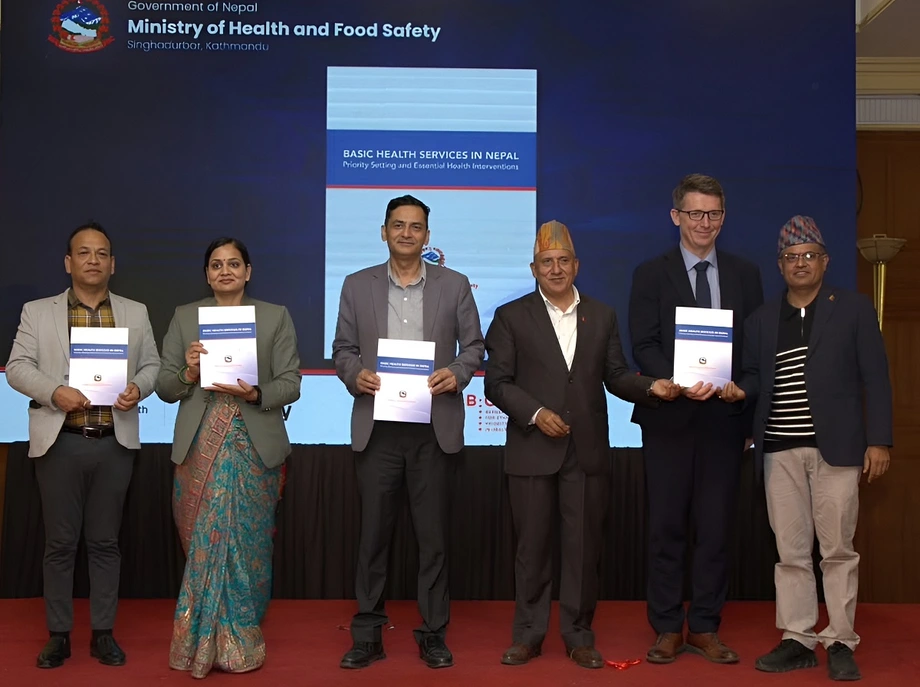
The Ministry of Health and Food Safety has now put a price on that promise. Its study, Basic Health Services in Nepal: Priority Setting and Essential Health Interventions, was prepared with the Bergen Center for Ethics and Priority Setting in Health at the University of Bergen and the Nepal Health Economics Association. It finds that Nepal cannot deliver all 224 proposed clinical services at the promised level with the money now reaching basic care.
At 2025 price levels, the study says current access to those services costs Rs 22.4 billion a year, about Rs 760 per person. Reaching the target population for all services would cost Rs 65.8 billion a year, about Rs 2,220 per person. That is nearly three times current spending.
For a patient, the issue is practical. It is about whether a nearby clinic has the medicine, a trained worker to give it, and a working plan to send difficult cases to a bigger hospital. The study warns that services without their own clear cost line can lose out when the budget is tight, even if they remain on the official list.
What the ministry's costing exercise shows
The study breaks the Rs 65.8 billion target into three parts. It says 34 percent, or Rs 22.4 billion, is needed just to keep current services running. Another 19 percent, or Rs 12.5 billion, would expand access to services that already exist. The largest share, 47 percent or Rs 30.8 billion, would pay for tests, medicines and treatments not now in routine practice.
Nepal has 224 clinical services in the package. The ministry sorted them by six measures: health benefit and cost effectiveness, disease severity, fairness, policy relevance, social effect and feasibility. Cost effectiveness asks how much health gain a system gets for each rupee. Feasibility asks whether the service can actually be delivered with existing staff, facilities and referral routes.
The sorting produced three priority groups. The first group is the recommended package for early rollout. The second waits for more money. The third is set aside for later review. The study says the package should be reviewed regularly as costs, disease patterns and service use change. It also says a stable and predictable flow of money matters as much as the headline budget size.
Which services are most at risk of quiet cuts
The risk is not limited to hospital treatment. The study examined 96 service lines in health promotion and Ayurveda and alternative medicine: 36 in promotion and 60 in Ayurveda and alternative care. All 96 were valued separately and kept in the proposed package.
They still face a budget problem. The study says these services have not received detailed cost calculations and must be paid from existing budget headings. If the budget is squeezed, they can slip behind other programs with stronger budget lines. Five year estimates put Ayurveda within the basic health budget at Rs 1.9 billion and health promotion and prevention at Rs 508 billion, which overlaps with the basic health budget.
A minimum budget floor means protected spending that cannot be easily cut. The study proposes a minimum budget floor and a medium term expenditure framework, or a spending plan that links annual budgets with costs expected over several years. It does not name the size of the floor or a date for changing the public health service regulations. It asks for regular monitoring tied to budgets.
How the three priority groups divide the package
The recommended first group is smaller than the full list, but it still carries a heavy price. The figures below use 2025 prices and cover fiscal years 2084/85 to 2088/89.
- Group 1: 131 services, Rs 16.25 billion in current annual spending, Rs 44.19 billion at target access, and Rs 204.4 billion over five years. It is the proposed first package.
- Group 2: 82 services, Rs 4.24 billion now, Rs 14.95 billion at target access, and Rs 66.3 billion over five years. These would be added as the financial envelope grows.
- Group 3: 11 services, Rs 1.80 billion now, Rs 6.46 billion at target access, and Rs 28.5 billion over five years. These are kept aside for later review.
Groups 1 and 2 together would cost Rs 270.7 billion over five years. All 224 services would cost Rs 302.2 billion over the same period. The first group alone would take about 95 percent of the projected Rs 214.8 billion envelope if fully implemented during the five year window.
The study says annual spending for that first group would exceed the projected budget after fiscal year 2087/88. It estimates a Rs 13 billion gap in fiscal year 2088/89. If target access is reached by 2031, inflation would push the annual cost of group 1 to Rs 59.2 billion, or about Rs 1,490 per person. Keeping group 1 at current access costs Rs 16.25 billion a year.
What delivery would require on the ground
Of the 131 services in group 1, the study says 116 can be delivered through the current structure. Eight need investment in infrastructure, trained staff and equipment. Seven need reliable referral and transport systems. Referral means sending a patient from a local clinic to a hospital or specialist service that can handle a harder case.
The study recommends checking each health facility against minimum service standards before rolling out services. Places with shortages should receive targeted investment and a phased start. Communities should not be left without a service for a long period simply because the area is hard to reach.
The first years should focus on taking services already in the package to communities that lack them, rather than adding more new services right away. Monitoring should track medicine shortages, staff gaps and weak referral systems. Local governments and health facilities should correct those problems quickly and update cost and effectiveness data as they go.
The cost estimate does not fully include health equipment, referral spending, or the extra transport and operating costs in remote areas. Those missing costs make annual budget planning important, especially in the years when the package expands.
How money would move to provinces and local governments
The Health Ministry plans to work with the Finance Ministry, provinces and local governments to adjust conditional grants to the revised package. Conditional grants are funds sent from the federal budget to lower levels of government with rules on how the money should be used. The aim is to make the flow of money match the services each level is responsible for.
That matters in Nepal because distance and local capacity shape access. A local government in a remote area may face higher transport costs and fewer trained workers. If grants ignore those realities, people in hard to reach places can fall further behind. The study says funding based on service duties can reduce that risk.
How free services and health insurance should split work
Article 35 gives every citizen the right to free basic health services. The study proposes a clear division: basic services should be paid from the government budget and remain free at the point of care, while health insurance should focus on specialist and referral services above the basic package. Universal health coverage means people get the care they need without financial hardship.
Some services now appear both in the free package and in the insurance benefit list. That creates double payment risks and scatters money across systems. The study wants benefit lists aligned, procurement coordinated, and social protection programs integrated over time. It also says any service in the basic package should stay free for the patient, no matter which public financing source pays for it.
Where more money could come from
The study recommends raising the health share of the national budget step by step, creating a minimum budget floor for basic services, and increasing taxes on tobacco and alcohol. Higher taxes can raise money for health and reduce use of products that cause disease.
Nepal already channels part of the tax on tobacco and alcohol through a health tax fund. The study says much of that spending goes to diagnosis and treatment, while less than 2 percent goes to prevention and awareness. It argues that prevention needs more stable support.
Development partners once covered a larger share of the health budget. Their share fell from 18.3 percent in fiscal year 2080/81 to 8.3 percent in fiscal year 2083/84. The study says domestic funding must now protect vaccines, nutrition, HIV and tuberculosis programs. It also calls for better drug procurement, staffing, budget release and spending processes.
What leaders and experts say about the trade off
Health and Food Safety Minister Nisha Mehta said the package should be reviewed and implemented on facts and evidence. She made the comment at the public launch of the study, where she linked universal health coverage to the Sustainable Development Goals deadline of 2030. The minister said:
Decisions based on facts and evidence must be taken for the review and effective implementation of the package.
Mehta also noted progress in maternal, newborn and child health and in controlling communicable diseases. She said rising noncommunicable diseases now add pressure to the health system. These are long lasting conditions such as heart disease, diabetes and some cancers, and they often need continuous care.
Public health expert Dr Sharad Wanta criticised the conclusion that the state has no budget for the constitutional promise. He described it this way:
A surrender of the state.
Health Ministry spokesperson Dr Samir Adhikari acknowledged resource gaps. The study turns that general problem into a set of numbers: current annual access spending of Rs 22.4 billion, a full target of Rs 65.8 billion, and a five year gap that appears before the end of the first package period.
Key dates in the funding debate
- 2025 price levels: full access to all 224 services would cost Rs 65.8 billion a year, compared with Rs 22.4 billion now.
- Fiscal year 2080/81: development partners accounted for 18.3 percent of the health budget.
- Fiscal year 2083/84: the government allocated Rs 101.95 billion to health, and the partner share fell to 8.3 percent.
- 21 November 2026: the minister's launch remarks are dated, while the detailed costing is dated Mangsir 12, 2083.
- Fiscal years 2084/85 to 2088/89: the group 1 implementation window, with Rs 214.8 billion projected for the period.
- 2030: the Sustainable Development Goals deadline linked to universal health coverage. 2031: group 1 target access is estimated at Rs 59.2 billion a year with inflation.
- Fiscal year 2088/89: the first group is projected to leave a Rs 13 billion annual gap.
Key Points
- Nepal allocated Rs 101.95 billion to health in fiscal year 2083/84, about 4.80 percent of the national budget.
- Full access to 224 basic services would cost Rs 65.8 billion a year at 2025 prices, nearly three times current spending.
- The ministry sorted services into three groups, with 131 in the recommended first package.
- Health promotion and Ayurveda services face cuts because they lack detailed cost lines.
- The study proposes a minimum budget floor, stronger conditional grants and a clearer split between free care and insurance.
- A Rs 13 billion annual gap is projected for fiscal year 2088/89 even for the first package.