A national promise at a Mirpur congress
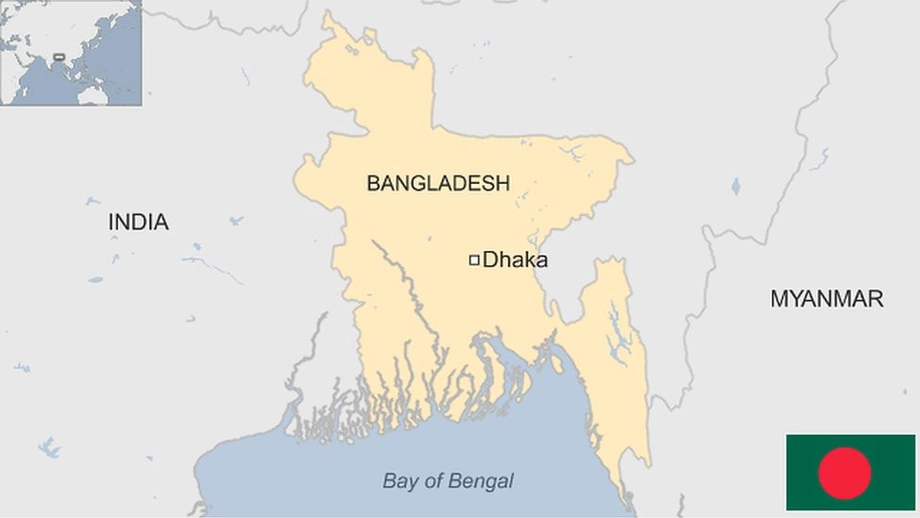
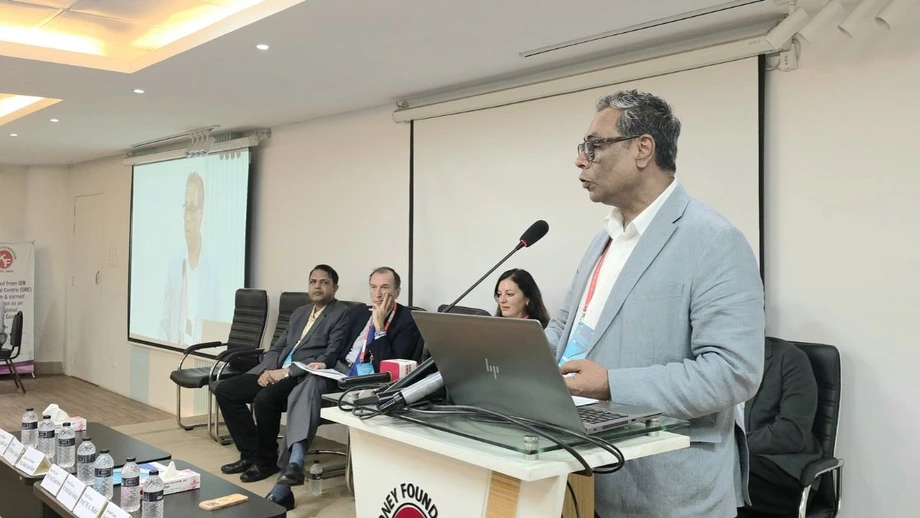
Bangladesh intends to introduce dialysis services in every one of its 64 districts within the next year, State Minister for Health and Family Welfare Dr M A Muhit announced on Saturday, 28 November 2026. He spoke as chief guest at the opening of the 20th Congress of the International Federation of Kidney Foundations–World Kidney Alliance (IFKF-WKA), an event lasting two days at the Kidney Foundation Hospital and Research Institute in Mirpur, Dhaka. IFKF-WKA and Kidney Foundation Bangladesh jointly organised the congress.
Contents
Muhit's main estimate was that around 38 million people in Bangladesh have various forms of kidney disease. The Bengali figure he used, 3.8 crore, equals 38 million. In the same address, he also spoke of a possible total approaching 40 million. Many affected people, he said, do not realise that their kidneys are gradually being damaged.
Around 38 million people in the country suffer from various forms of kidney disease. Many of them do not know about the damage caused over time. To address this situation, the government will introduce dialysis services in all 64 districts within the next year.
Kidneys filter waste and excess fluid from the blood. When they fail badly enough, dialysis can perform part of that filtering work with medical equipment or through a treatment using the lining of the abdomen. It can sustain life, but it does not repair the failed organs. The 38 million estimate covers many forms and stages of kidney disease, so it is far larger than the group likely to need dialysis. People whose damage is found earlier may instead need monitoring, medicines and treatment for related conditions.
What the expansion would build
Bangladesh currently has 146 dialysis centres, according to figures Muhit gave at the congress. Most are in Dhaka or other large cities, and a large share belongs to the private sector. That concentration helps explain why the government is presenting district access as a central part of its plan, particularly for people who live far from major urban hospitals.
The physical expansion has several parts. Existing dialysis centres at 15 government medical college hospitals are to be upgraded so that each has 50 beds. District hospitals are to receive dialysis centres with 10 beds. Muhit also said the government planned to buy 1,000 dialysis machines.
Applied uniformly, the stated templates would provide 750 beds across the 15 medical college hospitals. One centre with 10 beds in each of the 64 districts would represent another 640 beds. The speech supplied no existing bed totals for those hospitals, leaving the actual increase in beds unquantified. Machine numbers also cannot be converted directly into patient numbers. A centre can use one machine for successive treatment sessions, while staffing, opening hours, maintenance and the length of each session determine how many people it can serve.
Screening before kidneys fail
The second major part of the plan concerns finding disease before patients arrive at hospital with advanced failure. Around 100,000 government health workers are to take part in screening and early detection at the upazila level. An upazila is an administrative area below a district, bringing the planned work closer to villages and small towns than a system based only in district cities.
Kidney screening will be added to primary healthcare work that already covers diabetes and high blood pressure. The connection is practical as well as administrative. Diabetes and high blood pressure can damage the tiny filters inside the kidneys, while damaged kidneys can make blood pressure harder to control. Checking these conditions together can therefore reveal patients who need closer monitoring or referral.
Screening can include a urine check for protein, which may indicate kidney damage, and a blood measurement of creatinine, a waste product. Creatinine results can be used to estimate how well the kidneys are filtering blood. Muhit described the workforce, settings and conditions to be covered, but did not lay out a test by test protocol for every primary healthcare centre.
Professor Dr Harun Ur Rashid, founder and president of Kidney Foundation Hospital, chaired the opening session. He argued that existing primary healthcare buildings and staff should be used more effectively, even where the facilities are under strain.
Many problems can be solved if kidney disease is diagnosed at an early stage. Infrastructure is a major problem. Primary healthcare centres are struggling, and they must be used. Staff who receive just seven to 14 days of training can carry out preliminary diagnosis there.
His reference to seven to 14 days concerned preliminary identification by local staff. The separate training programme described by Muhit is intended to develop the doctors, nurses and technologists needed for treatment and more specialised care.
The workforce behind the machines
Training has already begun with support from government and private organisations, Muhit said. Its purpose is to create enough skilled personnel to expand kidney services across the country rather than simply install equipment in buildings. Screening instruction for nurses and medical technologists forms part of that work.
The government expects comprehensive kidney care to become available in every district within the next two to three years. Muhit described teams comprising specialist physicians, specialised nurses and medical technologists. Their roles cover different parts of treatment: assessing patients and prescribing care, monitoring people during dialysis, responding to complications, operating equipment and performing the laboratory work needed to guide treatment.
This timetable is longer than the one year dialysis pledge. The first target concerns making dialysis available in each district, while the later target concerns the fuller range of staffing and services needed to diagnose and manage kidney disease locally.
Muhit also linked the kidney programme to the government's wider commitment on diabetes and hypertension, the medical term for persistently high blood pressure.
The government is committed to bringing every kind of service for kidney disease, diabetes and high blood pressure to people's doorsteps.
What congress specialists said
Professor Alessandro Balducci, president of IFKF-WKA, told the opening session that restricted access to kidney treatment is a problem extending beyond Bangladesh. He connected the international treatment gap with the need to identify disease earlier.
Kidney treatment is a major problem in countries with low incomes, such as Bangladesh. Many countries have limited access to treatment and dialysis. These problems can be addressed if the disease is diagnosed at an early stage.
Professor Dina Abdellatif, secretary general of IFKF-WKA and its incoming president, also addressed the congress. She is a professor of internal medicine and nephrology at Cairo University Hospital. Nephrology is the branch of medicine concerned with kidney diseases.
Professor Ruhul Amin Rubel, secretary general of Kidney Foundation Bangladesh, delivered the welcome address. Dr Farhad Hossain Chowdhury, member secretary of the Bangladesh Renal Society, was another speaker. Their contributions placed the government's capacity targets beside a broader clinical message: find damage sooner, manage the conditions that accelerate it, and make continuing treatment accessible when kidney function becomes severely impaired.
Sri Lanka shows the cost of late treatment
A regional comparison comes from Sri Lanka's kidney estimates, presented by Health and Media Minister Dr Nalinda Jayatissa at NephCON 2026 in Colombo. That congress ran from 24 to 26 November. Sri Lanka has an estimated 2.2 million people with chronic kidney disease, roughly 10% of its population, yet the number of reported patients had reached only 112,000 by 2025.
The 112,000 reported cases equal about 5% of the estimated 2.2 million total, or roughly one recorded case for every 20 people estimated to be affected. One figure counts patients appearing in official records, while the other estimates the burden across the whole population. Around 8,000 Sri Lankans were receiving dialysis.
Annual spending on dialysis there had reached approximately 16.8 billion rupees. Dividing that expenditure by the roughly 8,000 recipients gives an arithmetic programme average of about 2.1 million rupees per recipient each year, although individual costs can differ. Jayatissa said prevention, earlier diagnosis and proper treatment could reduce the number of newly reported patients reaching the final stage of kidney disease by 30%. His target concerned new advanced cases each year.
For Bangladesh, those figures add a financial dimension to the Mirpur announcement. Advanced treatment can require substantial annual spending even when dialysis recipients form a small fraction of the estimated patient population. Early detection and dialysis construction therefore serve different needs: one aims to slow or identify disease before failure, while the other provides continuing treatment to people whose kidneys can no longer filter adequately.
What patients outside major cities could gain
A patient in a district without a dialysis unit may have to travel repeatedly to Dhaka or another large city. People receiving haemodialysis, the form that filters blood through a machine, commonly need several sessions each week. A functioning local service could reduce those journeys and the associated demands on work, family care and transport budgets. The announcement did not say whether treatment at the new government units would be free or what patients would be charged.
A person whose kidney damage is found through upazila screening would have a different immediate need. Care could involve repeat kidney tests, control of blood pressure or diabetes, appropriate medicines and referral to a specialist when necessary. Dialysis becomes relevant when kidney function declines severely or complications require it.
For some people with advanced failure, a kidney transplant can take over much of the filtering work when a suitable donor and the necessary surgical care are available. Muhit's district promise concerned dialysis and, later, comprehensive kidney services. He did not announce transplant surgery in every district.
The timetable and details still to come
Muhit's announcement set three distinct clocks for the congress proposals and the government programme.
- 28 November 2026: the dialysis and screening plans were announced at the congress opening in Mirpur.
- The following 12 months: dialysis services are intended to become available in all 64 districts.
- The following two to three years: comprehensive kidney care is intended to reach district level through teams of specialist doctors, specialised nurses and medical technologists.
Counting from the speech, the first window points towards late November 2027, although no exact completion date was given. No district by district opening calendar, procurement budget, total programme cost or allocation plan for the 1,000 machines was announced. The speech also gave no national count of people currently receiving dialysis.
A functioning unit needs more than a machine. Dialysis depends on trained staff, reliable power, carefully treated water, infection control, disposable supplies and maintenance. The practical checkpoints for the government programme are therefore the completed upgrades at 15 medical college hospitals, working centres with 10 beds in district hospitals, installation of the promised machines and evidence that the 100,000 health workers are carrying out screening.
What to Know
- Dr M A Muhit promised dialysis services in all 64 Bangladeshi districts within a year on 28 November 2026.
- His main estimate put the number of people with various kidney diseases at around 38 million, with many unaware of their damage.
- Bangladesh has 146 dialysis centres, concentrated mainly in large cities and the private sector.
- Fifteen government medical college hospital centres are to be upgraded to 50 beds each, while district hospitals are to receive centres with 10 beds.
- The government plans to buy 1,000 dialysis machines.
- Around 100,000 health workers are expected to support screening at the upazila level alongside work on diabetes and high blood pressure.
- Training has begun, with comprehensive kidney care targeted in every district within two to three years.
- No detailed opening calendar, programme cost, machine allocation or patient fee schedule was announced.