A Rate Cut Signal With a Clear Condition
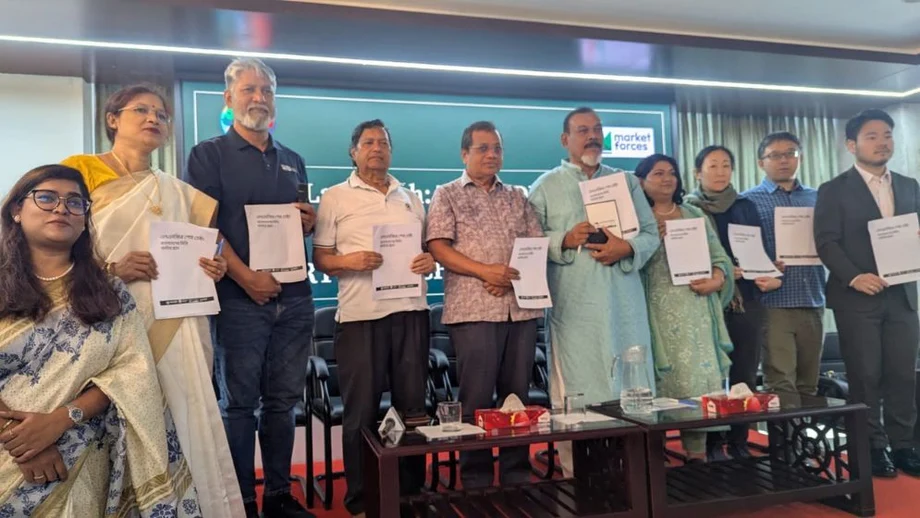
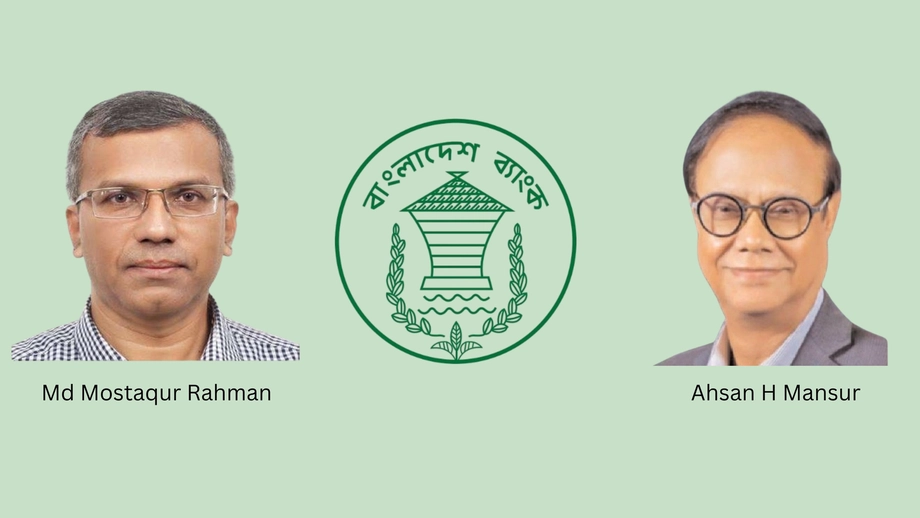
Bangladesh Bank Governor Md Mostaqur Rahman on Saturday, 28 November 2026, linked any further reduction in borrowing costs to inflation remaining under control. He spoke at the Bangladesh Bank Training Academy in Mirpur, Dhaka, during the launch of the Bangladesh Real-time Trade Arrangement, known as Barta, a domestic platform for exchanging information about local letters of credit.
Contents
- A Rate Cut Signal With a Clear Condition
- Inflation Has Eased, but Price Pressure Remains
- Why Business Costs Are Central to the Governor's Argument
- How Barta Changes a Local Letter of Credit
- What Ministers and Exporters Expect From Barta
- Cheaper Imports, Full QR Payments and Digital Documents
- Anonymous Currency Trading Could Start Within a Month
- An Adviser Wants a Much Larger Reduction to 7 Percent
- The Banking Problems Behind the Wider Debate
- What to Know
Rahman said the central bank had already begun reducing rates and could consider another modest move. His remarks suggested a possibility rather than a firm decision, and he announced neither the size nor the date of another cut.
Rates have been reduced by some basis points already. As inflation is now somewhat under control, we can think of reducing them a little more in the future.
The policy rate now stands at 9.5 percent after Bangladesh Bank reduced it from 10 percent on 30 July. That was a cut of 50 basis points. One basis point is one hundredth of a percentage point, so the July reduction amounted to 0.50 percentage point.
The policy rate, often called the repo rate, influences what commercial banks pay when they borrow short term funds from the central bank. Lower central bank rates give commercial banks room to charge businesses less, although each bank still sets its own lending rates after considering deposits, risk and operating expenses.
Cheaper credit can encourage a factory to buy machinery, a trader to finance inventory or an entrepreneur to expand, supporting investment and employment. The same process can also put more money into circulation. If spending grows faster than the supply of goods and services, inflation can rise again, explaining why Rahman attached a clear condition to his signal.
Inflation Has Eased, but Price Pressure Remains
Data from the Bangladesh Bureau of Statistics (BBS) show why the central bank is discussing caution and relief at the same time. Point to point inflation fell to 8.27 percent in October 2026 from 8.34 percent in September. The October figure was still above the 8.17 percent recorded in October 2025.
On a point to point basis, the October figure means that a basket of goods and services costing Tk 100 in October 2025 cost Tk 108.27 in October 2026. The monthly decline of 0.07 percentage point shows a small improvement, while the annual comparison shows that prices were rising slightly faster than they had been a year earlier.
- June 2026: Point to point inflation was 9.16 percent, at the end of fiscal year 2025-26.
- July 2026: Inflation was 8.32 percent, and Bangladesh Bank cut the policy rate to 9.5 percent on 30 July.
- August 2026: Inflation eased to 8.26 percent.
- September 2026: Inflation edged up to 8.34 percent, following the effect of higher fuel oil prices.
- October 2026: The rate declined to 8.27 percent.
- 28 November 2026: Rahman said another rate reduction could be considered if inflation stayed controlled.
Rahman said inflation had remained around 9 percent for more than four years before spending recent months in the 8 percent range. That history matters for households and businesses. A lower inflation rate does not mean that prices have returned to their earlier levels; it means they are rising more slowly. The central bank therefore has some evidence of easing pressure, but not a return to the much slower price growth that would make borrowing costs less urgent for consumers.
Why Business Costs Are Central to the Governor's Argument
Rahman presented cheaper finance as part of a wider effort to reduce transaction costs throughout the economy. His argument connects bank charges and interest payments directly to the prices paid by Bangladesh's 18 crore people, equivalent to 180 million.
No businessperson pays extra costs out of their own pocket. They have to add them to the price of the product.
One measure concerns letters of credit. A letter of credit, or LC, is a bank's promise to pay a seller when specified documents and conditions are met. Bangladesh Bank reduced the maximum margin that banks can add to the benchmark when opening LCs from 4 percent to 3 percent. The benchmark is the reference used in the calculation, while the margin is the additional charge above it. Rahman acknowledged criticism of the measure and said some banks might earn less, but argued that ordinary people were gaining access to goods at fairer prices.
The governor also cited a Tk 7,000 crore stimulus package, equal to Tk 70 billion, under which Bangladesh Bank is bearing interest costs for businesses through subsidies. The size of the package was also given as Tk 6,000 crore, or Tk 60 billion. In either case, the measure is intended to reduce interest expenses separately from any future change in the policy rate.
Other parts of the programme address payment fees, import financing, trade documents and currency transactions. For consumers, the final effect will depend on two steps: banks and financial service providers must pass on their savings, and businesses must then reflect lower expenses in their prices rather than retaining the entire benefit.
How Barta Changes a Local Letter of Credit
Barta addresses a particular expense in domestic trade. Exporters frequently use a master export LC or contract from a foreign buyer to obtain local or back-to-back LCs. These allow them to purchase fabric, yarn, buttons, zippers, leather or other inputs from suppliers at home before the export order is completed and paid for.
Until now, messages concerning such local LCs could travel through SWIFT, an international financial messaging network based in Belgium, even when both banks were in Bangladesh. The launch of Barta created a domestic route through Bangladesh Bank's own servers, removing that foreign detour for participating transactions.
Banks can use the centralised platform to exchange information about opening and amending LCs, discrepancies in documents, acceptance of bill payments and payment confirmations. Instant exchange should shorten parts of the process, while central storage allows records to be retrieved later without requesting them from a foreign institution.
Bangladesh Bank said 579,110 local LCs in foreign currency were opened in fiscal year 2025-26, with message exchange costing about Tk 1,500 each on average. The central bank expects Barta to save about $7 million in foreign currency annually. The estimate presented at the launch was also expressed as a range of $6 million to $7 million.
The platform has no usage fee, according to Bangladesh Bank. SWIFT will continue alongside it during the initial stage and will be phased out gradually for the relevant local traffic after Barta becomes fully operational and stable. No exact phaseout date was announced. Rahman said the system had been built with strong cyber security and that its security and performance had been tested before launch. Centralised records are also expected to improve accuracy, transparency and the central bank's supervision of trade finance.
What Ministers and Exporters Expect From Barta
Finance and Planning Minister Amir Khosru Mahmud Chowdhury inaugurated the platform as chief guest. Rahman chaired the event, Deputy Governor Sarwar Hossain presented the keynote paper, and deputy governors, bank executives and business leaders attended. The minister argued that the initiative's value exceeded the estimated $6 million saving because it demonstrated confidence and an ability to carry out practical reforms. He also said similar digital arrangements for international LCs could make it easier to monitor the prices at which goods are imported and exported.
Mahmud Hasan Khan, president of the Bangladesh Garment Manufacturers and Exporters Association, said avoiding the roughly Tk 1,500 cost on each local LC would particularly help exporters that open large numbers of LCs for relatively small amounts. He also expects Barta to assist with checks on value addition and the resolution of commercial disputes. Value addition checks examine how much of an export product's value is created locally rather than coming from imported inputs.
Khan called for clear Bangladesh Bank instructions to keep LC opening and acceptance charges reasonable, and asked for special attention to small and medium industries. Those businesses often have less capacity to absorb repeated bank charges or long delays than large exporters.
Syed Nasim Manzur, a leader of the footwear and leather goods export sector, described Barta as major progress and urged its development into a complete digital transaction system. He said exchanging local LCs through the platform could reduce both costs and the lengthy process of amending them. FBCCI Administrator Md Fazlul Haque and other banking representatives also addressed the event. Their requests extend the system's purpose beyond messaging: suppliers connected to export production, known as backward linkage industries, stand to gain when information moves more quickly and records become easier to verify.
Cheaper Imports, Full QR Payments and Digital Documents
Separate changes to telegraphic transfer, or TT, rules give importers another way to pay for raw materials without opening an LC through SWIFT. A TT sends payment instructions electronically through banking channels. Under the relaxed arrangements, importers can pay up to $25,000 through normal TT and up to $50,000 from export retention quota accounts. These accounts, known as ERQ accounts, allow exporters to retain part of their foreign currency earnings for permitted payments.
For payments of $100,000 or more, Bangladesh Bank said permission would be granted within 48 hours under its circular. Rahman urged businesses to use the facilities, linking lower transaction expenses to conservation of foreign currency.
If you use these facilities, costs will fall and we will save a lot of foreign exchange.
Small merchants are the focus of another measure involving Bangla QR. Rahman said a seller would receive the full value of a payment through the system. His example was a vegetable seller who previously received Tk 98.5 from a Tk 100 payment and would now receive Tk 100. The Tk 1.5 difference is small in one sale but can accumulate across many transactions. The governor said he expected the saving to be reflected in prices.
Bangladesh Bank is separately working with foreign partners to digitise LC documentation. At present, paper documents sent between countries can require international courier services, adding expense and waiting time. Rahman said the digital arrangement could reduce courier bills and deliver documents to another country in about one minute. This document project is distinct from Barta's initial role in domestic LC messaging, although both pursue the same objective of cheaper and faster trade administration.
Anonymous Currency Trading Could Start Within a Month
Rahman also connected business costs to the exchange rate. He said the taka had depreciated by about 60 percent over the past decade, compared with roughly 40 percent in a neighbouring country that he did not name. Depreciation means that the domestic currency has lost value against foreign currencies, making imports more expensive unless other factors offset the change.
The governor said Bangladesh Bank believed in a free market and was developing software to automate foreign exchange trading. Buyers and sellers would not see each other's identities during the transaction process. The intention is to reduce opportunities for manipulation and produce an exchange rate that better reflects actual supply and demand.
The system was described as an automated online trading and auction process for buying and selling dollars. Rahman said it could begin within one month and help establish a genuine market rate. He did not give a firm launch date or detailed operating rules. Alongside Barta's eventual separation of local LC traffic from SWIFT, this is the clearest near term timetable among the initiatives announced at the event.
An Adviser Wants a Much Larger Reduction to 7 Percent
Rashed Al Mahmud Titumir, adviser to the prime minister on finance and planning, has separately called for Bangladesh Bank to cut the policy rate from 9.5 percent to 7 percent. He spoke at an Arthakantha roundtable in Dhaka titled Banking Ethics, Accountability and Trust, arguing that cheaper borrowing was needed to stimulate investment.
A move to 7 percent would amount to 250 basis points, five times the 50 basis point reduction made in July. Titumir acknowledged objections to reducing rates while inflation remained relatively high and cited Japan as an example of a country where the policy rate had been below inflation. His proposal goes well beyond the limited and conditional possibility described by the governor, and Bangladesh Bank has announced no decision to adopt it.
The disagreement is therefore about both scale and urgency. Rahman is emphasising inflation data before considering another modest cut, while Titumir is placing greater weight on the immediate cost of finance and the needs of investors.
The Banking Problems Behind the Wider Debate
Titumir accompanied his rate proposal with a much broader account of financial sector weaknesses. He said banks needed about $80 billion in recapitalisation, equivalent to 11 percent of gross domestic product. Recapitalisation means supplying banks with additional capital so they can absorb losses, strengthen their balance sheets and continue operating safely.
He said the previously disclosed default loan ratio of 11 percent had concealed an actual figure of 35.73 percent, which had fallen to 32.26 percent following reforms. A default loan ratio measures the share of loans that borrowers are failing to repay as required. Titumir also alleged that gross domestic product figures had been overstated under the previous Awami League government since fiscal year 2014-15, and said foreign debt had increased by 323 percent during that administration.
The government has adopted a banking restructuring plan running for four years. It covers assessments of asset quality at weak banks, reductions in default loans, recapitalisation tailored to individual banks and governance improvements. Legal changes are also being prepared to increase accountability among bank directors, officials and auditors for irregularities.
For depositors, the insured limit has been doubled from Tk 1 lakh to Tk 2 lakh, or from Tk 100,000 to Tk 200,000. This raises the maximum amount covered by deposit insurance, offering somewhat greater protection if an insured bank fails.
Other speakers at the roundtable described the institutional challenge. Premier Bank Chairman Arifur Rahman said public confidence was lacking in nearly two thirds of the country's banks, which he blamed on weak accountability and unethical practices. Former Sonali Bank chairman Muslim Chowdhury called for a recovery plan with deadlines and measurable targets instead of further discussion alone. Mustafa K Mujeri, executive director of the Institute for Inclusive Finance and Development, said in his keynote paper that default loans, fraud, insider lending, corruption and political interference had eroded trust, with depositors and the wider economy bearing the consequences.
What to Know
- Governor Md Mostaqur Rahman said Bangladesh Bank could consider another modest policy rate cut if inflation remains under control, but gave no date or size.
- The policy rate is 9.5 percent following a 50 basis point reduction from 10 percent on 30 July 2026.
- BBS put October inflation at 8.27 percent, down from 8.34 percent in September but above the 8.17 percent recorded a year earlier.
- Barta provides a domestic system for local LC messages and records, with annual foreign currency savings estimated at about $6 million to $7 million.
- Bangladesh Bank has also reduced the LC margin ceiling to 3 percent, relaxed TT payments, promoted full merchant receipts through Bangla QR and begun work on digital LC documents.
- Anonymous automated foreign exchange trading could start within one month, while no exact date was given for phasing SWIFT out of relevant local LC traffic.
- Adviser Rashed Al Mahmud Titumir separately proposed a much larger cut to 7 percent and cited an $80 billion bank recapitalisation requirement.