The last flight and an empty fleet
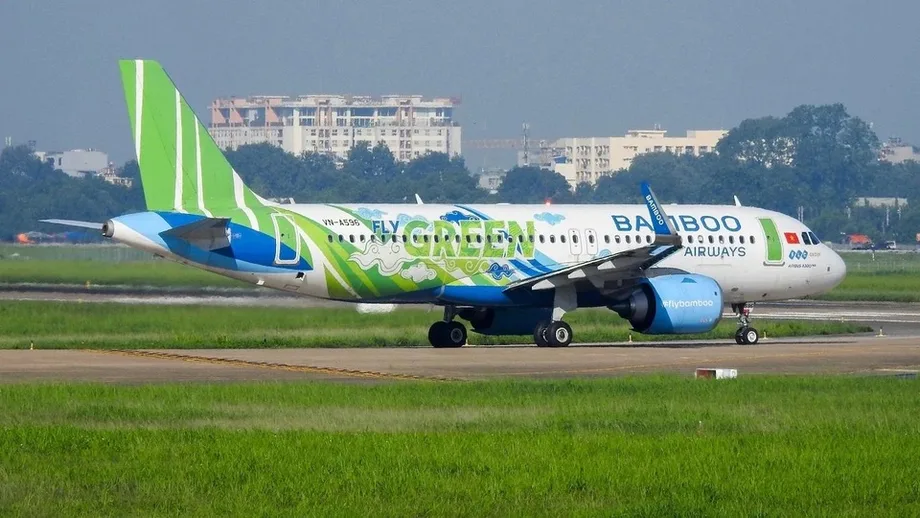
Bamboo Airways, once a bold bet on Vietnam's appetite for a new carrier, has no aircraft in its active fleet. Planespotters data updated on 27 November moved all 47 aircraft ever linked to the airline into a historic fleet category. The platform marks the carrier as having ceased operations from 6 November, after nearly eight years of commercial flying.
Contents
- The last flight and an empty fleet
- Why an empty fleet matters to travelers
- A timeline of a long slowdown
- From 47 aircraft to none
- Unpaid bills reach airports, tax office and workers
- Passengers and agents face the refund queue
- The winter schedule shows who fills the gap
- Vietnam's aviation market is growing while Bamboo is grounded
- From a bold launch to years of rescue plans
- An aircraft leasing plan changed direction
- What remains unresolved
- Key Points
Flight records put the last journey at 6 November, when VN-A227 flew from Macau International Airport to Da Nang International Airport. Flight QH9589 landed at 21:29. One fleet record calls VN-A227 an Airbus A320; other flight records identify the same registration as an Airbus A321-211. They agree on the registration, route and date. No later flight was recorded, 17 days by 23 November and more than three weeks by 25 November.
bambooairways.com was unreachable from 23 November, with users seeing a 502 Bad Gateway error, a server message that appears when a site cannot pass a request onward. The official Facebook page had no new post after 20 November, and the founder's personal Facebook page had comments disabled.
Why an empty fleet matters to travelers
An active fleet is the group of aircraft an airline can use now to carry passengers. Moving every aircraft to a historic list means flight planners see no Bamboo aircraft available to sell seats on or operate a route.
A restart would need aircraft, crews, airport access, ticket systems and a valid operating permission. None of those steps was announced. For travelers, the practical result is that no active Bamboo aircraft exists to fly a booking.
A timeline of a long slowdown
The airline's decline stretched over months, then became abrupt in November.
- 31 May 2017: FLC Group founded Bamboo Airways.
- 16 January 2019: The first commercial flight flew from Ho Chi Minh City to Hanoi.
- 29 March 2022: FLC founder Trinh Van Quyet was arrested over alleged stock market offences.
- 21 June 2023: Him Lam Group was announced as the new owner.
- 31 March 2024: The main offices moved from Hanoi to Ho Chi Minh City.
- September 2025: FLC took back operating control when Bamboo had seven aircraft and 12 domestic routes.
- June to September 2026: Flights fell from about 725 in June to 43 in August and 38 in September.
- 1 August 2026: The Hanoi to Lijiang charter service stopped.
- 25 October 2026: The winter flight schedule began without Bamboo.
- 6 November: VN-A227 flew from Macau to Da Nang and was not tracked flying again.
- 23 to 27 November: The website failed, the Facebook page went quiet, and fleet data showing zero active aircraft appeared on 25 November and was updated on 27 November.
From 47 aircraft to none
The 47 aircraft in the fleet history included 22 Airbus A320s, 10 Airbus A321s, 10 Embraer ERJ-190s, three Boeing 787 Dreamliners, one Airbus A319 and one Boeing 737. Another fleet count used a peak of 44 aircraft; Planespotters lists 47 in the carrier's history.
The retirement record shows how the fleet shrank:
- Airbus A319: in service from 2019 to 2022.
- Airbus A320-200 and A320neo: retired in 2026.
- Airbus A321neo: in service from 2018 to 2023.
- Boeing 737-900ER: wet leased from BBN Airlines Indonesia from 2025 to 2026.
- Boeing 787-9: in service from 2019 to 2023, with two transferred to Austrian Airlines.
- Embraer E190: in service from 2021 to 2024.
- Embraer E195: in service from 2020 to 2021.
A wet lease means the aircraft owner supplies both plane and crew. A normal lease supplies the aircraft; the airline provides its own crew. Returning aircraft to lessors, companies that own and rent planes, is a common way for a carrier to cut costs, and it leaves fewer planes to fly.
Days before the zero fleet figure, CEO Luong Hoai Nam said 19 aircraft had gone back to lessors and 11 Airbus and Embraer aircraft remained. He said the carrier had one A321neo and one A320 active, was flying Da Nang to Macau charters and was seeking investment and restructuring support. VN-A227's monthly schedule had already fallen from 228 flights in July to 69 in August, 66 in September, 66 in October and 16 before 7 November. VN-A227 was later described as parked at Da Nang; VN-A595 was scrapped at London Stansted.
Unpaid bills reach airports, tax office and workers
Unpaid bills now reach the state, airports, workers, passengers and banks.
Tax debt stood at VND441 billion (US$17 million) as of 3 September. The Gia Lai Tax Department barred Le Thai Sam, then described as Bamboo Airways chairman, from leaving Vietnam in early September until the bill was paid. Company records say he returned as chairman on 30 September after more than 10 months away.
ACV receivables linked to Bamboo reached VND2.721 trillion (US$105.3 million) at the end of the third quarter, up nearly VND100 billion from the start of the year. The sum was nearly 35 percent of ACV's total receivables of VND7.81 trillion (US$302.5 million). ACV had made provisions, accounting set asides for debts it may not collect. A person familiar with the matter said ACV planned legal action to recover the money.
The Gia Lai social security agency recorded VND48 billion (US$1.9 million) in overdue social, health and unemployment insurance at the end of September. The arrears covered 30 months and affected 318 domestic workers, plus more than VND33 million owed for one foreign worker over nine months. Late in October, workers of Bamboo Airways JSC signed a petition to authorities over wages delayed since mid 2026.
Sacombank and MSB also moved on collateral tied to FLC loans. Sacombank targeted more than 86,300 square metres of land at Dak Doa, Gia Lai, after a 27 March handover deadline and a planned seizure from 22 April to 22 June. MSB said from 10 May it would seize 387 land use rights and attached assets in Dak Doa, Nhon Hoi and FLC Sam Son.
Passengers and agents face the refund queue
Passengers and ticket agents are counting losses that do not appear in fleet data.
In August 2026, the Vietnam Competition Commission worked with Bamboo after complaints about delayed refunds for canceled flights. Bamboo's guidance said refund requests sent by email could take up to 90 working days after complete documents were confirmed, more than four calendar months. Direct customers were told to use [email protected]. Passengers should keep booking references, electronic tickets, cancellation notices and proof of payment. Those who booked through agents should contact the agent.
Trần Oánh, a passenger in Hanoi, said a promised refund passed its stated deadline. He said he booked a trip home in July, was told after payment that the flight time had changed, cancelled without charge and still had no money back.
Tôi đặt vé về quê hồi tháng 7, họ thu tiền xong nhưng hôm sau báo đổi giờ bay. Nhận thấy giờ bay mới không phù hợp với lịch trình cá nhân, tôi gọi lên tổng đài, họ hướng dẫn huỷ vé miễn phí và hoàn tiền sau 90 ngày. Đến giờ vẫn không thấy gì.
A ticket agent said some agencies refunded clients from their own cash and were waiting more than four months for repayment. Agents also sought deposits, commissions and refunds tied to canceled bookings.
The winter schedule shows who fills the gap
The Civil Aviation Authority of Vietnam's winter 2026 flight schedule, covering 25 October 2026 to 27 March 2027, has no Bamboo Airways entry. Five carriers are listed: Vietnam Airlines, Vietjet Air, Pacific Airlines, Vietravel Airlines and Sun PhuQuoc Airways.
- The market plan has 50 domestic routes and 4,182 flights a week, up 202 flights and two routes from the previous winter.
- Vietjet Air leads with 1,930 weekly flights.
- Vietnam Airlines, including VASCO, has 1,877 weekly flights.
- Vietravel Airlines has 175 weekly flights, and Sun PhuQuoc Airways has 116.
- No weekly figure for Pacific Airlines appeared in the published breakdown.
A weekly flight count is a plan for one seven day period, not a passenger count. Bamboo's absence puts it outside the official domestic calendar for late year travel and the 2027 Lunar New Year holiday, even as other carriers add capacity.
Vietnam's aviation market is growing while Bamboo is grounded
The Civil Aviation Authority of Vietnam listed 83 airlines for international flights in winter 2026, including four Vietnamese carriers and 79 foreign carriers from 31 countries and territories. International frequency was 3,523 round trips a week, up 271, about 8.3 percent. Vietnamese carriers had more than 117 routes to 22 countries and territories, up six. Foreign carriers had 159 regular routes to Vietnam, up 16.
Uông Việt Dũng, director general of the authority, said the schedule shows continued growth, wider networks and more varied airline participation. He said stronger air links help tourism, investment, trade and logistics and connect regions.
The authority counted 261 Vietnamese registered aircraft as of 15 October, up 26 from 2025. Vietjet had 107, including 83 A321 aircraft. Vietnam Airlines had 94, including 17 Boeing 787 aircraft. Together, they held 201 aircraft, about 77 percent of the national total.
Noi Bai listed 53 international airlines and 1,299 round trips a week, up 181. Tan Son Nhat listed 52 airlines and 1,199 round trips. Phu Quoc had 276 round trips, up 79, and seven more routes flown by Vietnamese carriers. Sun PhuQuoc Airways was listed with 18 international routes to 10 countries and 126 round trips a week, alongside 116 domestic weekly flights.
The contrast is concrete: marketwide domestic weekly flights rose by 202, while Bamboo's own flights fell from 725 in June to 43 in August, about 94 percent lower, and 38 in September, the lowest count among Vietnamese carriers.
From a bold launch to years of rescue plans
Bamboo was legally founded on 31 May 2017 by FLC Group and received air operator certificate number 366 on 9 July 2018. An AOC is the permission an airline needs to operate commercial flights. The prime minister approved the carrier in July 2018, and the Ministry of Transport issued an aviation licence in November 2018. Bamboo presented itself as Vietnam's first hybrid airline, combining full service touches with lower cost operations. Its hubs were Noi Bai and Tan Son Nhat, with Phu Cat as its registered base, and a route profile listed 15 destinations including Melbourne.
Expansion plans were large. An Airbus memorandum in March 2018 covered up to 24 A321neo aircraft worth up to US$3.1 billion. On 25 June 2018, FLC signed an agreement with Boeing for 20 Boeing 787-9 aircraft worth US$5.6 billion. In March 2019, Bamboo added an agreement for 26 more A321neo aircraft with a list value of up to US$6.3 billion, bringing its ordered A321neo fleet to 50. The first A319 arrived in December 2018, and the first A321neo came from GECAS the same month. The first commercial route opened on 16 January 2019. The first A320neo arrived in November 2019, and the first Boeing 787-9 followed a month later.
Money from flying and money from financing were different stories. In 2019, net revenue was VND3,494 billion and gross loss was VND1,132 billion, but VND1,820 billion in financial income produced VND242 billion after tax profit. Financial income is money from investments or financing, not ticket sales. The company also had net profit in 2020 with financial income support. It lost VND2,281 billion after tax in 2021, the year Trinh Van Quyet spoke of a United States listing worth a hoped for US$4 billion. In 2022, after tax loss passed VND17,600 billion, and another summary put net income at minus US$722.5 million.
Trinh Van Quyet, FLC's founder and Bamboo's chairman, was arrested on 29 March 2022 over alleged stock market manipulation, fraud and appropriation of properties. The civil aviation authority said it would monitor the airline. Bamboo said business was running smoothly and that it needed a strategic investor. FLC's stake fell to just over 21 percent by the third quarter of 2022.
New investors were confirmed in March 2023, and Him Lam Group was announced as owner on 21 June 2023. Bamboo denied bankruptcy rumours while Sacombank was linked to a possible investment. Leadership changed through Dang Tat Thang, Nguyen Manh Quan, Nguyen Minh Hai and Nguyen Ngoc Trong. Luong Hoai Nam became CEO in October 2023 during fleet restructuring, and Le Thai Sam became chairman after lending more than VND7,700 billion.
Bamboo moved its main offices from Hanoi to Ho Chi Minh City on 31 March 2024. FLC took back operating control in September 2025, when the airline still had seven A320 and A321 aircraft and 12 domestic routes. In 2026, it said it would keep the Boeing 787 order and study the Boeing 737 MAX, while then chairman Nguyen Ngoc Trong had set a 100 aircraft target for 2028. Former chairman Bui Quang Dung later joined Vietravel Airlines.
An aircraft leasing plan changed direction
FLC created a company in February 2026 to invest in and lease aircraft for Bamboo's expansion. FLC put VND1,497 billion into the VND1,500 billion initial capital, a 99.8 percent stake. Trinh Huy Linh and Do Thi Thanh Huyen held 0.1 percent each. Capital rose to VND6,000 billion on 9 March.
The company changed names several times and became VANTA in early October, with registered activities widening from 193 to 197. It added wind, solar and hydropower, power construction, motors, generators, transformers and electrical distribution equipment, and registered four workers. In June 2026, VANTA's predecessor, FLC and HAS Development Corporation proposed investment in Phu Cat Airport under a public private partnership, where a private company works with the state on a public facility. By late November, Bamboo had no active aircraft.
What remains unresolved
Bamboo has not said why its website failed, whether its operating permission has changed, or when flights and ticket sales might return. No date was given for a licence decision, a court hearing, a website repair or an aircraft return. Planespotters marks operations as ceased from 6 November, and the company has issued no formal update on its current status.
The next published domestic schedule runs until 27 March 2027. Without a new filing or announcement, Bamboo will stay outside the official calendar through late year and Lunar New Year travel. The refund process taking up to 90 working days and the email [email protected] remain the clearest published steps for direct customers.
Workers, tax authorities, ACV, passengers and ticket agents are still waiting for payment. The amounts translate into unpaid wages, lost benefits, refunds and ticket money already spent. The operational picture is plain: flight trackers show no active Bamboo aircraft.
Key Points
- Planespotters lists zero active Bamboo Airways aircraft and 47 in its historic fleet.
- The last tracked flight was QH9589 from Macau to Da Nang on 6 November.
- Bamboo is absent from the winter 2026 domestic schedule running to 27 March 2027.
- Tax debt stood at VND441 billion as of 3 September, and ACV receivables reached VND2.721 trillion at the end of the third quarter.
- Social insurance arrears of VND48 billion affected 318 domestic workers.
- Passengers and agents still seek refunds, with the airline's published process taking up to 90 working days.
- No restart date, website repair date or formal update on operating status has been announced.