A Quiet Cabinet Decision Awaits MCC Approval
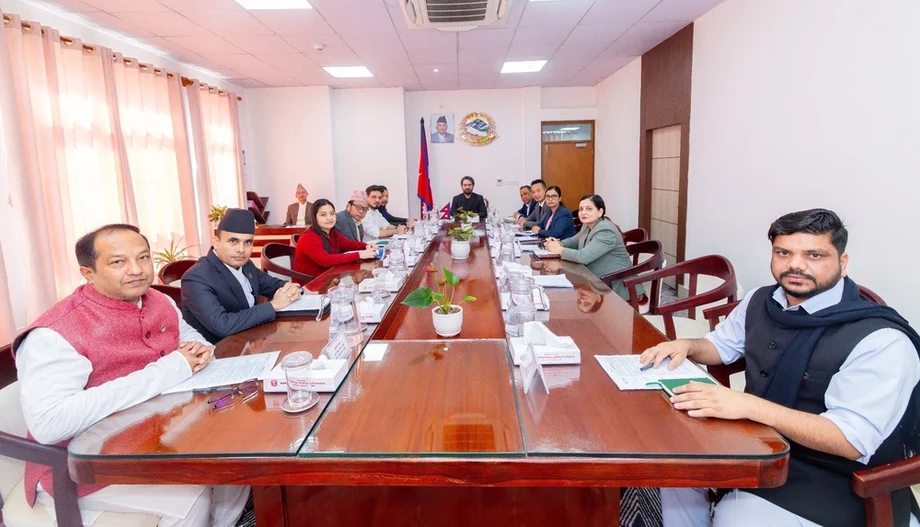
Nepal's Cabinet has authorised the Ministry of Finance to seek an extra year for infrastructure projects under the $747 million Millennium Challenge Corporation compact. The decision came to light on November 28, 2026, although the Cabinet had acted several weeks earlier and the government spokesperson did not announce it in a public briefing. If the MCC approves, Millennium Challenge Account Nepal (MCA-Nepal) would have until August 2029 to finish the work, rather than the present deadline of August 30, 2028.
Contents
- A Quiet Cabinet Decision Awaits MCC Approval
- Why the Project Clock Stopped
- How a Failed Tender Reshaped the Transmission Line
- What Is Finished and What Remains Under Contract
- How the Compact Reached $747 Million
- Why Five Years of Work Can Need More Calendar Time
- Key Dates From Signature to the Extension Request
- What the MCC Board Will Consider on December 8
- What the Extra Time Would Change in Nepal
- Key Points
The Finance Ministry must now formally convey Nepal's position to MCC headquarters. The request is expected to go before the MCC board on December 8. The board is chaired by US Secretary of State Marco Rubio, so Nepal's decision is an essential step rather than the final approval.
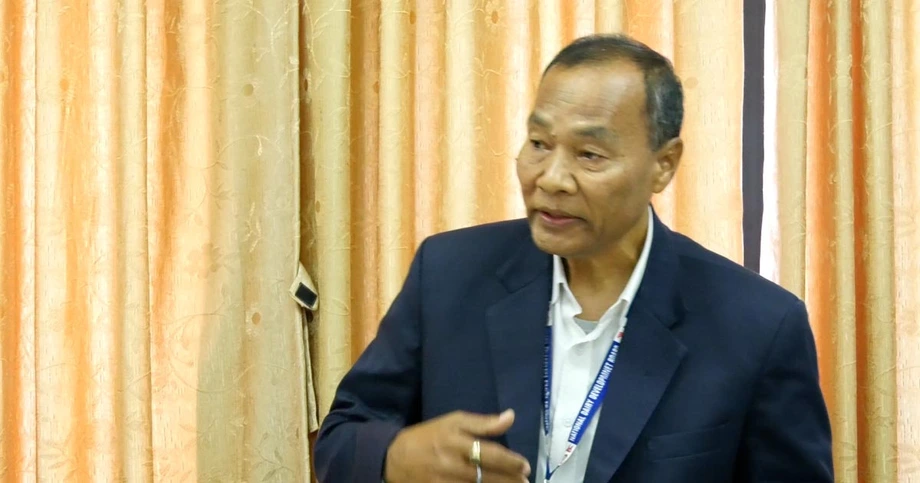
A minister familiar with the Cabinet decision said the government had attached two conditions: Nepal would not spend more money, and the effective period of implementation would remain five years.
We will not bear any additional costs, and the effective implementation period will remain five years.
The minister also said Nepal had told MCC headquarters that it would not pay a single penny beyond its $197 million commitment. Until this week, the extension request had spent more than six months waiting for a Nepali government decision after MCA-Nepal submitted it in the middle of May 2026. The American board has not yet announced whether it will approve the additional calendar time.
Why the Project Clock Stopped
MCA-Nepal officials estimate that implementation has lost about 14 months. They attribute the disruption to the temporary suspension of American assistance, natural disasters and the cancellation of transmission line contracts that later had to be awarded again. Their argument is that the extra year would recover time lost during implementation rather than expand the programme.
Finance Ministry officials date the start of the aid suspension to January 20, 2025, when President Donald Trump initiated a review of foreign assistance after taking office. Work under the Nepal compact stopped during that review. In March 2025, while the wider review continued, MCC wrote to Nepal permitting essential procurement and office operations. Washington recommended continuing the Nepal project in the last week of July 2025, producing a suspension lasting roughly seven months.
Weather added a separate layer of delay. A minister cited floods and landslides that slowed work on the ground, while Finance Ministry officials identified severe flooding on the Trishuli River in both 2025 and 2026 as an obstacle. These interruptions affected a programme whose construction contracts were already running behind their original procurement schedule.
A senior MCA-Nepal board member, who is not authorised to speak to the media, explained the purpose of the request in schedule terms.
The extension was proposed to make up for the disruption midway through implementation.
For readers, the central distinction is between calendar time and effective working time. Nepal wants a later outer date because months were lost to events that officials say were outside the implementing agency's control. The government is not asking to increase Nepal's financial contribution or to add another year of active spending beyond the five years it says remain effective.
How a Failed Tender Reshaped the Transmission Line
The transmission procurement problem began before the American aid pause. In October 2023, MCA-Nepal cancelled all bids for a transmission line stretching 315 kilometres and operating at 400 kilovolts. Even the lowest bid was about 60 percent above the estimated cost, according to Finance Ministry officials. The cancellation, on 26 Asoj 2080 in Nepal's calendar, forced the agency to reassess the project and restart procurement.
That reassessment also showed that the budget set aside for the line would be insufficient. Washington subsequently added $50 million to the compact. MCA-Nepal separated the 18 kilometre section running towards the Indian border for its own tender and divided the remaining 297 kilometres into three construction packages.
The new contracts created another timing problem. Their completion schedules extend beyond the compact's existing term, meaning that even contractors working under the revised procurement plan need the compact itself to remain open long enough for their work to be finished. MCA-Nepal says this affects both principal components: the electricity transmission project and the upgrade of a section of the Mahendra Highway.
Another MCA-Nepal official described the consequences of leaving the present deadline unchanged.
Without an extension, neither of the two projects undertaken by MCA-Nepal will be completed by the August 2028 deadline.
The same official said an early decision would help maintain implementation momentum and reduce pressure to meet a deadline that the agency considers unworkable. Officials also argue that an extension should be judged by whether it allows the compact to be completed, particularly in a country where development projects frequently miss their initial schedules.
What Is Finished and What Remains Under Contract
One visible section of the transmission project is already complete. MCA-Nepal finished the 18 kilometre line from the New Butwal substation to the Indian border nine months after its groundbreaking. That is a small part of the planned 315 kilometres, but it demonstrates that construction has continued while the agency pursued the extension.
Contracts have also been awarded for the remaining 297 kilometres of transmission line, divided among three packages, and for three substations. The substations are at Damauli in Tanahun, Ratmate in Nuwakot and in Nawalparasi. A separate contract covers upgrading the road from Dhankhet to Lamahi in Dang, a section of the Mahendra Highway, which is also known as the East-West Highway.
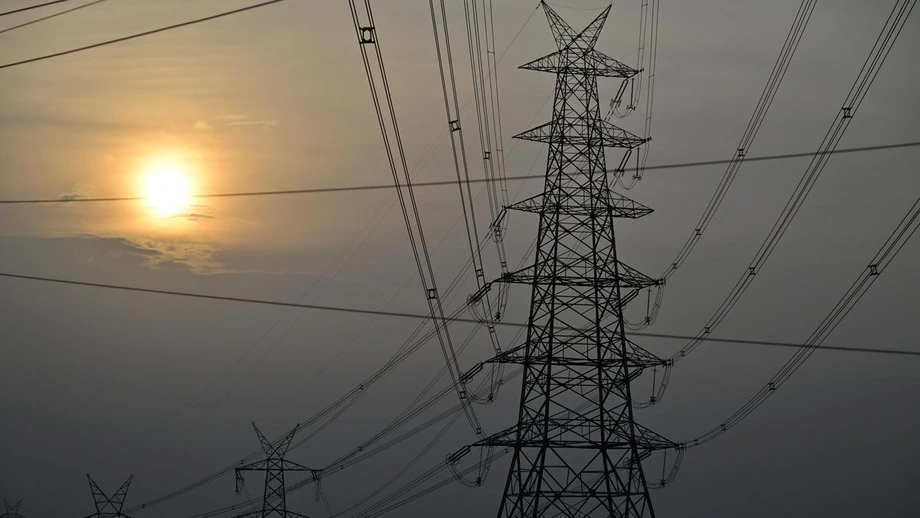
A 400 kilovolt line is designed to carry large amounts of electricity at high voltage over long distances, reducing losses compared with transmission at lower voltages. Substations change voltage and direct electricity between parts of the network. The completed border segment, the much larger contracted line and the three substations therefore form different pieces of the same electricity system rather than unrelated construction jobs.
The road package gives the compact a second, more immediately visible dimension. Its contract has been awarded, but officials have not provided a revised completion date for that individual section. Their warning is broader: the transmission and road projects both need the compact's deadline moved if the existing work is to reach completion.
How the Compact Reached $747 Million
The funding total has changed substantially since Nepal and the United States signed the compact in September 2017. Washington initially promised a $500 million grant, while Nepal expected to contribute $130 million. In May 2023, Nepal increased its share by $67 million, taking its commitment to $197 million as project costs rose. The American grant later reached $550 million with the additional $50 million announced in November 2025. Those contributions produce the current total of $747 million.
The American share is about 74 percent of that total, calculated from $550 million out of $747 million. Nepal's $197 million represents about 26 percent. The minister's condition means that the requested extension would leave those figures unchanged.
Official funding documents provide more detail about how the American commitment evolved. The original compact divided it into $459.5 million for programme funding and $40.5 million for compact development funding, money used to help prepare and carry out the programme rather than solely to build infrastructure. On June 28, 2024, MCC moved $16,477,559.41 of excess implementation money into programme funding, raising that component to $475,977,559.41 without increasing the total American pledge.
The First Amendment to the compact, recorded by the US Department of State as Treaties and Other International Acts Series 25-1119, was signed in Washington on September 22, 2025 and in Kathmandu on November 19, 2025. It entered into force on November 19. The amendment added $50 million and raised the programme funding ceiling to $525,977,559.41. Its stated reason was that the cost of completing the Electricity Transmission Project had risen above the available budget.
This history matters because the extension and the funding increase address different problems. The additional $50 million responded to higher transmission costs. The extra year now being sought addresses time lost through the aid suspension, natural disasters and the procurement restart.
Why Five Years of Work Can Need More Calendar Time
The compact's five-year implementation requirement began when the agreement entered into force on August 30, 2023. Entry into force was the moment when the agreement became operational and its implementation clock started, not when it was signed in 2017 or ratified by Nepal's Parliament in 2022. Counting five years from that operational date produces the existing completion deadline of August 30, 2028.
Finance Ministry officials describe that limit as compulsory. They say the American grant is liable to be returned if the programme is not completed within the required period. That gives the deadline financial consequences beyond the ordinary embarrassment of a delayed construction project.
Nepal's proposed answer is to extend the outer calendar period while preserving five years of effective implementation and refusing any increase in cost. In practical terms, the government is asking MCC to recognise the months when work was suspended or disrupted. Approval would give MCA-Nepal until August 2029, although officials have not specified a new day within that month.
Key Dates From Signature to the Extension Request
The current request follows nearly a decade of negotiations, political dispute, procurement changes and interrupted implementation.
- September 2017: Nepal and the United States sign the compact, with an initial American grant commitment of $500 million.
- February 2022: Nepal's House of Representatives ratifies the compact with an interpretive declaration after prolonged political opposition.
- May 2023: Nepal increases its contribution from $130 million to $197 million.
- August 30, 2023: The compact enters into force and the implementation clock begins.
- October 2023: MCA-Nepal cancels the transmission line bids after the lowest offer comes in about 60 percent above estimate.
- January 20 to late July 2025: The American assistance review disrupts implementation for roughly seven months.
- November 19, 2025: The First Amendment adding $50 million enters into force.
- May 2026: MCA-Nepal asks the Finance Ministry to seek an extension lasting one year.
- November 2026: The Cabinet's authorisation for the Finance Ministry comes to light, with the MCC board meeting scheduled for December 8.
The interval between signature and entry into force was almost six years. MCA-Nepal's present argument concerns a different period: the construction time available after the compact finally became operational.
What the MCC Board Will Consider on December 8
The request reached the Cabinet after months of diplomatic and administrative pressure. While it remained pending at the Finance Ministry, the US Embassy in Kathmandu and senior MCA-Nepal officials raised it with Finance Minister Swarnim Wagle and other senior officials. MCC acting Vice President Jason Small also met Wagle during the finance minister's visit to the United States. Finance Ministry officials say that meeting included discussion of extending the implementation period if necessary to complete the programme successfully.
American legislation provides a mechanism for the board's consideration. In January 2026, the US Senate passed legislation allowing MCC to extend eight compacts in Nepal, Indonesia, Kosovo and Senegal by up to one additional year. Any extension is subject to the availability of funds, and MCC must notify the relevant congressional committees beforehand. Nepal also had to approve its own request before formally sending it, which explains the importance of the Cabinet's decision.
An MCA-Nepal official said the agency had received encouraging signals from Washington and linked that reception to the reasons set out in its letter.
The MCC headquarters is positive about the proposal because our reasons are well-founded and valid. The Trump administration has also introduced a new law allowing a one-year extension for projects under implementation in four countries.
That assessment is not a board approval. The MCC board has not announced its decision, and officials have not said whether December 8 will produce an immediate ruling or a later response. Until approval is communicated, August 30, 2028 remains the formal compact deadline.
What the Extra Time Would Change in Nepal
Contractors would receive the clearest practical benefit. Some transmission contracts already run beyond the compact's current term, so an approved extension would align the governing agreement with the time required to finish the work. MCA-Nepal officials say an early decision would also let managers plan without the pressure of an approaching deadline they consider impossible to meet.
The Nepali government's financial position would remain fixed at $197 million. The request does not create another construction project, raise Nepal's contribution or alter the $550 million American commitment. Its purpose is to preserve enough time to use the existing funding plan for the transmission line, substations and highway upgrade.
For people waiting for the infrastructure, the immediate change would be administrative rather than a new opening or completion ceremony. The finished 18 kilometre border segment would remain the completed portion, while work continued on the other 297 kilometres, three substations and the Dhankhet to Lamahi road. Officials have given August 2029 as the proposed endpoint, but they have not published revised milestones for each contract.
Key Points
- Nepal's Cabinet has authorised the Finance Ministry to seek an extra year for MCA-Nepal projects, without publicly briefing the decision when it was taken.
- The MCC board, chaired by US Secretary of State Marco Rubio, is scheduled to consider the request on December 8.
- Approval would move the completion window from August 30, 2028 to August 2029.
- Nepal says it will not spend beyond its $197 million commitment and that effective implementation will remain five years.
- The compact totals $747 million: $550 million from the United States and $197 million from Nepal.
- MCA-Nepal estimates delays totalling about 14 months from the aid suspension, natural disasters and transmission procurement problems.
- The original transmission bids were cancelled in October 2023 after the lowest offer exceeded the estimate by about 60 percent.
- An 18 kilometre line from New Butwal to the Indian border is complete; contracts cover the remaining 297 kilometres, three substations and the Dhankhet to Lamahi road upgrade.