Milk farmers face a price squeeze as support rate stays fixed
Kathmandu, 11 Mangsir. Farmers, cooperative leaders, private dairy owners and a government board are pressing the Ministry of Agriculture, Forest and Environment to raise the price paid for raw milk, arguing that a rate set nearly four years ago no longer covers the cost of animal feed, medicine and transport. The Central Dairy Cooperative Association Nepal wants at least Rs 10 more per litre for farmers. The Nepal Dairy Association says costs for dairies are about Rs 14 per litre and warns that any change must be weighed against prices in India. The ministry says a proposal is being prepared for the cabinet.
Contents
- Milk farmers face a price squeeze as support rate stays fixed
- What farmers get and what city buyers pay
- How much do farmers and dairies want?
- Why animal feed is the biggest pressure point
- Why India shapes the price argument
- The board went to four provinces
- Output is rising while collection appears to be slipping
- Which dates matter now?
- From milk spills to manure protests
- What the ministry can decide and what remains open
- Key Points
At stake is the price farmers receive before milk is processed and sold in cities. Processed milk in many markets costs consumers more than Rs 120 a litre. Farmers say they receive Rs 65 or Rs 66. The gap has turned a technical pricing question into a pressure campaign involving district cooperatives, feed suppliers and dairy factories. Farming households in several districts have already set deadlines for action.
The government set the Minimum Support Price at Rs 65 per litre from 19 Falgun 2079, in the third week of Falgun, for milk with 4 units of fat and 8 percent SNF. SNF means milk solids other than fat, including protein, lactose and minerals. The state owned Dairy Development Corporation, known as DDC, raised its payment by Rs 1 to Rs 66 from 1 Asar. No broader revision has followed.
What farmers get and what city buyers pay
Consumers buying packaged or processed milk in Kathmandu and other markets often pay more than Rs 120 a litre. In Kaski, farmer leaders put the retail range at Rs 120 to Rs 140. The raw milk price paid at the farm gate remains tied to the older support rate, with higher fat content lifting some payments only to about Rs 66 to Rs 71.
That difference is at the centre of the dispute. Raw milk is the unprocessed liquid collected from cows and buffaloes. Dairies test it for fat and SNF, then process, package and deliver it. Farmers argue that the first link in that chain has been held at a fixed price while costs farther along the chain have risen.
The Nepal Dairy Association estimates national output at about 7.6 million litres a day, of which about 3.6 million litres enter commercial collection. It says commercial collection has fallen by 200,000 to 300,000 litres a day recently. Of the milk that is collected, 40 percent goes through DDC and cooperatives and 60 percent through private dairies.
How much do farmers and dairies want?
Ram Acharya, general secretary of the Central Dairy Cooperative Association Nepal, said the association asked for at least Rs 10 per litre for farmers after considering both production costs and the ability of consumers to pay. He said a larger amount would be closer to real costs, but the proposal was kept lower to limit the burden on households. He said the association would support two or three rupees more if that could be done without shifting too much cost onto consumers.
Milk prices, which should increase every two years, have not increased even after four years. Even Rs 10 is not enough to give farmers a price based on cost, but we have to pay attention to consumers as well, so we have clearly said farmers should get at least Rs 10 per litre.
Acharya said a recent discussion with Agriculture Minister Geeta Chaudhary and Secretary Rajendra Prasad Mishra produced an assurance that the ministry would send the file to the cabinet. He said farmers would not stay silent if the decision is delayed again. District milk producer unions have issued statements and prepared action at the local level.
Amar Bahadur Kunwar, chair of the same association, put the demand at Rs 13 per litre in total: Rs 10 for farmers and Rs 3 for dairy operation and management, which would take the rate to Rs 79. He set 10 Mangsir as the date for adjustment. Kishor Bagale, an association chair, also asked the government to control animal feed prices and remove value added tax on dairy products made by farmers.
Why animal feed is the biggest pressure point
Maize, a main ingredient in feed, used to cost Rs 28 a kilogram, according to Kunwar. He said it now costs Rs 53. Feed prices have risen by Rs 8 to Rs 10 a kilogram. Umesh Sapkota, central chair of the feed industry association, said raw materials used in feed were up to 15 percent more expensive, with higher international prices, tension in the Gulf region and higher freight adding to costs.
Farmers listed soybean cake, bran, roughage, minerals, medicines and veterinary treatment alongside maize. Transport is also part of the calculation because feed must reach farms and milk must reach collection points. In hill districts, a single price for the whole country is difficult to apply because availability and travel distance differ sharply.
The cooperative association said price revisions are due every two years under the rules it follows. Counting from the 2079 support price, farmer groups describe the freeze as nearly four years. The board has described the freeze as three years. Both descriptions point to the same practical problem: the rate has stayed fixed while the inputs have not.
Why India shapes the price argument
Prahlad Dahal, chair of the Nepal Dairy Association, said all sides have agreed that milk prices should rise, but the amount and starting date are not settled. He said industry calculations show an added cost of Rs 14 per litre and a similar cost for farmers. He said Nepal must compare its price with the rate in India before setting the new figure.
The industry cost is Rs 14 per litre and the farmer cost is around the same. But we have to compare it with the rate in India too. If our milk is cheaper, it goes there and we face a shortage here. If milk there is cheaper, it comes here and milk holidays increase, which is an even bigger problem.
A milk holiday is a period when dairies stop or reduce collection because the market cannot absorb milk at the given price. Dahal said a mismatch with Indian prices can pull milk in either direction across the border. For Nepal, that means a price rise meant to help farmers could also change how much milk is available for domestic dairies if the new rate is not balanced.
Indian retail prices provide a concrete, though not like-for-like, comparison. After Mother Dairy revised its prices on 12 November 2026, toned milk cost Rs 62 a litre in Delhi-NCR and full-cream milk Rs 76. The Gujarat Cooperative Milk Marketing Federation, which markets Amul, raised pouch-milk rates by Rs 2 to Rs 4 a litre on the same day: Rs 2 on toned Amul Taaza and Rs 4 on full-cream Amul Gold. Amul's toned milk price in Delhi has risen from Rs 54 a litre in mid-2024 to Rs 62, with half of that increase in the last six months. These are retail prices, not procurement rates paid to Indian farmers.
The board went to four provinces
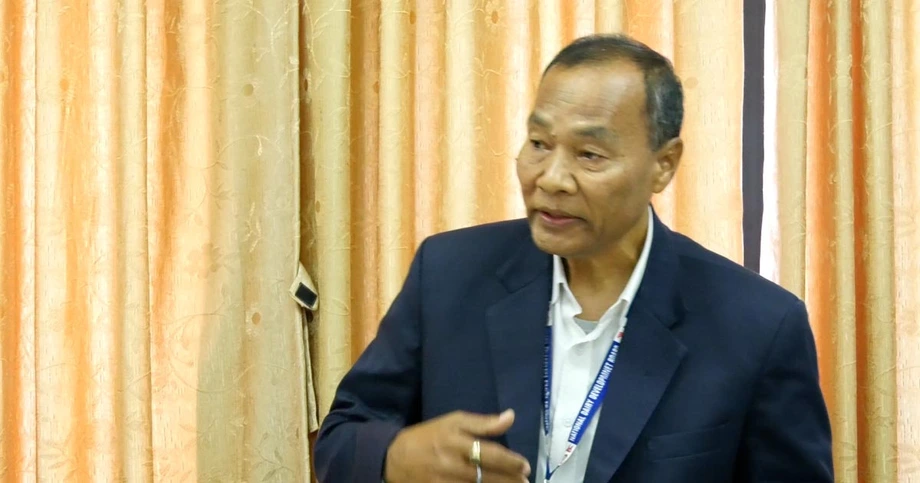
Balak Chaudhary, acting executive director of the National Dairy Development Board, said the board did not want to recommend a number from a desk in Kathmandu. He said the board gathered evidence from farms and districts because farmers would not trust a decision made without seeing local conditions.
Sitting at a table and saying milk prices will rise, no one believes that. That is why we went in a short time to villages and districts in main areas, including parts of Koshi, Madhes, Bagmati and Gandaki provinces, and took information from the remaining places through virtual means.
Chaudhary said feed and other input costs differ by location, so the board found it hard to name one percentage increase for every input. He said there was no doubt that costs had risen and that stakeholders had supported a price rise. The board has submitted its report and stakeholder views to the Ministry of Agriculture, Forest and Environment. Chaudhary said the ministry, with stakeholder agencies, will decide the amount.
Before the report was submitted, stakeholders met at the board's hall in Kathmandu on Thursday, 3 Mangsir 2083. Dahal said their organisations would submit written views, and the board would study those suggestions alongside its own research before making its recommendation to the ministry. The submitted report's recommended amount and wording have not been quoted, and no copy or summary appears to be publicly available.
The board also said a structural concept for setting milk prices is being prepared. It said a review must cover production costs, transport costs and the Indian market, and that some gaps need to be linked to law. It described the sector as sensitive and said short term fixes and legal arrangements should be separated.
Output is rising while collection appears to be slipping
Government figures show milk production has increased over three fiscal years. The board's litre series puts output at 2.537864 billion litres in 2079/80, 2.605825 billion litres in 2080/81 and 2.639007 billion litres in 2081/82. That is an increase of about 101.143 million litres over three years. Board data in tonnes puts output at 2.614 million tonnes in 2079/80, 2.684 million tonnes in 2080/81 and 2.718 million tonnes in 2081/82, an increase of about 104,000 tonnes.
The National Dairy Development Policy 2078 is in force to raise production and self reliance. It gives priority to breed improvement, artificial insemination, better animal feed, concessional loans, subsidies, milk collection and chilling facilities. Artificial insemination means placing semen into the animal's reproductive tract without natural mating, a common way to improve herd quality.
These measures aim to increase supply, but farmers say the price signal has not kept pace. If farmers cannot cover costs, they may reduce herd sizes or sell less milk to formal collectors. The Nepal Dairy Association's estimate of a daily collection drop of 200,000 to 300,000 litres is the strongest warning so far.
Which dates matter now?
The milk price campaign has moved through a series of dated demands and government steps. Mangsir is a month in the Nepali calendar.
- 8 Bhadau: the Central Dairy Cooperative Association Nepal submitted a demand letter seeking a price revision.
- 19 Falgun 2079: the Rs 65 Minimum Support Price took effect for milk with 4 units of fat and 8 percent SNF.
- 1 Asar: DDC raised its payment to farmers by Rs 1, to Rs 66 per litre.
- 3 Mangsir 2083: the board discussed a study covering production costs, transport costs and the Indian market, and said it would send a report with stakeholder suggestions to the ministry.
- 10 Mangsir: cooperative leaders asked the government to complete the adjustment.
- 11 Mangsir: farmer, cooperative and dairy groups were pressing the ministry in Kathmandu.
- 15 Mangsir: farmers in Dhankuta have asked for Rs 80 per litre.
- 16 Mangsir: Kaski farmers have warned they will protest if their demands are not met.
No cabinet date has been announced. The ministry has said it will move after technical recommendations from the Department of Livestock Services and the board.
From milk spills to manure protests
Kaski farmers are demanding at least Rs 80 per litre. The district cooperative union says about 11,500 households in Kaski are involved in dairy farming. The Saptagandaki Milk Producers Cooperative Union has 42 cooperatives with about 5,500 farmer households, while about 6,000 households sell milk through private firms.
Navaraj Baral, chair of the Saptagandaki Milk Producers Cooperative Union, said farmers are asking for payment for their work rather than charity. He said the protest method may change from spilling milk to carrying manure if the demand is not met by 16 Mangsir.
Farmers are asking for the fair price of their labour and sweat. We are not asking for subsidy, charity or alms. We should not be pushed into tying cows and buffaloes to pillars of government offices and homes with ropes. Tomorrow, instead of milk, we may have to sit in protest at government offices with manure in milk cans, sickles, carrying straps and loads of straw.
Daily milk production in Kaski has fallen from 80,000 to 100,000 litres to 60,000 to 70,000 litres. The district union says its wider list of demands includes scientific price assessment, timely payment, regular vaccination, free artificial insemination, cheaper animal feed, livestock insurance and stronger disease control.
Chitwan's district milk producers union submitted a memo last week seeking a price increase and timely payment from DDC. In Dhankuta, farmers led by district union chair Narad Katuwal have asked for Rs 80 per litre by 15 Mangsir. These local demands sit alongside the national proposal and show why the ministry faces pressure from several directions at once.
What the ministry can decide and what remains open
Maniratna Aryal, information officer at the Ministry of Agriculture, Forest and Environment, said the ministry is discussing the proposal and preparing to send it to the cabinet. He said the process will move once technical reports are recommended by the Department of Livestock Services and the National Dairy Development Board.
There is pressure from farmers to raise the price. If technical reports are recommended by the department and the board, the ministry will move the process forward. We are discussing how much to increase. First we will take the proposal to the cabinet. Only after the cabinet sets the milk price can we say anything.
The cabinet decision will determine the official price. What is still open is the final amount, the effective date and the split between money reaching farmers and money needed for dairy operation and management. The ministry has not given a date for the cabinet step. It has also not said whether feed price controls or value added tax relief will be part of the same decision.
For households, the immediate question is whether a higher raw milk price will be passed on to processed milk in shops. For farmers, the question is whether the new payment arrives before more herds are reduced. For dairies, the question is whether a higher procurement price can be balanced with Indian market prices and stable domestic supply.
Key Points
- Raw milk support price has stayed at Rs 65 per litre since 19 Falgun 2079; DDC pays Rs 66.
- Farmer groups want at least Rs 10 more for farmers, while a national cooperative chair has proposed Rs 13 in total to take the rate to Rs 79.
- Private dairies put added cost at about Rs 14 per litre and say the new price must be weighed against Indian market rates.
- Feed costs have jumped, with maize rising from Rs 28 to Rs 53 a kilogram and feed raw materials up to 15 percent higher.
- The National Dairy Development Board has sent field based findings to the agriculture ministry after visits to four provinces.
- Milk output rose over three years, but commercial collection is estimated to have fallen by 200,000 to 300,000 litres a day.
- Kaski, Chitwan and Dhankuta farmers have set deadlines and threatened protests, including a warning to carry manure to government offices.
- The final price, effective date and cabinet timetable have not been announced.