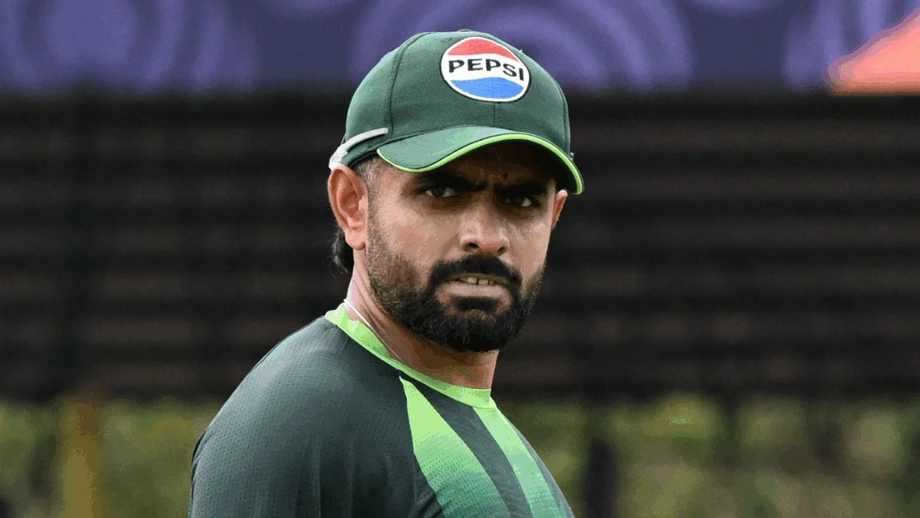
A century that brought criticism, not celebration
Babar Azam's 115 against England at Trent Bridge could have been remembered simply as a century in Pakistan's imposing total of 340 for 7. Former head coach Mickey Arthur remembers it for 15 deliveries. He believes Babar slowed down while approaching three figures, and that Pakistan's chances slipped away during that passage.
Contents
- A century that brought criticism, not celebration
- What those 15 balls meant at Trent Bridge
- Why Arthur challenged his leading batter in public
- Forty days later, Arthur saw his answer at Edgbaston
- Why Babar was so important to Arthur's Pakistan
- The coaching gamble and the reaction it provoked
- Why an innings from 2019 still follows Babar
- What to Know
Arthur has revealed that he challenged Babar in front of the rest of the squad after the match on May 17, 2019. The criticism was not about whether Babar could score runs. It was about whether he had put his century ahead of the extra runs Pakistan might have needed.
The immediate cost was personal. Arthur said he and Babar had enjoyed a close relationship, but the batter stopped speaking to him for a week. Other players were astonished that the coach would confront someone who had just scored a hundred.
Arthur, 58, told the story on The Super Over podcast hosted by former West Indies player Carlos Brathwaite. His account did not end with the argument. Forty days later, Babar made an unbeaten century against New Zealand at the World Cup, an innings Arthur still describes with visible affection and presents as evidence that his message had been understood.
What those 15 balls meant at Trent Bridge
The match was the fourth one day international of Pakistan's 2019 series in England. Pakistan batted first and made 340 for 7 in 50 overs. Babar scored 115 from 112 balls, with the innings record listing 13 fours and one six. England reached 341 for 7 in 49.3 overs, winning by three wickets with three balls unused. The hosts began the final over needing three runs and collected them in singles.
An ODI gives each side 50 overs, with six deliveries in an over. For the team batting first, every unused delivery is a scoring opportunity that cannot be recovered. Arthur's argument centred on that basic arithmetic rather than on the prestige attached to a century.
According to Arthur, Babar had reached 90 from 78 balls before requiring another 15 deliveries to move from 90 to 100. A strike rate measures runs per 100 balls. Babar's rate to that point was about 115.4, while 10 runs from 15 deliveries represents a rate of 66.7. His completed innings of 115 from 112 balls gives a rate of 102.7, so Arthur was isolating one phase rather than dismissing the entire innings as slow.
Arthur, speaking as the coach responsible for Pakistan's tactical approach, explained why he raised that phase in the dressing room:
He got a hundred. It took him 15 balls to go from 90 to 100. The next two balls after he got the hundred, he went six, six. We lost in the last over. I highlighted the 15-ball period where, in my opinion, he played for the hundred.
If he'd gone from 90 to 100 in five balls, we'd have got another 10 balls where we could've got another 15 runs and won the game comfortably.
His suggested alternative was therefore 10 runs in five balls, leaving 10 additional deliveries for Pakistan's innings. His estimate that those deliveries could have produced another 15 runs remains a coach's reconstruction of a match Pakistan had already lost.
The ball-by-ball record presents a further difficulty for that reconstruction. Scorecards show Babar's hundred came off 104 balls and that he was out at 249 for 3 in the 39.4th over. Those details do not fit Arthur's account of 90 from 78 balls followed by 15 deliveries to reach 100, leaving his argument about the extra 10 balls untested.
Arthur's memory was less exact on some other details. He remembered Babar's score as being closer to 140, although it was 115. He also recalled sixes from each of the two balls after the century, while the recorded boundary tally for the entire innings contains only one six. Those details distinguish his recollection of the sequence from the broader tactical argument he was making.
Why Arthur challenged his leading batter in public
The confrontation was deliberate, not an accidental loss of temper. Arthur said a coach sometimes needs to question the most prominent player when the team becomes flat or stops responding. Doing that in front of everyone, in his view, prevents status from placing a player beyond criticism.
Arthur described that philosophy in his own words:
Sometimes when it starts getting lull within the team, you take that top player down in front of the team because it bursts their bubble.
Babar was already central to Pakistan's batting, which made him both the obvious example and the riskiest player to confront. Arthur said their relationship had been strong before Trent Bridge. That closeness helps explain why the subsequent silence stood out to him.
Arthur recalled that the initial response around the dressing room was disbelief rather than agreement. He described teammates reacting to his decision to challenge a batter who had just reached three figures:
Wow, you can't take Babar on, bro. He's got a hundred.
Arthur's quoted podcast remark gives the resulting silence as one week. The original Urdu-language report of his remarks, published on November 28, 2026, also gives one week, not three weeks. In his general description of the coaching method, he said a challenged player might remain upset for two weeks before producing a surprising performance. His consistent point was that Babar temporarily withdrew from him after being criticised.
The episode exposes the bargain involved in public criticism. Arthur wanted every player to see that the team's requirement came before an individual landmark. The same approach also turned a tactical discussion into a test of a close relationship, with other players initially defending the century rather than the coach.
Forty days later, Arthur saw his answer at Edgbaston
Babar's next defining innings under Arthur came against New Zealand at Edgbaston on June 26, 2019. He finished unbeaten on 101 from 126 balls as Pakistan won by six wickets, keeping their hopes of reaching the World Cup semifinals alive. Babar was named player of the match.
Arthur added that Babar moved from 90 to 100 in only three balls on this occasion. He remembered the boundary that completed the century, a cut for four against Lockie Ferguson, and Babar showing his bat toward the dressing room.
Arthur, recalling the innings that followed their difficult exchange, explained why it remained so vivid for him:
The best hundred, I still get goosebumps now thinking about it. He cut Lockie Ferguson for four to get his hundred.
The later century was not faster throughout. A score of 101 from 126 balls represents about 80 runs per 100 balls, compared with roughly 103 for Babar's Trent Bridge innings. Pakistan were setting a target against England and chasing at Edgbaston, so the match situations were different. Arthur's praise focused on the movement through the 90s, the completed chase and what he believed was a change in approach.
The connection between the confrontation and the World Cup innings is Arthur's interpretation. He remembered thinking that the message had landed when Babar gestured toward the dressing room. Babar's own account of the Trent Bridge exchange, and of whether it influenced him at Edgbaston, was not included in the podcast remarks.
The sequence can be followed through a few dates:
- May 17, 2019: Babar made 115 at Trent Bridge, but England chased down 341 and won late in the final over.
- The days that followed: Arthur said his public criticism led to a week in which Babar would not speak to him.
- June 26, 2019: Babar's unbeaten 101 helped Pakistan defeat New Zealand at Edgbaston and remain in contention for the semifinals.
- After the World Cup: Arthur left his position as head coach, returning to Pakistan as team director four years later.
- November 2026: His podcast account brought the dressing room confrontation back into public discussion.
Why Babar was so important to Arthur's Pakistan
Babar's output during Arthur's tenure explains why the coach treated him as the player who could set a standard for everyone else. Between 2016 and 2019, Babar played 67 ODI matches, scoring 3,129 runs at an average of 55.88 with 11 centuries.
An ODI batting average divides a player's runs by the number of times he has been dismissed. An average of 55.88 therefore means Babar was losing his wicket roughly once for every 56 runs during that period. He was also Pakistan's outstanding batter at the 2019 World Cup, even though the team's campaign was disappointing.
Arthur had coached South Africa from 2005 to 2010 and Australia from 2010 to 2013 before taking charge of Pakistan in 2016. His Pakistan side, captained by Sarfaraz Ahmed, won the 2017 ICC Champions Trophy. It remains Pakistan's most recent ICC title.
That history gives the Trent Bridge story an important context. Arthur was not an outsider commenting on a famous batter years after watching him play. He had selected the tactics, worked with Babar during a highly productive period and chosen to challenge him shortly before a World Cup.
The figures also show why teammates could find the criticism startling. A player producing centuries regularly and averaging nearly 56 would usually appear to be the least of a coach's concerns. Arthur instead treated that status as a reason to make him the example.
The coaching gamble and the reaction it provoked
Babar's silence provides the clearest measure of the immediate damage. Arthur had gained an opportunity to discuss scoring tempo with the whole squad, but he had also lost ordinary communication with his best batter for several days.
There were two competing standards in the room. For Arthur, 115 could still contain a passage that harmed Pakistan. For the teammates whose reaction he recalled, a century was an achievement that made public criticism appear unreasonable. The disagreement was about what should count as a successful innings.
A team total makes Arthur's position easy to understand without requiring agreement with his method. Pakistan's 340 was substantial, but England still pursued it successfully. Had Babar reached his century sooner, Pakistan would have had more deliveries available. Whether Arthur should have raised that issue privately, rather than before the entire squad, is the coaching choice at the centre of the story.
Reaction to the podcast clip reflected that division. Some social media users described Arthur's stories as fabricated, while others defended his argument that a century should not protect a batter from scrutiny. The recorded differences over Babar's final score and boundary tally gave critics specific details to challenge, but his description of the confrontation and the silence remained the focus of discussion.
Arthur himself presented the later Edgbaston innings as the reward for accepting short term friction. His account contains both sides of that gamble: a relationship strained immediately, followed by a performance he still regards as Babar's best century under him.
Why an innings from 2019 still follows Babar
Questions about Babar's batting have continued in several forms, long after Arthur's first tenure ended. On October 18, 2026, he passed 16,000 international runs during an innings of 45 from 57 balls against Sri Lanka in Rawalpindi. Pakistan won that match by 37 runs.
Babar became the fifth Pakistani batter to reach 16,000 international runs, achieving it in his 399th innings. His total stood at 16,038 across 355 appearances after that match. The landmark placed him alongside Inzamam-ul-Haq, Younis Khan, Mohammad Yousuf and Javed Miandad among Pakistan's leading run scorers.
The same innings also ended with another dismissal against a short ball, keeping attention on his response to deliveries that rise sharply toward him. That technical issue is different from Arthur's complaint. One concerns how a batter handles bounce; the other concerns decision making and scoring tempo as a personal milestone approaches.
Babar's wait for a Test century has also extended back to December 2022, when he reached three figures against New Zealand in Karachi. He subsequently endured a lean home Test series against Sri Lanka while leading Pakistan, although his team won the two match series 1-0.
For Pakistan, Arthur's story remains relevant because it addresses how a team's most prolific batter is judged. Babar's career figures demonstrate the scale of his contribution. Trent Bridge demonstrates why coaches can still examine a substantial score ball by ball, asking whether its construction gave the team the best chance of winning.
What to Know
- Mickey Arthur said he criticised Babar Azam in front of Pakistan's squad after the fourth ODI against England at Trent Bridge on May 17, 2019.
- Babar scored 115 from 112 balls as Pakistan made 340 for 7; England replied with 341 for 7 in 49.3 overs and won by three wickets.
- Arthur said Babar went from 90 off 78 balls to 100 after another 15 deliveries, a phase he believed cost Pakistan valuable scoring opportunities.
- The coach argued that reaching the century in five balls would have saved 10 deliveries and could have produced about 15 additional runs.
- Scorecards show Babar's hundred came off 104 balls and he was out at 249 for 3 in the 39.4th over, a record that does not fit Arthur's sequence and leaves his argument about 10 extra balls untested.
- Arthur's podcast account and the original Urdu-language report published on November 28, 2026 both give Babar's silence as one week, not three weeks.
- On June 26, 2019, Babar made an unbeaten 101 from 126 balls against New Zealand at Edgbaston, helping Pakistan win by six wickets and earning the player of the match award.
- Babar scored 3,129 ODI runs in 67 matches under Arthur, averaging 55.88 with 11 centuries.
- Arthur views the World Cup innings as evidence that his message landed; Babar's own response to that interpretation was not included.