China Advances With an Apology, Not Just a Celebration
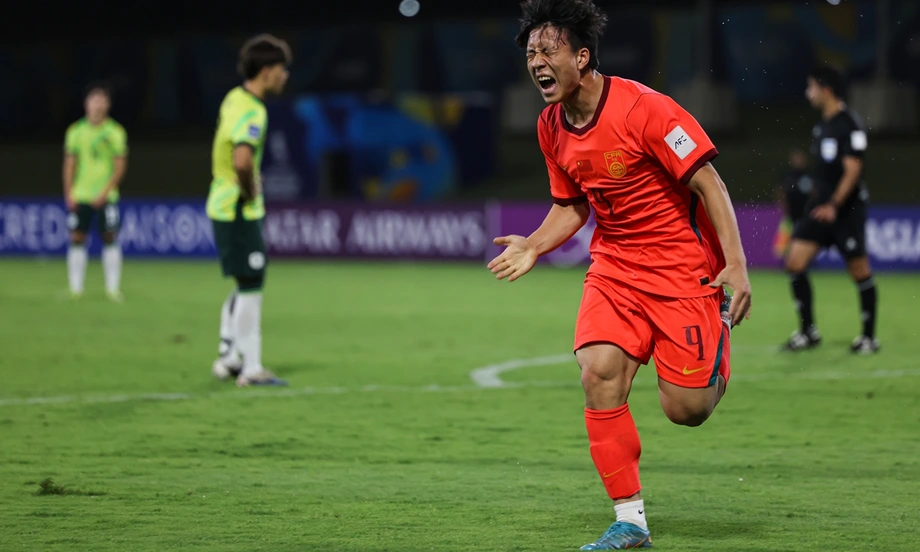
China's 8-0 victory over Fiji in Doha delivered the country's biggest win at the FIFA U17 World Cup and a place in the round of 32, yet the player of the match left with an apology. Wan Xiang scored twice, created another goal and forced an own goal on Thursday, November 26. He also missed a penalty when one more goal would have changed China's final position in Group H.
Contents
- China Advances With an Apology, Not Just a Celebration
- The Campaign in Five Dates
- How One Goal Decided Second Place
- What the 5-0 Defeat to Spain Exposed
- How China Nearly Beat Morocco
- What the 8-0 Win Over Fiji Actually Delivered
- Why Liu Jianhong Is Looking Past the Scoreline
- Serbia Will Test the Progress Immediately
- What to Know
Wan told his teammates that his disappointment came from missing that penalty and finishing third because of a difference of one goal. His contribution had still covered half of China's eight goals.
I want to say I'm sorry to each and every one of my teammates.
China nevertheless secured its first U17 World Cup knockout match in 21 years, during its third appearance at the tournament after 1985 and 2005. The competition has 48 teams in 12 groups. The top two in each group and the eight best teams finishing third reach the round of 32. China ranked second in that comparison of third place teams, earning a match against Serbia at 21:30 Beijing time on December 1.
The Campaign in Five Dates
China's route through the 2026 tournament in Qatar moved from a heavy defeat to a painful draw and then a rout.
- November 20: Spain beat China 5-0 in the Group H opener, outshooting it 17-3.
- November 23: Zhao Songyuan scored in the second and 57th minutes against Morocco, but China conceded in the 64th minute and again at 90+9 in a 2-2 draw.
- November 26: China beat Fiji 8-0 while Spain defeated Morocco 2-0. Morocco finished second with a goal difference of +4, one better than China's +3.
- November 28: Serbia was confirmed as China's opponent after winning all three of its group matches without conceding.
- December 1: China and Serbia meet at 21:30 Beijing time. A draw after 90 minutes leads directly to a penalty shootout, with no extra time.
Those results explain the mixed mood around qualification. China recovered from its opening defeat and achieved its main objective, while the missed chances against Morocco and Fiji remained visible in the final arithmetic.
How One Goal Decided Second Place
Goal difference, meaning goals scored minus goals conceded, settled the order beneath Spain. The champions of Group H finished with nine points, 22 goals scored, none conceded and a difference of +22. Morocco and China both collected four points through one win, one draw and one defeat. Morocco scored eight and conceded four for +4. China scored 10 and conceded seven for +3. Fiji finished without a point, scoring no goals and conceding 29.
China and Morocco could not be separated by their own meeting because it ended 2-2. Had China beaten Fiji 9-0, it would have matched Morocco's +4 and moved ahead on goals scored, by 11 to eight. That is why Wan's penalty in the 17th minute, with China already leading 1-0, became so important. Kuang Zhaolei won the penalty, but the Fiji goalkeeper saved Wan's attempt.
Wan responded in the 28th minute by scoring from a tight angle on the left of the penalty area. Four minutes later, his involvement forced an own goal, and China reached halftime leading 4-0. He scored again after the interval and supplied the pass for the eighth goal. Even at 8-0, China's bench sought a video review when Wan went down in the area during stoppage time. The referee decided that the contact did not warrant a penalty.
There was another route by which China could have finished second. Spain led Morocco 2-0 through goals in the 18th and 61st minutes, then received a penalty in the 75th minute before a video review overturned the decision. Had that decision stood and Spain converted for 3-0, Morocco and China would both have finished on +3. China would then have taken second place on goals scored, 10 to eight. One goal therefore cost China second place, while its four points were enough to advance regardless.
What the 5-0 Defeat to Spain Exposed
China's opening match kicked off at 22:00 Beijing time on November 20. Spain won 5-0 and held a 17-3 advantage in shots. China's attacking review identified only two high quality openings, neither of which produced a goal. There were also fitness questions around Zhao Songyuan and Kuang Zhaolei before the match.
China lined up in a 4-2-3-1 formation, with four defenders, two deeper midfielders, three attacking midfielders and Zhao as the central striker. Jiang Yuhan started in goal, Zhou Yunuo and Xu Zhengpeng occupied the deeper midfield positions, and Wan Xiang, He Sifan and Kuang supported Zhao.
Spain opened the scoring from a 36th-minute penalty after Kuang was judged to have committed a foul in the area. The decision prompted debate, but the rest of the match revealed a much wider gap. A direct free kick made it 2-0 in the second minute of first half stoppage time. Spain then scored in the 73rd, 79th and 85th minutes as China's defending deteriorated late in the game.
Chinese football commentator Liu Jianhong credited the players' effort while pointing to fitness and pressure as factors in those three late concessions. Spain's passing and pressing also made it difficult for China to play out from defense. A squad built around players developed in Barcelona's academy held advantages in experience, coordination and player valuations.
Spain's subsequent results provide a useful scale. Its 15-0 victory over Fiji was the second largest winning margin in U17 World Cup history, behind Morocco's 16-0 win over New Caledonia in 2025. Spain finished the group with 22 goals and three clean sheets. That is an average of 7.33 goals per match, although the average falls to 3.5 when the Fiji game is removed. Its seven goals across the matches against China and Morocco still came without conceding.
How China Nearly Beat Morocco
Three tactical changes helped China respond only three days later. Kuang moved from his usual position on the right to the left wing, creating a different matchup for Morocco's defense. Jin Yucheng joined the high pressing, while longer passes toward Zhao used his height and speed to move the contest into Morocco's half.
The approach produced a goal after just two minutes. Zhao intercepted the ball in the attacking half, drove into the penalty area and finished calmly with his left foot. Wan and Kuang also threatened on counterattacks during the first half. In the 57th minute, He Sifan sent a low cross from the right after a flowing team move, and Zhao scored from close range for 2-0.
Ahmed Kantari's Morocco side then increased the pressure. Ziyad Baha converted a penalty in the 64th minute after Nan Zixun was penalized for holding. China's players tired, and the replacements could not maintain the same level. Rami Lougmani finally equalized at 90+9, connecting with an Adam Soudi cross and forcing the ball past the defense at the near post.
The match statistics show how much territory China surrendered. Morocco had 69% of possession and led 21-14 in shots and 9-5 in attempts on target. The draw left Spain on six points after two matches, Morocco on four, China on one and Fiji on zero.
Football commentator Zhan Jun saw a team willing to match Morocco technically and physically. His assessment also identified the missing late skill: withdrawing into a more compact shape and protecting a lead.
For most of the match, the performance was impressive. They dared to compete head on.
Wan said after the match that the players could not keep thinking about the defeat by Spain and had to prepare fully for the next game. That mental reset worked. The remaining lesson was tactical: pressing and counterattacking had created a lead, but controlling the tempo, sustaining defensive concentration and surviving stoppage time required further work.
What the 8-0 Win Over Fiji Actually Delivered
China's attacking production against Fiji was spread across the team. Zhao opened the scoring and later supplied an assist. Kuang scored twice and provided two assists, while Wan scored twice, assisted another goal and forced the own goal. Substitutes also scored, and China produced four goals in each half.
The tangible reward was qualification. China moved from one point and a goal difference of -5 to four points and +3. Its total placed it ahead of Ecuador, Tajikistan, Uzbekistan, Qatar and Vietnam in the relevant comparison of teams finishing third. China ultimately ranked second among those teams and advanced.
Fiji's difficulties place the scoreline in context. It lost 6-0 to Morocco, 15-0 to Spain and 8-0 to China, finishing with no goals scored and 29 conceded. Fiji's coach said that more than half of his players had participated in only zero to 10 matches during the previous year. That limited amount of regular competition contrasted sharply with the academy experience available to Spain's players.
Former China international Sun Jihai argued that the size of the victory said little by itself and that its real value was securing progression. The Fiji match also did not recreate Spain's press or Morocco's late attacking surge. China's efficiency from set pieces and its ability to pass out from the back under severe pressure therefore remain unfinished tests rather than problems settled by eight goals.
Why Liu Jianhong Is Looking Past the Scoreline
Liu described third place as a reflection of the team's strength and warned against praising the players too highly after the Fiji result. His assessment holds two developments together. China showed genuine adaptability by moving from 0-5 to 2-2 and then 8-0, while its performances against Spain and Morocco still exposed gaps in technique, endurance and match control.
Three technical tasks follow directly from those matches. Playing out under pressure requires defenders and midfielders to make accurate passes while opponents close them down. Defensive continuity means preserving spacing and cover after tackles, substitutions and losses of possession. A successful transition means turning a regain into an attack before the opposing defense can reset. China managed parts of that sequence against Morocco, but its late concessions showed the difficulty of sustaining it.
Liu also stressed the distance between playing at 17 and establishing a professional career. Even within Barcelona's La Masia academy, not every player from the same age group reaches the top. His long term concern is whether China's youth development structure and its newer school football route can provide systematic support. In practical terms, that means regular competitive matches, consistent coaching and a pathway linking schools with higher levels of training. Fiji's limited match exposure illustrates how strongly playing opportunities can shape a team's performance.
Serbia Will Test the Progress Immediately
Serbia arrives with three victories: 2-0 over Honduras, 1-0 over Japan and 1-0 over Colombia. It scored four goals, conceded none and was ranked seventh among the group winners. China's status as the second ranked team finishing third produced this pairing for the round of 32.
Two of Serbia's opponents offer China familiar reference points. Japan beat China twice at this year's U17 Asian Cup, and Honduras defeated China 2-1 in a friendly before the World Cup. Serbia has now kept clean sheets against both teams, while also shutting out Colombia.
China's tournament figures require the same careful reading as Spain's. It scored 10 and conceded seven in Group H, but eight of those goals came against Fiji. Across the matches with Spain and Morocco, China scored twice and conceded seven. The practical requirements against Serbia are therefore clearer passing under pressure, a defense that remains connected through the closing minutes and better finishing when limited chances appear.
The knockout format adds another demand. There is no extra time, so a level score after 90 minutes sends both teams straight to penalties. Wan's missed penalty against Fiji and his subsequent response form part of that preparation, although his message after qualification was focused on the collective task.
No matter who our next opponent is, we will all do our best.
For China's players, December 1 offers another match at a global tournament after a 21 year absence from this stage. For their coaches, it provides an immediate examination against a team that combined three wins with three clean sheets, rather than another opportunity to build a score against struggling opposition.
What to Know
- China finished Group H with a 5-0 defeat by Spain, a 2-2 draw with Morocco and an 8-0 win over Fiji.
- China and Morocco both earned four points, but Morocco took second place with a goal difference of +4 against China's +3.
- A 9-0 win over Fiji would have given China second place on goals scored, by 11 to eight.
- Wan Xiang scored twice, assisted once and forced an own goal against Fiji, but apologized for a missed penalty.
- China ranked second among the teams finishing third and reached its first U17 World Cup knockout match in 21 years.
- Serbia won 2-0 against Honduras, 1-0 against Japan and 1-0 against Colombia, conceding no goals.
- China faces Serbia at 21:30 Beijing time on December 1, with a penalty shootout following immediately if the match is level after 90 minutes.
- Liu Jianhong sees qualification as progress, while identifying defending under pressure, transitions, finishing and youth development as the continuing tests.