A small gain after 11 years
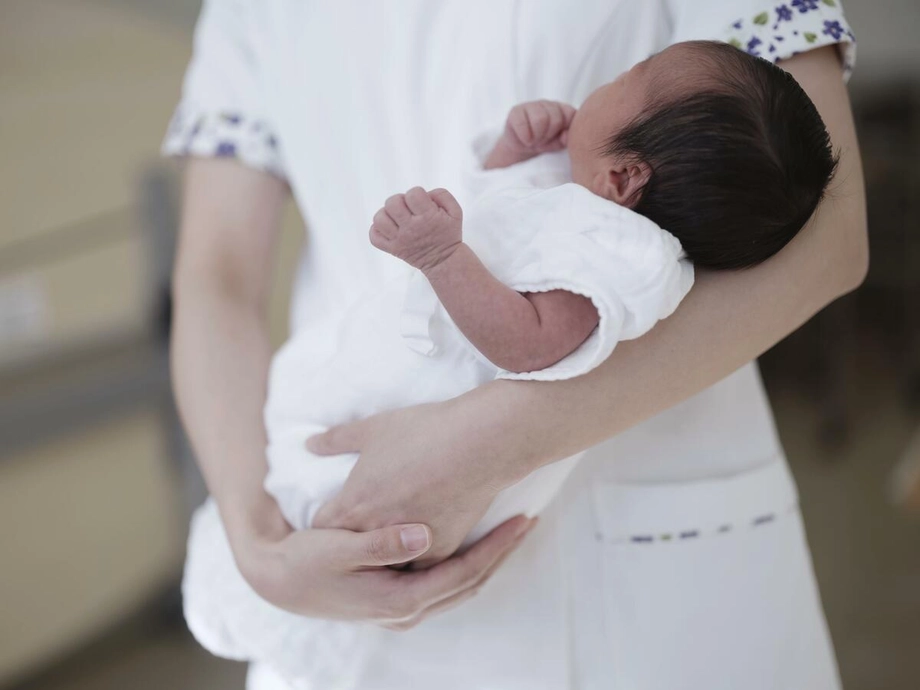
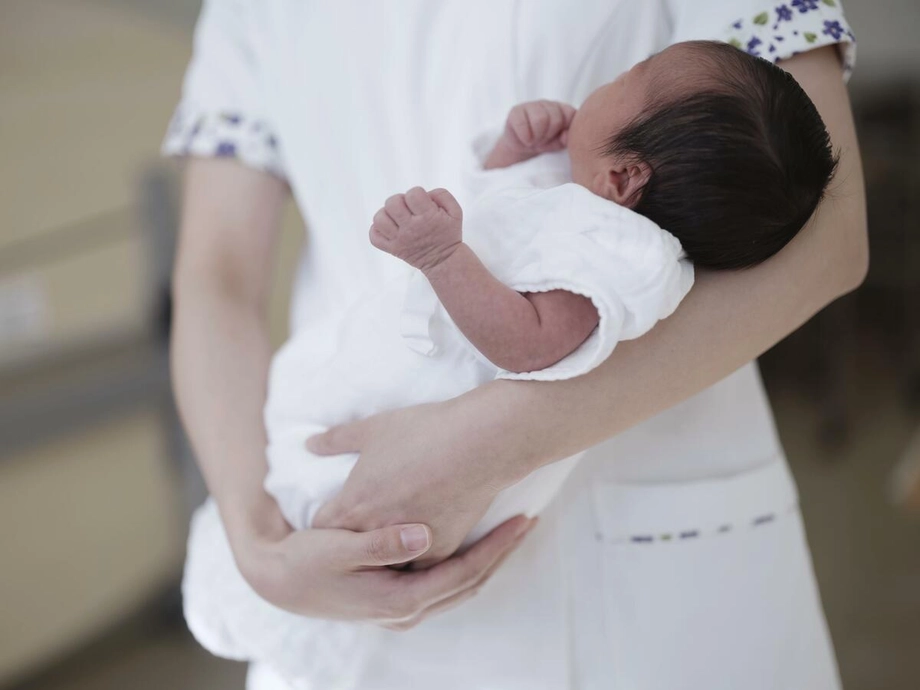
Japan recorded 320,458 Japanese children born within the country between January and June 2026, an increase of 1,379 from the 319,079 recorded a year earlier. The 0.4 percent rise in the Ministry of Health, Labour and Welfare's approximate vital statistics was the first increase for the first half of a year in 11 years, following a long series of declines.
Contents
- A small gain after 11 years
- Why marriages matter, and why 2026 is unusual
- Tokyo supplied more than the entire national increase
- Beyond Tokyo, cities gained while smaller prefectures struggled
- Births rose, but the population balance remained deeply negative
- In Shimane, the birth figures meet a shortage of maternity care
- How Oda is preparing families for longer journeys
- Japan looks different beside its East Asian neighbours
- What government policies have changed so far
- The dates that will shape the next reading
- What to Know
A wider count produced a larger increase. The ministry recorded 342,068 births when babies born to foreign nationals were included, up 2,788, or 0.8 percent, from the same six months of 2025. The two figures measure overlapping populations and should not be added together. The Japanese national figure is the basis for the 11 year milestone, while the broader figure provides a wider picture of births recorded in Japan.
The improvement does not settle the direction for 2026. Preliminary figures for January through September, which also include Japanese babies born overseas and foreign babies born in Japan, showed 523,304 births. That was 1,760 fewer than a year earlier, a decline of 0.3 percent. A ministry official responsible for explaining the figures urged caution about the annual result.
It is not possible to foresee whether births will increase or decrease over the full year.
Why marriages matter, and why 2026 is unusual
Marriages offer one explanation for both the improvement and the uncertainty. The number of marriages had fallen during the COVID-19 pandemic, when restrictions and caution reduced opportunities for people to meet. Marriages turned upward in 2024 and increased again in 2025. Japan recorded 485,092 marriages in 2024, while the projection for 2025 was around 495,000 couples.
Births in Japan are closely associated with marriage, so additional weddings can affect birth statistics after a delay. A couple married in 2024 might have a child in 2025 or 2026. That timing helps explain why first half births could rise even as marriages during the same six months slipped to 229,458 couples, down 708 from a year earlier. The recent decline in marriages is one reason the increase in births may be difficult to sustain.
The calendar adds an unusual cultural detail. The year 2026 is a hinoe uma, or Fire Horse, year in the Chinese zodiac cycle. In 1966, the previous Fire Horse year, a superstition that girls born that year would make poor wives and might even kill their husbands contributed to a fall of roughly one quarter in births. The first half figures for 2026 show no comparable collapse. The earlier recovery in marriages and the location of the additional births provide more concrete explanations for the latest change.
Tokyo supplied more than the entire national increase
Tokyo recorded 41,745 births among Japanese nationals in the first half, an increase of 1,864, or 4.7 percent. That gain exceeded the national increase of 1,379. In practical terms, Tokyo drove the national increase, while declines elsewhere absorbed some of the capital's growth.
The other 46 prefectures together recorded 278,713 births, compared with 279,198 a year earlier. Their combined total therefore fell by 485. Tokyo accounted for about 13 percent of Japanese births nationwide, calculated from its 41,745 births out of the national total of 320,458, but it supplied more than 100 percent of the net national gain.
The capital's improvement also developed over several periods. Tokyo recorded 39,881 births in the first half of 2025, up 105, or 0.3 percent. The second half brought 45,183 births, an increase of 754, or 1.7 percent, from the corresponding period a year earlier. Births then rose in each month from March through June 2026, extending the growth into a third consecutive period of six months.
Tokyo Governor Yuriko Koike has attributed the improvement to the capital's support policies for parents. Geography may also play a part. Some young families who once might have moved from Tokyo to surrounding areas may instead be remaining in the capital, causing births that would previously have been registered elsewhere to appear in Tokyo's statistics.
Beyond Tokyo, cities gained while smaller prefectures struggled
Births increased in 24 of Japan's 47 prefectures and decreased in 23. Several large urban centres joined Tokyo in recording gains, although their increases were much smaller. The prefectures with the largest birth totals after Tokyo were:
- Osaka: 25,431 births, up 292.
- Kanagawa: 23,961 births, up 122.
- Aichi: 21,325 births, up 392.
- Saitama: 18,489 births, up 88.
- Chiba: 15,946 births, up 121.
- Fukuoka: 15,294 births, up 308.
Western Japan also contained pockets of improvement. The five prefecture Chugoku region recorded a little more than 18,300 Japanese births in the first half, over 200 more than a year earlier and its first increase for that period in 11 years. Hiroshima prefecture accounted for about 7,300 of those births. Its increase of just over 2 percent was its first for a first half in 11 years and ranked as the third highest growth rate among the prefectures.
The smallest totals were concentrated in prefectures with much smaller populations. Tottori recorded 1,383 births, seven more than the 1,376 registered a year earlier. That was an increase of 0.5 percent, illustrating how a handful of babies can produce a visible percentage change in a small prefecture. Akita recorded 1,402 births, down 45; Kochi recorded 1,454, down 39; Shimane recorded 1,548, down 43; and Tokushima recorded 1,710, down six.
The largest numerical declines included Ishikawa, where births fell by 416, Niigata, where they fell by 330, and Tochigi, where they fell by 258. These decreases show why describing the national change as a general baby boom would miss the experience of much of the country.
Births rose, but the population balance remained deeply negative
More babies did not mean that Japan stopped losing population through deaths. During the first six months, the country registered 778,982 deaths against the broader birth count of 342,068. Deaths exceeded births by 436,914, equivalent to about 2.3 deaths for every birth. The comparison shows how deaths still far outnumbered births even during the first improvement in Japanese births in more than a decade.
The natural decrease, meaning deaths minus births before migration is considered, reached 622,232 people for January through September. The broader birth tally for those nine months was down 0.3 percent, suggesting an annual total for 2026 at roughly the 700,000 level. This can coexist with the first half increase because the figures cover different periods and, in the case of the Japanese national count, different population categories.
Annual figures show the scale of the longer decline. The broader total for 2025 was about 705,800 births, roughly 15,000 fewer than the previous year and a tenth consecutive record low. The annual count for Japanese nationals was 671,236. A projection prepared on Dec. 23, 2025, using preliminary figures for January through October and approximate figures for January through July, had estimated 667,542 Japanese births for the year, compared with 686,173 in 2024.
That estimate was below both scenarios published in 2023 by the National Institute of Population and Social Security Research. Its projection using medium assumptions had put Japanese births at 749,000 in 2025, while its projection using lower assumptions put them at 681,000. The lower scenario did not reach 665,000 until 2029. The 2025 estimate was already close to that level, indicating that births were falling faster than the institute had anticipated.
In Shimane, the birth figures meet a shortage of maternity care
Shimane's decline from 1,591 to 1,548 births gives the national statistics a local human dimension. Families there are also facing a reduction in places where they can safely give birth. The prefecture had 15 facilities accepting deliveries, but two suspensions scheduled for 2027 will particularly affect communities in its western area.
Oda Municipal Hospital is the only hospital accepting deliveries in the city of Oda. It plans to suspend them in the middle of March 2027 because it does not have enough obstetricians on its permanent staff. Obstetricians are doctors specialising in pregnancy and childbirth. Women expecting babies after the suspension will still be able to attend pregnancy checkups in Oda, but they will need to travel to a medical institution in Izumo, about one hour away by car, as the birth approaches.
Hospital director Shingo Yamagata explained the decision at a forum on safe childbirth in Oda attended by about 200 medical workers and residents. He said that giving birth at institutions outside the city with stronger medical staffing was safer, including when staff must respond to an emergency such as severe maternal bleeding.
People often speak of ten months and ten days. This is a life carefully nurtured in the mother's womb. I believe that safety and peace of mind must be assured before the safe birth of a small life can truly be fulfilled. That is why I reached the decision to suspend deliveries.
For an expectant mother, the change means more than a different hospital address. Travel can affect the cost and frequency of appointments, arrangements for older children, time away from work and the journey when labour begins. The hospital's decision also places greater importance on emergency transport and on coordination between the city, fire services and hospitals outside Oda.
How Oda is preparing families for longer journeys
Oda began offering 20,000 yen toward transportation costs in October 2026 for pregnant residents who will need to travel to distant medical institutions. The assistance is directed at women expecting to give birth from March 2027 onward, when the municipal hospital's suspension will affect delivery arrangements.
A second service, Oda Mama Support 119, is scheduled to begin in December 2026. Pregnant women will register their expected delivery date and pregnancy information with the city's fire department in advance. If labour begins or their condition changes and travelling becomes difficult, they can call 119, Japan's emergency telephone number, and provide their registration number. Emergency workers will then use the registered information while arranging transport to an appropriate medical institution. Similar arrangements are being introduced by municipalities elsewhere in Japan.
The pressure will extend beyond Oda. Hamada Medical Center in the city of Hamada is also due to suspend deliveries from April 2027. Once the suspensions at Oda and Hamada have taken effect, only two facilities accepting deliveries will remain in western Shimane.
Shimane Governor Tatsuya Maruyama has said that support must be organised before services disappear, rather than after families are already confronting longer journeys. He wants arrangements for earlier assistance to be prepared within the current fiscal year, which runs to the end of March in Japan.
The need to travel to hospitals farther away than before does not arise only after deliveries are suspended. It arises before that, so the government must put its preparations in place within this fiscal year.
Oda Municipal Hospital says it still intends to recruit doctors and eventually resume deliveries. Yamagata has said that its policy of securing physicians has not changed and that it wants families to be able to welcome their babies with peace of mind. No date has been given for a resumption, leaving recruitment as the immediate requirement.
Japan looks different beside its East Asian neighbours
Japan's total fertility rate stands at 1.14 in the regional comparison surrounding the latest figures. This rate estimates the average number of children a woman would have over her lifetime if current patterns continued. Around 2.1 is generally needed to keep a population stable without migration. Japan's rate is the highest among East Asia's wealthier economies, whose other rates have fallen below one. Singapore's rate is 0.87.
That comparison contrasts with Japan's longstanding image as the country with the most severe fertility problem. It does not make the small increase in births especially large. South Korea has recorded a jump of more than 14 percent in births, far exceeding Japan's 0.4 percent first half rise. Tokyo's fertility rate, despite being the lowest within Japan, is about 50 percent higher than Seoul's.
Marriage patterns provide another point of comparison. Japanese women married at an average age of 29.7 in 2025, compared with 31.6 in South Korea. Children are overwhelmingly born within marriage in both countries, making the timing and frequency of marriage central to birth trends in each.
What government policies have changed so far
The national government is spending about 3.6 trillion yen, equivalent to roughly $23 billion at the time of the package, each year on measures intended to counter the falling birthrate. A population strategy headquarters was established in November 2025 to examine responses to population decline. Prime Minister Sanae Takaichi has described that decline as a quietly advancing national crisis and is compiling a broader strategy.
Takaichi took office in October 2025, meaning the babies counted in the first half of 2026 were conceived before her tenure began. Her government's policy decisions will matter for later birth cohorts, while the latest increase reflects marriages, births and family decisions already underway.
Some changes in working and family life are easier to measure than the effect on the number of babies. The share of working women who remain in their jobs after having a first child has risen from about 50 percent to almost 70 percent. The share of men taking parental leave has increased from under 3 percent in 2015 to more than 50 percent. Daycare waiting lists, once a major obstacle for parents returning to work, have largely disappeared.
Japan also has an official fertility goal of 1.8, well above the current rate of 1.14. The employment and childcare figures therefore show improvements in the conditions surrounding parenthood even as births remain close to record lows. Fewer children eventually mean fewer people entering the workforce, adding to labour shortages while pensions, healthcare and local services must support a larger older population.
The dates that will shape the next reading
The next national figures will arrive in stages. The health ministry normally publishes preliminary annual figures, including foreign nationals and Japanese babies born overseas, around February of the following year. Approximate figures for Japanese nationals follow around June. On that schedule, February and June 2027 will provide the next major checks on whether the first half improvement lasted.
- December 2026: Oda Mama Support 119 is due to begin connecting registered pregnant women with emergency transport.
- Around February 2027: The ministry's broad preliminary birth total for 2026 is expected under its usual publication schedule.
- Middle of March 2027: Oda Municipal Hospital is due to suspend deliveries.
- April 2027: Hamada Medical Center is due to suspend deliveries, leaving two such facilities in western Shimane.
- Around June 2027: The approximate annual count for Japanese nationals is expected under the usual schedule.
The national statistics will reveal whether additional births outside Tokyo were enough to sustain an annual increase. In western Shimane, the more immediate measures will be whether transport subsidies, emergency registration and support for longer hospital journeys are operating before maternity services contract.
What to Know
- Japanese births within Japan reached 320,458 in the first half of 2026, up 1,379, or 0.4 percent, marking the first increase for that period in 11 years.
- A broader count including births to foreign nationals reached 342,068, up 0.8 percent.
- Tokyo added 1,864 births, more than the entire national gain, while the other 46 prefectures together recorded 485 fewer.
- Births increased in 24 prefectures, but Ishikawa, Niigata and Tochigi recorded some of the largest declines.
- First half marriages fell by 708 to 229,458 couples, and preliminary births for January through September were down 0.3 percent.
- Deaths exceeded births by 436,914 in the first half, and the natural decrease reached 622,232 for January through September.
- Oda and Hamada are preparing for maternity service suspensions in 2027, with transport subsidies, emergency coordination and prefectural support intended to help affected families.
- Japan's fertility rate of 1.14 remains far below both the population replacement level of about 2.1 and the government's goal of 1.8.