From an Orange Plush Toy to a Younger Companion
Punch, the Japanese macaque whose attachment to a stuffed orangutan drew worldwide attention, is appearing in a different kind of scene at Ichikawa City Zoo in Chiba Prefecture, east of Tokyo. A video shared on November 9, 2026, shows him approaching a newborn monkey, lying down beside it and remaining close.
Contents
- From an Orange Plush Toy to a Younger Companion
- What the New Videos Show
- Why Punch Needed the Stuffed Orangutan
- A Year of Changes, Step by Step
- Making Friends Takes More Than Sharing an Enclosure
- Why Keepers Responded to Claims of Bullying
- A Small Feeding Change With a Practical Goal
- How Punch's Fame Changed Visits to the Zoo
- A Young Monkey Still Learning Troop Life
- Key Points
A day earlier, the zoo posted footage of Punch playing and jostling with other monkeys. Together, the clips offer an encouraging update on an animal born in July 2025, rejected by his mother and raised by keepers before returning to a troop where he initially struggled to fit in.
Punch is about 16 months old in the November footage, still a young monkey himself. His quiet presence beside a smaller animal has prompted viewers to describe him as protective. The newborn's identity, age and relationship to Punch have not been given.
The more detailed story of his progress includes months of work by keepers: monitoring social encounters, temporarily removing some monkeys that showed frequent aggression, changing his feeding arrangements and moving visitors farther from the enclosure. Playing with companions and resting beside a baby are part of that longer adjustment.
What the New Videos Show
Melissa Wong, an X user who shared the November 9 clip, drew attention to the contrast between Punch carrying his orange toy earlier in the year and his gentle approach to the smaller monkey. In the footage, he moves toward the baby cautiously, then settles beside it.
The zoo's November 8 video shows another part of his social life, with Punch playing among other members of the group. The accompanying message credited the daily work of keepers for his healthy development and asked supporters to recognise their contribution.
Ichikawa City Zoo said the condition of Punch and the other animals changes from day to day. Staff observe them, interact with them and adjust care and feeding to match the season and weather. His progress therefore involves continuing decisions about his needs, rather than a single moment when his care is complete.
Why Punch Needed the Stuffed Orangutan
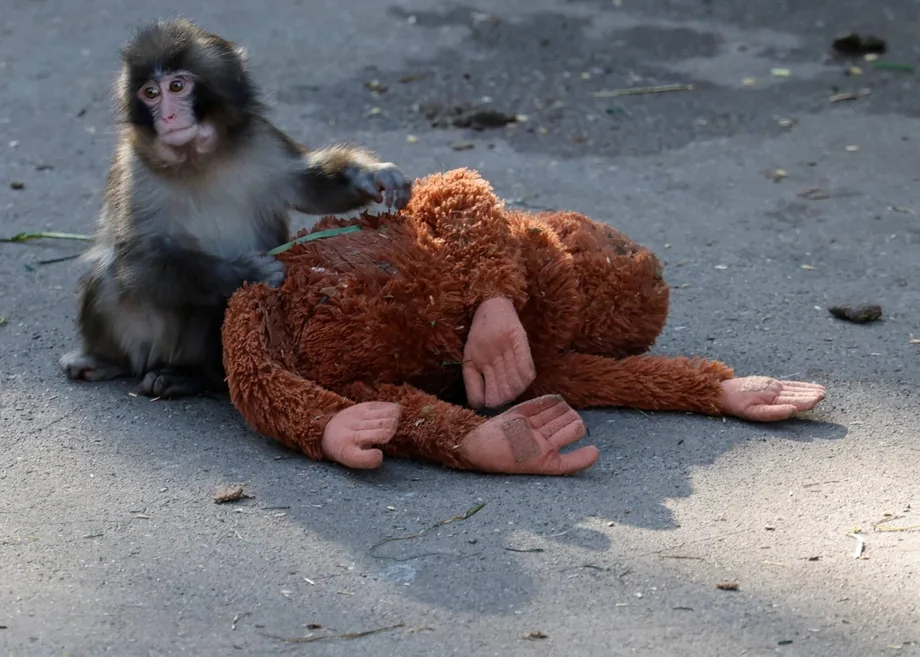
Punch was born in July 2025 and raised by hand after his mother abandoned him. A keeper gave him a large orange orangutan toy from Ikea, providing something he could hold close while also encouraging muscle development.
The toy served a practical purpose as well as a comforting one. A baby monkey normally has a mother to cling to. Punch instead had a soft object he could grip and carry while keepers looked after him and helped prepare him for life among other macaques.
Photos of the small monkey holding the oversized toy spread widely in February 2026. His early encounters with the troop added to public concern: some monkeys ignored him, while others chased or threatened him. Fans rallied around the hashtag #HangInTherePunch, and demand for the orangutan toy grew.
Zookeeper Shunpei Miyakoshi later explained that Punch continued to use the toy at particular moments, including when settling down to sleep or after a difficult encounter with an adult monkey. As more monkeys began interacting with him, he carried it less often.
A Year of Changes, Step by Step
Punch's physical return to the troop and his growing confidence within it happened on different schedules. He was fully returned in January 2026, but learning to interact, play and eat among other monkeys continued through the year.
The main developments trace how his daily life changed:
- July 2025: Punch was born and subsequently raised by keepers after his mother rejected him.
- January 2026: He was fully returned to the troop, where he initially struggled with social encounters.
- February 2026: Images of Punch carrying his orangutan toy brought widespread attention.
- April 20, 2026: Keepers confirmed a female macaque carrying a newborn, making Punch the second youngest in the zoo's group of 56 Japanese macaques.
- June 21, 2026: A keeper update described continued observation of troop interactions and reported that Punch was eating heartily.
- June 30, 2026: The zoo changed his feeding arrangements, allowing him to choose between eating behind the scenes and on the monkey mountain.
- November 8 and 9, 2026: Posts showed Punch playing with other monkeys and resting beside a newborn.
The April birth gave Punch a younger troop member after months as the youngest. By late April, roughly three months after his return, he was already being seen less often holding his plush companion. Keepers nevertheless continued watching for conflicts that might leave him excluded.
Making Friends Takes More Than Sharing an Enclosure
Miyakoshi described Punch beginning to communicate, hug and play with other monkeys. Those interactions gave keepers specific signs of progress beyond simply seeing him occupy the same space as the troop.
The zookeeper described the change in Punch's behaviour:
Now he's communicating with other monkeys and it's great to see him reaching those milestones,
Earlier observations also showed that Punch still spent much of his time alone and sometimes returned to his toy after rough encounters. His increasing contact with others developed alongside those quieter or more difficult periods.
Takashi Yasunaga, chief of the city's zoological and botanical garden division, connected Punch's declining reliance on the toy with a possible reduction in anxiety. He also described the limits of his acceptance within the group:
He is probably gradually feeling less anxious. More monkeys are starting to interact and play with him, though it's still limited to certain members of the troop. Even small conflicts can lead to cases where he is excluded, so we are monitoring the situation carefully.
For Punch, having particular companions willing to approach him was an important change. The zoo's concern was whether those relationships could continue through the ordinary tensions of group life.
Why Keepers Responded to Claims of Bullying
Videos of Punch being chased, tackled or pushed away led to concern in Japan and overseas. The zoo responded by explaining that Japanese macaques live within a strict social hierarchy, a system in which some individuals have higher status than others.
Dominant monkeys can use physical actions toward monkeys lower in that hierarchy. The zoo described these as disciplining behaviour within macaque society. Miyakoshi said the rough encounters circulating online accounted for only a few minutes of Punch's day, while the zoo said he spent most of the day peacefully.
Keepers also intervened. The zoo temporarily removed some higher ranking troop members that had shown aggression more frequently. Its approach combined continued social contact for Punch with changes to the group around him.
People for the Ethical Treatment of Animals called for Punch to be moved to a reputable sanctuary, arguing that his experience highlighted the cruelty of zoos. Ichikawa City Zoo warned that removing him from the troop carried its own lasting risk.
The zoo explained why it favoured keeping Punch within the group:
Punch has become accustomed to living in this troop, so separating him now would create the risk that he would never be able to return to the group and would have to continue living that way for the rest of his life.
Those positions lead to different proposals for his care: relocation to another setting, or continued work toward stable relationships within his existing troop. The zoo has pursued the latter while monitoring his welfare.
A Small Feeding Change With a Practical Goal
On June 30, the zoo introduced a feeding arrangement intended to prepare Punch to eat alongside the other monkeys. He could choose where to eat: in a room behind the scenes or out on the monkey mountain.
Punch chose the area behind the scenes that day. Visitors who expected to see him during the midday meal therefore found him absent from the public enclosure. The zoo explained that his feeding time and the staff responsible for him had not changed.
Eating together is another part of joining a troop. Punch's new arrangement gave him a choice of location while keepers worked toward shared feeding with the others. The change also meant that a familiar public appearance at mealtime would no longer happen every day.
A June 21 keeper update had already described him eating well, using the recurring Japanese hashtag #ごはモ. The phrase abbreviates a message meaning that he is eating heartily. Alongside observations of play and social contact, appetite gave followers another concrete update about his daily condition.
How Punch's Fame Changed Visits to the Zoo
Ichikawa City Zoo attracted visitors from around the world after Punch became famous. Crowds were particularly large on weekends, and visitors included Lisa of the K-pop group Blackpink.
The zoo became concerned that crowds surrounding the monkey mountain, especially people shouting, could increase stress among the animals. Staff feared that young Punch might then become a target for aggression from other troop members.
A new fence moved the viewing area about 1 metre farther from the mountain. After keepers confirmed the newborn on April 20, the zoo asked visitors to remain especially quiet around the enclosure to reduce stress for the mother and baby.
For visitors, supporting Punch means accepting some distance and the possibility that he may be eating or resting out of sight. The feeding change and the viewing barrier both put the animals' routines ahead of a guaranteed close encounter.
A Young Monkey Still Learning Troop Life
The November scenes show Punch taking part in the social life that keepers had been working toward for months. He plays with companions, receives attention from others and can stay quietly beside a smaller monkey.
His development also looks different when the full calendar is considered. The baby holding a plush toy in February was still learning to live among the troop. By June, staff were adjusting where he could eat. By November, viewers were watching him settle beside a newborn rather than retreat with his toy.
Keepers continue to describe care as daily work shaped by observation, weather, feeding needs and changing relationships. Punch's story now includes more companionship, while the responsibility for watching his health and helping him navigate troop life remains with zoo staff.
Key Points
- A video shared on November 9, 2026, shows Punch approaching and resting beside a newborn monkey.
- The zoo posted footage a day earlier showing him playing with other troop members.
- Born in July 2025, Punch was raised by keepers and fully returned to the troop in January 2026.
- His orangutan plush toy provided comfort while he learned to interact with other macaques.
- Keepers have monitored conflicts, temporarily removed some frequently aggressive monkeys and adjusted his feeding arrangements.
- The zoo moved visitors about 1 metre farther from the enclosure and asked for quiet to reduce stress.
- Punch's care continues through daily observation and adjustments to his changing needs.