A faster bid after a 62.8% fall
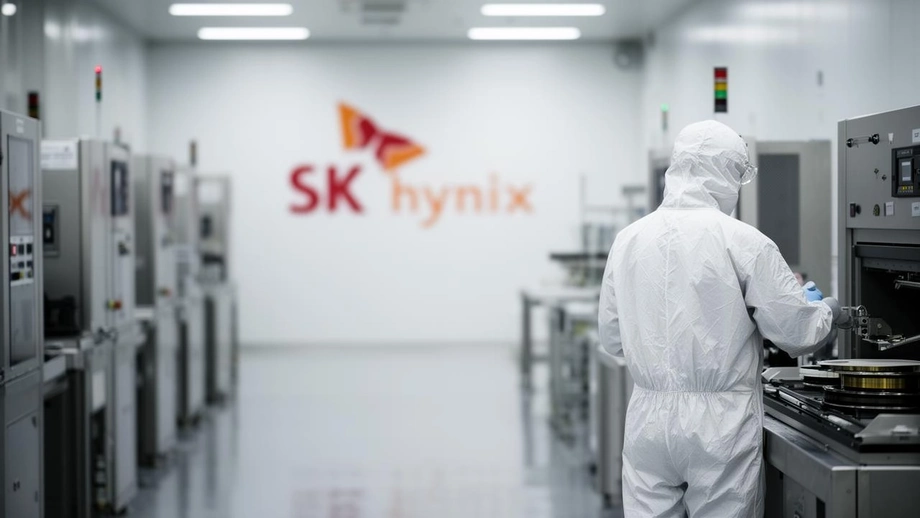
SK hynix is doubling its daily orders to buy its own shares to about 700,000 from roughly 350,000, accelerating purchases after a steep decline in its stock. The chipmaker disclosed the decision in a regulatory filing released after the Seoul market closed on November 27, 2026. Korea Exchange trading records published the next day showed an application to buy 700,000 treasury shares during trading on November 30.
Contents
- A faster bid after a 62.8% fall
- What changes, and what stays the same
- The dates behind the buying program
- Why August's 40 trillion won program matters
- How firm is the 100 trillion won promise?
- The cash, the Kioxia gains and the dividend
- Why one chipmaker matters to the whole market
- What the valuation numbers say
- Memory prices will set the next test
- Key Points
The scale of the decline explains the urgency. SK hynix reached an intraday high of 2,987,000 won on June 25, briefly approaching 3 million won a share. It closed at 1,110,000 won on November 27, leaving it 62.8% below that peak in about five months. The stock nevertheless gained 57,000 won, or 5.41%, during the November 27 session, before the accelerated buying was disclosed.
The company said the recent fall had deepened the gap between its share price and its assessment of corporate value. Faster execution is intended to support the stock in the short term and provide a steady source of buying demand over a longer period. Foreign investors also bought a net 378.3 billion won of SK hynix shares on November 27.
The announcement changes the speed of an existing program rather than its authorized size. SK hynix has also said it intends to continue repurchasing shares after the current acquisition ends, but those purchases require another board resolution. No size or starting date has been set for that later program.
What changes, and what stays the same
At the November 27 closing price, the value of shares targeted by the daily orders rises from about 388.5 billion won to 777 billion won. Those figures describe orders, not guaranteed purchases. The amount actually acquired will depend on how many orders are filled and the prices paid during each session.
The underlying authorization dates from October 28, when the board approved the open market purchase of 14.92 million common shares. The disclosed acquisition amount was 20.00772 trillion won, with the purchasing period running from October 29 through January 28, 2027. About half of the program is intended to enhance shareholder value, while the remainder is intended to provide stock compensation for executives and employees.
Execution had been relatively measured before the latest decision. By November 20, SK hynix had acquired 33.0% of the reported amount on the exchange, leaving 13.4066 trillion won unspent. Across 17 trading days, it bought an average of 311,765 shares a day, within a range of 250,000 to 350,000 shares. That average represented just 20.9% of the daily purchase order limit of 1,492,000 shares disclosed with the board plan.
The new order of 700,000 shares remains comfortably below that limit. It is also less than half the authorized daily maximum, leaving room for the company to adjust its buying again if directors consider it necessary.
The dates behind the buying program
The November decision is the latest stage in a return policy that has expanded as SK hynix's cash position has improved. The sequence also distinguishes programs that have already been completed from money that remains subject to future decisions.
- November 2024: SK hynix announced a plan to return up to 50% of cumulative free cash flow generated during 2025 to 2027. It said execution could begin early if stronger operating performance produced a meaningful increase in cash flow.
- August 19 and 20, 2026: Directors approved a 40 trillion won repurchase and cancellation program, with purchases scheduled to begin on August 20 and run for about three months.
- October 21: The company completed that separate 40 trillion won buyback about a month ahead of schedule.
- October 28 and 29: Record third quarter results accompanied the roughly 100 trillion won return target for fiscal 2026. The board also approved the current acquisition of 14.92 million shares, and its purchase period began on October 29.
- November 22 and 24: Financial authorities announced a market stabilization package, and the Financial Services Commission resolved to ease daily limits on treasury stock purchases for three months.
- November 25: SK hynix filed a voluntary progress report on its 2026 corporate value improvement plan with the Korea Exchange and furnished an English summary to the US Securities and Exchange Commission.
- November 27 to 30: The company disclosed the doubled daily order after the market closed on November 27, exchange records appeared on November 28, and the first 700,000 share order was scheduled for November 30.
January 28, 2027 is the next fixed checkpoint because the current acquisition period ends then. Market data also list that date as the estimated next earnings release, although additional repurchases will still need separate approval from directors.
Why August's 40 trillion won program matters
The company's August buyback announcement described the 40 trillion won repurchase and full cancellation as the largest treasury share cancellation ever undertaken by a South Korean listed company. SK hynix said its business competitiveness, cash generation and growth potential were not fully reflected in its share price.
Based on the closing price of 1,662,000 won on the day before the board resolution, the program represented approximately 24.07 million shares. That was about 3.3% of the 730,492,365 shares then issued. All shares acquired under that program were designated for cancellation, and the subsequent value improvement filing listed the August shares as cancelled.
Cancellation permanently removes shares from the company's capital structure. With fewer shares remaining, each share represents a larger fraction of the business. Earnings per share can also rise if profit stays the same, because the profit is divided among fewer shares. Shares distributed as employee compensation serve a different purpose, which is why they are excluded from the shareholder return calculation in the November filing.
The August board resolution also raised the return target for 2025 to 2027 from within 50% of cumulative free cash flow to more than 50%. Free cash flow is the money left from operations after spending on assets such as factories and equipment. SK hynix reported net cash of approximately 69 trillion won at the end of the second quarter and said fixed and special dividends were being considered alongside repurchases.
How firm is the 100 trillion won promise?
The fiscal 2026 plan targets about 100 trillion won in total shareholder returns, with minimum amounts assigned to each part: at least 30 trillion won in cash dividends and at least 60 trillion won in buybacks and cancellations. For comparison, the company returned 14.3 trillion won for 2025, consisting of 2.1 trillion won in dividends and 12.2 trillion won in previously held shares that were cancelled. The 2026 target is therefore about seven times larger.
The November 25 summary counted 64.6 trillion won as declared or approved: 14.6 trillion won of dividends and 50 trillion won of buybacks. That leaves 35.4 trillion won, roughly one third of the headline target, without a final board decision. The buyback portion consists of 40 trillion won from August and 10 trillion won attributed to the October program.
The 10 trillion won figure does not contradict the roughly 20 trillion won October authorization. The larger authorization includes shares intended for employee and executive compensation, while the shareholder return total counts only the portion directed toward shareholder value. Cancellation is planned for the counted October portion.
Timing also needs attention. The filing says some amounts included in the fiscal 2026 program may be decided or paid during 2027, and part of the repurchases and cancellations may occur that year. The label describes the program's accounting year rather than requiring every payment to be completed by December 31.
At the Federal Reserve exchange rate of 1,342.41 won per dollar on November 20, the target was worth about $74.5 billion. That is roughly 1.8 times the $41.1 billion Nvidia returned in its fiscal year ending in January 2026 and about three quarters of Apple's $102.1 billion in the year to September 2026. Samsung Electronics has separately projected 90 trillion to 110 trillion won in shareholder returns for 2026.
The cash, the Kioxia gains and the dividend
The balance sheet shows why SK hynix can consider distributions on this scale. Net cash, meaning cash after subtracting debt, moved from minus 9 trillion won at the end of 2024 to 12.7 trillion won at the end of 2025 and 98.7 trillion won by September 30, 2026. The combined minimum for dividends and buybacks is 90 trillion won, below that September cash balance.
Operating performance supplied much of the money. Revenue for the first nine months of 2026 reached 237 trillion won and operating profit reached 181 trillion won, compared with full year 2025 revenue of 97 trillion won and operating profit of 47 trillion won. The planned 100 trillion won return is about 103% of the previous year's entire revenue, a comparison that captures the exceptional size of the program.
The third quarter dividend added another unusual element. It totaled 14.1 trillion won, or 20,000 won a share, with a Korean record date of November 30. Half of the amount a share was based on earnings. The other 10,000 won was related to investment gains from Kioxia, the Japanese flash memory producer in which SK hynix invested through a consortium. SK hynix has also said it will convert its Kioxia bonds into shares, giving it an indirect stake of about 14%.
Chief executive Kwak Noh-Jung connected those proceeds to the company's ability to maintain distributions while preparing for further investment.
"These gains help replenish our capacity for shareholder returns, which may temporarily decline as we prepare for the future," he said.
The two halves of the dividend therefore draw on different sources. The earnings based portion depends on memory profitability, while the Kioxia portion comes from monetizing an investment. SK hynix has indicated that more of those gains could be returned through the dividend for the end of 2026, but the board has not yet declared that payment.
Why one chipmaker matters to the whole market
SK hynix dominates the pool of immediately available buyback funds in South Korea. A Korea Exchange disclosure summary identified 181 listed companies with remaining purchase capacity totaling 15.5086 trillion won. SK hynix accounted for 13.4066 trillion won, or 86.4% of that total. The other 180 companies had only 2.102 trillion won combined.
That concentration gives the company's daily decisions unusual weight for the broader index. The remaining capacity outside SK hynix was less than half the 4.5159 trillion won of net foreign selling recorded on the KOSPI during the previous week. Samsung Electronics had also ended the purchase period for its 15 trillion won program on November 21.
The Financial Services Commission's decision to ease daily purchase limits provides more room for companies willing to buy, but board approvals and disclosure procedures still take time. Attention has consequently turned to the proposed 10.76 trillion won Securities Market Stabilization Fund as another possible source of support.
Jeong Da-un, a researcher at LS Securities, addressed both the limits of that fund and its potential role during disorderly trading.
It may be difficult to reverse the trend with just the Securities Market Stabilization Fund, but it is worth expecting its role as a safety net to suppress irrational panic selling in a market where bid-ask spreads have thinned.
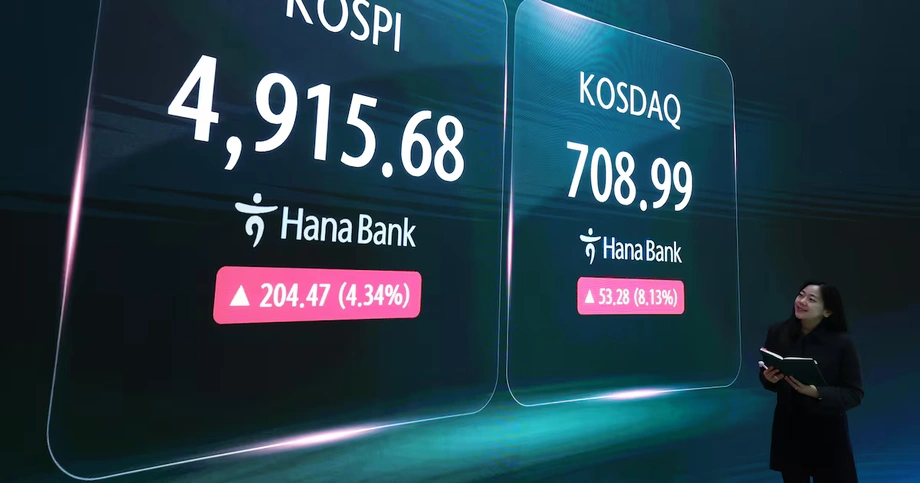
The wider market was already rebounding when SK hynix made its disclosure. The KOSPI rose 4.34% to 4,915.68 on November 27 as tariff concerns eased, while SK hynix gained 5.41%. Both moves occurred before the doubled daily order was filed after the close.
What the valuation numbers say
At 1,110,000 won a share, SK hynix had a market capitalization of approximately 789.34 trillion won and 711.12 million shares outstanding. Its trailing price to earnings ratio was 4.19, while the ratio based on forecast earnings was 2.23. A price to earnings ratio compares the share price with annual profit a share; the forward version changes when analysts revise their earnings estimates.
The 62.8% retreat from June does not capture the full boom and correction. The stock was still up 111.83% over the preceding 52 weeks. At the same time, its close remained below the average price of 1,419,350 won over 50 trading days and 1,534,657.50 won over 200 trading days, showing how far it had fallen from its recent trading range.
Among 41 analysts covered by the market data, the consensus rating was strong buy. Their average price target was 2,957,152 won, about 166.4% above the November 27 close. The annual dividend stood at 20,750 won a share, giving a yield of 1.87% at that closing price, with November 27 also listed as the ex-dividend date.
US investors have a separate way to trade the company. Nasdaq began trading SK hynix American depositary shares under the ticker SKHY on July 10, with each depositary share representing one tenth of a common share. Those securities rose nearly 4% in limited trading as of 10:27 a.m. Eastern time on November 27.
Memory prices will set the next test
Future repurchases depend on earnings and cash generation, making memory prices more consequential than the size of any single daily order. GF Securities cut its DRAM price forecast for 2027 on the day of the buyback disclosure. It projected price gains during the first half, followed by stable prices in the second, while expecting conventional DRAM supply to remain tight through 2028.
The Bank of Korea presented a weaker scenario on November 26. It warned that memory chip prices could fall well below current forecasts through 2028 if artificial intelligence investment cools, financing becomes harder to obtain and Chinese manufacturers increase output. Kim Du-eon, an analyst at Hana Securities, also sees a possibility of falling prices for standard DRAM next year and has pointed to cash flow pressures at large US technology companies that could slow memory orders.
SK hynix must simultaneously fund its expansion in artificial intelligence infrastructure, including a US platform for AI infrastructure. Those investments do not alter the disclosed buyback amounts, but they compete for the same pool of cash when directors consider future distributions.
The company's stated quarterly policy is to continue buybacks at a scale set by the board after considering the share price, market conditions and cash flow. The immediate task is to execute the remaining 13.4066 trillion won reported as unspent on November 20 before the current period closes on January 28. Any further program, and particularly its size, will provide the clearest indication of how much financial room SK hynix believes it has after that date.
Key Points
- SK hynix doubled its daily buyback order to about 700,000 shares from 350,000, with the first increased order scheduled for November 30, 2026.
- The stock closed at 1,110,000 won on November 27, down 62.8% from its June 25 intraday high, although it rose 5.41% that day before the filing.
- The faster orders sit within an existing 20.00772 trillion won authorization to acquire 14.92 million shares by January 28, 2027.
- The fiscal 2026 return target is about 100 trillion won, including at least 30 trillion won in dividends and at least 60 trillion won in buybacks and cancellations.
- About 64.6 trillion won has been declared or approved, leaving 35.4 trillion won awaiting board decisions, with some payments potentially occurring in 2027.
- Net cash reached 98.7 trillion won by September 30, while revenue and operating profit for the first nine months of 2026 reached 237 trillion won and 181 trillion won.
- SK hynix holds 86.4% of the remaining buyback capacity identified across 181 South Korean listed companies, giving its purchases unusual importance for the wider market.
- Future purchases remain subject to board approval, with memory prices, AI investment and infrastructure spending set to influence their scale.