A Three Company Map for Indonesia's Construction State Firms
Danantara told Indonesia's House of Representatives on Thursday, 26 November 2026, that it will merge six construction state companies into three, with the first deal to be finalised this year and the hardest pair left for early 2027. Dony Oskaria, Danantara's chief operating officer, gave the sequence to Commission VI at the parliament complex in Senayan, Jakarta. The plan puts PT Nindya Karya (Persero) with PT Brantas Abipraya (Persero), PT Adhi Karya (Persero) Tbk with PT PP (Persero) Tbk, and PT Waskita Karya (Persero) Tbk with PT Wijaya Karya (Persero) Tbk.
Contents
- A Three Company Map for Indonesia's Construction State Firms
- What Happens First, and Why the Order Matters
- Why Waskita and Wika Must Wait
- The Wider Cleanup Already Under Way
- From Seven Companies to Six, and From Options to a Schedule
- Why Danantara Is Not Simply Letting the Companies Fail
- What Else Is in the 2027 Work Plan
- A Timeline of the Changes
- Workers, Buyers and Suppliers Are Part of the Calculation
- What the Merger Changes in Practice
- Key Points
A merger combines two companies under one owner and one plan. In Indonesia, Badan Usaha Milik Negara, or BUMN, means state owned enterprise, and BUMN Karya refers to the construction group. Before a merger, Danantara is carrying out restructuring, a cleanup of debt, assets and business lines so the new company is not carrying problems that cannot be managed.
Danantara told Commission VI on 26 November that the four company consolidation would be finalised in 2026: Nindya Karya with Brantas Abipraya first, then Adhi Karya with PT PP. In another timing from the same hearing, Adhi Karya and PT PP were placed in early 2027, before Waskita Karya and Wijaya Karya. Both put Waskita and Wika last, in early 2027, because their finances need more work.
What Happens First, and Why the Order Matters
Nindya Karya and Brantas Abipraya are the first pair. Dony said Danantara would finalise their merger in 2026, which means completing the legal and corporate steps that turn two companies into one. He said Adhi Karya and PT PP had already finished their restructuring, putting them next in line. That matters because merging a healthier balance sheet is easier than merging companies still trying to repair their finances.
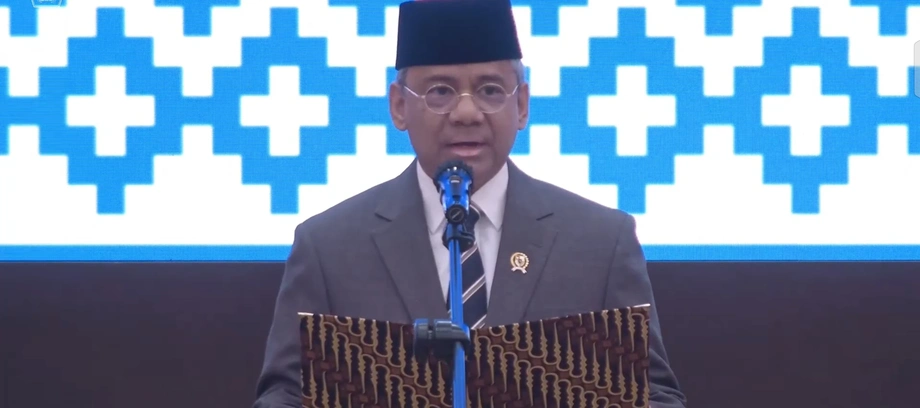
Dony Oskaria, Danantara's chief operating officer and head of BP BUMN, told the hearing that the construction companies had heavier problems than other state companies. He described the order in these words:
Then we will continue with the merger of Adhi Karya and PP, and next we will carry out the settlement process for Waskita and Wika.
The sentence sets out a queue. Nindya Karya and Brantas Abipraya come first, Adhi Karya and PT PP follow, and Waskita Karya and Wijaya Karya are handled last. The final two are not simply waiting for paperwork. They need debt and business repairs before a combination can work.
Why Waskita and Wika Must Wait
Dony said Waskita Karya and Wijaya Karya face 'quite deep financial problems', so their merger has been pushed to early 2027 for restructuring. In simple terms, restructuring can mean changing debt terms, selling assets, writing down values or moving businesses to the right owner. The aim is to make the companies light enough to carry on before they are joined to another firm.
Financial data cited at the hearing showed that four listed construction related companies, Adhi Karya, PP Properti, Waskita Karya and Wijaya Karya, had liability to asset ratios of 85 percent to 99 percent as of September 2026, with Wijaya Karya in the most critical position. A liability to asset ratio compares what a company owes with what it owns. A figure near 100 percent leaves little cushion if projects stall or payments are late.
Dony Oskaria, who is also chief executive of PT Danantara Asset Management (DAM), explained why Danantara did not take the faster route of declaring badly indebted companies bankrupt. He said a purely commercial decision could have led to bankruptcy, but the effects on buyers, vendors and subcontractors would have been severe. He gave the stalled LRT City project under PT Adhi Commuter Properti Tbk, a subsidiary of Adhi Karya, as an example.
We have to consider how many people have already purchased units that have still not been built to this day.
That point turns the merger from a balance sheet exercise into a public issue. People who bought homes in stalled projects, suppliers waiting for payment and subcontractors on state projects all sit behind the company numbers. Dony said DAM's takeover of the state companies also gave it a duty to resolve the problems rather than walk away.
The Wider Cleanup Already Under Way
The construction mergers sit inside a larger program to simplify the structure of Indonesia's state companies. Aminudin Maruf, deputy head of BP BUMN, told a Collaboration For Solution Forum at the national planning ministry office in Jakarta on Monday, 23 November 2026, that 360 of 628 entities had been streamlined. The remaining 268 are being pursued until the end of December 2026.
Aminudin said state companies were cutting entities through mergers, divestments and other steps. Divestment means selling or transferring a business, often to reduce debt or focus on the main work. The 360 completed cases equal about 57 percent of the target, so the final stretch covers almost half of the planned work in about one month.
Aminudin listed the parent state companies with the largest streamlining targets:
- Pertamina: 118 entities
- Telkom Indonesia: 49 entities
- Pupuk Indonesia: 46 entities
- PTPN III: 37 entities
- PT PP: 30 entities
- ID Food: 29 entities
- Semen Indonesia: 29 entities
- BRI: 24 entities
- IFG: 20 entities
- Danareksa: 19 entities
Those figures show why the construction sector is only part of the story. Danantara and BP BUMN are reshaping subsidiaries and subsubsidiaries across energy, telecoms, fertilizer, plantations, food, cement, banking and insurance. The six construction firms are the last major group in that cleanup because Dony said their problems run deeper.
From Seven Companies to Six, and From Options to a Schedule
The plan has changed since earlier discussions. In April 2026, Dony said consolidation covered seven construction state companies: Hutama Karya, Waskita Karya, Wijaya Karya, Adhi Karya, PT PP, Brantas Abipraya and Nindya Karya. The target then was June 2026. He said the work was late because each company needed its own restructuring scenario, especially with large debts.
Dony Oskaria, then speaking at Hotel Mulia Senayan in Jakarta on Tuesday, 28 April 2026, said each company needed a separate design because the debts were large and the problems could not be handled all at once.
He said some construction companies held assets outside their main construction work, including fiber optic businesses, drinking water supply systems known as SPAM, and toll roads. Danantara planned to divest these assets through valuation by public appraisers, often called KJPP in Indonesia. The valuation step takes time because a sale must benefit the company and the state, particularly by reducing debt.
Earlier ideas were different. On 18 July 2025, Dony said Danantara was studying several options, including mergers and consolidation into another business line. At that stage, one scheme would have moved Waskita Karya into Hutama Karya, another would have combined Adhi Karya with Brantas Abipraya and Nindya Karya, and a third would have paired PT PP with Wijaya Karya. Novel Arsyad, president director of PT PP, said at a press conference in Jakarta on 30 April 2025 that the company was preparing for merger steps while waiting for Danantara's final decision.
The current plan keeps the three company goal but drops Hutama Karya from the six company merger group and changes the pairings. That shift matters because it shows Danantara has moved from broad options to a staged schedule, with the most indebted names held back.
Why Danantara Is Not Simply Letting the Companies Fail
Dony said the financial cleanup is tied to a wider change in what state companies should do. His message was that Danantara should focus on large, core industries and leave smaller businesses to private players. He cited a former Angkasa Pura unit selling Tahu Susu Sono snacks as an example of a business outside the main industry that had been closed.
He also pointed to a change in the relationship between dividends paid by state companies and PMN, or state capital injections. In 2021, state companies paid IDR 29.5 trillion in dividends while receiving IDR 68 trillion in state capital, a net gap of IDR 39 trillion. In 2022, dividends were IDR 39 trillion and capital injections IDR 51 trillion, a net gap of IDR 12 trillion. In 2023, dividends rose to IDR 81 trillion while capital injections fell to IDR 34 trillion.
Dony Oskaria, Danantara's chief operating officer, said the shift continued in 2025 and gave this account of the tax contribution:
In 2025, there were no longer any state capital injections, but tax revenue received by the government increased by nearly IDR 100 trillion.
He estimated that higher tax revenue could add nearly IDR 180 trillion to fiscal contributions in 2026. Those numbers are his explanation for why the state can receive value from stronger companies even if dividend policy changes. The merger plan is meant to build companies that can pay tax, win projects and keep operating, not merely to cut names from a list.
What Else Is in the 2027 Work Plan
The six construction mergers are one part of PT Danantara Asset Management's 2027 corporate work plan and budget, known in Indonesia as RKAP. Dony told Commission VI that five groups face major repairs: PTPN, Pos Indonesia, INKA, KCIC and BUMN Karya. The work uses restructuring, consolidation, business transformation and stronger governance, terms that mean changing debt, joining companies, changing how they earn money and improving rules for decision making.
PTPN, the plantation group, is being split by commodity. Palmco will handle palm oil, Sugarco sugarcane and sugar, and a third group tea, coffee and rubber. Consolidation of PTPN's financial obligations is due in the first quarter of 2027. PTPN I, acting as SupportingCo, managed about 276,137 hectares of planted land as of 31 December 2024, from Aceh to Maluku, including palm oil, rubber, sugarcane, tea, coffee and tobacco. In September 2024, PTPN I agreed an 80 year partnership with PT Kawasan Industri Terpadu Batang to develop industrial park land in Batang, Central Java.
Pos Indonesia will book an impairment of about IDR 9.5 trillion because of accounting errors. Impairment is an accounting step that lowers the recorded value of an asset when it is worth less than shown in the books. The target is the first half of 2027. INKA, the train maker, will combine with PT Kereta Api Indonesia, the rail operator, by early 2027. KCIC, operator of the high speed railway between Jakarta and Bandung, will undergo debt restructuring and reassignment of functions so duties match the role of each party.
Danantara CEO Rosan Perkasa Roeslani also set out 41 strategic projects for 2027, with 16 continuing programs and 25 new ones. They include the transformation of Garuda Indonesia, revitalisation of KAI infrastructure and a downstream equity stake in Krakatau Steel.
A Timeline of the Changes
The dates matter because some deals are being finalised while others are still being designed. This short timeline captures the steps named in the hearing and in earlier statements by the people involved.
- 13 March 2025: Erick Thohir, then minister for state companies, said Danantara would decide the final construction merger shape.
- 30 April 2025: PT PP president director Novel Arsyad said merger preparation was under way while final decisions waited on Danantara.
- 18 July 2025: Dony listed options, including mergers and consolidation into another business line.
- 28 April 2026: Dony said the June 2026 target had slipped because each company needed a separate restructuring design.
- 23 November 2026: Aminudin Maruf said 360 of 628 entities had been streamlined, leaving 268 by the end of December.
- 26 November 2026: Dony set Nindya Karya and Brantas Abipraya for 2026 and Waskita Karya and Wijaya Karya for early 2027.
- First quarter of 2027: PTPN's financial obligation consolidation is due to finish.
- Early 2027: INKA and KAI are due to combine; KCIC and Waskita and Wika restructuring are due to be handled.
- First half of 2027: Pos Indonesia's impairment is due to finish.
Workers, Buyers and Suppliers Are Part of the Calculation
Restructuring can change jobs, contracts and project ownership, so labor rules are part of the process. Mujahidah Fauzi Islami, head of the BUMN Industrial Relations Development Team at the Manpower Ministry, told a forum at Bappenas on Tuesday, 24 November 2026, that the transformation must follow Law No. 27 of 2026 on Labor Protection.
Mujahidah Fauzi Islami said the ministry was watching how state companies handle workers during the changes:
The Manpower Ministry ensures the transformation of BUMN runs in tandem with compliance with existing regulations, especially paying attention to aspects of labor or industrial relations.
The hearing did not give an exact closing date for the Nindya Karya and Brantas Abipraya deal, and Danantara did not say how many workers, project contracts or supplier payments would change. That leaves three practical questions for the coming months: which projects move to the merged companies, how debts are treated, and how staff are assigned. The answers will shape daily work for employees and the companies that build roads, rail and housing projects with them.
What the Merger Changes in Practice
For the companies, the immediate change is the order of work. Nindya Karya and Brantas Abipraya are being prepared to become one company in 2026. Adhi Karya and PT PP are next after restructuring, while Waskita Karya and Wijaya Karya get more time. The sequence lets Danantara test the model before handling the two companies with the deepest financial strain.
For buyers, suppliers and subcontractors, the impact depends on contract mapping that was not set out in the hearing remarks. Danantara has said the impact on unfinished homes and unpaid businesses was one reason it avoided bankruptcy. The coming months will test whether it can finish the 2026 streamlining target, close the first construction merger and carry the heavier cases into 2027.
Key Points
- Danantara plans to merge six construction state companies into three: Nindya Karya with Brantas Abipraya, Adhi Karya with PT PP, and Waskita Karya with Wijaya Karya.
- Dony Oskaria told Commission VI on 26 November 2026 that Nindya Karya and Brantas Abipraya would be finalised in 2026, while Waskita and Wika need restructuring until early 2027.
- Adhi Karya and PT PP have completed restructuring, but Danantara timings place their merger either in 2026 after the first deal or in early 2027 before Waskita and Wika.
- Four listed construction related companies had liability to asset ratios of 85 percent to 99 percent as of September 2026, with Wijaya Karya in the most critical position.
- Danantara said bankruptcy would have harmed homebuyers in stalled projects, vendors, suppliers and subcontractors.
- BP BUMN has streamlined 360 of 628 entities, about 57 percent of its target, with 268 remaining by the end of December 2026.
- The 2027 work plan also covers PTPN, Pos Indonesia, INKA and KCIC, with deadlines from the first quarter to the first half of 2027.
- The Manpower Ministry said the transformation must comply with Law No. 27 of 2026 on Labor Protection.