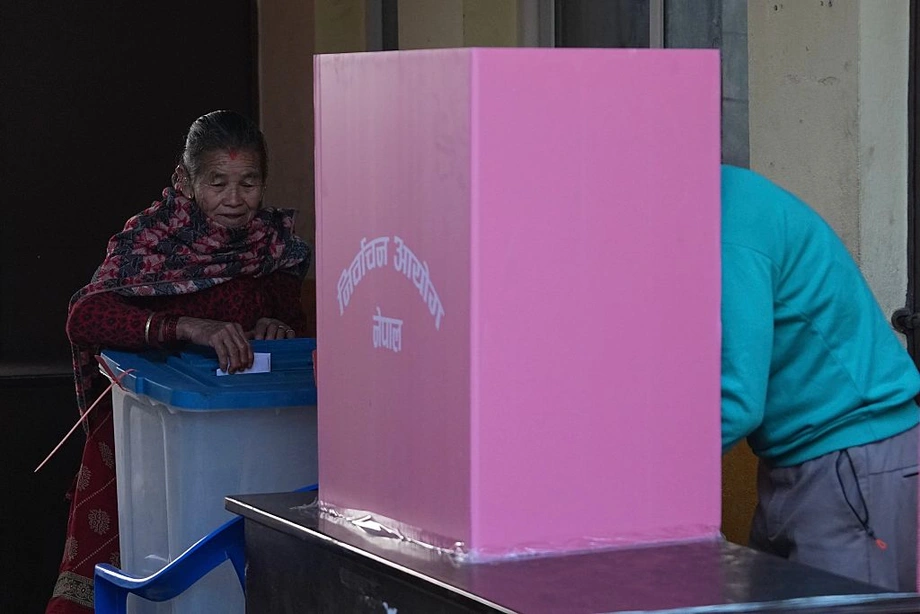
A Vote That Turned Protest Into Power
Nepal held its general election on 5 March 2026, nearly six months after street protests forced K.P. Sharma Oli from office and after a political transition driven by young voters. The vote filled the House of Representatives, which has 275 members and chooses the government. The ballot was the first national test of a movement that began with anger over a social media ban and grew into a revolt against corruption, inherited privilege and weak job prospects.
Contents
- A Vote That Turned Protest Into Power
- Who Voted, and How the System Works
- What September Changed
- The Candidates and the Old Guard
- From Rapper and Engineer to Prime Minister
- Jobs, Corruption and Money in Politics
- Who Get Left Out of the Ballot System
- The Online Information Battle
- India, China and a Delicate Balance
- What the India Visit Delivered Beyond Aid
- The Floods Behind the Reconstruction Money
- What Remains Unsettled at Home
- Key Points
The result was a rupture. The government profile says the RSP won a majority close to two thirds and that Balendra Shah assumed office as prime minister on 27 March 2026. Published counts put the party at 182 of 275 lower house seats. At one stage of counting, the RSP had 125 wins or leads, Nepali Congress had 18 and CPN-UML had no figure shown; an earlier partial count showed 106 direct seats and a projection of 190. Shah was 35 when he took office.
The scale of the change is easiest to see in one contest. Shah beat Oli, a prime minister four times, in Jhapa 5, Oli's own constituency. The result followed a campaign in which the RSP went from 20 seats and fourth place in the 2022 election to the centre of government. Nepal had moved from protest slogans to a young prime minister with a parliamentary majority in about seven months.
Who Voted, and How the System Works
Nearly 19 million of Nepal's 30 million people were eligible to vote. Election authorities said 65 parties were in the contest. About one million voters were added after the 2025 protests, most of them young people, including about 800,000 people voting for the first time.
Of the 275 seats, 165 were decided in direct contests, where the candidate with the most votes wins. The remaining seats were filled through proportional representation, a system that gives parties seats in proportion to their vote share. That split matters in Nepal because voters can choose a local candidate and a party list, and because party decisions shape who appears on those lists.
ANFREL's pre election assessment was conducted from 21 to 30 January 2026 and drew on 32 structured interviews with election officials, observers, media groups, rights advocates, parties, candidates and youth initiatives. It was the first stage of an engagement with three stages that also included an international election observation mission and structured review after voting. It assessed conditions against regional and global standards, including the Model Commitments for Advancing Genuine and Credible Elections (2024), Bangkok Declaration, Dili Indicators, Bali Commitment, Colombo Pledge and Kathmandu Declaration.
What September Changed
The protests that reshaped the election began on 8 September 2025 after the government restricted social media platforms, including TikTok and YouTube. The demonstrations soon widened into a challenge to corruption and the children of political families who were seen as living with advantages ordinary families could not imagine. Security forces killed 77 protesters, including 19 on the first day, according to official counts, and more than 2,000 people were injured. The count used before the toll was settled stood at least 76.
An interim government led by a former chief justice took office on 12 September 2025 and governed until the election. As Gen Z anger built before the vote, some children and grandchildren of senior politicians removed luxury posts from social media. Shrinkhala Khatiwada, a former Miss Nepal and daughter of a former health minister, closed an Instagram account with more than a million followers. Smita Dahal, granddaughter of a former Maoist leader who served three times as prime minister, made her account private.
Satish Kumar Yadav, aged 25 and a laboratory technician, described the resentment in everyday terms before the election.
The kids of big politicians celebrate special occasions in places like Thailand and Switzerland.
The quote captured two forces that travelled together online: anger at family privilege and anxiety about work. Nepal's youth unemployment rate stood at 20.6 percent, and about three million citizens worked overseas, often in construction jobs in Gulf countries. About a fifth of the population lived in poverty.
The Candidates and the Old Guard
Four men dominated the public contest for the top job. Shah, aged 35, ran for the centrist RSP from Jhapa 5. Oli, aged 74, of the Communist Party of Nepal (Unified Marxist Leninist), sought another term after losing power. Gagan Thapa, aged 49, represented the centrist Nepali Congress. Pushpa Kamal Dahal, aged 71, led the Nepali Communist Party after decades in revolutionary and mainstream politics.
Oli had been a liberal communist since the 1990s. Dahal led a Maoist insurgency that lasted a decade and was marked by bloodshed before joining mainstream politics in 2006. Shah had been the first choice of Gen Z groups to lead the interim government. Their political histories gave weight to the RSP argument that the country needed leaders outside the parties that dominated the period after the monarchy. The RSP itself was new, formed in 2022, and Rabi Lamichhane, its president, brought Shah into the party before the election.
The election landslide in Jhapa was stark. By 8 March 2026, officials had recorded 68,348 votes for Shah and 18,734 for Oli, a margin of 49,614. That was almost four votes for Shah for every one for Oli, the man who had governed Nepal when the protests erupted.
From Rapper and Engineer to Prime Minister
Shah's public profile mixed infrastructure, music and municipal politics. Before politics, he worked as a civil engineer and rapper, and served as mayor of Kathmandu Metropolitan City from 2022 to 2025. The government profile says he worked across 65 of Nepal's 77 districts and contributed to reconstruction after the 2015 earthquake.
The same profile lists an M.Tech in Structural Engineering from Visvesvaraya Technological University in Karnataka, India, and a bachelor's degree in civil engineering from Purwanchal University in Nepal. It says he is pursuing a doctorate in structural engineering at Kathmandu University, focused on conserving Newa structures in the Kathmandu Valley. He also studied civil engineering in Bengaluru, giving him a personal link to India before he entered national politics.
His music career became part of his political identity. He released his first single, which he wrote himself, Sadak Balak, in 2012, gained attention through Raw Barz in 2013 and composed more than 25 songs. He published a poetry collection titled Ashra and later released Jay Mahakaali. Shah is married to Sabina Kafle, and they have a daughter.
Jobs, Corruption and Money in Politics
The election was fought over bread and butter issues as much as history. Corruption remained the central grievance from the protests. Job creation sat beside it because a fifth of Nepalis lived in poverty and young people faced few opportunities at home. Shah's government began an anti corruption drive that included arrests of senior leaders and businessmen accused of illegally amassing property. It also promised to replace political appointments to civic bodies with competitive selection and to improve public service delivery.
Money shaped the contest itself. The pre election assessment found that legal campaign spending ceilings were widely exceeded and that enforcement was weak. The formal rules required dedicated campaign accounts and expense reports after voting, but the assessment found little deterrence. Weak enforcement created risks of vote buying and patronage, and it made competition harder for women and candidates from marginalized communities who lacked large networks of donors.
Nepal's election rules also allowed many parties but not equal access to resources. The assessment found that young people, women and marginalized aspirants were often filtered by nomination rules, party gatekeepers and the cost of campaigning. In direct contests, where the winner takes the seat, those barriers had more effect because party lists were not the only route to power.
Who Get Left Out of the Ballot System
Nepal's constitution and laws created inclusion measures, including proportional representation seats and gender thresholds, or rules requiring women's inclusion on party lists. The pre election assessment found that the legal architecture was broad, but practical access remained uneven. Women, persons with disabilities, older voters, Indigenous nationalities, Dalits and other marginalized communities faced barriers in documentation, polling sites and information formats.
Mobility was the clearest gap. Nepal did not provide voting from outside a person's home district or voting from abroad, so internal migrants, overseas workers and students away from their registered district could not vote from where they lived or studied. That mattered in a country where about three million people worked abroad. Security personnel and other duty voters also faced limits on exercising their vote.
The difference between eligibility and access can be simple. A student in Kathmandu whose voter registration remains in a rural district may be legally entitled to vote but unable to travel home on polling day. Practical measures included accessible polling sites, better voter education and reasonable accommodations, which means changes that make a right usable in real life.
The Online Information Battle
The fastest moving risk before polling was online. The pre election assessment called the digital information environment the highest velocity integrity risk, with false information, hate speech and manipulation using artificial intelligence moving faster than oversight. Voters used phones for work, family messages and news, which made social media a central campaign space after the 2025 restrictions.
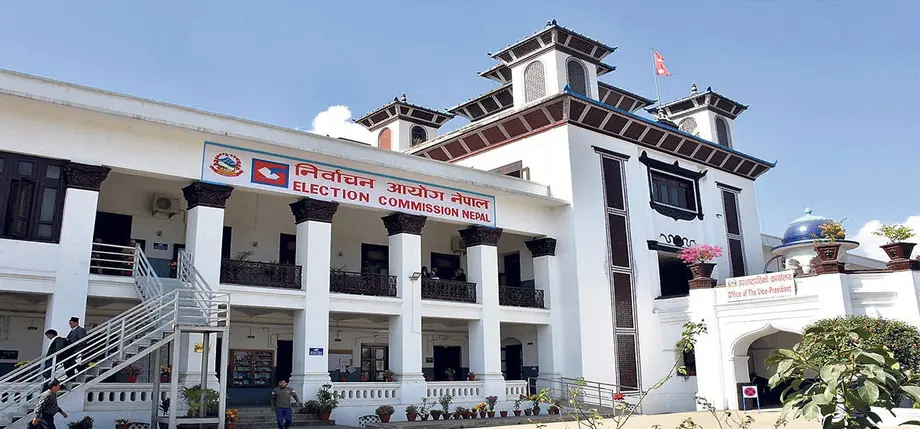
The Election Commission of Nepal established the Information Integrity Promotion Centre, known as the IIPC, to coordinate work with platforms and respond to false information. The assessment described the centre as a real step, but it raised concerns about scale, speed, transparency and public trust. It also warned that monitoring should be led by civilians and consistent with rights, so efforts against false messages do not become a path to intimidation or unequal treatment of political speech.
Domestic observation was strong in number but uneven in depth. Nepal had many accredited observer groups, yet many relied on volunteers with different levels of training and limited methods beyond checklists used on polling day. The assessment said better coordination and stronger safety protocols would make citizen observation more useful during opening, closing, counting and tabulation.
India, China and a Delicate Balance
Nepal's geography makes every government balance two large neighbours. India accounts for about two thirds of Nepal's international trade, while China accounts for 14 percent and has lent more than $130 million to Nepal, according to the World Bank. Both countries court young Nepalis. The Chinese embassy launched a Youth Pioneer programme for professionals, activists and entrepreneurs aged 22 to 34, with leadership training and educational trips to China. United States embassy programmes also target Nepali youth.
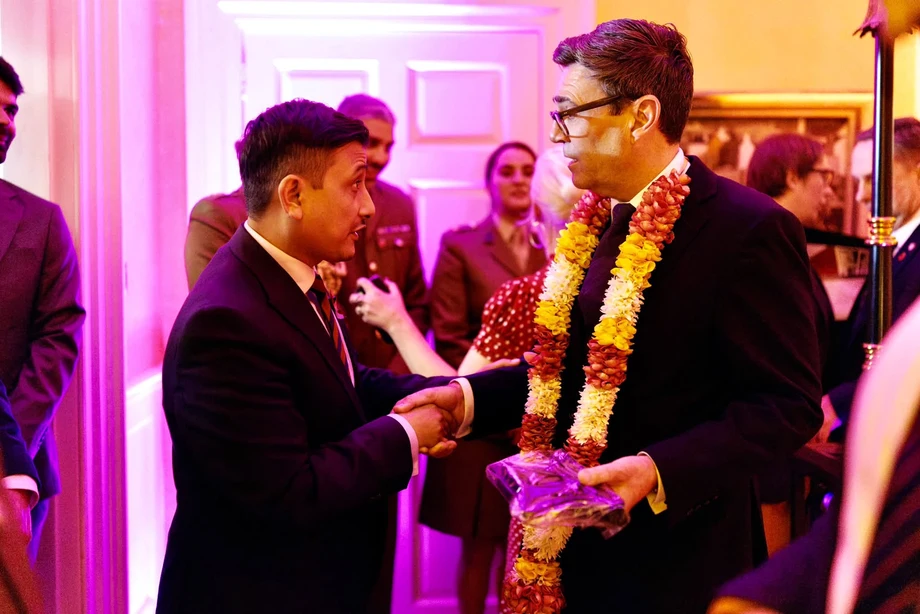
Shah's India visit began on 22 November 2026, about seven months after he took charge. The trip lasting two days was compressed. He led a delegation of 34 officials, travelled with a business group of 52 people and spent about 25 hours in Delhi. Shah met Prime Minister Narendra Modi in New Delhi on 23 November. The leaders discussed trade, transit, energy, disaster recovery and connectivity, then issued a joint vision document covering ten areas of cooperation.
Narendra Modi, India's prime minister, praised the election result during a joint statement at Hyderabad House and linked it to generational change.
This year the Nepali people gave him a historic mandate. It reflects the aspirations of a new generation in Nepal.
India announced a development assistance package of ₹15,000 crore, made up of ₹3,500 crore in grants for reconstruction after disasters and new infrastructure and ₹11,500 crore as a Line of Credit for energy projects. A grant does not have to be repaid. A Line of Credit is a loan arrangement, often used for large projects.
What the India Visit Delivered Beyond Aid
The visit also produced projects with effects that will last. India agreed to establish a branch of the Indian Institute of Technology Kanpur in Nepal. Modi announced new access for Nepal through Deendayal port at Kandla in Gujarat and Paradip port in Odisha. The two governments said they would open new transit routes and air routes to improve access and connectivity.
Some disputed subjects stayed outside the public talks. Issues such as Lipulekh, Kalpani and Limpiyadhura, and the entry of Nepali Gorkha recruits into India's Agnipath scheme, did not figure in the discussions described after the visit. India's foreign secretary told reporters that the EPG report belonged to the past and that the approach now was forward looking. The EPG was the India Nepal group that had examined old disputes and border concerns.
For Nepal, the practical gain was a mix of money, infrastructure and recognition. For India, the visit gave New Delhi a way to engage a government whose arrival surprised established political circles. The timing also placed India and China in a quieter contest for influence among young Nepalis, with New Delhi concentrating on youth dialogue after the protests and Beijing offering training and trips.
The Floods Behind the Reconstruction Money
The aid package arrived after a national disaster. In August 2026, floods in Rasuwa and along the Bhotekoshi river killed more than 1,400 people and left more than 5,000 missing. The floods damaged more than 400 megawatts of hydropower projects, along with livestock and settlements. Reconstruction was estimated at $5 billion.
Those numbers explain why disaster recovery sat near the top of Shah's talks in Delhi. The ₹3,500 crore grant was tied to reconstruction and new infrastructure, while the ₹11,500 crore Line of Credit targeted energy projects. Hydropower matters to both countries because Nepal wants revenue and electricity, and India wants cleaner power and connections across the border.
No final date was given for completing the missing persons count or for finishing the reconstruction programme. The scale of loss means the aid package will be judged in projects, not in announcements: roads, power lines, homes and public services that people can see.
What Remains Unsettled at Home
Shah's government has a large mandate and a hard agenda. The protest deaths still require accountability, and voters who backed change expect action on corruption, jobs and public services. The government's anti corruption drive had public support in general, though some actions drew criticism. No timetable was given for every case or for a final accounting of the protest toll.
Inside the RSP, the relationship between Shah and Rabi Lamichhane is central. Lamichhane, who served twice as deputy prime minister, faces allegations of embezzlement involving savings and credit cooperatives. He brought Shah into the party before the election, and the government's ability to move depends on how the two leaders share power.
Nepal also faces another election cycle. Officials have discussed holding local and provincial elections in April 2027 and November 2027, but the Cabinet has not announced a single schedule. Those polls will test whether the RSP can turn a national surge into local organisation, and whether the Gen Z movement can stay engaged after the symbolic victory of a young prime minister.
Key Points
- Nepal voted on 5 March 2026, after the September 2025 protests that forced K.P. Sharma Oli from office.
- The RSP won a majority close to two thirds, and Balendra Shah became prime minister on 27 March 2026.
- Nearly 19 million people were eligible to vote, with 65 parties contesting and 275 seats at stake.
- The election was shaped by corruption, jobs, youth unemployment, poverty and anger at political family privilege.
- Election monitors flagged weak campaign spending enforcement, online false information and barriers for migrants and marginalized voters.
- Shah's India visit produced ₹15,000 crore in assistance, an IIT Kanpur branch and new port and transit access.
- August floods killed more than 1,400 people, left more than 5,000 missing and created an estimated $5 billion reconstruction bill.