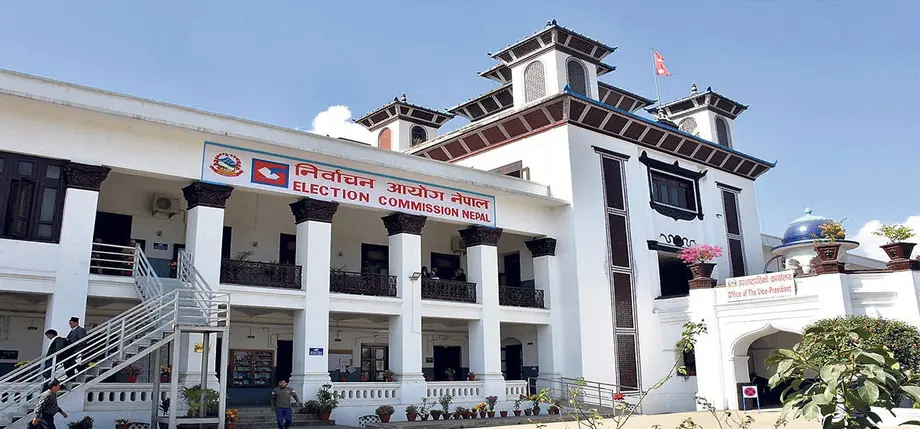
March deadline puts pressure on election preparations
Nepal's Election Commission has recommended completing the next local elections by March 19, 2027, setting a timetable that would require the government to move quickly on a formal announcement. The commission says it needs at least 120 days to prepare, while the law calls for elections two months before the current local representatives finish their five years in office.
Contents
- March deadline puts pressure on election preparations
- Why the commission is pointing to March 19
- What 120 days means for the announcement
- Six parties invited to discuss the vote
- The dates that shape the decision
- Local and provincial elections are being planned separately
- A previous bill of about 15 billion rupees
- Could people vote outside their home district?
- The Cabinet must turn the proposal into a schedule
- Key Points
Election Commission spokesperson Narayan Prasad Bhattarai said the recommendation takes account of election preparations, logistical arrangements and legal procedures. The proposed deadline is Chaitra 5, 2083, in Nepal's Bikram Sambat calendar.
The Cabinet has yet to announce a polling date. Prime Minister Balendra Shah is expected to hold further political consultations after Rastriya Swatantra Party chair Rabi Lamichhane returns, although no date for those talks has been given.
The decision will shape preparations for an electorate of more than 19 million people. It will also determine how much time election officials have to organise voting, settle a budget and consider whether any trial of voting from outside a person's home district or from abroad can proceed.
Why the commission is pointing to March 19
The Local Level Election Act 2073 requires elections for local representatives two months before the term of the village or municipal assembly ends. Bhattarai's explanation uses May 19, 2022, when the current representatives assumed office, as the starting point for their five years in office. That produces the recommended March 19, 2027, election deadline.
Chief Election Commissioner Man Bahadur Karki has also described the current local governments' terms as ending next April. That differs from the May timetable underlying the commission spokesperson's March 19 recommendation. The government's formal announcement will need to give voters and parties a single, clear schedule.
The practical concern is continuity. Local governments need elected representatives in place to exercise powers assigned to their offices and keep everyday public business moving. Former acting chief election commissioner Dolak Bahadur Gurung has warned that vacancies can interrupt services because some legal powers belong specifically to local chairs and deputy chairs.
What 120 days means for the announcement
The Election Commission Act defines the election period as beginning 120 days before polling and continuing until the final results are published. Commissioner Rajiv Subba says the commission normally needs about four months to conduct the preparations.
A full 120 days before March 19, 2027, points to November 19, 2026. That makes an announcement in November central to the commission's preferred timetable. A decision in the first week of December would leave less than 120 days before the proposed deadline.
The recommendation that the Cabinet decide in the first week of Mangsir refers to a period in November, not the first week of December. Nepal uses the Bikram Sambat calendar for many official dates, so matching the two calendars matters when explaining the preparation window.
The law's definition of the election period contains no express ban on announcing a vote with fewer than 120 days remaining. Officials nevertheless describe that amount of time as necessary for their work. A shorter announcement period would mean less preparation time.
Subba has discussed a broader timetable as well: an announcement by the middle of Mangsir could allow elections by the end of Chaitra, around mid-April 2027. That would be later than the March 19 target presented by Bhattarai. These two schedules give the government different amounts of preparation time, making the Cabinet's final choice consequential.
Six parties invited to discuss the vote
The commission invited representatives of nationally recognised political parties to a consultation on November 20, at 11:30 am. Bhattarai also identified the meeting date as Mangsir 4. The agenda covers election preparations, with local polls a priority.
The invited parties are the Rastriya Swatantra Party, Nepali Congress, CPN-UML, Nepali Communist Party, Shram Sanskriti Party and Rastriya Prajatantra Party. Bhattarai said discussions about the necessary arrangements would take place in stages.
Bhattarai, explaining the division of responsibility between the government and the election authority, said:
The commission is ready to conduct elections within the stipulated timeframe to ensure that local governments do not remain without elected representatives. The government is responsible for announcing the date, and the commission is fully prepared to hold the elections accordingly.
Subba said an initial discussion had already taken place with the home minister and described the government as positive about holding the elections. Party consultations give the commission a chance to hear concerns before the government commits to the schedule.
The dates that shape the decision
The timetable combines the start of the current representatives' terms, the consultation process and the proposed polling deadline. The central dates are:
- May 2022: Nepal held the previous local elections, on Baisakh 30, 2079.
- May 19, 2022: The current local representatives assumed office, according to the timetable cited by Bhattarai.
- November 19, 2026: The point 120 days before the proposed March 19 polling deadline.
- November 20, 2026: The commission scheduled consultations with nationally recognised parties for 11:30 am.
- March 19, 2027: The commission's recommended deadline for completing the next local elections.
- May 19, 2027: Five years after the current representatives assumed office, the reference date behind the two-month calculation.
Gurung also pointed to the practical limits imposed by weather. He said the period before the monsoon and intense heat leaves the government a relatively short favourable window in Chaitra and Baisakh, roughly from mid-March to mid-May.
The commission's March recommendation therefore brings together a legal timetable and a practical concern about when voting can be organised. Once the date is announced, parties will have a fixed target for candidate selection and campaign preparations, while officials can work towards a common polling deadline.
Local and provincial elections are being planned separately
Subba said the commission is not considering holding local and provincial assembly elections together. He described them as elections with different purposes and said combining them was outside the commission's current planning.
Nepal followed separate schedules in 2022. Local elections took place in May, while elections for the House of Representatives and provincial assemblies were held together on November 20 that year.
Gurung favours considering a combined local and provincial vote as a way to reduce costs. He said additional staff might be needed, but security and other arrangements could produce savings when shared between elections.
Subba's position keeps the immediate focus on a local election timetable. He described election spending as part of keeping democracy functioning and said the response should be to use resources as economically as possible.
The political stakes are particularly high for the governing Rastriya Swatantra Party. Gurung said the party has no representation at local or provincial level, making the elections an opportunity to measure current public support and build a presence beyond the federal government.
A previous bill of about 15 billion rupees
The 2022 local elections cost approximately 15 billion Nepalese rupees, including security expenses, according to government figures. That previous bill provides a reference point as officials prepare the next vote.
The commission says the budget for the coming elections will be settled after the government fixes the date. No spending estimate for the next local polls has been announced. Timing matters because the election schedule and the arrangements needed to carry it out must be planned together.
The size of the electorate adds to that task. A commission report published at the end of Asoj 2083, around mid-October 2026, recorded 19,091,375 eligible voters who had reached 18 by Bhadau 15, around the end of August.
For election managers, that means preparing for participation by more than 19 million people while coordinating polling arrangements, staff, security and the legal steps required to complete the vote. The commission's request for four months gives the government a concrete planning requirement alongside the proposed March deadline.
Could people vote outside their home district?
Subba said the commission is discussing a possible trial that would let some voters cast ballots from another district or from abroad. The idea would address a practical problem for people living away from the place where they are registered to vote.
The proposal requires a change in the law. Subba said the commission would like to test the arrangement during the local elections in at least one location within one province. If that cannot happen at the local polls, he said the commission intends to pursue it for provincial elections.
No trial location, participation rules or voting method has been announced. Subba has previously discussed internet voting with specialists as a possible option for voters abroad or outside their constituency, while the government's decisions and the required legal amendment would determine how a trial could proceed.
The scale of the proposal is limited: the commission is discussing an initial test, followed by experience that could inform later elections. Voters living away from their registered area will need the final rules before they can know whether any new arrangement applies to them.
The Cabinet must turn the proposal into a schedule
The next formal decision belongs to the Cabinet. The commission has recommended a deadline and begun consultations, while the government is preparing to settle the date after further political discussions.
Karki, the chief election commissioner, has said the government's role is to choose the date and the commission's responsibility is to conduct fair elections without controversy. Bhattarai's recommendation puts a specific deadline before ministers, while Subba's comments describe the preparation time officials want.
The government now has to align those requirements: the legal provision for elections before local terms expire, the commission's operational timetable and the political consultations preceding an announcement. For voters, the immediate result to watch is a Cabinet decision setting polling day. For local governments, the aim is to keep elected leadership in place without an interruption in public business.
Key Points
- The Election Commission recommends completing Nepal's local elections by March 19, 2027.
- The Cabinet has not announced the polling date.
- A full 120 days before the proposed deadline points to November 19, 2026.
- Six nationally recognised parties were invited to consultations on November 20.
- The commission is planning local elections separately from provincial elections.
- The previous local elections cost about 15 billion rupees, including security.
- A possible trial of voting from another district or abroad requires a legal amendment.