A cancelled tender leaves a finished tunnel waiting
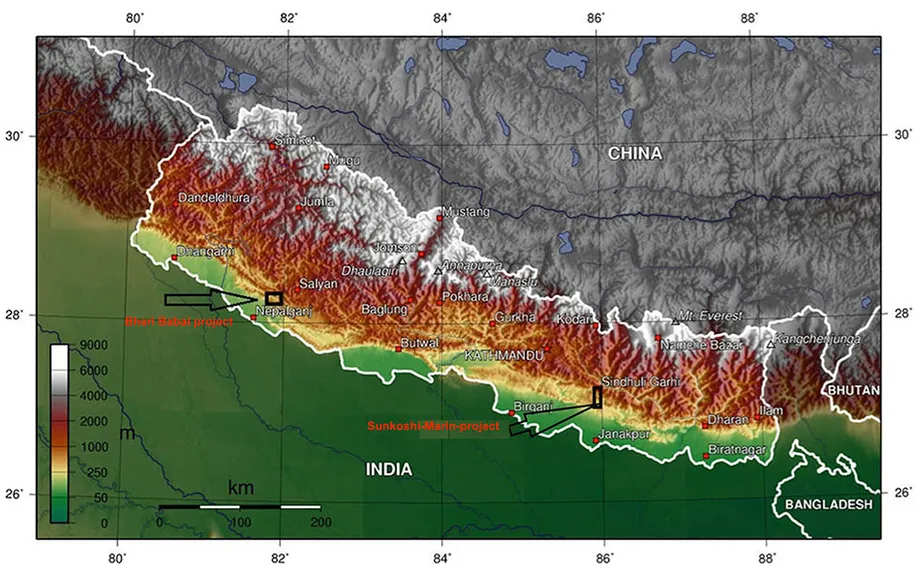
Nepal has cancelled a tender worth about Rs16 billion for the dam and powerhouse of the Sunkoshi Marin Diversion Multipurpose Project, days before three qualified bidders were due to have their financial proposals opened. The decision threatens another delay to a project intended to irrigate 122,000 hectares of farmland across five southern districts and generate 31.07 megawatts of electricity.
Contents
- A cancelled tender leaves a finished tunnel waiting
- What happened before the cancellation?
- Which bidders qualified, and why did that matter?
- The government claims savings, but lawyers question the legal route
- How rejected bidders can challenge an evaluation
- The previous contractor had already fallen far behind
- Billions in guarantees and another contested intervention
- What another delay means for Madhesh
- Key Points
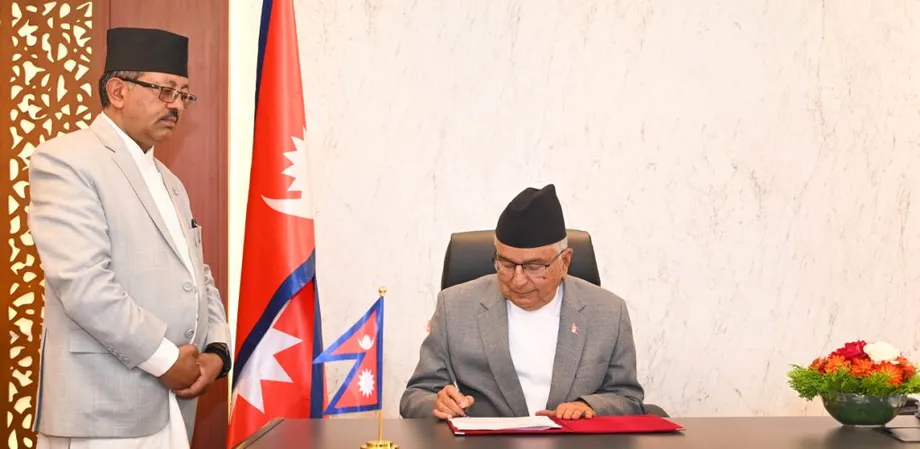
The cancellation followed the alleged detention of Department of Water Resources and Irrigation Director General Dinesh Rajauria and project director Krishna Prasad Rijal. Police and ministry sources alleged that officials associated with Prime Minister Balendra Shah's Secretariat pressured them to stop the procurement after companies favoured by people close to the Secretariat failed the technical evaluation.
Infrastructure Minister Sunil Lamsal gave a different explanation. He said a complaint had challenged the tender's compliance with new procurement rules and claimed that continuing the process could cost the state an additional Rs2 billion to Rs3 billion. He said he had only informed district administrators that the officials should be sent to Kathmandu.
The dispute has an immediate practical consequence: the project's completed diversion tunnel cannot carry water into operation until the dam is ready. Farmers in Bara, Rautahat, Sarlahi, Mahottari and Dhanusha must keep waiting for the irrigation system, while the government decides how to restart procurement.
What happened before the cancellation?
The project invited international bids on June 8, allowing 30 days for submissions. Six companies or joint ventures competed for the dam, powerhouse and associated structures. Technical evaluation narrowed the field to three bidders, whose financial proposals were scheduled to open on Monday, Kartik 16.
Police sources said Rajauria and Rijal were taken into custody from Siraha and Sindhuli on Kartik 12 and brought to the Office of the Prime Minister and Council of Ministers. They were reportedly released the following evening. Sources alleged that Rajauria was taken without an arrest warrant and agreed to cancel the tender before his release.
A cancellation notice appeared in the Gorkhapatra newspaper on Saturday. Project engineer Ashok Raj Gautam confirmed that the instruction came from the department, while leaving the next procurement decision to that body.
Gautam, a senior divisional engineer working on the project, described the decision:
The contract has been cancelled as directed by the Department of Water Resources and Irrigation. The department will have to decide whether to invite fresh bids or take some other course of action.
Energy, Water Resources and Irrigation Minister Birajbhakta Shrestha was in Thailand attending a United Nations energy event when the cancellation occurred. He had supported moving the tender forward. Afterward, he declined substantive comment, saying he assumed the Prime Minister's Office had a good reason and that government work should be transparent.
Which bidders qualified, and why did that matter?
China International Water & Electric Corporation, the ANENG-RCC joint venture and Sinohydro Corporation passed the preliminary technical evaluation. Technical evaluation checks whether bidders meet requirements such as relevant experience, financial capacity and the ability to carry out the work before their prices are considered.
The three unsuccessful bids came from the SIL-KC Construction-Phewa joint venture, the Songda-Kalika Construction joint venture and the CREGC-SWDCC joint venture. Some unsuccessful companies wrote to the project seeking reasons for their exclusion. A representative of one acknowledged taking a complaint to Lamsal.
Kalika Construction is owned by Nepal Construction Entrepreneurs' Federation president Nicholas Pandey. Ministry sources alleged that pressure intensified after its partnership with Vietnam's Songda failed the technical assessment. They claimed that Pandey had developed close ties with the Prime Minister's Secretariat, which wanted the partnership to receive the contract.
Rasuwa Construction, the Nepali partner in the qualified ANENG-RCC venture, is owned by Nepali Congress lawmaker Mohan Acharya. Ministry sources expected that venture to win. The financial proposals had yet to be opened, leaving the price comparison unfinished when the tender was stopped.
The allegations therefore concern both competition among contractors and the conduct of government officials. Sources described political connections around rival bidders, while Lamsal framed the intervention as an effort to protect public money through compliance with revised rules.
The government claims savings, but lawyers question the legal route
Lamsal said a complaint had reached the Prime Minister's Office about ten days before the cancellation, alleging that the tender did not follow new procurement regulations. His estimate of a possible Rs2 billion to Rs3 billion loss amounts to roughly 12.5 percent to 18.75 percent of the Rs16 billion tender estimate. That makes the claimed savings substantial, although he did not provide a calculation explaining the figure.
The cancellation notice cited Section 3(2) of Nepal's Public Procurement Act. Lawyer Semanta Dahal and former urban development secretary Maniram Gelal questioned that choice, saying the provision concerns the legal framework governing procurement rather than giving the procuring office its own power to cancel a tender.
Dahal and Gelal said Section 26 sets out the authority and grounds for cancellation. The grounds they discussed include a lack of responsive bids, an inability to conclude an agreement, prices above the cost estimate, or a decision that the construction or services are no longer needed.
Their central point was that officials must state the factual and legal reasons for stopping the process. Gelal said a review body or court could examine whether procurement had breached the law, while a project office cancelling its own tender needed to use the relevant cancellation provision.
The Prime Minister's Secretariat had not publicly detailed the precise defect behind its intervention. The department had also not announced whether it would invite new bids, revise the tender or pursue another course. Those decisions will determine how much work must be repeated.
How rejected bidders can challenge an evaluation
Nepal's procurement system provides a formal route for companies dissatisfied with tender decisions. Bidders can seek review through the Public Procurement Review Committee and, if necessary, challenge decisions in court. No complaint about this tender had been filed with the committee at the time described.
Engineer Laxman KC criticised the alleged use of intimidation against officials. He said companies unhappy with a technical evaluation should use review procedures or the courts, and warned that cancelling an international tender at its final stage could waste bidders' expenses and delay a national pride project for years.
The project exceeded the Rs5 billion threshold described for international bidding under the procurement regulations. Foreign companies could participate with Nepali partners. The dispute also involved reported preferences for domestic participation, including additional evaluation points and price allowances for eligible partnerships.
Those preferences affect how qualified offers are compared. Here, the process ended before the financial proposals were opened, making the immediate dispute about the legality of cancellation and the treatment of bidders that had already passed the technical requirements.
Shah's administration faces these allegations after an election campaign shaped by demands for cleaner government. His March election landslide followed the Generation Z movement against corruption and political privilege. The procurement dispute brings those promises into a decision involving billions of rupees and the treatment of public officials.
The previous contractor had already fallen far behind
Patel-Raman JV, a partnership between India's Patel Engineering and Nepal's Raman Construction, received the earlier contract in January 2023 for about Rs14.08 billion, including tax. Roughly 60 percent of its contract period had passed while physical progress remained around 10 percent.
The replacement tender's estimated Rs16 billion value is approximately Rs1.92 billion above that earlier award, an increase of about 14 percent. An estimate and an awarded price are different measures, but the figures show the scale of the procurement now being restarted after the original contractor's removal.
The termination chronology contains different dates. The account of the court proceedings dates the termination decision to November 11, 2025, following notice to the contractor; the earlier project account places termination on Mangsir 8, 2082. Both describe the same underlying problem: repeated warnings had failed to produce sufficient construction progress.
Patel-Raman challenged the decision in the Supreme Court on November 25, 2025. The following day, Justice Tek Prasad Dhungana issued an interim order blocking implementation of the termination and seizure of bank guarantees. The court revoked that order on February 9, allowing the government to proceed.
The sequence of major milestones shows how the project reached another procurement stoppage:
- January 2023: Patel-Raman JV received the dam and associated structures contract.
- May 2024: Excavation broke through the diversion tunnel.
- August 27, 2025: Tunnel finishing was completed.
- November 2025: The earlier contract entered termination and court proceedings.
- February 9: The Supreme Court lifted its interim restriction on termination.
- June 8: The project invited replacement bids.
- Kartik 16: Financial proposals were due to open, but the cancellation stopped that step.
The Public Procurement Monitoring Office subsequently blacklisted Patel-Raman for three years, preventing it from obtaining new public contracts during that period while allowing existing projects to continue.
Billions in guarantees and another contested intervention
The earlier contractor had received about Rs2.14 billion in payments, approximately 15 percent of its award. The sums associated with its guarantees were also large: Rs2.4 billion in performance security and Rs1.2 billion securing advance payments.
The original project account described the full Rs3.6 billion as confiscated. The later financial account said the Rs1.2 billion advance had been recovered but the Rs2.4 billion performance guarantee remained to be collected. The difference matters for how much money the government has actually recovered.
A performance guarantee gives the government financial protection if a contractor fails to carry out its obligations. An advance payment guarantee protects money paid before the corresponding work is completed. Recovering either can involve banks and legal proceedings, as the earlier Supreme Court order illustrates.
Political intervention is also alleged around the old contract. A source close to former energy minister Kulman Ghising said people associated with Shah, then Kathmandu mayor, had urged Ghising not to terminate Patel-Raman's agreement. The source said Lamsal asked for more time and that the contractor received another two months.
Lamsal denied meeting Ghising to ask him to preserve the contract. He said the contractor had contacted him and that he had only helped arrange a meeting. His response places his role in dispute alongside the competing explanations for the latest cancellation.
What another delay means for Madhesh
The Sunkoshi Marin project is designed to transfer water from the Sunkoshi River to the Marin River in Sindhuli, then supply irrigation across five Tarai districts. Its planned dam is about 30 metres high and 158 metres long. Water reaching Kusumtar in Kamalamai Municipality would also drive the powerhouse.
The completed diversion tunnel is described as 13.3 kilometres long in the detailed construction account and 13.1 kilometres in the earlier project description. China Overseas Engineering Group excavated it using a tunnel boring machine. Finishing and testing have already taken place, but the missing dam keeps the wider system from operating.
The full project began in fiscal year 2016-17 and has an estimated cost of Rs49.42 billion. Its revised master plan now targets completion in fiscal year 2032-33. Farmers waiting for irrigation throughout the year therefore face a much longer project timetable than the construction of the tunnel alone might suggest.
Ghising said a fresh procurement round could add six months to a year before construction resumes. The former energy minister explained why he opposed another stoppage:
The previous contractor's agreement was terminated because it was not doing the work. The new contract should be awarded as soon as possible so that construction can move forward.
The promised benefits depend on the dam, powerhouse and water delivery system working together. Completing procurement would allow the unfinished structures to advance; another prolonged tender dispute would leave an expensive completed tunnel waiting while the intended farmland remains without the project's irrigation supply.
Key Points
- Nepal cancelled a tender worth about Rs16 billion before the financial proposals of three qualified bidders were opened.
- Police and ministry sources alleged detention and political pressure; Minister Sunil Lamsal cited procurement rules and potential state savings.
- Lawyer Semanta Dahal and former secretary Maniram Gelal questioned the legal provision used to cancel the process.
- The project aims to irrigate 122,000 hectares in five Tarai districts and generate 31.07 megawatts of electricity.
- The completed tunnel needs the unfinished dam before the diversion system can operate.
- A revised plan targets completion in fiscal year 2032-33, while the department must decide how procurement will resume.