A toll measured in ships and families
A total of 136 vessels connected with India were caught in attacks or other security incidents in three troubled maritime regions between March 1 and November 1, 2026. The human cost was 16 Indian seafarers killed, five missing and 34 injured, according to a security review by the Directorate General of Maritime Administration (DGMA), India's maritime regulator.
Contents
- A toll measured in ships and families
- Which waterways carried the greatest danger?
- What happened to Tara Gas?
- Other attacks show how quickly risks mounted
- October and November brought a sharper escalation
- Why the strait remains so unstable
- The Red Sea is becoming a second pressure point
- How India is tracking ships and helping crews
- Civilian crews need protection beyond naval escorts
- What a wider safety system would need
- What to Know
The review covers the corridor formed by the Strait of Hormuz, Persian Gulf and Gulf of Oman; the Red Sea, Gulf of Aden and Bab-el-Mandeb; and the Black Sea. Its vessel count is broader than a list of ships registered in India. It includes ships flying foreign flags but tied to India through their crews or other maritime interests. The incidents include attacks, hijackings, armed robberies and other emergencies.
The most prolonged case is the MT Asana, seized by pirates on July 17. Eleven Indian seafarers and 11 seafarers from other countries were still captive when the review emerged in late November. For their families, the global figures reduce to a simple reality: 22 people have not come home.
Which waterways carried the greatest danger?
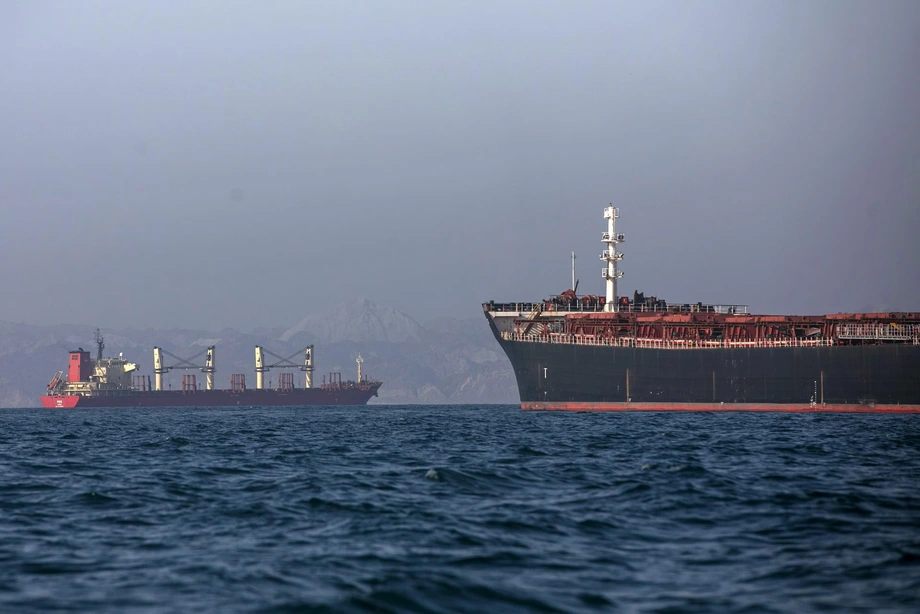
The Strait of Hormuz, Persian Gulf and Gulf of Oman corridor accounted for 93 of the 136 vessels, roughly two in every three. Six were flying the Indian flag and 87 were registered abroad. DGMA recorded 11 deaths, three missing crew members and 27 injuries in this corridor. The strait is the narrow entrance to the Persian Gulf, making it a crucial passage for tankers carrying oil and gas.
The Black Sea accounted for 37 vessels, all flying foreign flags. Five Indian seafarers were killed there, two went missing and six were injured. Six more vessels were affected in the Red Sea, Gulf of Aden and Bab-el-Mandeb corridor. DGMA's summary did not provide a separate casualty breakdown for those six ships.
Piracy added a distinct danger alongside the wars. Forty-six Indian seafarers were affected by seven incidents involving piracy, hijacking or armed robbery during the eight months. Apart from the MT Asana, the vessels were released or resumed their voyages, or their crews were safely released. The 22 people still held aboard the Asana are therefore the unresolved piracy case in the review.
What happened to Tara Gas?
The Panama registered LPG tanker Tara Gas, identified by IMO number 9290270, shows how quickly a routine voyage can turn into a emergency. The ship is a Very Large Gas Carrier able to transport more than 53,000 tonnes of liquefied petroleum gas (LPG). It had 25 people aboard when a missile struck on November 16 in the Strait of Hormuz, off Oman's Musandam Peninsula.
The missile hit the rear left side of the ship near its purifier room. It tore a hole measuring about 1.2 metres by 1.2 metres in the hull, just above the waterline, and started a fire. The crew sent a MAYDAY signal, the international distress call used when a ship needs urgent help. All aboard were initially reported safe, and electrical power was restored.
A second attack in the strait changed that assessment. In the shipping ministry's account, 21 Indian crew members were safe afterwards, two had been hospitalised and one was missing. The missing man was identified as K. Subramanian of Aruppukottai in Tamil Nadu. He was serving as the ship's third officer, a rank that commonly includes navigation and safety duties.
The ministry and the Sailors Union of India said 24 of the 25 crew members were Indian. A detailed crew account listed 21 Indians and identified the captain as Ukrainian. Both accounts put the total crew at 25 and describe an Indian seafarer remaining missing after the second strike. The union subsequently demanded an immediate search and rescue operation and diplomatic intervention by India.
Other attacks show how quickly risks mounted
Several other ships with Indian crew members were attacked in November. A projectile struck the very large crude carrier Fujairah Energy, IMO number 9723071, during its Hormuz transit on November 10. Four of its 22 crew members were injured, including one Indian. The remaining 18 were safe, among them three other Indians.
On November 17, the Liberian tanker Navig8 Messi, IMO number 9482859, was attacked about 11 nautical miles off Khasab in Oman. Three of its crew were Indian. Everyone aboard was rescued without serious injuries. Its attack came immediately after the two strikes on Tara Gas, giving Indian officials three major ship cases to manage within eight days.
An earlier incident involved the Indian vessel MSV Al Jusufi, which was hit by an unidentified aerial object near Limah, Oman, on November 2. One sailor was killed, while Omani coast guards rescued 13 crewmates. The Ministry of External Affairs identified this as the latest death in its wider conflict count.
That ministry said 23 Indians had died in the West Asia conflict, including 15 seafarers. Its figures cover Indian deaths across the wider conflict. DGMA's count of 16 seafarer deaths concerns its three designated maritime routes and has a cutoff of November 1, so the two official sets describe different scopes and periods.
October and November brought a sharper escalation
The United Kingdom Maritime Trade Operations Centre (UKMTO), which receives security reports from shipping, recorded 31 attacks in and around the Strait of Hormuz in October and about 19 more by November 18. Those roughly 50 reports in seven weeks almost matched the 53 incidents logged from March through September.
The International Maritime Organization (IMO), the United Nations agency responsible for shipping, used a more conservative count of confirmed attacks. It recorded 34 in and around the strait during October and November, compared with roughly 50 from March to September. Its wider regional compilation listed 138 attacks on vessels across the Middle East since the war began. The Sailors Union of India separately cited IMO figures of more than 130 attacks on internationally trading commercial vessels in the strait since February 28, with at least 25 seafarer deaths.
The main dates help explain the accelerating crisis:
- February 28: The war involving the United States, Israel and Iran began.
- April 13: The United States started a naval blockade stopping Iranian ships and vessels connected with Iran from entering or leaving the Gulf of Oman.
- June 18 to July 13: The United States paused that blockade before resuming it.
- July 17: Pirates captured the MT Asana, whose 22 remaining captives include 11 Indians.
- October and November: Maritime organisations recorded the sharpest concentration of Hormuz attacks since the war began.
- November 16 and 17: Tara Gas was struck twice, while Navig8 Messi was attacked off Oman.
Why the strait remains so unstable
Most positions of attacked tankers reported to UKMTO were in the southern part of the strait, close to the Omani coast. Noam Raydan, a senior fellow at the Washington Institute for Near East Policy, said Iran wanted to keep that passage extremely dangerous and make the recovery of energy exports inconsistent. Hamidreza Azizi, a senior Iran analyst at the International Crisis Group, said Tehran was trying to make arrangements developed by Washington and its regional partners more expensive and less reliable.
One such arrangement is the ship to ship transfer, known as STS. Smaller tankers cross the strait with their tracking systems switched off, then transfer their cargoes to larger tankers after reaching the other side. Sina Toossi, a senior fellow at the Center for International Policy, described a contest in which each side adjusts to the other's tactics:
Tehran has escalated its attacks to make the STS system more dangerous, costly, and ultimately unviable.
Toossi said Iran's broader aim was to show that normal oil exports could not continue while the United States maintained its blockade, creating enough economic pressure to force negotiations. Azizi also observed that large oil tankers appeared to be receiving particular attention, whether crossing the strait or operating elsewhere in the Persian Gulf.
The case of the Panama registered supertanker Gem No. 2 illustrates the danger beyond an active Hormuz crossing. The vessel had been idle off the United Arab Emirates for nearly five months, carrying two million barrels of Saudi crude. Crew members said one drone attacked on October 9 and at least three more struck on October 10. The second attack caused a large fire and forced an evacuation.
Iran's Revolutionary Guards said the tanker had hit a naval mine while attempting to cross the strait through an unauthorized route. Satellite images placed the abandoned ship off the UAE coast, outside the strait. Drone warfare researcher Fabian Hinz examined wreckage photographed by the crew and identified it as an Iranian Hadid-110 drone powered by a jet engine. Samir Madani, cofounder of TankerTrackers.com, said the vessel had been easy to locate because its public location transmissions were switched on. Why that particular ship was attacked remains unknown.
Strikes have also reached infrastructure. Iran attacked Oman's Didamar island inside the strait on November 8. The island hosts radar and satellite communications equipment, and Iranian state media described the targets as enemy navigation aid systems. Oman did not publicly comment on the attack.
The Red Sea is becoming a second pressure point
Saudi Arabia responded to the Hormuz disruption by pushing about four million barrels of oil a day through its pipeline to Yanbu on the Red Sea. That gave exports another route to the sea. A tanker sailing north from Yanbu towards Suez does not pass through Bab-el-Mandeb, but a tanker heading south towards Asia does. Cargoes destined for India can therefore face a second dangerous gateway after avoiding Hormuz.
Yemen's Houthis declared a blockade of shipping connected with Saudi Arabia in July. The Saudi supertanker Amazon was struck off Yanbu in August, and the Houthis claimed a missile attack on another Saudi tanker, Daisy, in the Gulf of Aden. On November 12, the group said it had attacked a pumping station serving Saudi Arabia's pipeline to Yanbu, an oil facility at Yanbu and an Aramco building in Riyadh. Saudi Arabia did not immediately confirm those claims.
A United States Maritime Administration advisory warned that ships connected with Saudi Arabia, the United States, the United Kingdom or Israel faced greater danger in the southern Red Sea and Gulf of Aden. The warning also covered ships belonging to fleets that had called at Saudi ports.
The danger has extended to Indians ashore. Two Indians were among 11 people injured in a Houthi drone strike in Riyadh, while Abha International Airport was attacked on October 7. Strikes and disruption around Saudi airports, energy installations and commercial buildings also left thousands of pilgrims stranded and unable to return.
How India is tracking ships and helping crews
The Ministry of Ports, Shipping and Waterways said nine ships flying the Indian flag or connected with Indian maritime interests were being tracked through the Strait of Hormuz at the time of its November statement. Such vessels had made 86 transits. The ministry did not specify the period covered by that transit figure.
Its seafarer tracking module, eNavik, was monitoring more than 800 vessels in the Persian Gulf and more than 200 in the Gulf of Oman. This gives officials a wider picture than the nine ships receiving individual attention and helps them identify where Indian crew members may be exposed.
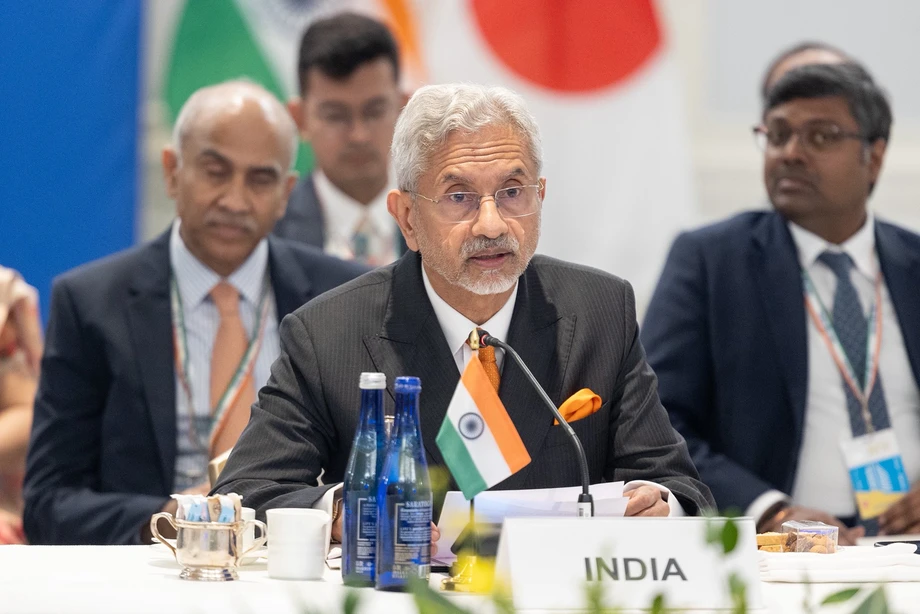
Union Minister Sarbananda Sonowal directed DGMA to strengthen monitoring in areas of high risk, issue security advisories promptly, communicate regularly with shipping companies and vessel operators, and raise awareness among Indian seafarers. He condemned the attacks and called for close coordination with the Ministry of External Affairs, Indian diplomatic missions, maritime organisations and international agencies.
Sonowal also reviewed compensation for victims. He asked the Director General of Shipping to brief him personally on progress and sought information about timely assistance for victims' next of kin. He connected secure sea lanes with the continuation of trade, economic growth, energy supplies and national prosperity.
Naval protection was already underway before the latest attacks. The Indian Navy has maintained a warship in the Gulf of Aden since October 2008. Operation Sankalp, launched in June 2019, covers the Gulf of Oman and Arabian Sea. In March, naval ships escorted the LPG carriers Shivalik and Nanda Devi and the crude tanker Jag Laadki after they crossed Hormuz. In August, INS Trishul and INS Aditya escorted an Indian tanker bound for Mumbai and a Liberian tanker through Bab-el-Mandeb.
Civilian crews need protection beyond naval escorts
The Sailors Union of India argues that seafarers need protection before deployment, during an attack and after a ship has been damaged. It has demanded mandatory risk assessments before Indian crews are sent into dangerous waters and arrangements that allow them to seek evacuation without losing their jobs or future contracts.
In October, the union condemned a projectile attack on MT ON PEACE in the Strait of Hormuz that injured 12 crew members, including 11 Indians. It has also sought the repatriation of a crew member stranded in Russia after a drone attack damaged MV NADEZHDA. Separately, it said Indians aboard MV PRUVALINE in Lebanon faced shortages of food and fresh water, unpaid wages and delays in returning home.
The union proposed a permanent, internationally coordinated Seafarers' Emergency Support Network in September. It would provide emergency assistance, evacuation, medical care, communication with families and protection of wages and employment rights during conflicts. Its latest demands include search and rescue for missing crews, independent investigations, accountability for attackers, medical assistance and adequate war risk allowances, meaning extra pay for working in exceptionally dangerous areas.
RP Veettil, the union's national president, said merchant seafarers were civilian professionals and should not bear the cost of political or military confrontations. His statement set out the union's position:
no commercial interest, geopolitical strategy, military objective or political confrontation could justify the killing, injury, abandonment or endangerment of innocent merchant navy personnel.
The union has raised these demands with the prime minister, the foreign and shipping ministries and DGMA, and wants India to press the issue at the IMO. The concern reaches seafaring communities such as Goa, where many households depend on relatives working aboard merchant ships.
What a wider safety system would need
Colonel M. V. Shashidhar, a retired officer and defence and strategic affairs expert, argues that an escort can answer whether a ship is able to pass, but not whether an insurer will cover the voyage, a refiner can afford the cargo or storage space will be available. He has proposed a standing maritime and energy security cell bringing together the Navy, relevant ministries, refiners and insurers.
Under his proposal, the participants would agree in advance when to escort ships, change routes, draw on reserves or provide national backing for war risk insurance if commercial cover disappears. He also proposed quarterly practice drills and diplomatic coordination with partners in Riyadh, Abu Dhabi, Muscat and Washington. This is his proposal, not a programme announced by the government. India's Information Fusion Centre in Gurugram already supplies one element of wider cooperation by sharing maritime data with more than 20 countries.
Several immediate cases remain unresolved. No date was given for freeing the 22 people held from the MT Asana, and no completion date was announced for the search for K. Subramanian. The government's stated next steps centre on continued vessel monitoring, security advisories, compensation for victims and the personal briefing requested by Sonowal.
What to Know
- DGMA counted 136 vessels with Indian links affected on three maritime routes between March 1 and November 1.
- Sixteen Indian seafarers were killed, five were missing and 34 were injured in that review.
- The Hormuz, Persian Gulf and Gulf of Oman corridor accounted for 93 vessels, about two thirds of the total.
- Eleven Indians and 11 foreign seafarers from the MT Asana remained in pirate captivity.
- Tara Gas was struck twice on November 16 and 17, leaving third officer K. Subramanian missing.
- India was tracking nine ships individually in Hormuz and monitoring more than 1,000 others through eNavik in the Persian Gulf and Gulf of Oman.
- Seafarer representatives are demanding rescue, compensation, independent investigations and stronger protection of civilian crews.