December inspection sets the final delivery in motion
An Indian Air Force team is due to visit Russia in December 2026 to inspect India's fifth S-400 air defence system before it is dispatched. Two senior officials familiar with the plan said the system should be ready for deployment by February 2027. Its intended destination is Jammu and Kashmir, where it would help guard the approximately 740 kilometre Line of Control (LoC) with Pakistan. One delivery schedule places arrival in January or February, with February given as the deadline for deployment readiness.
Contents
- December inspection sets the final delivery in motion
- How the original five system order reached this point
- What an S-400 squadron brings to the border
- Operation Sindoor turned performance claims into procurement pressure
- Pakistan's expanding supplier network drives Indian planning
- Why India is looking beyond the S-400
- Five more squadrons, 280 missiles and a maintenance plan
- Project Kusha and the S-500 shape the next layer
- Russia's role and the decisions still pending
- Key Points
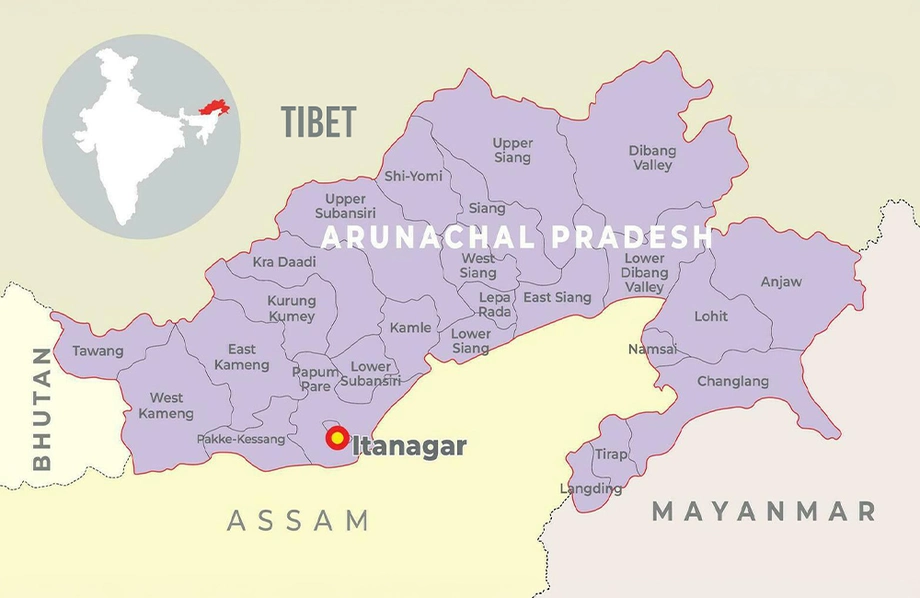
The unit would complete the five system contract signed with Russia in October 2018 for $5.43 billion. Four systems have already arrived. The current operational summary places three on the western front, covering Punjab, Rajasthan and Gujarat, and the fourth in Assam, where its responsibilities include the 1,126 kilometre Line of Actual Control (LAC) in Arunachal Pradesh.
The Union government has not publicly confirmed the fifth system's location or timetable. An inspection before dispatch allows air force specialists to examine the launchers, radars, command vehicles and associated equipment before shipment. Deployment would follow transportation, installation and integration with India's existing surveillance and command network.
For Jammu and Kashmir, the plan would add mobile radars and interceptor missiles to the defences protecting military positions, infrastructure and populated areas. The S-400 can engage aircraft, cruise missiles, certain ballistic missile threats, armed drones and loitering munitions. Actual coverage varies with mountains, radar visibility, target altitude and the missile selected, even though its furthest reaching interceptor has a stated range of 400 kilometres.
How the original five system order reached this point
Deliveries under the 2018 agreement have stretched across more than five years. Disruption to supply chains during Russia's war against Ukraine delayed the fourth system by more than three years, according to the delivery history accompanying the latest plan.
- December 2021: India's first S-400 squadron became operational in Punjab after the initial delivery earlier that year.
- July 2022: The second consignment arrived. Squadron histories from that period associated it with the Sikkim sector and surveillance of the Chicken's Neck, the narrow corridor connecting India's northeastern states with the rest of the country.
- February 2023: The third consignment arrived, strengthening coverage across the western desert and border sectors.
- June 2026: The first shipment for the fourth system reached India. Its current deployment is described as Assam, guarding the LAC in Arunachal Pradesh.
- December 2026 to February 2027: The air force inspection, shipment and preparation of the fifth system are scheduled to take place.
Public deployment descriptions are less tidy than the delivery sequence. Senior officials now describe three systems covering Punjab, Rajasthan and Gujarat, plus the fourth in Assam. An earlier squadron breakdown listed the Punjab and Jammu sector, the Sikkim sector and the Rajasthan and Gujarat sector, while counting three operational squadrons. Precise sites and movement dates are withheld for security reasons, so the public record does not provide a synchronised roster for every unit.
The fifth system's importance therefore lies in both arrival and assignment. It completes the original purchase while adding capacity at a location where India faces aircraft, drone and missile threats across a mountainous and frequently tense frontier.
What an S-400 squadron brings to the border
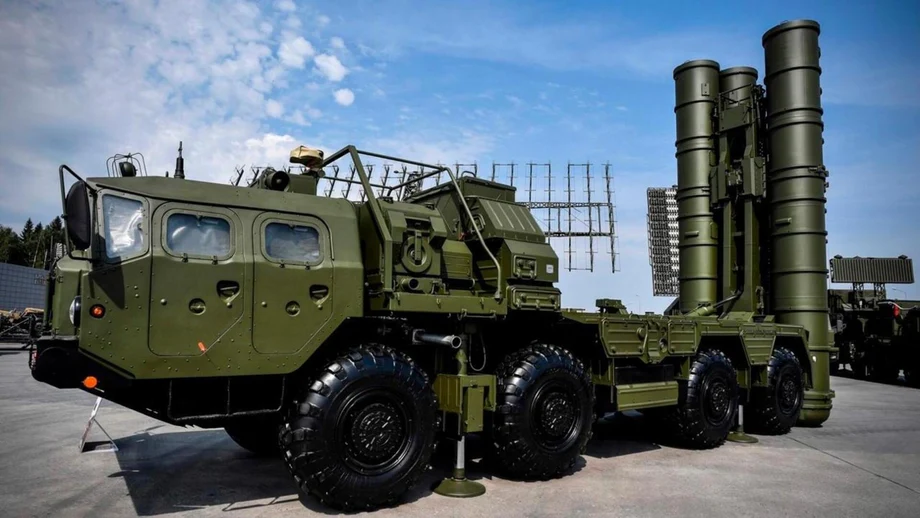
Russia's Almaz Antey developed the S-400 Triumf, which entered service in 2007. An Indian squadron is a network of mobile vehicles rather than a single missile launcher. Its components include a reinforced command centre, mobile launchers, the 91N6E Big Bird surveillance radar and the 92N6E Grave Stone engagement radar. The squadron establishment cited for India includes 256 missiles.
The Big Bird radar has a stated detection range of nearly 600 kilometres. Detection range describes how far away the radar can find an object, while engagement range describes how far away a missile can attack it. Large aircraft can be tracked from farther away than small ballistic targets, with results also depending on speed, altitude and the radar's view of the surrounding terrain.
Different interceptors allow operators to match the weapon to the threat:
- The 40N6 has a stated range of 400 kilometres.
- The 48N6 covers distances up to 250 kilometres.
- The 9M96E2 has a range of about 120 kilometres.
- The 9M96E covers approximately 40 kilometres.
Stated performance figures also include engagements at altitudes up to 30 kilometres and terminal speeds above Mach 14, meaning 14 times the speed of sound. In practical terms, a system with this reach can force hostile aircraft to operate farther from their intended targets, fly at less favourable altitudes or carry smaller weapon loads. Its effectiveness still depends on timely detection, secure communications and coordination with fighters and other air defence units.
Operation Sindoor turned performance claims into procurement pressure
The four days of fighting between India and Pakistan in May 2025, known in India as Operation Sindoor, followed a terrorist attack in Jammu and Kashmir that killed 26 civilians. Indian officials credit the S-400 with preventing Pakistani ballistic missiles and rockets from striking Indian territory during the operation. They also say it destroyed Pakistani fighters and aircraft used for airborne early warning and electronic intelligence, with some engagements occurring as far west as the Indus.
Airborne early warning aircraft act as flying radar stations, helping other aircraft detect and track targets. Electronic intelligence aircraft collect information from radio and radar emissions. Removing either can reduce an opposing air force's ability to understand what is happening around it.
A defence ministry account gave the most striking figure: an S-400 shot down a Pakistani aircraft at a distance of 314 kilometres. Footage of the engagement was released on February 26, 2026, and Indian officials described it as the longest recorded kill of its kind. The ministry's account said Pakistan kept its airspace open during the fighting, placing military and civil flights in the same sky. It said the air force identified the military aircraft before guiding the interceptor to its target.
Akash missiles, additional radars, fighter aircraft and command networks also formed part of India's response. That experience helps explain why the planned Kashmir deployment is being accompanied by missile replenishment, interest in more S-400 squadrons and work on a wider national shield rather than treated as a standalone purchase.
Pakistan's expanding supplier network drives Indian planning
Officials discussing the fifth deployment pointed to military support reaching Pakistan from China, Turkey, the United States and Saudi Arabia. China is planning to supply J-35 stealth fighters to Pakistan in 2027 and has already delivered armed Wing Loong II drones capable of firing missiles. China's HQ-9BE air defence system also features in India's assessment of the systems its forces may need to overcome.
Operation Sindoor already demonstrated the challenge posed by distant aerial engagements. The Pakistan Air Force paired Chinese J-10 fighters with Swedish airborne early warning aircraft to launch PL-15E missiles with a stated range of about 200 kilometres. Two data links allowed steering updates during flight. India is responding with weapons intended to let its own forces attack from outside an opponent's most dangerous operating area.
Pakistan's naval purchases form another part of the assessment. It is acquiring eight Hangor-class attack submarines from China, derived from the Yuan class, in a programme valued at more than $5 billion, or about Rs 46,220 crore. One entered Pakistan Navy service in June 2026. Their air independent propulsion, commonly called AIP, allows them to remain submerged for longer periods without surfacing frequently to recharge batteries. Turkey is modernising Pakistan's Agosta 90B submarines and supplying kamikaze drones with extended reach.
Washington's role includes a $686 million package to modernise Pakistan's F-16 fleet and extend its operating life through 2040. New Delhi objected to that package in October 2026, and Defence Minister Rajnath Singh raised the concern with US Secretary of War Pete Hegseth during talks in the Philippines. Officials also described Saudi funding as compensation for Pakistan's support for the Mecca Alliance against Iranian backed Houthis. They contrasted this military spending with Pakistan's approach to the International Monetary Fund for assistance and its low foreign exchange reserves.
Why India is looking beyond the S-400
New Delhi plans to manufacture and acquire standoff weapons for engagements between aircraft, attacks from aircraft against ground targets and strikes launched from the ground. A standoff weapon is fired from enough distance to reduce the launcher's exposure to defending aircraft or missiles. India also wants more loitering munitions, weapons that can circle above an area while identifying a target before diving into it.
A senior military officer involved in that assessment described future wars as contests without direct contact. He summed up the expected advantage in his own words:
Whoever has a longer-range missile and better anti-missile capability will have an edge.
Border infrastructure along the LAC is also scheduled for improvement. Roads, communications, surveillance positions and supporting facilities affect how quickly sensors, commanders and weapons can respond. The fifth S-400 consequently represents one element of a broader adjustment covering both the Pakistan and China fronts.
Five more squadrons, 280 missiles and a maintenance plan
The Defence Acquisition Council cleared a proposal in March 2026 to buy five additional S-400 systems from Russia. Their estimated cost exceeds Rs 50,000 crore. Five extra units would double the original inventory from five systems to ten if the purchase is completed.
Moscow submitted a detailed cost proposal in August 2026, opening the way for price negotiations. Dmitry Shugayev, head of Russia's Federal Service for Military Technical Cooperation, confirmed discussions on additional supplies in September. No contract has been signed, and no delivery schedule for the additional units has been announced.
India is also purchasing 280 S-400 missiles with different engagement ranges. These are intended to replace stocks used during Operation Sindoor and create a reserve for sustained operations. Missile inventories matter because a launcher and radar provide little enduring protection without enough interceptors available for training, alerts and combat.
A separate proposal under consideration would establish a private Indian enterprise to maintain and repair the systems, potentially with technology transfer from Russia. Local maintenance could reduce the need to send equipment or specialists abroad. No company, location, investment figure or starting date has been given for that enterprise.
Project Kusha and the S-500 shape the next layer
India's wider Sudarshan Chakra plan is intended to connect several forms of air and missile defence. The S-400 would provide the longest reach, Barak 8 would cover threats at intermediate distances, and the indigenous Project Kusha would add a domestically developed option. Radars, command systems and weapons for closer threats would complete the network. Its stated targets include ballistic missiles, drones and hypersonic weapons, which travel at least five times the speed of sound and present difficult tracking and interception problems.
The Defence Research and Development Organisation conducted Project Kusha's first successful flight test on July 23, 2026, from APJ Abdul Kalam Island off Odisha. The test involved an electronic target representing a fast aerial threat at high altitude. Rajnath Singh described the achievement as a milestone for Indian defence research.
Project Kusha is being developed around three interceptors. M1 has an approximate range of 150 kilometres, M2 about 250 kilometres, and M3 is expected to cover roughly 350 to 400 kilometres. Further M1 trials are to be followed by development and flight testing of M2 and M3. The stated goal is phased induction between 2028 and 2030, leaving several years of testing and production work before the system can assume an operational role.
Russia has also offered the more advanced S-500 Prometheus, including the possibility of technology transfer and technical cooperation. The S-500 is intended to address very fast ballistic missiles and threats at high altitude. India has announced no purchase agreement for it, so the immediate programme remains the fifth S-400, negotiations for five more and the development of Project Kusha.
Russia's role and the decisions still pending
Russia supplied 40% of India's imports of major arms by volume during 2021 to 2025, according to figures released in March 2026 by the Stockholm International Peace Research Institute. That equals two of every five units in the institute's measure. India ranked as the world's second largest importer of major arms during that period, behind Ukraine.
The missile discussions continue a defence relationship reaffirmed during the December 2025 summit, when Prime Minister Narendra Modi and President Vladimir Putin also backed an economic cooperation programme through 2030 and a goal of $100 billion in bilateral trade. The delayed S-400 deliveries show the practical risks of relying on overseas production during a war, while the proposed maintenance enterprise and Project Kusha are intended to increase capacity within India.
The next fixed milestone is the air force inspection in Russia in December 2026. Delivery is expected around January or February 2027, with readiness for deployment targeted by February. The additional S-400 contract, the S-500 proposal and the private maintenance venture remain undecided. Project Kusha's next tests and its planned induction window of 2028 to 2030 provide the principal domestic milestones after that.
Key Points
- An Indian Air Force team is due to inspect the fifth S-400 in Russia in December 2026, with deployment readiness targeted by February 2027.
- The planned location is near the 740 kilometre LoC in Jammu and Kashmir, although the government has not publicly confirmed the site or timetable.
- The unit will complete the October 2018 contract for five systems worth $5.43 billion; four have already been delivered.
- Existing coverage is described as three systems on the western front and a fourth in Assam supporting defence of the LAC in Arunachal Pradesh.
- The S-400 uses several interceptors with ranges from about 40 to 400 kilometres, supported by surveillance radar with a stated detection reach of nearly 600 kilometres.
- Indian officials credit the system with major results during Operation Sindoor, including the destruction of a Pakistani aircraft at 314 kilometres.
- Five additional squadrons have received procurement clearance but no contract has been signed; India is also buying 280 missiles and considering local maintenance.
- Project Kusha was first tested successfully on July 23, 2026, with phased induction planned between 2028 and 2030, while Russia's S-500 offer remains without an Indian purchase agreement.