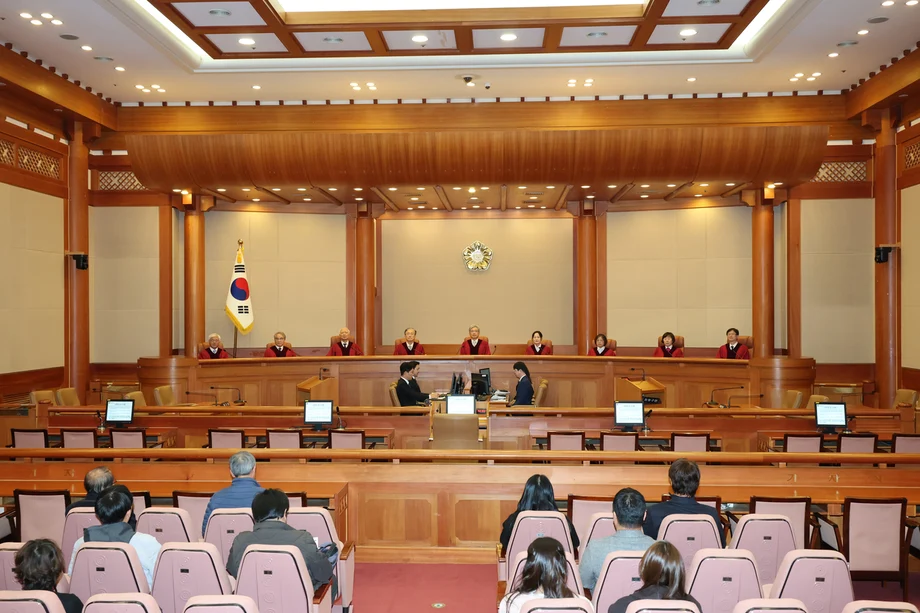
A Verdict 49 Years in the Making
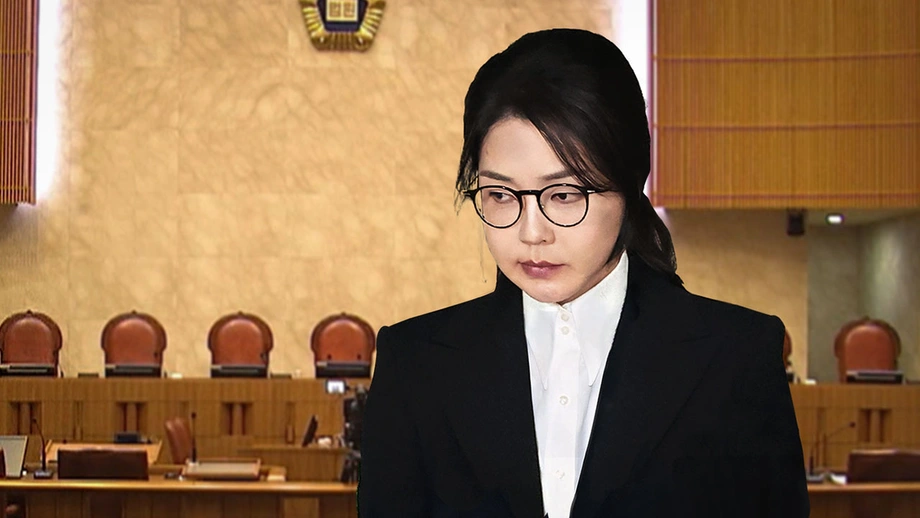
The Constitutional Court of Korea ruled on Thursday, Nov. 26, 2026, that Article 17, Paragraph 2 of the Immigration Act is incompatible with the Constitution, striking at a provision that had barred foreign residents from political activity since 1977. The 6-3 decision in the 2021헌마785 ruling was delivered in the court's main courtroom in Jaedong, central Seoul, with Chief Justice Kim Sang-hwan presiding over the majority.
Contents
- A Verdict 49 Years in the Making
- What the Court Actually Decided
- Why the Justices Called the Ban Too Broad
- The Three Justices Who Would Have Upheld the Ban
- The Two Students Who Started the Case
- What Changes, and What Does Not
- How Korea Compares With Germany, the US and Japan
- Practices That May Now Face Review
- The Same Day, Another Expression Ruling
- What Comes Next
- Key Points
The clause at issue is short and sweeping. As amended by Act No. 10282 of May 14, 2010, it reads: "Foreigners staying in the Republic of Korea shall not engage in political activities, except as otherwise provided for by this Act or other Acts." In practice, that meant a foreign resident could risk an order to leave the country for speaking at a rally, joining a public forum or asking a candidate to change policies on discrimination.
Six justices held that the ban restricts far more expression than the country's security or public order requires. Three justices dissented, arguing the clause can be read narrowly enough to survive. The ruling does not erase the ban on the day it was issued, and it does not hand foreign residents an unrestricted right to politick. It sets a deadline: the National Assembly must rewrite the provision by Dec. 31, 2028.
For the roughly two million foreign nationals who live, study and work in South Korea, the decision changes the legal frame around everyday speech. A worker who wants to campaign for better conditions in a industrial town, a student who wants to petition a lawmaker, or a resident who wants to publish an article about discrimination now has a court ruling saying those acts belong inside the protection of free expression, not outside the law.
What the Court Actually Decided
The decision is a ruling of constitutional nonconformity, known in Korean law as 헌법불합치. It accepts that a provision violates the Constitution but keeps it temporarily in force to avoid a legal vacuum, leaving Parliament a window to fix it. If lawmakers miss Dec. 31, 2028, the provision loses its legal effect.
The court found the legislative aim legitimate. Restricting foreign residents' political activity, it said, can serve the sovereign decision-making of Korean citizens and the country's security, order and interests. What failed was the method. The court held that the provision breaches the over-breadth principle, the proportionality test that asks whether a restriction is necessary, minimal and balanced against the right it limits.
The majority wrote that not every act that could fall under "political activity" is tied to Korean sovereignty or threatens the state. "In spite of this, (the law) bans such activities in principle," the court said, adding that violators could face deportation. The bench also rejected the idea that judges could simply read the clause narrowly and leave it alone. "Rather than attempting a narrow interpretation, delineating the permitted and prohibited scope through legislation would be a means that far more greatly reduces the degree of restriction on fundamental rights and that better conforms to the principle of the rule of law," the court said.
Its reasoning leaned on the practical position of foreigners who are not familiar with Korean legal language and who face investigation, protective detention, departure orders or forced deportation. In that situation, the court said, a resident is more likely to abandon a planned activity than to take the risk and seek a remedy afterward.
One of the two original claimants had his petition dismissed because he filed outside the allowed period. The court decided the case on the remaining claim.
Why the Justices Called the Ban Too Broad
The majority pointed to real cases, not hypothetical ones. It cited situations in which activity aimed at improving the treatment of foreigners, connected to the very purpose of their stay, or even a simple expression of opinion in speech or writing, could be labelled "political activity." The National Human Rights Commission had flagged cases in which plain statements about migrants' status or discrimination were restricted.
The court also noted that other laws already cover the sensitive ground. The Public Official Election Act bars foreign residents from campaigning, the Political Parties Act bars party membership, and the Political Funds Act bars political donations. Other provisions of the Immigration Act can still sanction conduct that genuinely endangers national security or public order. With those tools in place, the bench found, a general ban adds restriction without adding protection.
Kim Seon-taek, a law professor at Korea University, said the problem was never that the state had no interest in regulating politics, but that the line was invisible. "Prohibiting political activities altogether is excessively broad," he said. "The boundaries of what is permitted or prohibited need to be clearly defined."
The Three Justices Who Would Have Upheld the Ban
Justices Jeong Hyeong-sik, Kim Bok-hyeong and Cho Han-chang dissented. They argued that the provision violates neither the clarity principle nor the proportionality rule, and therefore does not infringe on freedom of expression. In their reading, "political activity" does not mean everything the dictionary calls political. It means activity on matters in which a foreigner has no direct interest that could affect Korean citizens' exercise of sovereignty and that rises to a danger to the country's security, order and interests.
The dissent drew on the clause's legislative history, tracing it to an old deportation ground covering "joining or manipulating political party activities," and on how other statutes itemise banned political conduct, such as Article 27 of the State Public Officials Service Regulations. The three justices added that no case had been found in which a foreigner was ordered to leave or forcibly deported for breaching the provision, so no excessive restriction had actually materialised. They also warned that listing every prohibited act in law could freeze rules that need to move with a changing political environment.
The Two Students Who Started the Case
The complaint came from two Mongolian nationals on D-2 student visas. One entered South Korea on Nov. 25, 2018, the other on April 15, 2021. Ahead of the 20th presidential election, they planned to approach preliminary candidates and ask for policies that would end unfair discrimination against foreign residents and broaden protection of their basic rights.
While discussing the plan with people around them, they learned that the Immigration Act barred foreigners from political activity in principle. On July 2, 2021, they filed a constitutional complaint arguing that the abstract and sweeping wording of "political activity" chilled the whole range of foreigners' activities. The court answered five years and five months later.
- 1977: the Immigration Act is fully revised and a blanket ban on political activity by foreign residents enters the law.
- 2005: an amendment adds an exception for activities permitted under other laws, without narrowing the general ban.
- Nov. 25, 2018, and April 15, 2021: the two Mongolian students arrive on student visas.
- July 2, 2021: the constitutional complaint is filed.
- Nov. 26, 2026: the Constitutional Court rules 6-3 that the provision is incompatible with the Constitution.
- Dec. 31, 2028: the deadline for the National Assembly to amend the law.
The ban had been in force for 49 years and 10 months when the ruling landed. Concerns raised in the National Assembly when the clause was written in 1977, that the concept of political activity was too unclear and could be used arbitrarily, turned out to describe exactly what the court found.
What Changes, and What Does Not
Nothing changes overnight. Until the law is amended, the provision stays in force and the same administrative penalties remain available. Violations are not criminally punished, but foreign residents can be ordered to stop an activity or leave the country, and those without permanent residency can face deportation.
Once the amendment passes, the likely permitted zone includes policy proposals and petitions to politicians and candidates, and public expression and campaigns on issues such as residency rights, labour and human rights. The likely restricted zone covers election campaigning, joining political parties and political donations. The court also held that local voting rights granted to certain foreigners are rights created by statute, not constitutional political rights, and that foreigners cannot be subjects of the franchise.
Kim Kwang-jae, an attorney who represented the petitioners, said the ruling rests on the damage that unclear rules do. "The court recognized the chilling effect caused by unclear rules and the difficulty of seeking remedies as key grounds for its decision. This ruling could also serve as a standard for reviewing other regulations affecting foreigners in the future," he said. He added that the decision confirms that foreigners' political expression is protected under freedom of expression, a fundamental human right, and that the key question for lawmakers is how specifically to list prohibited acts.
Migrant groups welcomed the outcome. Udaya Rai, head of the Migrants' Trade Union, described years of uncertainty about where the line fell. "Immigration authorities have interpreted the provision too broadly. We have long feared visa-related disadvantages because even speaking at a rally organized by a political party or taking part in a public forum could be interpreted as political activity," he said.
The chair of the Seoul branch of the Native Language Teachers Union, who goes by the surname Day, said the ruling speaks to daily life. "This ruling affirms our basic human and democratic rights to engage with the government, speak out about our living and working conditions and advocate for our rights without fear of reprisal," Day said, calling it a significant step forward for human rights.
How Korea Compares With Germany, the US and Japan
The court did not invent its preferred model. It pointed to Germany, where the residence law permits political activity by foreigners in principle and lists the activity that is forbidden, a structure the bench said Korea could adopt without difficulty. It also noted that the United States and Japan have no comparable immigration provision broadly banning foreigners' political activity, leaving electoral rules to separate statutes.
Many democracies keep citizens' elections and party politics closed to non-citizens, and international human rights law follows the same split, guaranteeing freedom of expression to everyone while reserving certain electoral rights for citizens. The Korean provision went further than that split by reaching speech that has no electoral dimension at all, which is the gap the court closed.
Kim Seon-taek of Korea University framed the next stage as a drafting problem for legislators. "The ball is now in the National Assembly's court," he said, noting that the court still allows restrictions on activity that threatens the national interest, security or public order. "But what exactly counts as such activity? The law needs to spell that out." He urged lawmakers to consult migrant groups, legal experts and civic organizations while writing the revision.
Practices That May Now Face Review
The ruling reaches beyond the statute book into administrative habit. The National Institute for International Education has required applicants for government-funded graduate scholarships to sign pledges that they will not attend political rallies or publish articles and declarations. Kim Kwang-jae said the ruling is likely to prompt scrutiny of practices that discourage foreign residents from speaking out, including those pledges.
The court's emphasis on the gap between what the law says and what officials do gives such practices a new measuring stick. A pledge extracted from a scholarship applicant now sits awkwardly beside a constitutional finding that peaceful expression of opinion on matters affecting one's own stay is protected.
The Same Day, Another Expression Ruling
The Constitutional Court issued a second decision on political expression on the same day, this one about Korean citizens. It struck down a provision of the old Public Official Election Act that banned distributing documents with content supporting or opposing a party or candidate from 180 days before an election until election day. A 2023 amendment had already shortened that window to 120 days, so the ruling does not directly affect the current rule, and a separate constitutional challenge to the 120-day limit is pending.
The bench found that the old rule limited candidates' political expression and restricted ordinary voters even more broadly, since voters have a narrower range of permitted election activity than candidates. A National Election Commission official said the ruling suggests the court was not concerned only with the length of the period, and that the pending challenge to the 120-day rule will be decided separately. Some in the legal community expect the 120-day limit to face its own constitutional test on the strength of this reasoning, while a lawmaker who sat on the National Assembly's political reform committee during the 2023 revision argued that some window is needed to keep campaigns from becoming chaotic and costly.
What Comes Next
The clock now runs to Dec. 31, 2028. Parliament can amend Article 17, Paragraph 2, keep the rest of the Immigration Act's sanctions for conduct that endangers security or public order, and leave the election, party and donation bans in separate laws untouched. Or it can let the deadline pass, at which point the provision loses effect.
No draft has been published, and no committee schedule has been set for the revision. What the court fixed is the shape of the debate: a law that permits political activity by default and names the exceptions, instead of a law that forbids everything and trusts officials to be reasonable.
Key Points
- The Constitutional Court ruled 6-3 on Nov. 26, 2026, that the Immigration Act's blanket ban on political activity by foreign residents is incompatible with the Constitution.
- The case, 2021헌마785, began with a complaint filed on July 2, 2021 by two Mongolian nationals on student visas who wanted to lobby presidential candidates on discrimination.
- The provision, introduced in 1977 and last amended in 2010, stays in force until Dec. 31, 2028, the deadline for the National Assembly to rewrite it.
- Six justices found the ban breached the proportionality principle; Justices Jeong Hyeong-sik, Kim Bok-hyeong and Cho Han-chang dissented.
- The court urged a German style law that permits political activity in principle and lists banned acts, noting the US and Japan have no comparable blanket ban.
- Election campaigning, party membership and political donations remain restricted under the Public Official Election Act, the Political Parties Act and the Political Funds Act.
- Administrative penalties, including orders to leave the country and deportation for non-permanent residents, remain available until the law changes.
- On the same day, the court struck down an old rule banning distribution of election documents from 180 days before a vote, a decision that does not affect the current 120-day limit.