Investment promotion will be judged by what Thailand receives
Thailand will raise the minimum investment for large manufacturers seeking Board of Investment promotion from THB 1 million to THB 20 million from the first working day of 2027. At the same time, a pilot program will make additional corporate income tax exemptions for electric vehicle and appliance manufacturers depend on their use of Thai materials and the wages they pay to Thai workers.
Contents
- Investment promotion will be judged by what Thailand receives
- How can a manufacturer earn two additional years?
- What does the existing BOI rulebook already require?
- Why do Thai SMEs receive a separate route?
- Why is the manufacturing minimum rising twentyfold?
- What must major projects spend to receive the speed incentive?
- How will Thailand FastPass expand?
- What do the two newly approved plants involve?
- Why is actual spending receiving so much attention?
- How are global tax rules changing the incentive mix?
- Which dates should investors watch?
- Key Points
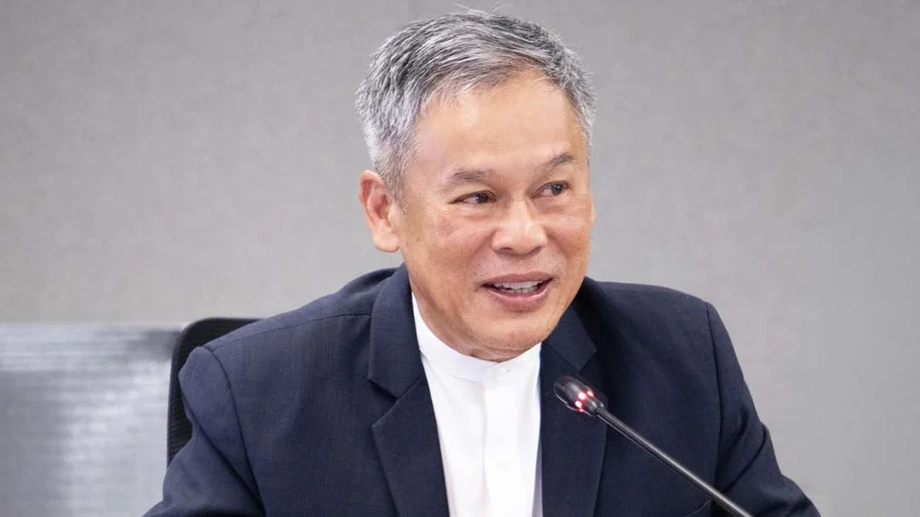
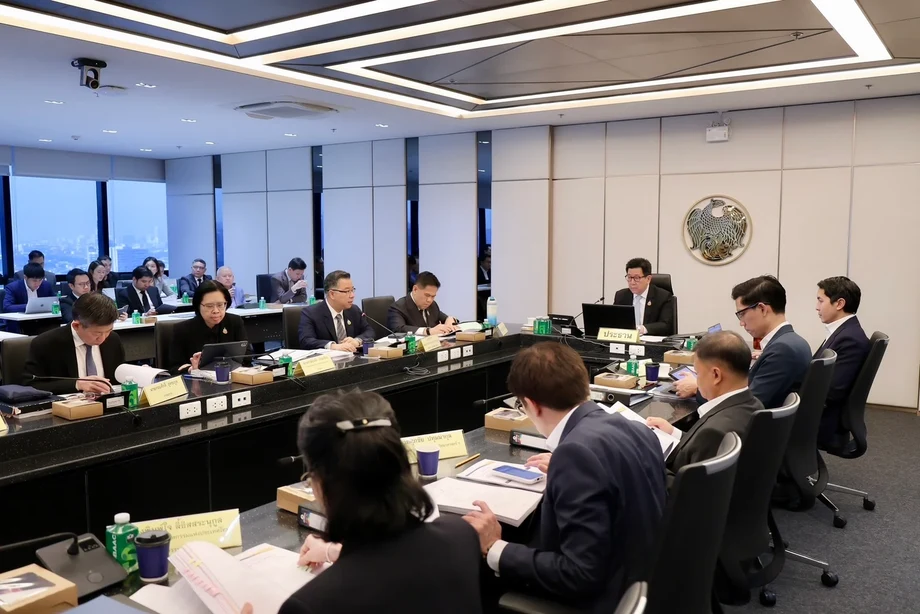
The Board of Investment approved the changes on 27 November 2026 at a meeting chaired by Deputy Prime Minister and Finance Minister Ekniti Nitithanprapas. BOI Secretary General Narit Therdsteerasukdi said three urgent measures would apply to applications submitted from January 2027. The board also extended an incentive for faster capital spending, approved an expansion of Thailand FastPass and gave investment promotion to two industrial projects worth a combined THB 10.719 billion.
Narit explained the new approach after the meeting, saying that the board would look beyond the number and value of applications.
We will give greater weight to the quality of investment and what it delivers for Thailand through local sourcing, jobs for Thai workers and technology development.
The immediate FastPass portfolio illustrates the task ahead. Its 42 projects carry more than THB 344.8 billion in approved investment, but actual spending has passed THB 51 billion. Thirteen projects have received all the approvals or permits they need from the agencies involved.
How can a manufacturer earn two additional years?
The pilot covers manufacturers of electric vehicles, electrical appliances and parts for both sectors. Basic incentives will be reduced, although the announcement did not specify the size of each reduction. A manufacturer can then earn one additional year of corporate income tax exemption by meeting the required level of domestic sourcing and obtaining Made in Thailand certification, known as MiT, from the Federation of Thai Industries.
The general sourcing range is 40% to 45% of the total value of raw materials for electric vehicles and electrical appliances. The threshold for qualifying key electronic parts is 15%. Local content measures the value of materials and components obtained in Thailand, rather than simply counting how many items a factory buys.
A separate additional year is available when wages paid to Thai employees represent at least 70% of the company's total wage bill. This is a payroll test, not a requirement that 70% of employees must be Thai. The conditions must be met within three years of the project first earning revenue.
For a Thai parts producer, the potential benefit is a new customer with a financial reason to place orders locally. For workers, the payroll condition gives an investor a reason to develop Thai staff and assign them substantial roles. A corporate income tax exemption means that profit from the promoted activity is exempt during the approved period, so each additional year has a direct financial value.
What does the existing BOI rulebook already require?
The Board of Investment has published detailed thresholds for each activity in its Investment Promotion Guide 2026. Under the existing measure for local parts, battery electric vehicles must reach 40% local content, while PHEVs, which are hybrids that can be charged from an external electricity supply, must reach 45%. Battery electric buses and trucks have a 40% threshold. Electric vehicle equipment is set at 15%, while smart electrical appliances, smart electronics and electrical appliances are set at 40%.
That measure comes from Announcement of the Board of Investment No. 6/2568, dated 22 July 2025. It covers new investments and projects already promoted by the BOI whose corporate income tax exemptions have not expired. Applications must be submitted by the last working day of 2026. MiT certification must be submitted before the exemption expires and no later than the last working day of 2027.
Its reward is a 50% reduction in corporate income tax on net profit from the promoted activity for two years after the exemption period ends. This timetable and reward differ from the additional exemption years offered under the 2027 pilot.
The guide also shows how technical conditions can determine eligibility. Battery projects with cell production must achieve an energy density of at least 150 Wh/kg and 1,000 charging cycles for A1 treatment. They can receive a 90% reduction in import duties for five years on necessary raw materials not produced locally under Section 30. Air conditioners, refrigerators, freezers, and washing and drying machines must meet Thai energy efficiency standards and carry label no. 5, or an equivalent standard. Smart appliance and electronics projects can gain another year of exemption when the entire printed circuit board assembly line uses surface mount technology, which places electronic components directly onto the board. Wafer manufacturing receives A1+ treatment, with 13 years of exemption and no cap on the amount of corporate income tax exempted.
Why do Thai SMEs receive a separate route?
Thai small and medium enterprises will be able to seek promotion with investment as low as THB 500,000 under the Smart SME measure. Individual Thai nationals must hold at least 51% of the applicant's registered capital. The business must also register for SME One ID with the Office of Small and Medium Enterprises Promotion.
Nine industry groups have activities designated for these applicants:
- Agriculture and food
- Bio based industries
- The medical sector
- Motor vehicles and parts
- Electrical appliances and electronics
- Machinery
- Metals and materials
- Paper and packaging
- Light industry
Qualifying SMEs will receive two more years of corporate income tax exemption than the standard rules provide. The BOI will also relax requirements concerning minimum investment, the ratio of debt to equity and the use of secondhand machinery in Thailand. The debt ratio compares borrowing with capital supplied by the owners, so changes to that test can affect how a smaller company finances an upgrade.
The board also ordered a subcommittee to coordinate efforts to connect Thai SMEs with the supply chains of seven target industries. Its work will cover access to markets, technology and finance, an updated database and a defined role for each agency. The seven industries were not listed in the announcement, and no deadline was given for the subcommittee's proposals.
The need for such support is substantial. Thai SMEs employ more than 12.9 million people and represent more than 90% of businesses. A World Bank assessment published in February 2025 found that only 1.1% of Thai firms invested in research and development, compared with 21.9% in the Philippines and 15.7% in Vietnam. Those figures sit at the center of the SME innovation gap, which also includes limited adoption of foreign technology and fewer new products and production methods.
Why is the manufacturing minimum rising twentyfold?
The THB 1 million minimum for manufacturing projects had remained unchanged since 1993. The BOI said it no longer reflected economic conditions. From the first working day of 2027, large manufacturers will need at least THB 20 million in qualifying investment, excluding land costs and working capital.
Applications below THB 20 million over the past 10 years represented about 13% of all projects but only 0.38% of total investment value. In simpler terms, roughly one project in eight fell below the new line, while their combined capital amounted to less than half of 1% of the value seeking promotion.
The change will not apply to Thai SMEs or service businesses. Thresholds for international business centers will also remain unchanged, preserving access for service activities that may require relatively little capital. At the Bank of Thailand's average selling rate of USD 1 to THB 34.2015 on 26 November 2026, the new manufacturing minimum is about USD 585,000, compared with roughly USD 29,200 under the old threshold.
The BOI says the higher minimum will let it direct more staff and administrative resources toward investors and projects capable of producing substantial economic benefits. The effect for a large manufacturer is a higher entry requirement; the effect for an eligible Thai SME is a separate system with a much lower starting point.
What must major projects spend to receive the speed incentive?
A project seeking the extended acceleration incentive in 2027 must invest at least 40% of its approved value and at least THB 2 billion within 12 months of receiving its promotion certificate. Land and working capital are excluded. The THB 2 billion requirement is about USD 58.5 million at the same exchange rate, and supporting evidence must be submitted within 18 months.
Projects whose total corporate income tax exemptions do not exceed eight years can receive an additional 50% corporate income tax reduction for three years. This means paying half the usual tax on eligible profit during that period, alongside the standard incentives. The government wants the spending to circulate through the economy, create employment and add production capacity sooner.
Data centers, power generation projects and activities without a fixed project location are excluded. Projects required to locate in the southern border provinces or border special economic zones are also excluded.
The earlier Economic Recovery Stimulation Measure similarly requires at least THB 2 billion and completion within 12 months, but it offers a 50% tax reduction for five years. Applications for that version close at the end of 2026. The 2027 extension therefore adds the 40% spending test while reducing the additional tax reduction period from five years to three.
How will Thailand FastPass expand?
Thailand FastPass will grow from eight partner agencies to 12. The Immigration Bureau will cover visas, while the Department of Employment will handle work permits. The Thai Industrial Standards Institute will address certification that industrial products meet relevant standards. The Food and Drug Administration will cover licences to manufacture food, medicines and medical devices.
The system coordinates selected strategic projects through one channel and targets reductions of 20% to 50% in approval and permitting times, depending on the process. Agencies are also working to connect their data so that officials can track approvals, permits and the amount actually invested in each project. Plans for a One Stop Service would give investors a single place to find information and submit applications.
As of 27 November 2026, the 42 approved FastPass projects were worth more than THB 344.8 billion, approximately USD 10.1 billion. Actual investment above THB 51 billion, or about USD 1.49 billion, equals roughly 14.8% of that portfolio value. The 13 projects with every necessary approval or permit represent about 31% of the 42 projects. A project can still require construction, equipment installation and preparation for operations after securing its permits.
What do the two newly approved plants involve?
Thai Kali Co., Ltd. received promotion for a THB 7.639 billion potassium chloride plant in Nakhon Ratchasima, equivalent to about USD 223 million. Its output will supply the fertilizer industry as a raw material for potash fertilizer. The project is intended to give agriculture a larger domestic source of this input and reduce reliance on imported material.
COFCO Biochemical (Thailand) Co., Ltd. received approval for a THB 3.080 billion plant in Rayong, approximately USD 90.1 million. It will produce erythritol, a sugar substitute, using cassava starch and corn starch bought from Thai producers. That sourcing links the factory's food ingredient production with domestic agriculture.
Together, the projects account for THB 10.719 billion, or about USD 313 million. Their use of fertilizer raw materials and agricultural starch reflects the same interest in domestic supply chains seen in the wider policy changes. The board did not provide construction schedules, production start dates or employment estimates for either project.
Why is actual spending receiving so much attention?
Investment applications reached THB 1.14 trillion in 2024, rising 35% to a ten year high. Applications during the first nine months of 2025 then reached THB 1.37 trillion. Foreign direct investment applications alone reached THB 1.37 trillion in the first half of 2026, up 80% from a year earlier, with data centers, electronics and clean energy among the areas attracting interest.
Total applications during the first nine months of 2026 reached THB 1.70743 trillion, an increase of 28% from the same period a year earlier. Actual investment reached THB 796.54 billion, up 27%. An application records what an investor proposes to spend; actual investment records expenditure as an approved project moves into construction, machinery installation and preparation for operations.
By November, nearly 800 billion baht had been spent during the first nine months, leaving THB 203.46 billion needed in the fourth quarter to reach THB 1 trillion for the year. Third quarter spending was THB 260.68 billion, so the remaining requirement equals about 78% of that quarterly total. Machinery accounted for THB 136.5 billion of third quarter spending and construction for THB 96.279 billion, together representing about 89%.
A full year result of THB 1 trillion would exceed the THB 865 billion recorded in 2025 by THB 135 billion, or approximately 15.6%. FastPass, digital tracking and the acceleration incentive all address the practical work required to turn approved budgets into expenditure of that kind.
How are global tax rules changing the incentive mix?
Beyond the November decisions, Thailand is adjusting to the OECD's Pillar Two framework for a global minimum tax. For multinational groups with revenue above EUR 750 million, the framework seeks an effective tax rate of at least 15% in every jurisdiction where they operate. If a Thai subsidiary falls below that level, another jurisdiction can collect the difference through a top up tax. A lengthy Thai exemption can therefore reduce tax paid in Thailand without producing an equivalent reduction in the group's worldwide tax bill.
Thailand is moving toward a Qualified Refundable Tax Credit as part of its response. Under this approach, companies can earn credits through qualifying expenditure such as research and development, training in science, technology, engineering and mathematics, and green technology. A mechanism that could pay excess credits as a cash grant is being designed; no final operating timetable was given.
Other programs serve established investors during this transition. The Retention and Expansion Program requires at least 15 years as a promoted entity, three promoted projects and combined investment above THB 10 billion. A new expansion of at least THB 500 million can receive three additional years of corporate income tax exemption or a 50% reduction for five years. Applications are due by the final working day of 2027.
A separate relocation measure requires a manufacturing application to be paired with an International Business Center project. Activities in incentive Groups A1, A2 and A3 can receive five additional years of exemption, while Group A4 can receive three. Pairing regional management with manufacturing encourages a company to place decision making and technical functions in Thailand alongside its factory.
Which dates should investors watch?
Several application windows and project deadlines will overlap during 2026 and 2027.
- 1993: The THB 1 million manufacturing minimum enters use and remains unchanged for more than three decades.
- 22 July 2025: BOI Announcement No. 6/2568 establishes the existing measure promoting locally manufactured parts in the electric vehicle and appliance industries.
- Last working day of 2026: Applications close under that local parts measure. The Economic Recovery Stimulation Measure also closes at the end of 2026.
- 27 November 2026: The board approves the 2027 policy package, the FastPass expansion and the two industrial projects.
- January 2027: The first phase of the new measures applies to applications, with the THB 20 million manufacturing minimum beginning on the first working day.
- Last working day of 2027: This is the final MiT certification deadline under the existing local parts measure and the closing point for Retention and Expansion applications.
Individual projects face additional clocks. Participants in the 2027 acceleration incentive have 12 months to meet the spending requirement and 18 months to submit evidence. Manufacturers seeking the new sourcing and payroll rewards must satisfy their conditions within three years of first earning revenue.
Key Points
- Large manufacturers seeking BOI promotion will need at least THB 20 million from the first working day of 2027, up from THB 1 million; Thai SMEs and service businesses are exempt from the increase.
- Electric vehicle and appliance manufacturers can earn one additional exemption year through local sourcing and MiT certification, and another through a Thai payroll share of at least 70%.
- Eligible Thai SMEs can apply with THB 500,000, must have at least 51% ownership by individual Thai nationals and can receive two additional exemption years.
- Major projects can receive a 50% corporate income tax reduction for three years by investing at least 40% of approved capital and at least THB 2 billion within 12 months.
- Thailand FastPass will expand to 12 agencies; its 42 projects exceed THB 344.8 billion in value, with more than THB 51 billion already invested.
- The board also approved Thai Kali's THB 7.639 billion potassium chloride project in Nakhon Ratchasima and COFCO Biochemical's THB 3.080 billion erythritol plant in Rayong.