A battlefield with nowhere to hide
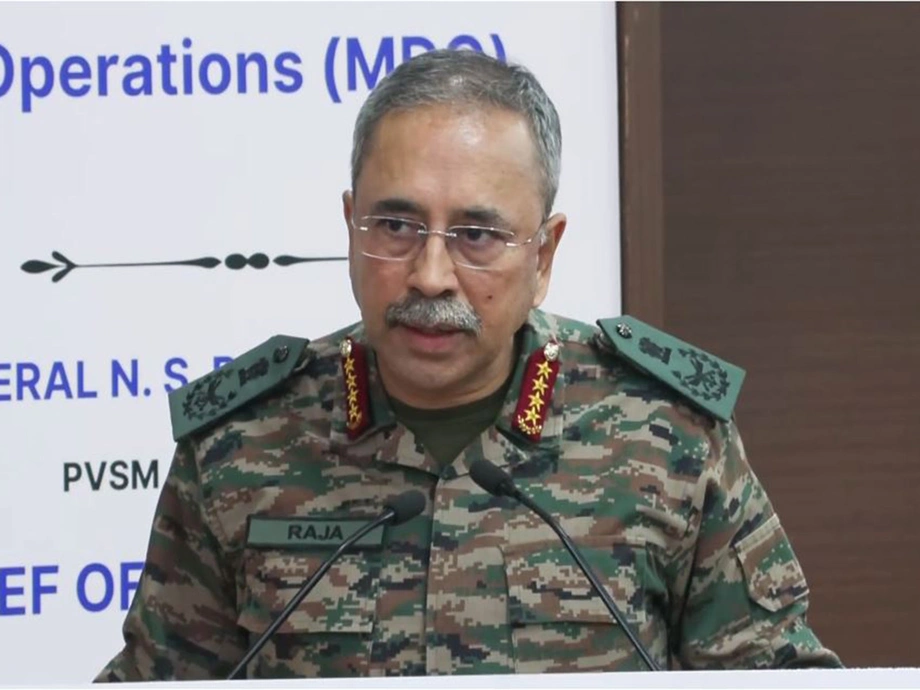
On Friday, November 27, 2026, General N S Raja Subramani, India's Chief of Defence Staff, used a lecture in New Delhi to describe a battlefield where visibility can be fatal. Speaking at the Vivekananda International Foundation on the future of warfare and India's preparedness for operations across domains, he said technology has made conflict so transparent that 'anybody who is seen will be fixed and killed.' Former CDS General Anil Chauhan (retd), who held the post during Operation Sindoor last year, moderated the session. Subramani set out ten trends, including a wider battlefield, continuous competition below open war, integrated forces, persistent surveillance and a whole of nation effort.
Contents
- A battlefield with nowhere to hide
- Why war and peace now overlap
- What operations across domains really mean
- Operation Sindoor becomes the test case
- How India plans to buy faster
- Drones, lasers and the seconds that matter
- The northern frontier without a copycat plan
- Pakistan's space push changes the security arithmetic
- Industry, endurance and the human factor
- The sequence and the next dates
- Key Points
General Subramani, India's top military officer, explained the shift in stark language:
With the advent of technology, battlefield transparency and persistent surveillance have to be taken for granted. Anybody in the future battlefield who is seen will be fixed and will be killed. So therefore, the way we fight has to be totally different.
The word fixed means located accurately enough for a weapon to be aimed. Satellites, drones, radar and signals sensors can make movement hard to conceal. Once a unit is found, precision weapons and fast command systems can be directed against it before it moves away.
- The battlefield now includes land, sea, air, cyberspace, space and information.
- The line between war and peace is increasingly blurred.
- Competition in cyber, space, electronic and cognitive domains runs before, during and after fighting.
- Isolated platforms are giving way to systems of systems.
- Surveillance and transparency are facts commanders must plan around.
- Information is becoming a leading operational function.
- Integrated command and control is essential.
- Precision strikes at long distance and logistics under pressure shape outcomes.
- Drones, artificial intelligence and directed energy weapons are growing in use.
- Citizens, industry, academia, research bodies and startups all have roles.
For ordinary people, the change means wars are less likely to stay in one place or one layer of society. A satellite signal, a factory, a social media feed and a soldier in a trench can all become part of the same contest.
Why war and peace now overlap
The Chief of Defence Staff said the old idea of a clear peacetime and a clear wartime no longer fits. Cyber operations, space competition, electronic warfare and efforts to shape opinion are already active, he said, even when no formal war has been declared.
General Subramani described how these pressures run through every phase of a crisis:
The distinction between war and peace is increasingly blurred. We are in a state of continuous contestation. Cyber, space, electronic warfare, and cognitive warfare are already occurring. That means they will precede a conflict, they will occur during the conflict, and they will outlast the conflict. So we cannot say that we are either in a state of peace or war; we are in a continuous state of contestation.
The idea is easier to picture as a ladder rather than a switch. A country can face probing of computer networks, jamming of signals, false stories online and pressure in space without tanks crossing a border. Those actions can then continue after open fighting stops.
The Chief of Defence Staff did not name the adversary behind the cognitive campaign he described. He said the purpose was to weaken social unity and military morale:
Even today, we are being subjected to cognitive warfare by our adversaries in an insidious manner, to sow (seeds of) division in society, create internal rifts, weaken the will and morale of the nation.
Cognitive warfare means influencing how people think and feel, often through false or manipulated information. Subramani linked it to deepfakes, artificial intelligence and social media manipulation. He said commanders must give information warfare the same attention they give operations, because information is now a primary function for a commander.
General Subramani cited conflicts involving Azerbaijan and Armenia, Ukraine, and the United States, Israel and Iran to explain how wars spread into other countries' economies and politics. He said closure of the Strait of Hormuz affected critical minerals, fertilisers and energy, and contributed to President Donald Trump losing the United States elections held halfway through his term. He called such outcomes unintended effects.
What operations across domains really mean
The phrase operations across domains can sound abstract. General Subramani defined it by its purpose: making an opponent face too many problems at once to respond cleanly.
The Chief of Defence Staff explained that joint action is about more than putting every capability in one room:
Multiple-domain operations is not about combining all the capabilities, rather it implies integrating different capabilities to pose multiple dilemma to an adversary.
Integration means linking army, navy, air force, space assets, cyber defence and communications so they support one decision. If a commander can see a target from space, confuse an enemy signal, block a cyber intrusion and strike from land or sea in a coordinated way, the adversary must defend several directions at once. Subramani said integrated command and control is a prerequisite, and he called for a joint communication network to speed decisions.
Electronic warfare is part of that picture. It involves using the radio spectrum to jam, deceive or protect signals. The Chief of Defence Staff said the military was working with the three services to modernise its electronic warfare architecture. He also called for attention to space based assets, cyber defence and subterranean warfare, meaning operations in tunnels and underground spaces.
General Subramani said India should not copy a foreign model. He noted that a joint doctrine for operations across domains was promulgated during General Chauhan's tenure and said he was taking that work forward. 'We need not look at a prescribed template. We need to have our own template,' he said, pointing to India's geography, adversaries, budget and threats. He said technology superiority is 'only transitory' and needs constant improvement.
The naval reading of the same idea was practical. Subramani called for more unmanned surface vessels, unmanned underwater vessels and support systems to increase range. Such vessels can gather information or extend reach without putting a crewed ship in the same risk.
Operation Sindoor becomes the test case
Operation Sindoor, India's military response to the Pahalgam terrorist attack last year, was the clearest example Subramani offered. The Ministry of Defence has described it as warfare across land, sea, air, cyberspace, space and information, with emphasis on indigenous technology and joint readiness.
General Subramani said the second phase showed how separate capabilities can work as one force. He defended stopping when India's objectives had been met:
The time we got out of Op Sindoor was a perfect example of escalation control. We had achieved whatever objectives we wanted to; we had destroyed the terrorist camps, and we got out at the right time.
Escalation control means keeping a conflict from growing into a wider war. Escalation dominance means having enough capability and resolve to shape the other side's choices. Subramani said both, along with a planned exit, belong inside military planning.
The Chief of Defence Staff addressed questions about why India did not press further against Pakistan. He said the choice was deliberate:
At that time there were questions: we could have destroyed Pakistan fully; why did we have to get out, etc. But that was a calculated decision taken by the political-military hierarchy at that time. Escalation control, escalation dominance, and exit are integral to warfighting. You can't just start a war and not think about when you are going to exit, how you are going to exit, and how you are going to control escalation.
Subramani said the operation also validated the CDS role in coordinating with the Prime Minister, the Raksha Mantri, meaning the defence minister, and the National Security Advisor. He said political leadership set a clear direction:
The direction from the political leadership was very clear. There was no consideration about the cost of war or whether we should back down... If we go to war, the entire nation, I am sure, will be behind us. That is not a calculus in our warfighting strategy.
He also called the second phase an excellent example of joint, integrated operations across domains and said India achieved a decisive victory while controlling the escalation matrix. His message was consistent: the stopping point was part of the plan.
How India plans to buy faster
General Subramani said the armed forces have adopted a policy of ruthless prioritisation for the next two years. He said he had met the Defence Secretary and all Service Chiefs two or three days before the lecture, and that the group agreed to focus on artificial intelligence, decision support systems, strikes at long distance and air defence.
The Chief of Defence Staff rejected the idea that money alone is the blocker. 'I want to dispel the notion that budgets are not there... What we need to do is to improve our procedures and prioritise what we want,' he said.
Subramani gave the procurement problem a simple image: two clocks running at different speeds. He described the mismatch this way:
What you are talking about are two clocks: the platform clock and the technology clock. An armoured vehicle or an aircraft may take years to induct, but the technology is changing every week or every two weeks or every month. Our acquisition processes have to be different for technology procurement and for platform procurement.
A revised Defence Acquisition Procedure draft has been submitted to the Prime Minister's Office, and Subramani expects it to take effect early next year. No exact date was given. The aim is to create different routes for buying platforms and for bringing in fast moving technology.
Drones, lasers and the seconds that matter
General Subramani said directed energy weapons are being operationalised for direct interception of drones. A directed energy weapon uses focused energy, such as a laser, to disable a target. The attraction is speed: a laser can engage without a missile having to travel to the target.
The Chief of Defence Staff explained why lasers are entering the mix:
Laser and directed energy weapons will form a very important component as far as counter-drone is concerned. DRDO has developed laser weapons... Israel has fielded it very effectively, and we are also looking at fielding lasers.
Lasers have a limit known as dwell time. The beam must stay on one spot long enough to heat or disrupt the target. Subramani said layered systems will be used to handle that constraint. In simple terms, one layer may slow or disturb a drone while another finishes the intercept.
The focus fits his warning about visibility. If better sensors make forces easier to find, drones become both eyes and weapons. Laser defence gives commanders another way to protect troops, vehicles and airfields once small aircraft are detected.
The northern frontier without a copycat plan
General Subramani said India will not try to match China piece for piece. He said India needs enough capability to watch its borders and shorten the gap between satellite passes over the same area.
The Chief of Defence Staff explained the goal in terms of timing rather than imitation:
We need to have enough to look at our borders and the ability to reduce that revisit time.
Revisit time is how long it takes for a satellite to return over the same place. Shorter revisit time means fresher pictures of a border area and faster notice of changes. Subramani cited ongoing rollouts of NavIC, SBS-3 and GSAT-7 constellations. NavIC supports navigation, SBS-3 is aimed at surveillance, and GSAT-7 supports communications.
He said India is well geared along its northern frontier, while repeating that any technology lead is transitory and must be renewed through constant work.
Pakistan's space push changes the security arithmetic
General Subramani made the space comments while answering a question about China's Shenzhou-24 mission. The spacecraft carried Pakistani Air Force pilot Muhammad Zeeshan Ali, 40, to the Tiangong space station, making him the first foreign astronaut on the mission.
The Chief of Defence Staff said India must plan for Pakistan's improving space capability and possible help from Turkiye:
Pakistan's space capability is improving with Chinese help. Also, Pakistan's Suparco (Space and Upper Atmosphere Research Commission) is working to develop its own capability. Now we also have to take for granted that it will be aided by the Turkish too.
He said Chinese capabilities in intelligence, surveillance and reconnaissance, known as ISR, and in positioning, navigation and timing, or PNT, would be available to Pakistan. ISR helps a military see and track activity. PNT lets forces know where they are and when, which is essential for weapons, ships, aircraft and missiles. He also pointed to Chinese ability to jam satellite communications and technologies that could disable spacecraft.
Muhammad Zeeshan Ali launched from the Jiuquan Satellite Launch Centre in northwestern China with two Chinese astronauts. He described the relationship between China and Pakistan in broad terms:
The friendship between China and Pakistan is as vast as outer space.
Pakistani President Asif Ali Zardari and Chinese President Xi Jinping exchanged congratulatory letters over the mission. Subramani also pointed to the Makkah Joint Defence Agreement, signed on August 7 by Pakistan, Turkiye and Saudi Arabia. The pact sets up collective deterrence and says an armed attack against one would be treated as an attack against all three.
India's answer, he said, is a larger space surveillance network. The third phase of the Space Based Surveillance programme, known as SBS-III, will add 52 dedicated military satellites over three years. The Cabinet Committee on Security, chaired by the Prime Minister, approved the project in October 2024. The outlay is ₹26,968 crore, with one crore equal to ten million rupees.
The Defence Space Agency under the Headquarters Integrated Defence Staff is leading SBS-III. ISRO will build and launch 21 satellites, while private companies will build the remaining 31. That means about six in every ten satellites will come from private firms. General Subramani said the programme would greatly improve Indian capability and said India was working with private entrepreneurs to build and launch more satellites.
Industry, endurance and the human factor
General Subramani tied military power to the economy behind it. He summed up the requirement in a line used at the lecture:
A nation's military power is as good as its industrial power.
He said the entire nation has a role in preparing for, fighting and sustaining a war. Citizens, industry, academia, research bodies and startups all belong in that effort. For a prolonged conflict, he pointed to local industry, ordnance production, logistics, repair facilities and resupply mechanisms. These systems decide whether forces can keep operating after the first days.
Atmanirbharta, or self reliance, was a repeated theme. Subramani said India should reduce dependence on foreign sources for key needs during intense activity or conflict. He described the target force this way:
joint in design, multi-domain oriented, technologically enabled and Atmanirbhar in both thought and action.
He also called for capable human-centric leadership. Technology still depends on people, and General Subramani said training and leadership must change so personnel can operate in a dense technological setting:
We are seeking to ensure that our human resources can effectively and successfully operate and even combat within such an environment.
The Chief of Defence Staff linked innovation to judgment:
We will also be able to make sound and timely decisions and importantly, will possess an intelligent willingness to take risks.
General Subramani ended on confidence, saying India would be successful when the time came to meet future security challenges.
The sequence and the next dates
Several developments sit behind the lecture, from a Chinese crewed launch to an acquisition reform still awaiting a start date. The main moments are:
- October 2024: The Cabinet Committee on Security approved SBS-III with an outlay of ₹26,968 crore.
- Last year: Operation Sindoor followed the Pahalgam terrorist attack and became Subramani's example of joint action and controlled exit.
- Wednesday before the lecture: Shenzhou-24 carried Muhammad Zeeshan Ali, the first foreign astronaut on the mission, to Tiangong.
- Two or three days before the lecture: Subramani, the Defence Secretary and the Service Chiefs agreed on ruthless prioritisation for the next two years.
- Friday, November 27, 2026: Subramani delivered the Vivekananda International Foundation lecture in New Delhi and answered questions on Pakistan, China and space.
- Next three years: SBS-III is planned to add 52 dedicated military satellites.
- Early next year: The revised Defence Acquisition Procedure is expected to take effect, though no exact date was given.
The sequence shows a shift from doctrine to procurement. The lecture described how India wants to make decisions faster, buy technology faster and prepare the country for conflict that may begin long before open fighting.
Key Points
- General N S Raja Subramani said surveillance now makes battlefield visibility extremely dangerous.
- He said cyber, space, electronic and cognitive warfare are already active before, during and after conflicts.
- Operation Sindoor was presented as an example of escalation control, escalation dominance and a planned exit.
- India plans two years of ruthless prioritisation focused on artificial intelligence, decision support systems, strikes at long distance and air defence.
- A revised Defence Acquisition Procedure draft has gone to the Prime Minister's Office and is expected early next year.
- Lasers and layered defences are being prepared against drones.
- SBS-III plans 52 military satellites over three years, with 31 to be built by private companies.
- Subramani warned that Pakistan's space capability, Chinese support and Turkiye's likely assistance must be included in India's planning.