A Five Year Plan for 2027 to 2031
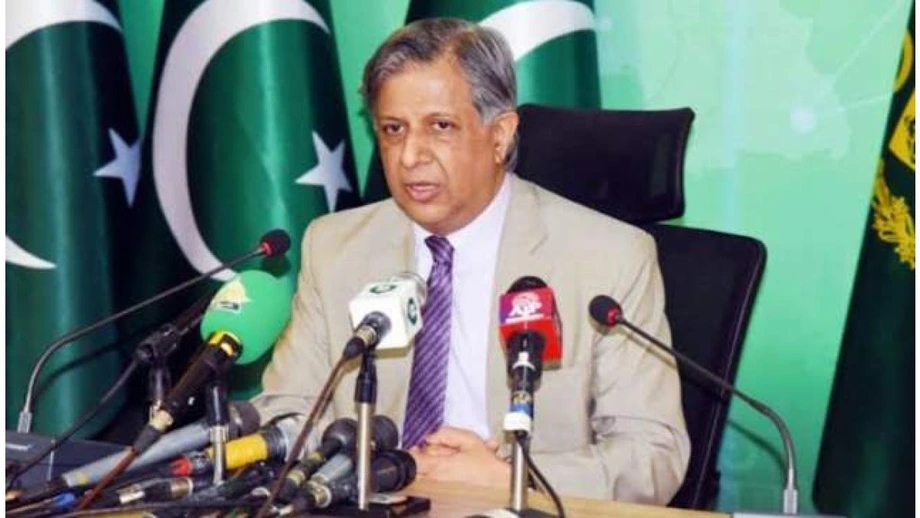
ISLAMABAD: Federal Minister for Law, Justice and Human Rights Senator Azam Nazeer Tarar launched the National Framework for Ending Child Marriages at a ceremony in Islamabad on Friday, November 27, 2026, opening a five year drive to stop girls and boys being married before they turn 18.
Contents
- A Five Year Plan for 2027 to 2031
- What the Data Says About How Many Girls Are Affected
- Why Protection Depends on Where a Girl Lives
- Who Spoke at the Islamabad Launch
- Shariah, the Courts and the Resistance in Parliament
- The Price Tag: $800 Million and Rs 12.64 Billion
- School Doors That Close Before Ninth Grade
- Health Risks That Fall on the Youngest Mothers
- Floods, Grooming and the New Risks Around the Corner
- From Islamabad to Africa: Pakistan's Pitch Through the OIC
- What to Know
The document runs from 2027 to 2031 and was prepared by the Ministry of Human Rights with technical assistance from the United Nations Population Fund (UNFPA) and UNICEF, while Group Development Pakistan supported its development and validation. It is written as a common roadmap for federal, provincial and territorial governments and rests on five areas: prevention, protection, girls' empowerment, effective law enforcement and community engagement. The government announcement of the launch set out the minister's commitment to protecting children, girls above all.
Tarar told the room that the law against child marriage is mandatory rather than optional, and that anyone who breaks it will face legal consequences. He said the government would strengthen the marriage registration system, working with provincial administrations, so that the minimum age of 18 can be checked and enforced rather than merely written down. Pakistan's parliament set 18 as the minimum age for both sexes in the Islamabad Capital Territory in 2025.
What the Data Says About How Many Girls Are Affected
The Pakistan Demographic and Health Survey for 2017 to 2018, cited throughout the framework, found that 18.3 percent of Pakistani women aged 20 to 24 were married before turning 18, and that 3.6 percent were married before turning 15. On those figures the government places Pakistan sixth in the world, with roughly 1.9 million married girls.
UNICEF works with a far larger number. The agency estimates that about 20 million girls and women in Pakistan were married as children, a count that reaches back over decades rather than describing one moment. The distance between the two figures points to the problem the framework itself names: many marriages are never registered, so no official can say how many underage weddings take place in a single year.
Weak birth and marriage records sit at the centre of that blind spot. Without a reliable record of a girl's date of birth, a registrar or a police officer cannot show that she is under 18. The framework recommends stronger civil registration, better age verification and the removal of registration fees, which can be enough to keep a poor family away from the registrar's office altogether.
Why Protection Depends on Where a Girl Lives
The framework records that the minimum age stands at 18 for girls and boys in Islamabad, Punjab, Sindh and Balochistan. In Khyber Pakhtunkhwa, Azad Jammu and Kashmir and Gilgit Baltistan, older laws still allow girls to marry at 16. A girl's legal protection therefore changes when she crosses a provincial border, and the framework calls for federal and provincial authorities to align their laws and enforce them together.
Sindh moved first, fixing 18 for both sexes in 2014. Tarar has repeatedly pointed to that law as proof that the argument can be won, noting that the Federal Shariat Court upheld it after it was challenged.
The framework also records outside scrutiny. In January 2026 the UN Committee on the Rights of the Child objected to judicial decisions that it said had validated marriages involving girls aged 15 on the basis of puberty, meaning a court treated a girl's physical development as a sign she was ready for marriage. The committee raised concern about Swara, Vani and Watta Satta, customary arrangements in which girls are handed over to settle disputes or exchanged between families, and about forced conversions linked to marriages of girls from religious minorities. It recommended stronger investigations, prosecution of offenders and proper support for affected children.
Who Spoke at the Islamabad Launch
The ceremony drew the officials and diplomats who will be expected to help carry the plan. Human Rights Secretary Abdul Khalique Shaikh, UNFPA Representative in Pakistan Dr Luay Shabaneh, UNICEF Representative Pernille Ironside and British High Commissioner Jane Marriott all addressed the gathering, each making the same point in different words: the framework only matters if it is turned into action, with institutions coordinating and partners staying involved.
The Ministry of Human Rights recognised Champions of Change for their work protecting children from early marriage, and the ministry, UNFPA and UNICEF acknowledged Group Development Pakistan for helping to develop and validate the plan.
Sara Ahmed, chairperson of the Child Protection and Welfare Bureau, used her turn to talk about the way families measure a girl's worth. She asked why a wedding is treated as the great achievement in a girl's life while a graduation is not, and said rescue alone is too small an ambition.
I feel personally, rather than spending so much and celebrating marriages, and keeping that as a benchmark for some achievement, a girl's graduation ceremony should be a benchmark for celebration.
Ahmed said girls pulled out of an early marriage need a safe place to live, schooling, healthcare, psychosocial support and a route back to a normal life, not just a rescue.
Shariah, the Courts and the Resistance in Parliament
Tarar spent much of his speech on the religious argument that has slowed such legislation for years. He said a law against child marriage does not conflict with Shariah, and he noted that the Constitution makes the Federal Shariat Court the body that decides whether a law is consistent with Islamic teachings, and that the court has upheld Sindh's provincial law.
He recalled that the bill faced resistance as it passed and that some religious scholars and parliamentarians declared on the floor of the House that they would break the law deliberately. His answer to them was blunt.
For God's sake, do not do this; I feel very strongly about this issue.
He also asked why Muslim countries elsewhere had managed to legislate.
Are Türkiye or Kuwait not Islamic countries?
A senator from Balochistan told the House during the debate that she had been married as a child and described what it had meant for her own life, a testimony Tarar has cited as one of the strongest voices in the Senate on the issue. He urged parents to treat daughters and sons alike, and to ask the girl herself what she wants.
A father whose 14- or 15-year-old daughter is being married off should at least ask his own daughter what she wants.
The Price Tag: $800 Million and Rs 12.64 Billion
The framework puts child marriage inside the ledger of the national economy. An economic study it cites estimated that the practice cost Pakistan about $800 million in 2019-20, equal to 0.42 percent of gross domestic product. The loss comes through girls leaving school early, earning less over a lifetime and remaining dependent on a husband or on their parents.
Poverty runs through the story in both directions. Families under financial pressure sometimes arrange an early marriage to cut household costs, yet the framework notes that the marriage usually deepens the poverty, because a girl who stops studying never builds the skills or the income to lift the household she came from.
Violence carries its own bill. A study cited in the framework estimates that 34 percent of domestic violence incidents in Pakistan were linked to child marriage. The framework records annual wage losses from physical abuse of Rs 5.23 billion in Punjab, Rs 5.86 billion in Sindh, Rs 1.24 billion in Khyber Pakhtunkhwa and Rs 310 million in Balochistan, adding up to Rs 12.64 billion across the four provinces.
School Doors That Close Before Ninth Grade
Education figures in the framework make the mechanism plain. Among girls who dropped out of school, 18.4 percent left to get married, against 1 percent of boys. In urban areas 22.3 percent of girls who dropped out did so for marriage, compared with 15.9 percent in rural areas. Only 13 percent of girls are still in school by the ninth grade.
Marriage tends to end a girl's schooling for good, and the framework warns that few find a way back. It proposes flexible learning so that married and pregnant girls can return to class, vocational training for those who cannot, financial help for vulnerable families and a push to keep girls enrolled through the dangerous adolescent years.
Health Risks That Fall on the Youngest Mothers
Pregnancy in adolescence carries risks for the girl and for the baby. The Pakistan Maternal Mortality Survey of 2019, cited in the framework, recorded 186 maternal deaths per 100,000 live births, against an international development target of fewer than 70. Research cited in the document estimates that between 4,000 and 5,000 women in Pakistan suffer obstetric fistula each year, an injury caused by prolonged, obstructed labour that leaves a woman leaking urine or faeces and is often repaired with surgery.
Young married girls also have the least say over their own bodies. Only 7.4 percent of married girls aged 15 to 19 use contraception, compared with 34.2 percent of married women aged 15 to 49, and only 5 percent of adolescent mothers receive information about family planning during visits after childbirth. The framework reads those numbers as a gap in information, in access to services and in a young woman's power to decide.
Floods, Grooming and the New Risks Around the Corner
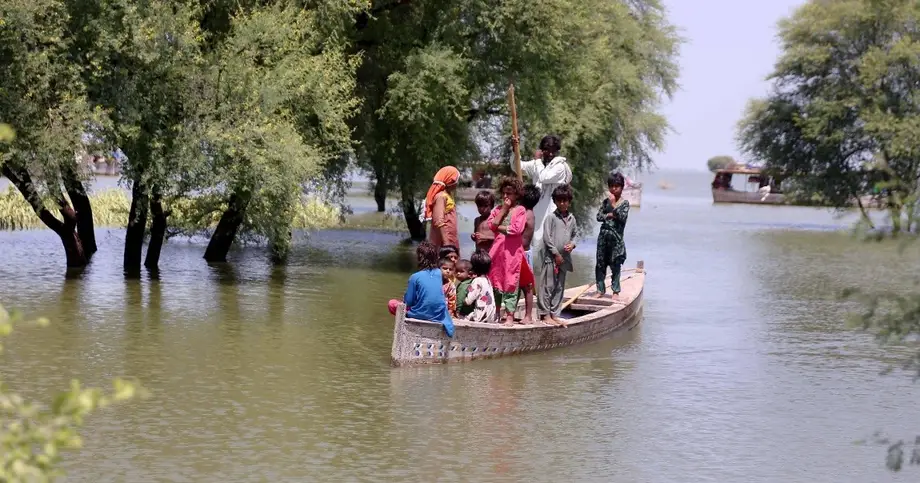
The framework links child marriage to the country's exposure to disaster. Floods, displacement, lost livelihoods and economic shocks can leave a family without a home or an income, and parents in that position may see an early marriage as a way to reduce costs or to place a daughter somewhere safer. The document calls for stronger social protection so that a climate emergency does not become a marriage emergency.
Digital life has added a newer set of dangers. Growing access to online platforms has created risks of grooming, coercion, blackmail and other exploitation that can push a girl toward marriage, and the framework proposes closer cooperation among child protection bodies, police, cybercrime investigators, internet service providers and the platforms themselves.
Trafficking and forced marriage for exploitation sit in the same chapter, along with the warning that girls married before 18 face higher risks of violence, emotional distress and restrictions on their freedom.
From Islamabad to Africa: Pakistan's Pitch Through the OIC
Tarar used the launch to announce that Pakistan intends to export the campaign. Pakistan took over the two year chairmanship of the OIC Ministerial Conference on Women in July, and the minister said that role would be used to press other governments to set a minimum age for marriage, beginning in African countries where such laws are missing or poorly enforced.
UNICEF estimates that about 41 percent of girls in West and Central Africa marry before turning 18, a share far higher than Pakistan's 18.3 percent. Tarar said he had raised the idea at a women's summit in Türkiye and wants a joint working group with two or three countries.
We will visit those countries and try to convince their governments to follow the path taken by other OIC member states.
He did not name the governments Pakistan intends to approach and gave no timetable for the visits, so the shape of the African initiative remains open. At home, he praised the Punjab and Balochistan governments for their efforts and said federal and provincial administrations must work together if the minimum age of 18 is to mean anything.
Trade pressure gives the enforcement question extra weight. Pakistan's access to European Union trade preferences under the GSP Plus scheme faces an assessment in 2027, and human rights compliance, including the treatment of children, is part of what that review examines.
What to Know
- Law and Justice Minister Azam Nazeer Tarar launched the National Framework for Ending Child Marriages in Islamabad on Friday, November 27, 2026, covering 2027 to 2031.
- The plan was prepared by the Ministry of Human Rights with UNFPA and UNICEF, and Group Development Pakistan supported its development and validation.
- Official data cited in the framework show 18.3 percent of women aged 20 to 24 married before 18 and 3.6 percent before 15, with about 1.9 million married girls and Pakistan ranked sixth globally.
- UNICEF estimates about 20 million girls and women in Pakistan were married as children, a much larger figure that reflects how many marriages go unregistered.
- Child marriage cost Pakistan about $800 million in 2019-20, or 0.42 percent of GDP, and wage losses from physical abuse reach Rs 12.64 billion a year across the provinces.
- The minimum age is 18 in Islamabad, Punjab, Sindh and Balochistan but remains 16 for girls in Khyber Pakhtunkhwa, Azad Jammu and Kashmir and Gilgit Baltistan.
- Tarar said the law is mandatory, that the Federal Shariat Court upheld Sindh's 2014 law, and that marriage registration will be strengthened with provincial governments to enforce the age of 18.
- The UN Committee on the Rights of the Child objected in January 2026 to rulings validating marriages of girls aged 15 and raised concern about Swara, Vani and Watta Satta.
- Only 13 percent of girls remain in school by ninth grade, and 18.4 percent of girls who dropped out left to marry against 1 percent of boys.
- Pakistan will use its OIC chairmanship to push for minimum marriage ages abroad, with a joint working group planned with African countries, though no partners or dates have been named.