One million homes completed, with 700,000 more under construction
Sindh has completed 1,007,111 houses under its programme to rebuild homes destroyed or damaged in Pakistan's 2022 floods, according to figures released by the provincial government. Another 700,000 homes are under construction, Senior Information Minister Sharjeel Inam Memon said at a Karachi news conference described in a November 16, 2026, dispatch.
Contents
- One million homes completed, with 700,000 more under construction
- How the recovery reached this point
- Where the completed houses are located
- Families receive money and manage construction
- What the housing grant buys
- Women gain property rights, with land questions still unresolved
- How the reconstruction is financed
- Water, toilets and drainage form the next major task
- Tracking quality as construction continues
- Key Points
The completed houses represent about 48% of the Sindh Peoples Housing for Flood Affectees programme's target of 2.1 million homes. That leaves 1,092,889 houses to finish. The wider reconstruction effort is intended to serve more than 15 million people, combining financial assistance for families with construction checks and the transfer of property rights to women.
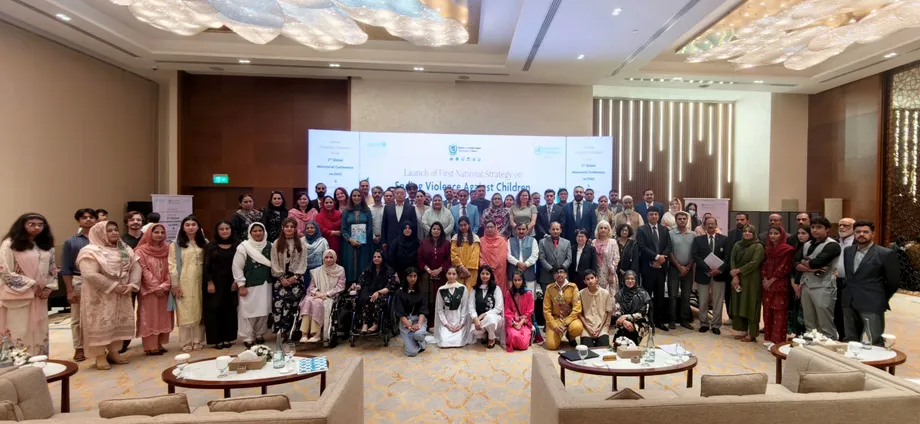
Chief Minister Murad Ali Shah marked the milestone at a ceremony at Chief Minister's House in Karachi attended by Pakistan Peoples Party Chairman Bilawal Bhutto Zardari, Chief Secretary Asif Hyder Shah, development partners and beneficiary families. Shah described what the completed homes meant for households displaced by the disaster:
"This is not just a number. It represents one million families who now have a roof over their heads, security for their children and hope for a better future," he said.
The achievement comes with unfinished work beyond the remaining buildings. Families have described spending their own savings or borrowing to complete construction. Water supplies, toilets and drainage are being planned through related investments, while legal ownership remains difficult for some households living on private land.
How the recovery reached this point
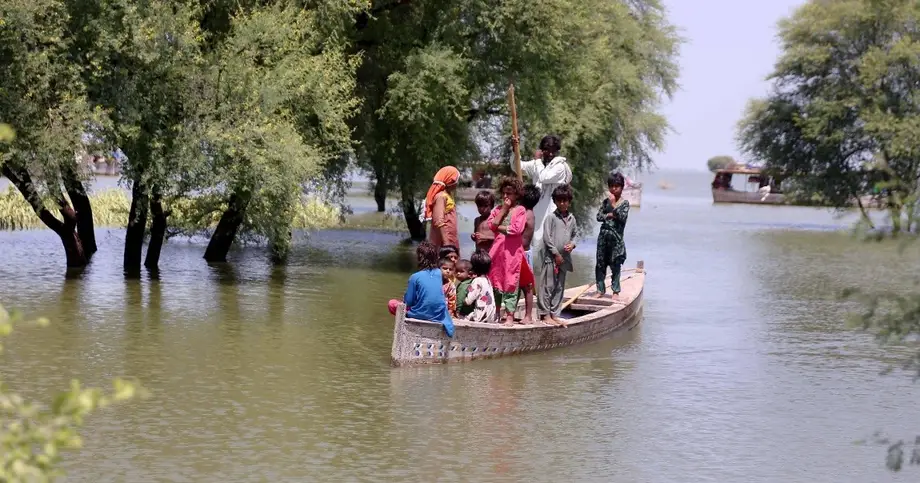
The 2022 floods affected about 33 million people across Pakistan and displaced nearly 8 million. The Asian Development Bank's project description records more than 1,700 deaths, 13,000 injuries and approximately 2.1 million houses damaged or destroyed nationally. Sindh became a central focus of housing recovery.
An assessment after the disaster put damage in Sindh at an estimated $4.3 billion, against almost $15 billion across Pakistan. Those losses extended beyond homes to the infrastructure and livelihoods that families needed to return to normal life.
Housing reconstruction has since developed through several funding programmes with different targets and reporting dates:
- 2022: Severe monsoon flooding destroyed or damaged homes and displaced families across Pakistan.
- July 26, 2024: The Asian Development Bank approved its Sindh Emergency Housing Reconstruction Project, supporting up to 250,000 houses and community infrastructure.
- December 2024: The World Bank approved $450 million in additional financing for its Sindh housing reconstruction project.
- March 2025: More than 230,000 homes were reported complete under the World Bank supported project, with reconstruction started on more than 410,000.
- Mid-2026: Programme figures described about one million homes as complete, with another 600,000 under construction.
- November 16, 2026: Memon's Karachi remarks described more than one million completed homes and another 700,000 under construction.
Earlier programme figures also described 600,000 homes as built by July 2024, while the narrower World Bank supported project recorded 230,000 completions in March 2025. The relationship between those counts, their construction definitions and their reporting boundaries has not been publicly reconciled in the figures cited here. A common completion standard would make progress easier for families and funders to follow.
Where the completed houses are located
Khairpur accounts for the largest number of completed houses in the detailed figures released at the chief minister's ceremony, with 167,739. Memon's statement gave a slightly different figure of 167,379 for the district. Naushahro Feroze followed with 90,865 completed homes and Jacobabad with 83,037.
Khairpur's ceremony total represents about one in six of all 1,007,111 completed houses. Dadu recorded 79,492, Qambar Shahdadkot 74,898, Larkana 72,357 and Shaheed Benazirabad 66,460. Those district totals show how reconstruction is spread across several heavily affected parts of the province.
Shikarpur recorded 61,143 completions, followed by Ghotki with 41,790, Badin with 39,721 and Sanghar with 38,473. Sukkur, Kashmore and Jamshoro were also among the districts listed. Other districts brought the provincial total to 1,007,111.
Shah described the overall target as covering 23 districts, while Memon and other programme descriptions referred to 24. Both officials presented the initiative as an effort to provide permanent shelter for families displaced by the 2022 floods.
Families receive money and manage construction
SPHF uses a model in which families receive financial assistance directly and arrange construction themselves, rather than receiving a finished house from a large contractor. Bank accounts are opened for verified beneficiaries, and payments are released as construction reaches specified stages.
Programme head Khalid Mahmood Shaikh described grants of 300,000 Pakistani rupees for a completely destroyed home and 100,000 rupees for a partially damaged home in July 2024. He said payments were made in instalments linked to completed construction stages.
Shah told the milestone ceremony that giving families responsibility for construction was a deliberate choice:
"We chose a different approach. Instead of relying on contractors, we placed families at the centre of reconstruction, empowering them to build their own homes with dignity and ownership," he said.
The model gives households a role in selecting materials, arranging labour and supervising work. Technical guidance and standard designs are intended to help families build stronger structures. Programme descriptions include raised foundations, which lift living space above the surrounding ground, and construction methods designed to withstand more than one kind of hazard.
Local employment is another part of the recovery. Memon said construction had provided work for labourers, masons and other skilled workers. A programme account published in 2026 estimated more than one million local jobs and about 20,000 trained masons. The World Bank supported project also includes a target to train 20,000 masons and engineers in resilient construction.
What the housing grant buys
For families, the size and condition of the completed shelter matter as much as the provincial total. In July 2024, Shaikh explained that the grant was intended to support one room and a small veranda, with toilets being considered for a later phase. Families could add their own money to build more.
Mashooq Barhamani, head of the Sujag Sansar relief organisation in Johi, Dadu district, described the assistance as valuable to very poor households but insufficient for a complete home with a boundary wall, kitchen and toilet. He said families often supplied their own labour to reduce costs, while some borrowed money or sold livestock to finish rooms and buy doors and windows.
Shaikh acknowledged that beneficiaries were adding about 20,000 to 25,000 rupees from their own resources. Rashid Ali Maitlo, a resident of Ubri village in Khairpur, described working on his own house and using his savings after the floods. An injury later stopped him working, and his final payment remained withheld because the room was unfinished.
His experience shows the financial pressure created by payments tied to construction stages: a household may need money to complete the work required to unlock its next instalment. At the Karachi ceremony, other beneficiary families expressed satisfaction with the assistance and the permanent shelter it helped them build. Both experiences are part of the programme's practical impact.
Women gain property rights, with land questions still unresolved
Memon said ownership rights to the reconstructed houses were being transferred to women to strengthen their financial and social position. Shah also described registration in women's names as a central feature of the programme.
The chief minister explained the intended benefit at the ceremony:
"A house registered in a woman's name is more than property; it is security, dignity and economic independence," he said.
By March 2025, more than 152,000 women had received housing grants under the World Bank supported project, accounting for 37% of beneficiaries. A later programme account stated that more than 800,000 land titles had been transferred to female heads of households. Grants and titles measure different steps: one provides construction money, while the other records ownership rights.
Land documents, known as sanads, are issued in women's names or through joint household ownership where possible. For a family that has lived for years without formal papers, obtaining a document can provide a clearer basis for asserting its rights to the property.
Private land presents a more difficult legal problem. A programme account estimated that 300,000 beneficiary families lived on privately owned land, where transferring title requires resolving existing ownership rights. The policy's reach therefore depends on both completing houses and settling the legal position of the land beneath them.
How the reconstruction is financed
The Asian Development Bank's Sindh housing project, numbered 57323-001, is listed as active. Its financing includes a $400 million concessional loan and $500,000 in technical assistance. A concessional loan provides borrowing on more favourable terms than ordinary market lending.
Approved on July 26, 2024, the ADB project supports reconstruction of up to 250,000 houses, alongside improvements selected by communities, including water, sanitation, essential infrastructure and livelihood recovery. It names Sindh Peoples Housing for Flood Affectees as the executing agency and gives January 31, 2028, as its original closing date.
The World Bank initially provided $500 million for the Sindh Flood Emergency Housing Reconstruction Project. An additional $450 million approved in December 2024 expanded its planned reach to 770,000 homes and 56,000 water, sanitation and hygiene facilities. Development partners also include the Islamic Development Bank and European Investment Bank.
Shah cited a Sindh government commitment of $179 million at the completion ceremony. Shaikh had cited a provincial contribution of $227 million in July 2024. The two stated amounts differ by $48 million, and neither statement explained the difference in accounting scope or timing.
The funding targets sit within the wider provincial goal of 2.1 million homes. The ADB target of up to 250,000 houses and the World Bank supported target of 770,000 describe specific financed projects within that larger effort.
Water, toilets and drainage form the next major task
Shah said nearly $1 billion in combined investments was intended to extend clean drinking water, sanitation and drainage to approximately 4,800 villages. These services address needs that a new room alone cannot meet, including safe water for drinking, toilets for families and drainage to carry wastewater away.
An earlier programme description placed an initial water, sanitation and hygiene phase at approximately 2,000 villages. The later ambition of 4,800 villages is 2.4 times that number. Delivery schedules and the relationship between the two phases were not specified.
The ADB project includes community infrastructure alongside housing and calls for designs that account for hazards, environmental conditions and the needs of women. The World Bank supported expansion also links reconstruction to public health through its planned 56,000 water, sanitation and hygiene facilities.
Residents described wider gaps in their settlements, including distant schools, missing roads and inadequate sewerage. Their accounts put the next phase in practical terms: recovery involves reaching a classroom, using a toilet, finding medical care and keeping drinking water safe, as well as sleeping under a permanent roof.
Tracking quality as construction continues
Shah said every completed house was tagged with its geographic location, monitored digitally and independently verified at different construction stages. These systems connect a physical building to a digital record, helping administrators check where assistance has gone and how far work has progressed.
Programme descriptions also refer to surveys using geographic information systems, satellite images and photographs submitted through mobile applications. By mid-2026, about two million beneficiaries had reportedly been validated, while 1.15 million constructions had passed checks at foundation or plinth level, the raised base on which a building stands.
Community participation extends to oversight. Around 27,000 village reconstruction committees were formed under the World Bank supported effort, with nearly half including women. Citizen feedback tools and community monitoring are intended to give residents a way to raise problems during construction.
Memon said monitoring would continue to identify eligible families and check quality. With 700,000 houses reported under construction and more than one million still needed to reach the full target, the next stages require sustained financing, completed inspections and services that make rebuilt settlements habitable. Similar approaches in which families manage their reconstruction are also being adopted in Sohbatpur and Jaffarabad in neighbouring Balochistan.
Key Points
- Sindh reports 1,007,111 completed houses, about 48% of its target of 2.1 million.
- Memon said another 700,000 homes were under construction.
- Families receive grants directly, with payments linked to construction progress.
- Women are receiving ownership rights, while private land creates legal difficulties for some households.
- Beneficiaries have described adding savings, labour or borrowed money to complete their shelters.
- ADB financing includes a $400 million loan for up to 250,000 houses and community improvements.
- The provincial government plans water, sanitation and drainage investments for approximately 4,800 villages.