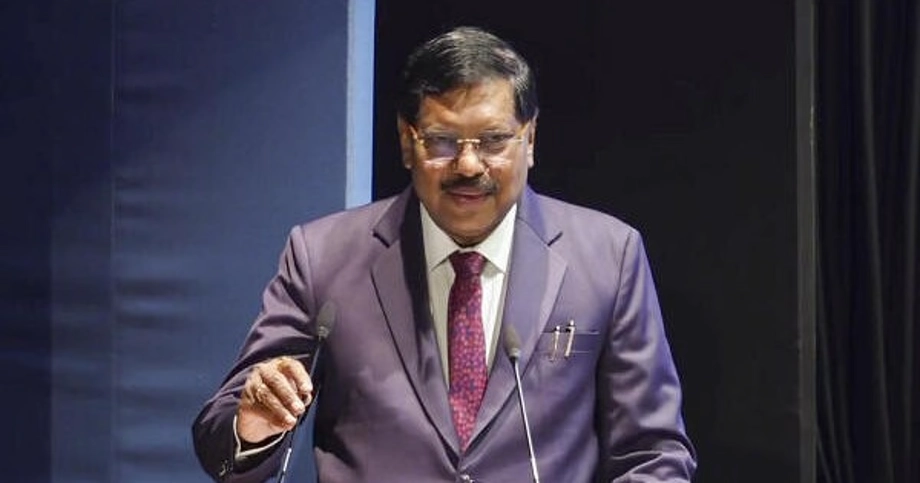
A rare warning from a former chief justice
New Delhi, November 27, 2026: Former Chief Justice of India B R Gavai has written a letter of three pages to President Droupadi Murmu, asking her to intervene over what he calls a worrying pattern in judicial appointments and transfers. Gavai, who headed the Supreme Court collegium from May 14 to November 23, 2025, says recent recommendations show a 'growing disregard for diversity, inclusion and merit'. The letter, dated November 27, 2026, was also marked to Prime Minister Narendra Modi and Union Law Minister Arjun Ram Meghwal.
Contents
- A rare warning from a former chief justice
- What the collegium does and why the letter matters
- The figures behind the allegation
- Why the historical comparison matters
- What Gavai says he did during his own tenure
- The transfers that drew dissent
- The balancing claim Gavai wants understood
- What the President can do, and what the Constitution says
- He criticises bias while defending the collegium
- Timeline of the dispute
- What is known and what happens now
- Key Points
The heart of the complaint is sharp: Gavai says a community making up less than 5 per cent of India's population has secured more than 40 per cent representation in the Supreme Court in recent years, and that the share has risen manifold. He does not name the group in the letter. He says candidates from Scheduled Castes, Scheduled Tribes, Other Backward Classes, minorities, women and even forward groups outside that circle are being left out.
The complaint lands at a practical point in the judiciary. A transfer can shape which court a chief justice leads, and a recommendation can decide who reaches the Supreme Court. Gavai's letter asks the President to treat representation and merit as part of those decisions, not as afterthoughts. It also puts on record a former insider's account of a system he once led.
What the collegium does and why the letter matters
The collegium is the group of senior Supreme Court judges that recommends names for appointment to the Supreme Court and High Courts. A convention built through court rulings has made those recommendations decisive, although the Constitution places formal appointment power with the President. Gavai knows that system from the inside: he was both a member and the head of the collegium.
In the opening of his letter, Gavai identified himself as a concerned citizen and a former head of the collegium. He said the system he once led had become questionable. He wrote:
I write to you as a concerned citizen who also happened to be former Chief Justice of India. I have had the opportunity to be a part and a head of the collegium whose working is now questionable.
That framing gives the letter unusual weight. It is not an outside demand for change from a party or activist. It is a dissent from a former head of the appointment panel, addressed to the President and copied to the two most senior political offices involved in the appointment process.
The figures behind the allegation
Gavai anchors the complaint in numbers placed before the Rajya Sabha in March 2025 by Union Law Minister Arjun Ram Meghwal. Of 715 High Court judges appointed since 2018, 22 were from Scheduled Castes, 16 from Scheduled Tribes, 89 from Other Backward Classes and 37 from minority communities.
Those four groups add up to 164 appointments, about 23 per cent of the total. Gavai said roughly three out of every four appointees came from the general category, the label used for people outside those listed categories in official counting.
He also cited figures for appointments from January 2021 to January 2026. In that set, he said, forward communities made up close to 80 per cent of appointees. The phrase refers to groups outside the main categories that receive reserved places in education and jobs. Other Backward Classes, which Gavai described as perhaps 40 to 50 per cent of India's population, received less than 14 per cent representation.
Representation figures matter because High Courts are the main pool for Supreme Court appointments. If a category is small at the entry point, the effect can be felt higher up. Gavai's letter uses that link to argue that representation cannot be separated from merit.
Why the historical comparison matters
Gavai also reached back to the Supreme Court's first four decades. He cited a study by political scientist George Gadbois covering 1950 to 1989. According to the study, a community that was about one nineteenth of the population held more than one third of Supreme Court judgeships in that period. The study discussed Brahmins; the letter itself leaves the group unnamed.
The letter says the social profile of the Court has barely moved in 75 years. Gavai, a Dalit and the first Buddhist to serve as Chief Justice of India, said the pattern survives through familiarity, networks and unexamined ideas about who is suited to the Court. Writing as a former chief justice who had sat inside that history, he said responsibility for the failure is shared. He wrote:
Each of us bears some share of that failure, and I say so plainly.
He also said caste data is not recorded for Supreme Court appointments and called that silence part of the problem. Without that record, claims about the Court's social mix depend on estimates and research, while the High Court numbers come from a parliamentary answer.
What Gavai says he did during his own tenure
Gavai served as the 52nd Chief Justice of India from May 14 to November 23, 2025. His last working day before leaving office was November 23, and Justice Surya Kant was sworn in as the next Chief Justice on November 24. Gavai was the second Dalit chief justice, after K G Balakrishnan, and the first Buddhist to hold the office.
During that tenure, the collegium he headed recommended 129 names for High Court appointments between May 14 and November 23, 2025. The government cleared 93 of them. The cleared group included 10 judges from Scheduled Castes, 11 from Other Backward Classes and other backward classes, 13 from minority communities and 15 women.
Forty nine of the 93 came from the Bar, meaning practising lawyers, and the rest came from the judicial service. Five were related to former or serving judges. Five Supreme Court judges were also appointed during his tenure: Justices N V Anjaria, Vijay Bishnoi, A S Chandurkar, Alok Aradhe and Vipul Manubhai Pancholi.
Gavai says this record shows what he considers a balanced approach. In the letter, he said he tried to include Scheduled Castes, Scheduled Tribes, Other Backward Classes, minorities, women and forward communities when considering candidates for higher courts. His tenure of six months also included major rulings on the Waqf law, the tribunal reforms statute and post facto environmental approvals for projects, meaning approvals granted after the fact.
The transfers that drew dissent
The letter moves from social representation to the movement of judges between High Courts. Gavai says a chief justice was transferred from one High Court to a smaller High Court, then from there to one of the smallest High Courts, and was later recommended for a prominent High Court. He says another meritorious and hardworking chief justice was moved to a smaller High Court to make way for that recommendation.
Gavai does not name the judges. He says he was part of the collegium that recommended the earlier transfers and was heading the collegium when the later recommendation was made. He adds that he knows the factors behind those decisions but will not reveal them. He wrote:
I am aware of the factors that prevailed at the relevant time with the collegium for recommending such an appointment/transfer. However, on account of propriety and judicial discipline I refrain from divulging these reasons.
He cited a second case in which a judge was transferred from his parent High Court to another High Court on what Gavai calls punitive considerations. That judge was later appointed chief justice of a large and prominent High Court. Gavai says such moves can discourage hardworking judges, especially those from marginalised groups.
The balancing claim Gavai wants understood
Gavai repeatedly says his objection is not to candidates from any particular community being considered. His point is that one group should not become the default route to appointment. He says even people from forward communities are overlooked if they are not from the group he sees being favoured.
Speaking as a former chief justice who helped make collegium recommendations, he tried to separate his position from opposition to any community. He wrote:
I may not be misunderstood as being opposed to any section of the society
He said recent circumstances support a perception that recommendations are being made with a focus on appeasing and rewarding a single community. In his closing description of the appointments and transfers, Gavai wrote:
I am constrained to voice my dissent and disappointment as evidently appointments and transfers are being done in complete disregard to ethos of diversity, inclusion and merits taking into consideration other irrelevant factors.
What the President can do, and what the Constitution says
The appeal to Murmu rests on Article 124(2) of the Constitution. That provision says the President appoints judges of the Supreme Court. Over several decades, judicial interpretation has given the collegium's recommendations decisive force. Gavai argues that this convention has not erased the President's duty to preserve, protect and defend the Constitution.
President Murmu is from a Scheduled Tribe. Gavai is the second Dalit chief justice and the first Buddhist to hold the office. Their identities are part of the background to a letter about representation, though the legal argument turns on constitutional responsibility and the appointment process.
Gavai also calls the executive and Parliament stakeholders. The executive is an equal stakeholder, he says, and both the government and Parliament have previously asked the collegium and High Courts to consider suitable candidates from marginalised sections. In practice, the President acts on the advice of the Council of Ministers, so any presidential step would involve the elected government.
He criticises bias while defending the collegium
Gavai's complaint sits alongside his wider position on the appointment system. In March 2026, he called the collegium the most workable model then available. He criticised delays by the executive in clearing recommendations and said the executive must comply once the collegium reiterates a name.
That position explains why the letter is aimed at bias within recommendations rather than at replacing the collegium. Gavai wants the President, the government, Parliament and the judiciary to treat diversity as part of the same process, not as a separate appeal after decisions are made.
The current collegium is headed by Chief Justice Surya Kant and includes Justices Vikram Nath, B V Nagarathna, M M Sundresh and P S Narasimha. Names listed for Supreme Court appointments after Gavai's retirement included Justices Sheel Nagu, Shree Chandrashekhar, Sanjeev Sachdeva, Arun Palli, V Mohana, Sunita Agarwal, D K Upadhyay and Apresh Kumar Singh.
Timeline of the dispute
The sequence stretches across more than a year and a half, from Gavai's tenure as chief justice to his letter as a former chief justice.
- May 14, 2025: Gavai becomes Chief Justice of India.
- May 14 to November 23, 2025: The collegium he heads recommends 129 names for High Court appointments; 93 are cleared.
- November 23, 2025: Gavai leaves office after a tenure of a little over six months.
- November 24, 2025: Justice Surya Kant is sworn in as Chief Justice of India.
- March 2026: Gavai defends the collegium as the most workable model and criticises executive delays.
- November 27, 2026: Gavai writes the letter of three pages to President Murmu, with copies to Prime Minister Modi and the law minister.
The timeline matters because Gavai is describing decisions from more than one period: his own tenure, data up to January 2026 and recommendations he says are recent at the time of the letter.
What is known and what happens now
Gavai asks President Murmu to acknowledge the issue and intervene in the way she considers appropriate. He wants the government, Parliament and the judiciary to be reminded of the duty of equal representation in the judiciary, which he describes as one of the important pillars of Indian democracy.
The President's response had not been announced, and no date was given for consultations or action. Gavai did not name the judges in the transfer examples or disclose the collegium reasons he said he knew, citing propriety and judicial discipline.
Key Points
- Gavai wrote a letter of three pages dated November 27, 2026 to President Droupadi Murmu, with copies to Prime Minister Modi and the law minister.
- He alleges that recent collegium recommendations favour one unnamed community and sideline Scheduled Castes, Scheduled Tribes, Other Backward Classes, minorities, women and other forward groups.
- He cites 715 High Court judges appointed since 2018: 22 Scheduled Caste, 16 Scheduled Tribe, 89 Other Backward Class and 37 minority appointees.
- He says forward communities held close to 80 per cent of appointments from January 2021 to January 2026, while Other Backward Classes received less than 14 per cent.
- He questions two sets of High Court transfers and says he will not disclose collegium reasons because of propriety and judicial discipline.
- He asks the President to intervene under Article 124(2); no response or date for consultations was announced.