A return to profit hides a sharp loss of momentum
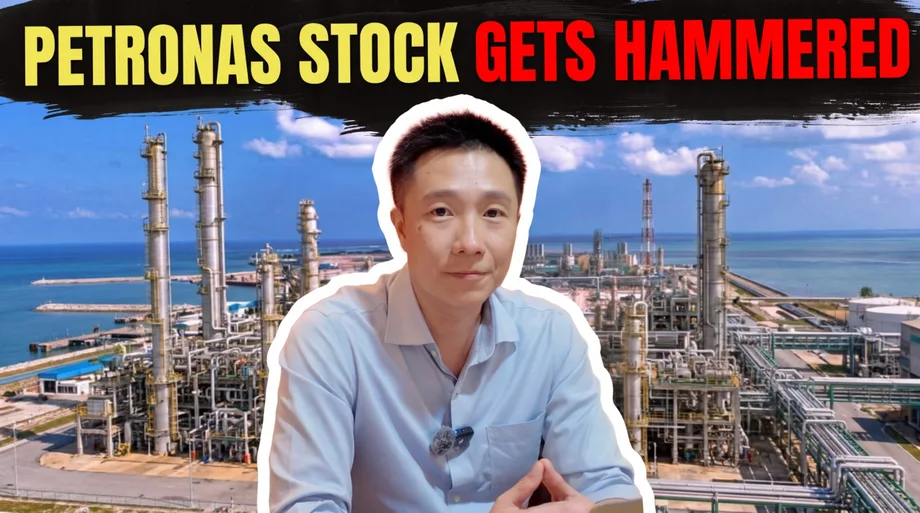
Petronas Chemicals Group Bhd posted a statutory net profit of RM179 million for the three months ended Sept 30, 2026, reversing a RM289 million loss a year earlier. The more urgent story for investors lies in the underlying numbers. Hong Leong Investment Bank (HLIB) calculated core net profit at just RM99 million, down 83% from the second quarter and 134% from a year earlier. The results triggered at least four brokerage downgrades in a single day as attention shifted from the annual recovery to the sudden loss of momentum.
Contents
- A return to profit hides a sharp loss of momentum
- Why higher sales brought thinner margins
- What HLIB and CIMB changed after the results
- Why the fourth quarter could still look better
- Pengerang remains the central financial concern
- The share price tells a story of war, relief and retreat
- Lotte Chemical shows the industry's survival response
- Maintenance and oversupply set the agenda for 2027
- Key Points
The profit figure depends on the measuring stick. Core profit is an analyst's estimate of earnings from ordinary business after excluding items considered unusual. HLIB arrived at RM99 million, while CIMB Securities put core profit after tax and minority interests at RM142 million. Both measures missed expectations, and their different adjustments explain why they differ from the statutory result announced on Nov 24.
HLIB put core net profit for the first nine months at RM908 million, compared with a core net loss of RM297 million a year earlier. On the statutory basis, net profit attributable to shareholders was RM994 million, reversing a loss of RM1.39 billion. The earlier period included foreign exchange losses and a write down of assets at Perstorp, the Swedish specialty chemicals unit. Petronas Chemicals, the chemical arm of Petroliam Nasional Bhd, operates 21 manufacturing sites and 54 production plants, so its results offer a broad view of the pressures facing chemical producers across the region.
Why higher sales brought thinner margins
Quarterly revenue rose 12.3% to RM7.62 billion from RM6.79 billion, helped by higher sales volumes. Profit before tax reached RM256 million, compared with a loss before tax of RM296 million a year earlier. The comparison with the second quarter was much weaker: profit after tax fell 54.6% to RM202 million from RM445 million, while revenue slipped about 4% because lower average selling prices outweighed the extra volume.
EBITDA, or earnings before interest, tax, depreciation and amortisation, declined to RM942 million from RM1.32 billion. The EBITDA margin narrowed to 12.4%, compared with 16.7% in the second quarter. A central measure here is the product spread, meaning the gap between a chemical's selling price and the cost of feedstock and production. When that gap narrows, a producer can sell more material and still earn less from each tonne.
Urea provided the clearest example. Its price dropped to US$407 per tonne in the third quarter from US$667 in the second, a fall of about 39%. Mazuin Ismail, the managing director and chief executive officer, connected the weakness to greater supply from China.
The third quarter was marked by softer product prices across the portfolio, with urea particularly affected by increased export availability from China.
Plant utilisation averaged 73%, down from 90% in the same quarter a year earlier. The group completed planned statutory maintenance at its methanol plant in Labuan and dealt with interruptions and maintenance at its olefins plants in Kertih. Sales still increased because of larger contributions from the Pengerang operations and strategic sourcing, which supplemented supply while parts of the production network were constrained.
Across the first nine months, revenue rose almost 8% to RM22.54 billion from RM20.88 billion. Higher average selling prices outweighed lower sales volumes and a stronger ringgit, which reduces the local currency value of export receipts. The company put EBITDA for the period at RM3.4 billion, up RM1.7 billion or 93%, helped by better average spreads, contributions from a joint operation and the specialties business, and lower plant operating costs. No interim dividend was declared for the third quarter itself, while the dividend reported for the nine-month period was six sen per share, compared with three sen a year earlier.
What HLIB and CIMB changed after the results
HLIB downgraded Petronas Chemicals to hold from buy and cut its target price to RM3.73 from RM5.49. Analyst Thye May Ting said the petrochemical upcycle was losing momentum, with product prices likely to have peaked in financial year 2026. The bank reduced its earnings forecasts for 2026 and 2027 by 30% and 22%, respectively, after urea and ammonia selling prices came in weaker than expected. The nine-month core result represented only 60% of HLIB's full year forecast and 51% of the wider consensus forecast.
CIMB Securities kept its hold rating but lowered its target price to RM4.20 from RM5.00. It cut earnings forecasts covering 2026 to 2028 by between 6.1% and 25.9%, citing weaker product spreads and greater uncertainty over a recovery in margins. Its RM142 million core profit calculation for the quarter fell short of both its own estimate and the consensus.
The wider analyst group remained divided. Among 21 analysts covering the company on Nov 25, eight had buy ratings, seven had hold ratings and six had sell ratings. Target prices ranged from RM3.10 to RM6.90, with an average of RM4.66 for the following 12 months. HLIB expects oversupply and subdued demand to moderate earnings in 2027 and 2028, even if production improves in the immediate term.
Why the fourth quarter could still look better
CIMB expects earnings to improve in the fourth quarter as production resumes at the Kertih Integrated Petrochemical Complex and major maintenance disappears from the schedule. It said utilisation could reach at least 90%, compared with 73% in the third quarter. The company has already reported that utilisation reached 90% in October. Running plants at 90% rather than 73% provides substantially more material to sell without requiring a new factory.
Higher output will coincide with weaker prices. CIMB said prices for olefins and derivatives, fertilisers and methanol had eased from their second quarter highs following the decline in Brent crude. Brent was quoted at US$90.28 per barrel on Nov 25, down 1.23% at that point. HLIB said the oil benchmark had fallen more than 20% from its peak in the middle of October, with renewed weakness in important petrochemical prices appearing since the middle of November.
That creates a race between volume and margin. Kertih can supply more tonnes, but oversupply and cautious buying may limit the income generated by each tonne. CIMB also warned that weaker demand from final customers could restrict any improvement in product spreads. Its fourth quarter recovery forecast therefore rests primarily on better plant availability rather than a broad rebound in chemical prices.
Pengerang remains the central financial concern
Pengerang Petrochemical Company (PPC), in which Petronas Chemicals holds a 50% stake, continued to drag on earnings. PPC recorded positive EBITDA of RM87 million in the third quarter, but that figure fell to about RM40 million after excluding foreign exchange gains. Its adjusted loss before tax widened to approximately RM80 million. Selected downstream units remained offline because management judged their product economics unfavourable, putting commercial viability ahead of simply maximising plant use.
No active discussions were taking place between Petronas and Petronas Chemicals over a possible sale of the 50% PPC stake. HLIB expects any divestment to be deferred until 2027 and has not included a potential earnings benefit in its forecasts. Investors consequently have no announced transaction, price or completion date around which to model a financial improvement.
CGS International had identified related dangers at the start of 2025 when it downgraded Petronas Chemicals to hold from add. It estimated that every 10% impairment in PPC's carrying value could reduce the listed group's book value by 11.25 sen per share. An impairment is an accounting reduction made when an asset is no longer worth its recorded value. CGS also warned that operating losses could exceed expectations because of uncertainty over feedstock supplied by the affiliated Pengerang Refining Company.
The Malaysian Inland Revenue Board presented another possible risk. CGS said the tax authority might limit the extent to which feedstock could be transferred between the two Pengerang businesses at prices below market levels. Transfer pricing concerns can arise when related companies trade with each other, because the prices affect both costs and taxable profits. A requirement to use prices closer to market levels could raise PPC's costs and weaken future profitability.
The share price tells a story of war, relief and retreat
CGS issued its earlier warning after Petronas Chemicals shares rebounded 13% in December 2024, reducing their loss for that year to 26%. The recovery had been supported by a stronger US dollar and the possibility of gaining market share after a shutdown at Lotte Chemical Titan. At that time, the shares carried nine sell, five hold and six buy recommendations, with an average target price of RM4.98 that implied less than 1% potential gain.
The share price subsequently became tied to an extraordinary geopolitical shock. Petronas Chemicals was viewed as a likely beneficiary because its feedstock comes from within Malaysia rather than the Middle East. Rising petroleum and petrochemical prices during the war between the United States and Iran briefly transformed market sentiment.
- Feb 27, 2026: The shares touched RM2.93, their lowest price in a year.
- Feb 28: The war began after the shares had been trading around RM3.00. Tehran subsequently moved to close the Strait of Hormuz, driving energy and chemical prices higher.
- March 30: The shares surged nearly 105% to RM6.13.
- Nov 24: They closed unchanged at RM3.82, giving the group a market capitalisation of RM30.56 billion and a gain of 5.2% so far in 2026.
- Nov 25: During trading, the shares were quoted nine sen or 2.37% lower at RM3.71, reducing market capitalisation to RM29.12 billion.
The average share price so far in 2026 was RM4.46. Despite surrendering much of the wartime gain, the company had added about RM5.7 billion in market value from its February low by Nov 25. CIMB placed the upper end of the trading range it tracked at RM6.05 and said the shares had subsequently moved between RM3.63 and that peak.
Lotte Chemical shows the industry's survival response
Lotte Chemical Titan Holding Bhd provides a stark illustration of the pressure created by excess capacity. CGS upgraded its rating on Lotte to hold from reduce after a sharp fall in the shares over three months and efforts by the company to slow its cash consumption. The upgrade followed the shutdown of Naphtha Cracker 1 at Pasir Gudang, Johor, after sustained losses.
The cracker produces up to 430,000 tonnes annually of intermediate petrochemicals, including ethylene and propylene, which are basic building blocks for plastics and many other products. Closing it removes 33% of Lotte's capacity. CGS called the shutdown a positive development after nine consecutive quarters of gross losses and said the company was finally taking the action needed to survive the downturn.
Lotte could seek cash injections from its parent or reduce utilisation at its Malaysian plant further. Its shares lost more than half their value in 2024, and the stock carried three sell, one hold and one buy recommendations after the CGS upgrade. For Petronas Chemicals, a competitor's closure can create room to gain market share, but it also demonstrates how severely weak prices are affecting producers across Southeast Asia.
Maintenance and oversupply set the agenda for 2027
Several planned shutdowns will interrupt production again in 2027. These plant turnarounds allow inspection, repairs and statutory work that support safe and reliable operations, but they reduce output while equipment is offline. CIMB provided the following schedule.
- First half of 2027: Maintenance at the Pengerang Petrochemical Complex and Petronas Chemicals Isononanol in Pengerang, Johor, could affect production.
- Second quarter: The propane dehydrogenation plant in Gebeng, Pahang, which makes propylene from propane, is scheduled for maintenance.
- Third quarter: PC Methanol 1 in Labuan is due for work.
- Fourth quarter: PC Fertiliser Kedah in Gurun, Kedah, is scheduled to undergo maintenance.
Olefins and derivatives face pressure from recovering regional supply, additional Chinese capacity and subdued demand from downstream manufacturers. Increasing Chinese urea exports and recovering methanol cargo flows from the Middle East could weaken fertiliser and methanol prices. Ammonia has some support from constrained supply and steady agricultural demand, while seasonal farming needs, food security priorities and imports should support fertiliser consumption more broadly. Methanol prices are expected to remain broadly stable.
Specialty chemicals face softer conditions in construction, automotive and consumer goods, with seasonal weakness expected in the fourth quarter of 2026. Geopolitical tensions could also keep feedstock and freight costs volatile. No date was given for the release of the fourth quarter results, while the tax authority has announced no decision on Pengerang feedstock pricing. The next results will give investors two immediate measures to assess: whether utilisation remains near 90%, and whether the extra volume can offset weaker spreads before the 2027 maintenance programme begins.
Key Points
- HLIB calculated third quarter core net profit at RM99 million, down 83% from the second quarter, while CIMB's core measure was RM142 million.
- Statutory net profit was RM179 million, reversing a RM289 million loss a year earlier, as revenue rose 12.3% to RM7.62 billion.
- Urea fell to US$407 per tonne from US$667 in the second quarter, and plant utilisation averaged 73% before recovering to 90% in October.
- HLIB cut its target price to RM3.73 and CIMB reduced its target to RM4.20, with both banks now rating the shares hold.
- A fourth quarter improvement depends on higher production at Kertih, while oversupply and weaker product prices continue to restrict margins.
- PPC posted an adjusted loss before tax of about RM80 million, and no active discussions are taking place over selling the 50% stake.
- Maintenance is scheduled at plants in Johor, Pahang, Labuan and Kedah during 2027.