Two late candidates put voter choice at the centre of DAP's campaign
Sarawak DAP will contest 14 seats in the Dec 12 state election after adding Dewan Rakyat Deputy Speaker Alice Lau Kiong Yieng in Bawang Assan and state party secretary Alan Ling Sie Kiong in Senadin. Sarawak DAP chairman Chong Chieng Jen announced the decision on Nov 27, one day before nomination day, saying the party wanted to stop Gabungan Parti Sarawak (GPS) candidates from collecting more victories without facing voters.
Contents
- Two late candidates put voter choice at the centre of DAP's campaign
- Fourteen names, an average age of 41.42 and three women
- Why Bawang Assan and Senadin are difficult ground
- How Sarawak reached the prospect of 44 walkovers
- What the Election Commission is asking the Attorney-General's Chambers
- PKR cites stability and MA63, while Anwar rejects claims of capitulation
- What voters lose when nobody opposes the incumbent
- Why DAP's federal ministers will stay away
- The federal arithmetic behind a subdued state election
- Urban margins show why every opposition vote matters
- Chong brings a land dispute into the Kota Sentosa contest
- Key Points
The expansion followed Sarawak PKR's decision on Nov 24 to withdraw from the election. Chong said neither Lau nor Ling had planned to stand, but both accepted the challenge despite DAP's limited resources and short preparation time. Lau is also the Lanang MP, while Ling is a lawyer and former Piasau assemblyman.
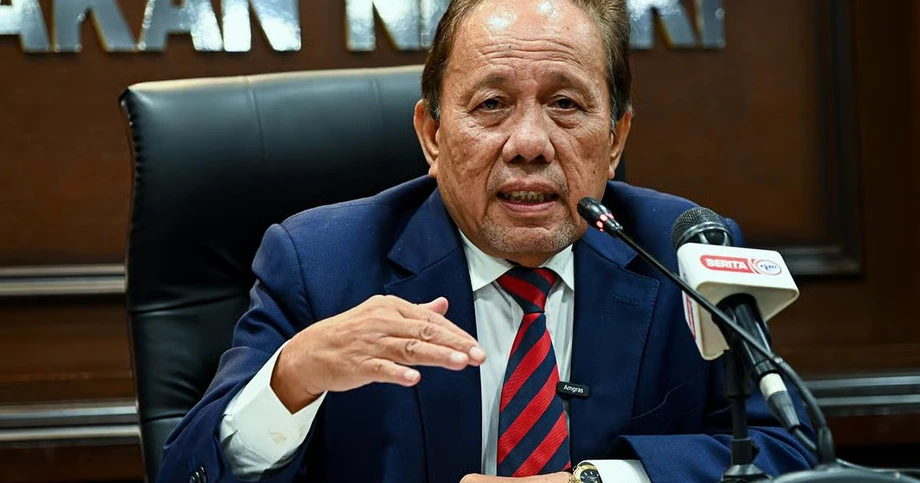
Chong told a press conference at DAP headquarters in Kuching that the state committee had discussed the situation before deciding that leaving seats without opponents would weaken political accountability.
I think the voters deserve to have a choice to vote. Therefore, we added on two additional candidates to offer ourselves as a choice for a stronger check and balance of the GPS.
An uncontested election, often called a walkover, means that only one valid candidate remains when nominations close. That candidate becomes the assembly member automatically, and people in the constituency do not cast ballots for the seat. DAP's intervention therefore concerns more than its own prospects: it determines whether voters in Bawang Assan and Senadin will have a contest at all.
Fourteen names, an average age of 41.42 and three women
DAP built its list in stages, first naming Irene Wong Lee Ting for Pelawan and Stanley Chiew Sung Ngie for Bukit Assek, then announcing seven more candidates, including Chong in Kota Sentosa and Violet Yong Wui Wui in Pending. The final 14 candidates and their constituencies are:
- Lim Nee Kon in Opar
- Michael Kong Feng Nian in Padungan
- Violet Yong Wui Wui in Pending
- Dr Kelvin Yii Lee Wuen in Batu Lintang
- Chong Chieng Jen in Kota Sentosa
- Jordan Soo Tien Ren in Batu Kitang
- Sim Kiat Leng in Batu Kawa
- Roderick Wong Siew Lead in Meradong
- Stanley Chiew Sung Ngie in Bukit Assek
- Alice Lau Kiong Yieng in Bawang Assan
- Irene Wong Lee Ting in Pelawan
- Chiew Chan Yew in Tanjong Batu
- Voon Kai Foo in Pujut
- Alan Ling Sie Kiong in Senadin
Chong said the candidates had an average age of 41.42 years. Soo and Irene Wong are the two Gen Z candidates, while Violet Yong, Lau and Irene Wong make up the three women on the list. He presented the selection as evidence of DAP's effort to bring younger people and women into Sarawak politics.
Why Bawang Assan and Senadin are difficult ground
Alice Lau returns to a constituency where she experienced a substantial defeat 15 years ago. She lost Bawang Assan in the 2011 state election to Wong Soon Koh by 1,808 votes. Since then, she has won three terms as Lanang MP and has served as a deputy speaker of the Dewan Rakyat, the lower house of Malaysia's Parliament, since December 2022.
Wong held Bawang Assan for seven terms, defending it under the Sarawak United Peoples' Party (SUPP), the United People's Party and Parti Sarawak Bersatu (PSB). PSB was later absorbed into the Progressive Democratic Party (PDP). Wong recently said he would not seek reelection and left PDP during the week of DAP's announcement, claiming that the party had moved away from its original direction.
His departure has not made the contest straightforward. Political analyst Jayum Jawan said SUPP and PDP had both been eyeing Bawang Assan, where most voters are Chinese. SUPP wants to recover a seat associated with its former assemblyman, while PDP inherited Wong's political organisation through the PSB merger. Lau will therefore enter a contest shaped by rivalries inside GPS as well as by DAP's attempt to rebuild its urban support.
Alan Ling faces an even longer period of entrenched control in Senadin. No party other than SUPP has held the seat since 1974, a span of 52 years. Ling, who trained as a lawyer under the late Karpal Singh, is making his fourth state election campaign. He defeated then deputy chief minister George Chan in Piasau in 2011, but lost the seat to SUPP's Sebastian Ting by 2,112 votes in 2016. In 2021, he lost Pujut to SUPP's Adam Yii by 1,566 votes.
How Sarawak reached the prospect of 44 walkovers
The immediate concern arose from a succession of withdrawals by national parties. Persatuan Pemangkin Daya Masyarakat, also known as ROSE, estimated on Nov 26 that only about 38 of Sarawak's 82 constituencies might have contests. That left as many as 44 seats where GPS could win without opposition. Forty-four seats amount to 53.7 percent of the assembly, rather than merely a small group of exceptional cases.
ROSE based its preliminary calculation on the announcements available at the time: GPS had named candidates for all 82 seats, Parti Bansa Dayak Sarawak (PBDS) had 26, DAP had 12 and Parti Bumi Kenyalang (PBK) had two. The organisation declined to publish a list of the 44 constituencies before checking the official nomination records.
The political sequence helps explain why the field changed so quickly:
- Nov 15: Barisan Nasional chairman and Deputy Prime Minister Ahmad Zahid Hamidi said his coalition would not contest, citing an understanding between Umno and Parti Pesaka Bumiputera Bersatu (PBB).
- Nov 19: PAS announced that it would stay out, its first absence from a Sarawak state election since 1996. It has never won a Sarawak state seat.
- Nov 22: GPS chairman and caretaker Sarawak premier Abang Johari Openg questioned why federal partners wanted to fight GPS, while saying his coalition was ready to face any challenger.
- Nov 24: Sarawak PKR issued its withdrawal statement. Amanah also stayed out, leaving DAP as the only Pakatan Harapan component contesting.
- Nov 25: Chong confirmed that Sarawak DAP would continue its campaign and accused PKR of sacrificing state democracy for federal political support.
- Nov 26: ROSE issued its walkover warning, while Chong met DAP secretary general Anthony Loke to agree on a campaign led by Sarawak leaders.
- Nov 27: DAP added Bawang Assan and Senadin, and the Election Commission said it was seeking legal advice about the possible consequences of numerous uncontested victories.
Parti Wawasan Malaysia and Bersatu also decided not to field candidates. PBDS, which has an electoral pact with DAP, remained the largest announced opposition presence after GPS in terms of candidate numbers.
What the Election Commission is asking the Attorney-General's Chambers
Election Commission chairman Ramlan Harun said on Nov 27 that 44 seats then had only one announced candidate each, while 36 had two and two had three. The commission's party snapshot listed GPS with 82 candidates, PBDS with 26, PBK and DAP with 12 each, Parti Bangsa Malaysia with one and one independent. These were moving figures announced before nominations were formally accepted and before DAP's final two additions could be reflected in the official contest list.
The number matters because a party or coalition needs 42 seats for a simple majority in the 82 member assembly. Forty-four walkovers would carry GPS two seats beyond that threshold before the remaining ballots were cast. Ramlan said he had asked the Attorney-General's Chambers to examine the legal implications, including what the commission should do if GPS crossed that line after nominations.
Speaking after inspecting the Samariang nomination centre at Dewan Serbaguna Taman Sukma in Kuching, Ramlan said the existing election procedures still had to run their course.
I have asked the AGC to look into this matter, and it is still under review. There are relevant regulations that we need to comply with. Based on the existing regulations, we have to ensure that all the election processes are carried out. They must proceed, and any announcement will be made thereafter.
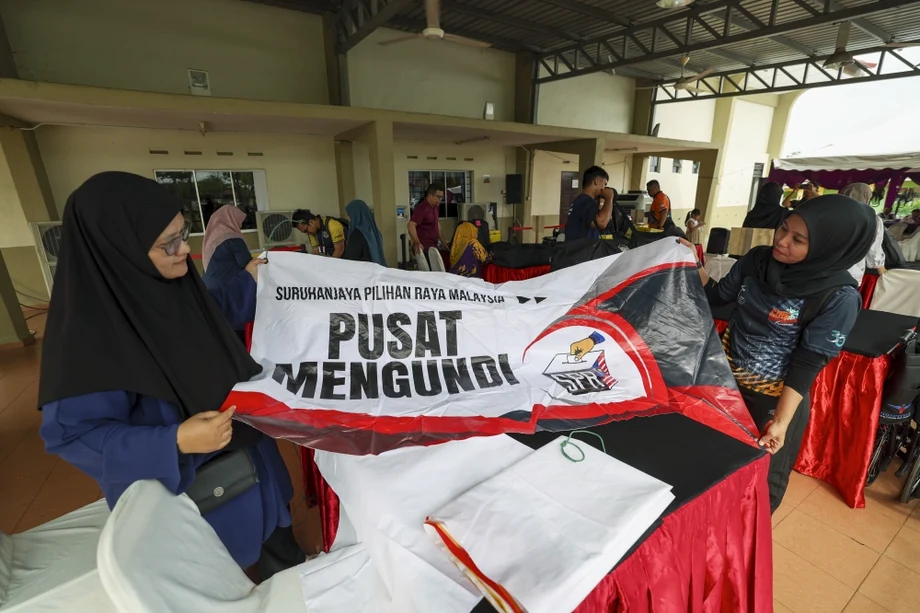
Ramlan also explained that a seat with only one valid nomination would be declared won unopposed. All 82 nomination centres were ready to receive papers from 9am to 10am on Nov 28. By the previous night, 721 nomination forms had been sold and 40 prospective candidates had paid deposits.
Early voting is scheduled for Dec 8 and polling for Dec 12. The commission also planned to begin delivering ballot boxes to rural areas, including places within the Baram parliamentary constituency, before polling day. The final number of uncontested seats, and the commission's response to any majority arising from them, remained pending after Ramlan's statement.
PKR cites stability and MA63, while Anwar rejects claims of capitulation
Sarawak PKR's withdrawal statement was signed by state adviser Hafsah Harun, national vice-president Roland Engan and state leadership council chairman Mahmud Epah. They said the decision respected cooperation and consensus within the federal Unity Government and was intended to preserve political stability in Sarawak and at the federal level.
The statement also connected that cooperation with efforts to implement the Malaysia Agreement 1963 (MA63), the agreement associated with Sarawak's position, rights and autonomy within Malaysia. PKR instructed its state machinery and leaders to comply with the decision, maintain good relations with Unity Government partners, especially GPS, and continue serving Sarawakians despite not contesting.
GPS is an important source of parliamentary support for Prime Minister Anwar Ibrahim's government, particularly if Barisan Nasional were to withdraw its backing. Chong alleged that PKR had compromised to keep GPS on the federal government's side. He framed Anwar's position as either cooperation with Abang Johari or submission to pressure from him.
Anwar rejected that characterisation when speaking to reporters in Kuala Lumpur.
I cooperated, not tunduk (caved in).
GPS information chief Abdul Karim Rahman Hamzah defended the abstentions as a legitimate democratic choice, arguing that declining to contest can be as valid as fielding candidates. He welcomed the decisions by PKR, Umno, Amanah and Bersatu and suggested that Chong was isolated because other parties wanted consistent relations between the state and federal governments.
What voters lose when nobody opposes the incumbent
ROSE accepted that political parties are free to decide whether to contest and to form alliances. Its objection concerned the practical result for voters: no campaign comparison, no ballot through which to assess an incumbent and no opportunity to choose between policy proposals. It also noted that the expected walkovers included several constituencies where Malays and Melanaus form the majority and where PBB candidates represent GPS.
The organisation set out the distinction between a legally valid victory and a mandate tested through competition.
An uncontested victory may be legal under electoral laws. However, winning without a contest cannot be equated with a mandate secured through electoral competition and the votes of the people.
The Society for Rights of Indigenous Peoples of Sarawak (SCRIPS) focused on the effect outside the cities. Michael Ding, its northern Sarawak ground coordinator and a native of Baram, said PKR had been expected to serve as the main opposition to GPS in Baram, Kapit and Belaga. This is the first Sarawak state election in which PKR is not contesting any seat.
Ding described the uncertainty created among rural communities and the loss of a platform through which opposition representatives had raised local grievances.
The move by PKR to suddenly withdraw from contesting has caused a lot of confusion and uncertainty among us rural people. GPS winning uncontested will be a serious blow to democracy in Sarawak. We rural natives will also lose an alternative platform to be our voice as the Opposition often raises our grievances and problems.
He urged other opposition parties to fill the gap. For rural voters, the concrete issue is not simply which coalition controls Kuching, but whether anyone campaigns locally, hears complaints and can question the government in the assembly on their behalf.
Why DAP's federal ministers will stay away
Sarawak DAP will run the campaign without campaigning support from its federal ministers and deputy ministers who are not Sarawakians. Chong said the arrangement followed his Nov 26 meeting with Anthony Loke in Kuala Lumpur and was made in the spirit of the Madani government and out of respect for federal coalition partners.
The DAP Central Executive Committee reaffirmed the state chapter's autonomy over the number of seats contested, candidate selection and the authorisation to use the party logo. Chong explained that these decisions are made in Sarawak rather than imposed by the national leadership.
Chong said the state organisation would rely on its own personnel and record.
Sarawak DAP will lead the campaign on the ground, with our own leaders, our own members and our own message. Our record and our commitment to the people of Sarawak will speak for themselves.
He nevertheless acknowledged the practical cost of starting without national campaigners and with fewer allies in the field.
It's not a good position to be in. I think Sarawak DAP is essentially fighting this battle alone.
The federal arithmetic behind a subdued state election
Sarawak has 31 seats in the federal Parliament, and GPS holds 23 of them. That bloc gives Abang Johari considerable bargaining power ahead of the 16th general election, which must be held by early 2028. Anwar said on Nov 25 that the federal election would likely take place before or after National Day in August 2027.
Syahruddin Awang Ahmad of Universiti Malaysia Sabah described the state contest as a strategic ceasefire driven by electoral pragmatism and the preservation of federal power. James Chin, a professor of Asian studies at the University of Tasmania, said GPS's dominance left only a small number of urban seats genuinely competitive. Jayum Jawan cautioned that avoiding fights in Sarawak would not guarantee GPS loyalty, because the coalition could support whichever side emerged strongest after a federal election.
Past losses provide another reason for caution. In the 2021 Sarawak election, 169 of 349 candidates forfeited their RM5,000 deposits after failing to obtain at least an eighth of the votes cast. They included 22 of PKR's 28 candidates, all eight Amanah candidates, three of DAP's 26 candidates and 23 of PSB's 70 candidates. PKR won no seats.
GPS won 76 of the 82 state seats in 2021, while PSB won four and DAP two. PSB's dissolution and absorption into PDP in 2024 helped raise GPS's held total to 79 before the assembly was dissolved. Former PSB assemblyman See Chee How became an independent and supported the state government, effectively taking the government's support to 80.
Former Umno information chief Shahril Hamdan argued that DAP's participation could give Barisan Nasional an advantage when courting GPS after the next general election. In his view, it showed that the prime minister could not control Sarawak DAP, while BN was leaving GPS entirely unchallenged. Muda deputy president Zaidel Baharuddin took the opposite view of DAP's role, saying the party had a long record in Sarawak and could provide effective checks and balances.
Urban margins show why every opposition vote matters
DAP's clearest opportunity lies in urban constituencies where most voters are Chinese. James Chin said these voters often want an opposition presence in the assembly because they worry about leaving GPS without scrutiny. DAP is also hoping that PSB's disappearance will reduce the fragmentation that hurt it in 2021, although PBK remains active.
SUPP took five seats from DAP in contests involving several opposition parties in 2021. In Tanjong Batu, SUPP won by only 23 votes, while PBK and PSB received 2,204 and 1,071 votes respectively. SUPP's winning margins were 100 votes in Pelawan and 874 in Bukit Assek. Pujut and Kota Sentosa were more comfortable victories, with margins of 1,566 and 1,683 votes, but PBK and PSB again attracted thousands of votes in those constituencies.
DAP has returned to all five battles: Chiew Chan Yew in Tanjong Batu, Irene Wong in Pelawan, Stanley Chiew in Bukit Assek, Voon Kai Foo in Pujut and Chong in Kota Sentosa. The new candidate list connects DAP's argument about checks and balances with places where relatively small shifts previously changed the winner.
Jayum said SUPP president and deputy premier Sim Kui Hian appeared to be making progress in drawing Chinese voters towards his party. He also warned that DAP's position as a federal partner of GPS but a state opponent could confuse voters. Sentiment against parties based in Peninsular Malaysia, visible during the 2025 Sabah election, could also affect Sarawak. That political risk helps explain why Sarawak DAP wants local leaders, rather than federal ministers, to front its campaign.
Chong brings a land dispute into the Kota Sentosa contest
Chong said one reason for returning to Kota Sentosa, after previously contesting Padungan, was a dispute involving about 23 acres near Sentosa Mile 7 Bazaar. He claimed that land where the existing Kota Sentosa police station had stood for decades was alienated to a private company in 2022 at about RM400,000 per acre. Land alienation refers to the granting of state land, in this case to a private owner.
Chong said he had raised the matter in the State Legislative Assembly but did not receive an answer there. He invited Kota Sentosa incumbent Wilfred Yap to respond and said DAP would release further details during the campaign.
I think this is something that we cannot tolerate. We do not want a return of the era which we have fought so hard to end in the last decade.
The announcement did not identify the company or provide the fuller documentation that Chong promised. His decision nevertheless ensures that the land question will form part of his campaign against Yap, alongside DAP's broader argument that the assembly needs representatives willing to press the government for answers.
Key Points
- Sarawak DAP expanded its election list from 12 to 14 candidates, adding Alice Lau in Bawang Assan and Alan Ling in Senadin.
- Chong Chieng Jen said the additions were intended to give voters a choice and reduce uncontested GPS victories after PKR withdrew.
- A preliminary count put 44 of 82 seats, or 53.7 percent, at risk of having no contest; the final number depends on accepted nominations.
- The Election Commission sought legal advice from the Attorney-General's Chambers because 44 walkovers would exceed the 42 seats needed for a simple majority.
- PKR cited federal stability, cooperation with GPS and MA63 implementation, while Anwar Ibrahim denied caving in to pressure.
- DAP is campaigning without its federal ministers and deputy ministers from outside Sarawak, leaving the state chapter to lead with its own resources.
- Nominations take place on Nov 28, early voting on Dec 8 and polling on Dec 12.
- Chong has also made a disputed 2022 land alienation near Sentosa Mile 7 Bazaar an issue in his Kota Sentosa campaign, with further details promised.