A Budget Passed, and a Deal Behind It
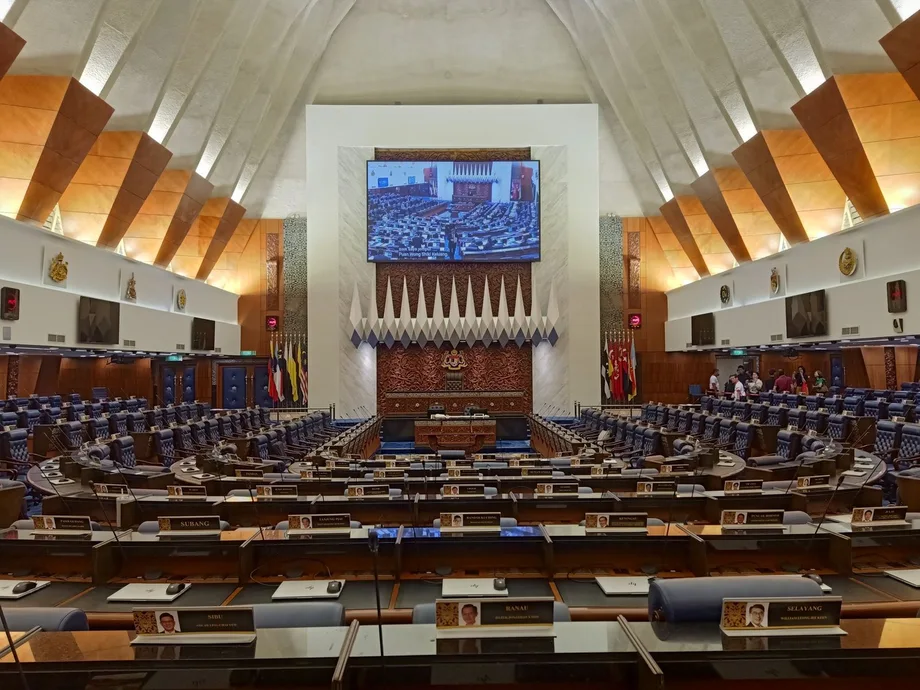
Malaysia's lower house passed the Supply (Budget) Bill 2027 on Thursday, Nov 26, 2026, clearing the government's spending plan for the year after four weeks of debate and a political pact that reshaped the numbers in the chamber.
Contents
- A Budget Passed, and a Deal Behind It
- What the RM510 Billion Adds Up To
- Cash Aid, Wages and the Cost of Living
- Who Pays Less Tax, and Who Gets a First Home Boost
- The Classroom, the Clinic and the Digital ID
- Defence, Sabah and Sarawak, and the Limits of a Voice Vote
- What the Deal Changes for Anwar
- What Comes Next
- Key Points
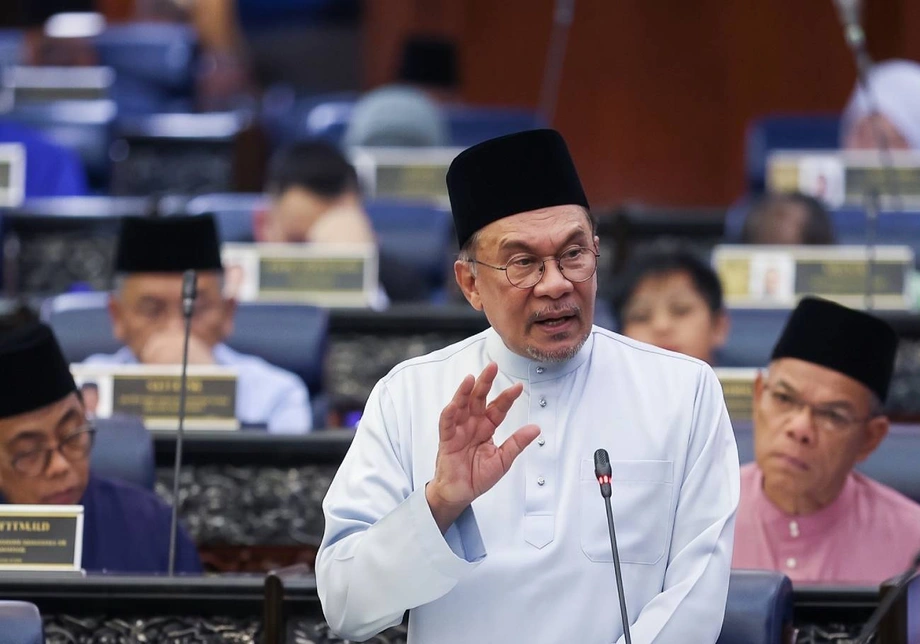
Deputy Speaker Datuk Seri Dr Ramli Mohd Nor announced the result after Second Finance Minister Datuk Seri Amir Hamzah Azizan moved the Bill for its third reading. The vote was taken by voice, with no Opposition MP rising to demand a bloc vote.
"Those in favour say aye. The ayes have it. The motion is carried," Ramli said.
A voice vote means MPs shout their support or opposition and the presiding officer judges which side is louder. No individual tally is recorded, so the House has no count of how many MPs backed the Bill.
The plan was tabled by Prime Minister Datuk Seri Anwar Ibrahim, who is also finance minister, on Oct 9. It passed its policy stage on Oct 29, the same day the government signed a confidence and supply agreement with 13 MPs. Committee stage debate ran from Nov 2 and covered 28 ministries over 14 sitting days.
Budget 2027 is the fifth under the MADANI government and the largest federal plan so far. It commits RM459.8 billion in direct government spending and brings the total to RM510 billion once investments by government-linked companies, statutory bodies and private partners are included. The theme is Reaching for the Sky, Rooted on the Ground, and the plan is built around eight pillars that range from household welfare to national resilience.
Anwar had promised a plan that would protect purchasing power while keeping the deficit on a downward path. The document he tabled sets direct spending at RM459.8 billion, a figure that must cover civil service pay, subsidies, debt servicing and development projects across the federation.
What the RM510 Billion Adds Up To
The direct allocation is split into RM376.8 billion for operating expenditure, which covers salaries, subsidies and day to day running costs, and RM83 billion for development, which pays for roads, schools, hospitals and other long term assets. Development spending is below the RM97 billion record set for 2023.
The RM50.2 billion in extra investment comes from RM25 billion by government-linked investment companies, RM11 billion through public-private partnerships and RM14.2 billion by federal statutory bodies and Minister of Finance Incorporated companies. The total of RM510 billion compares with RM470 billion for 2026 and keeps an expansionary fiscal policy, meaning the government is putting more money into the economy than it takes out.
Amir told the House that the development spending sits under a legal ceiling. He invoked Subsection 4(3) of the Development Account Act 1966 (Act 406), which allows no more than RM85 billion to be spent from the Development Account for 2027. The detailed estimates were tabled as Command Paper 22 of 2026.
The deficit is projected to fall to 3.3% of gross domestic product in 2027 from 3.6% in 2026. TA Securities had projected RM438.9 billion in direct spending, with RM353.1 billion for operations and RM85.8 billion for development. The actual plan came in RM20.9 billion above that forecast.
Cash Aid, Wages and the Cost of Living
Cash transfers form the biggest direct reach into household budgets. The allocation for Sumbangan Tunai Rahmah and Sumbangan Asas Rahmah rises to RM16 billion from RM15 billion. Every STR recipient will get SARA of up to RM150 a month, or RM1,800 a year, a benefit that reaches up to 9 million people. Annual STR payments range from RM600 to RM4,600 per recipient.
A separate SARA MADANI payment of RM100 will be made twice, before Aidilfitri and for the 70th National Day, to Malaysians aged 18 and above who are not STR recipients. It reaches up to 13 million people, including middle income earners in the M40 group, a category that often misses traditional aid for the bottom 40% of households.
Wages will rise at the bottom. The minimum wage moves from RM1,700 to RM2,000 a month from June 2027 and covers more than 4 million workers. Small and medium enterprises with annual sales below RM50 million are exempt, a move business groups welcomed. Government-linked investment companies and government-linked companies will raise their living wage benchmark from RM3,100 to RM3,400, covering 230,000 workers.
Gig workers get a RM160 million package from 2027, shared between the government and Grab. It is expected to lift the median net monthly income of e-hailing drivers by up to RM227 and of delivery workers by up to RM100. E-hailing and delivery workers also get a 35% matching incentive on their contributions to SOCSO, the Social Security Organisation, with a higher match when platform companies contribute.
Subsidies and incentives will exceed RM80 billion next year. Fuel subsidies stay at RM40 billion, and the BUDI95 petrol quota is 300 litres a month. About 100,000 users, under 1%, reached that limit in September, the government said. The electricity bill protection threshold rose last month from 600 to 800 kWh a month, benefiting more than 8 million domestic consumers, or up to 90% of the total.
Food programmes get RM750 million, up from RM630 million, for 35,000 Jualan Rahmah MADANI and Jualan Agro MADANI events. Agro MADANI sells fish, chicken, vegetables and fruit at prices up to 30% lower. The My50 public transport pass continues for 300,000 Prasarana commuters in the Klang Valley, and a new MyKomuter50 pass covers 40,000 KTM Komuter users who can save up to RM160 a month.
Health support is tied to the cash programme. STR recipients and their spouses aged 40 and above get free health screenings, medical equipment assistance and cancer treatment incentives under PeKa B40, with RM80 million set aside. A single payment of RM1,000 goes to 38,000 taxi and rental car drivers and 15,000 school bus drivers.
Who Pays Less Tax, and Who Gets a First Home Boost
Income tax changes aim at the middle of the pay scale. The relief for an individual and dependent relatives rises from RM9,000 to RM12,000, the first increase since 2010. For resident individuals, the rate on chargeable income of RM70,001 to RM100,000 falls from 19% to 18%, and a new band of RM100,001 to RM150,000 is taxed at 24%, down from 25%. The 30% top rate applies above RM1 million instead of RM2 million from the 2027 year of assessment.
About 5 million taxpayers would have up to RM1,600 more in disposable income from the higher relief and lower rates. The changes are proposed for the 2027 year of assessment and need legislation.
- Small businesses: the rate for micro, small and medium enterprises falls by one point to 14% on the first RM150,000 and 16% on RM150,001 to RM600,000, worth up to RM6,000 for 300,000 firms.
- First home: a full stamp duty exemption on the loan agreement and transfer for a home priced up to RM500,000. For a home up to RM750,000, the first RM500,000 is exempt and half of the balance. It covers agreements signed from Jan 1, 2027 to Dec 31, 2030.
- Bank accounts: a full stamp duty exemption on opening savings and current accounts from Jan 1, 2027.
- Elderly care: service tax falls from 8% to 6% from Jan 1, 2027, with services charging annual fees up to RM96,000 exempt.
- Entertainment: duty is waived for events at Stadium Merdeka and Stadium Negara, and tickets for local films and theatre in the Federal Territories are exempt from 2027.
Wider reliefs are proposed for postnatal care up to RM3,000 under health expenses, care costs for parents and grandparents, sports shoes up to RM300, education and skills fees across all fields of study, children's tuition up to RM2,000 and AI software subscriptions under the RM2,500 lifestyle relief.
The Classroom, the Clinic and the Digital ID
Education was the largest committee stage fight over numbers. The Dewan Rakyat approved the education ministry's RM68.99 billion allocation for operating and development spending after 33 MPs debated it. Deputy Education Minister Wong Kah Woh denied that the ministry's development allocation had been cut by RM1 billion, saying RM1 billion had been moved to operating expenditure and then restored.
"This does not involve a reduction in the allocation. The amount was merely transferred, and the ministry had applied to the finance ministry to have it returned to the development allocation, to which the finance ministry has agreed," Wong said.
The development allocation now stands at RM6.515 billion, up from RM5.515 billion and RM200 million higher than the 2026 figure. For the 2027 school session, 3,150 contract teachers will be placed in schools, with postings announced on Dec 7 and training at teacher training institutes running until Dec 23. More than 73,000 children aged six will enter Standard 1. About 1,040 extra classrooms are ready, made up of 639 renovated rooms and 401 modular units, and the ministry expects the total to reach 3,520 by the end of the year. A pilot autism classroom model starts in 17 schools, with a target of 30.
Health financing is moving more slowly. Health Minister Datuk Seri Dr Dzulkefly Ahmad told the House on Nov 16 that the ministry aims to draft legislation for a National Health Fund by 2029. The fund would combine tax financing and social insurance. The government is also proposing cottage hospitals in rural areas and more outsourcing of hospital services.
Digital services get RM1.362 billion. Digital Minister Gobind Singh Deo said the government is exploring law changes to let Malaysians display identity cards on the MyGOV application, a step current legislation blocks. The plan would put identity cards, passports, birth certificates and marriage certificates into one app, with MyDigital ID handling verification and a second phase adding payments for services such as passport renewal.
"Looking ahead, we are proposing a system that consolidates identity cards, passports, birth certificates and marriage certificates into a single application," Gobind said.
Data centres are part of the digital push. The government is setting up a National AI Compute Exchange to map available computing capacity and match demand. Operators face a Connected Load Charge penalty if actual maximum electricity demand falls below 85% of declared phased demand in their first four years, a rule meant to stop firms reserving power they do not use. Google's US$15 billion, or RM63 billion, investment includes its own energy and water arrangements. An AI Governance Bill is expected in the Dewan Rakyat in the first quarter of next year.
Defence, Sabah and Sarawak, and the Limits of a Voice Vote
Defence procurement drew sharp questions. Deputy Defence Minister Adly Zahari told the House on Nov 25 that Malaysia is pursuing legal action over Norway's cancellation of an export licence for missiles meant for the country's littoral combat ships (LCS), and is exploring alternatives involving Turkiye. Nearly 400 domestic vendors are involved in the LCS project, a figure the government used to argue for building more capacity at home.
Sabah and Sarawak took up attention over infrastructure needs and the implementation of the Malaysia Agreement 1963. MPs questioned whether federal allocations matched the promises made under the agreement, which sets out the terms on which the two states joined Malaysia.
The voice vote limits what the result can say about individual MPs. A bloc vote, where members walk into separate lobbies and are counted, would have recorded the exact support. Its absence meant the Bill passed without a published number, and the confidence and supply agreement had already made the result predictable.
What the Deal Changes for Anwar
The confidence and supply agreement signed on Oct 29 turned a fragile parliamentary position into a workable majority for the budget. Six Bersatu MPs led by party president Tan Sri Muhyiddin Yassin, six former Bersatu MPs and Muda's Muar MP Syed Saddiq Syed Abdul Rahman agreed to back the budget and Anwar's administration.
In return, the 13 signatories get the same constituency allocations as government backbenchers. Anwar had said the money would be disbursed once the Supply Bill won final approval. The pact also covers institutional reforms: a limit of two terms for the prime minister and a separation of the powers of the attorney general and the public prosecutor.
The agreement changes the politics around the budget. It gives Anwar a stable route through the Dewan Negara and into the next year, when a general election may be called. It also ties part of his reform agenda to MPs outside his coalition, whose support now carries a price in constituency funding and legal changes.
Anwar was in the House for the vote along with senior ministers. In a Facebook post after passage, he said the budget was meant to improve lives and secure the country's future.
"May all the plans and initiatives outlined be implemented effectively, bring real benefits to the people and serve as a strong foundation for building a more prosperous, fair and harmonious Malaysia," he said.
What Comes Next
The Bill now goes to the Dewan Negara, the upper house, for debate and approval before royal assent. No date has been announced for that stage. Measures in the budget that need separate legislation, including the tax changes, still have to pass Parliament, and no timetable has been set for them.
Some programmes will start before the legal details are settled. Applications for STR 2027 opened on paper at HASiL offices on Oct 1 and move online from Oct 15. The 3,150 contract teachers will learn their placements on Dec 7. The Ministry of Finance's pre-budget statement says the Dewan Rakyat will resume on Monday.
The budget leaves Malaysia with a wider safety net and a lower deficit at the same time. Its test will come in the delivery: whether the RM16 billion in cash aid reaches 9 million STR recipients and 13 million SARA MADANI recipients, whether small firms absorb the RM2,000 minimum wage after June, and whether the RM83 billion development budget turns into classrooms, clinics and rural infrastructure on schedule.
Key Points
- The Dewan Rakyat passed the Supply (Budget) Bill 2027 on Nov 26, 2026, by voice vote after third reading moved by Second Finance Minister Amir Hamzah Azizan.
- Direct spending is RM459.8 billion, with RM376.8 billion for operations and RM83 billion for development. Total resources reach RM510 billion with RM50.2 billion in investments.
- The deficit is projected at 3.3% of GDP in 2027, down from 3.6% in 2026. The total compares with RM470 billion for 2026.
- STR and SARA rise to RM16 billion, with SARA up to RM150 a month for up to 9 million people and RM100 paid twice to 13 million adults outside STR.
- The minimum wage rises to RM2,000 from June 2027, covering more than 4 million workers, with an exemption for small firms with sales below RM50 million.
- Individual tax relief rises to RM12,000, rates fall for income between RM70,001 and RM150,000, and the 30% top rate starts above RM1 million.
- The budget passed after a confidence and supply agreement with 13 MPs, who back Anwar's administration in return for constituency allocations and reforms.
- The Bill now goes to the Dewan Negara before royal assent. No date has been set.