A sudden stop with immediate human consequences
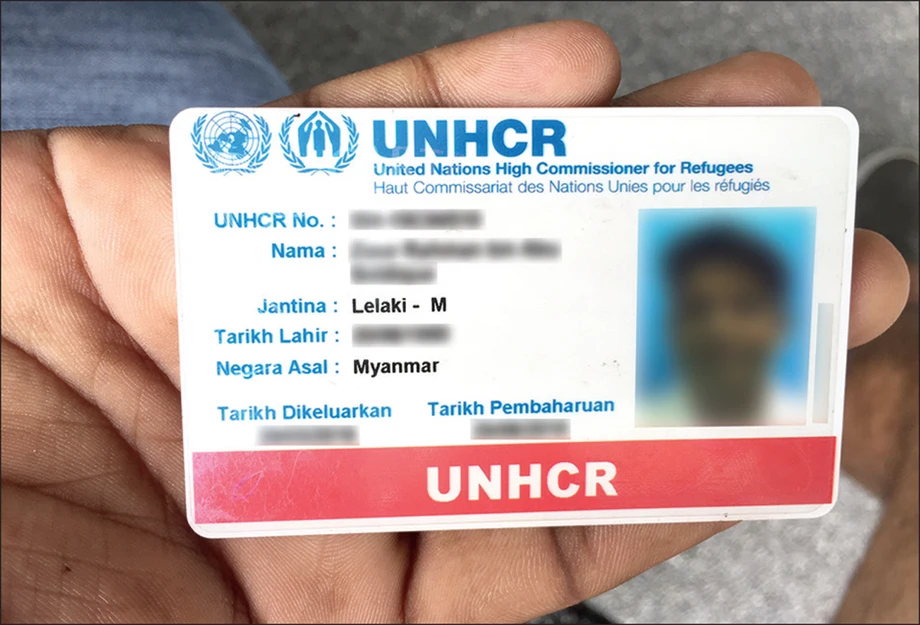
The United Nations refugee agency stopped registering new asylum seekers in Malaysia on November 18, 2026, following a decision by the Malaysian government. Refugee advocates said the suspension also interrupted refugee card issuance and renewals. The move closed the familiar route to documentation while Malaysia prepared to replace it with a state system, leaving new applicants and people waiting for appointments without a clear way to prove their status.
Contents
- A sudden stop with immediate human consequences
- Why a small card can decide access to a hospital
- The cabinet plan behind the suspension
- Anwar narrows valid registration to two ministries
- How events unfolded
- The official numbers show the scale of the task
- Resettlement promises and tighter borders
- Repatriation plans meet a landmark genocide ruling
- Rohingya refugees ask for time, safety and enforceable rights
- Key Points
The policy affects a large population. Home Ministry figures put the number of refugees and asylum seekers registered with the United Nations High Commissioner for Refugees (UNHCR) at 227,414 as of September 30. Of those, 205,273 were from Myanmar. They include Rohingya Muslims who escaped persecution and genocide in Rakhine State, members of other ethnic groups and political activists fleeing persecution.
For more than 40 years, UNHCR had performed the main humanitarian and documentation role for refugees in Malaysia. Thousands of individuals and families arrive each year seeking safety. Registration gave them a card with practical value: it could reduce public hospital charges and offer some protection against arbitrary or prolonged detention during raids and roadblocks.
The medical consequences surfaced almost immediately. Médecins Sans Frontières (MSF), also known as Doctors Without Borders, said surgery intended to save one patient's sight was halted less than a day after the announcement. Other patients risked permanent disability without orthopaedic treatment. Children, pregnant women and people with chronic or infectious diseases were among those causing the greatest concern.
Why a small card can decide access to a hospital
A UNHCR card does not grant Myanmar citizenship, Malaysian citizenship or a general right to remain permanently. Its importance lies in daily survival. Cardholders can receive treatment at public hospitals for half the rate normally charged to foreigners. The card also gives refugees something recognisable to show authorities when their identity or presence in Malaysia is questioned.
People without registration face a different calculation. They may be charged much more, refused treatment or afraid that visiting a hospital will expose them to arrest. MSF said obtaining a card was already slow before the suspension, with some applicants waiting years between registration and an appointment. New applicants now have no UNHCR registration process to enter, while people needing replacement or renewed documents face uncertainty.
The problem is especially severe for Rohingya refugees, whose Myanmar citizenship was stripped away in 1982. Many cannot obtain recognised identity documents from their country of origin. MSF said 43 refugees without UNHCR registration had been denied treatment at public healthcare facilities during the previous 10 months, even when the patients or the organisation were prepared to pay.
Tetyana Pylypenko, the medical coordinator for MSF in Malaysia, described what happens when cost, documentation and fear keep people away from clinics.
For medically vulnerable refugees, there is no longer a pathway to urgent care. Since 2024, MSF has supported 1,275 of them. Without registration, refugees are likely to delay or avoid seeking care because they lack documentation, fear arrest and face much higher costs. When people delay care, they tend to arrive later and sicker, which puts more pressure on emergency departments.
MSF asked the government to make the replacement system provide timely access to healthcare and essential services, with safeguards against harm. It also sought protection for everyone, including people who are unregistered, awaiting registration or held in immigration detention centres. Its central demand was that people fleeing persecution should not be treated as criminals, and it called for clear interim safeguards during the transition.
The cabinet plan behind the suspension
The government's position was publicly explained months before UNHCR stopped registrations. On July 23, Deputy Foreign Minister Datuk Lukanisman Awang Sauni told the Dewan Negara, Malaysia's Senate, that the cabinet had instructed UNHCR to halt all refugee registrations temporarily while the government reorganised the Refugee Registration Document programme.
The programme is known by the Malay initials DPP, for Dokumen Pendaftaran Pelarian. Lukanisman said it would allow the government to coordinate data, verify identities, monitor refugees and regulate their presence without relying on records held by a foreign entity. Registration would involve enforcement agencies and a strict screening process intended to admit only eligible people and prevent illegal immigration.
Lukanisman explained the cabinet instruction in his own words.
We have gone through the Cabinet's decision and instructed the UNHCR to stop any refugee registrations for the time being because we are reorganising the implementation of the DPP programme.
His answer came after Senator Hussin Ismail asked about Rohingya refugees who possess neither identity documents nor citizenship recognised by Myanmar. Lukanisman said Malaysia would continue pursuing a multilateral approach with Myanmar and members of the Association of Southeast Asian Nations.
He also argued that Malaysia should not continue carrying the refugee management burden alone. Malaysia has not signed the 1951 Refugee Convention, the international treaty that defines refugee status and sets out related rights and responsibilities. Lukanisman cited that position and the impact on local communities as reasons for bringing registration under direct government supervision.
Anwar narrows valid registration to two ministries
Prime Minister Datuk Seri Anwar Ibrahim gave the clearest description of the new arrangement on November 24. Speaking in the Dewan Rakyat, the lower house of Parliament, he said only registrations administered by the Immigration Department and Home Ministry would be recognised as valid under the cabinet decision.
Anwar said the government was taking the function away from UNHCR because its procedures were too lenient and complicated the work of Malaysian authorities. He was responding to Datuk Mohd Isam Mohd Isa, the Tampin MP, who had asked about policy following the introduction of the DPP.
Registration will no longer be handled by UNHCR because the registration process was too easy and complicated our work. Some are refugees, while others enter through syndicates, including criminal syndicates. If we recognise all of them as refugees, the country cannot be managed properly.
The prime minister's distinction between refugees and people brought in by criminal networks explains why enforcement agencies will have a central screening role. It also raises the stakes for applicants with no passports or citizenship documents. A system designed to detect fraud must still be able to assess people whose lack of papers is part of the persecution they fled.
On employment, Anwar said Malaysians would continue to receive priority. Relevant departments could consider special appeals involving refugees with specialised skills or expertise unavailable among local workers. He also said diplomatic negotiations over the refugee situation would continue, while domestic challenges remained the government's priority.
Several practical questions remained unanswered in the parliamentary statements. No date was given for DPP applications to open. The government did not set out the application procedure or explain how existing UNHCR records would be checked or transferred. It also did not say what document a new arrival could show a hospital during the transition, how expiring UNHCR cards would be treated or what interim protection would apply to people already waiting for registration.
How events unfolded
The decisions and warnings came in a rapid sequence during 2026.
- July 23: Lukanisman announced that the cabinet had instructed UNHCR to stop registrations temporarily while the DPP programme was reorganised.
- November 18: UNHCR stopped new registrations and ceased registration and documentation activities in line with the government's plan.
- November 19: The International Court of Justice found Myanmar responsible for genocide against the Rohingya during its 2017 military crackdown.
- November 20: MSF warned that refugees could lose urgent healthcare and protection. Myanmar's Foreign Ministry expressed disappointment with the judgment without committing to comply.
- November 24: Anwar confirmed that valid refugee registration would come exclusively from the Immigration Department and Home Ministry.
The court judgment arrived one day after the registration stop and five days before Anwar's explanation. That timing turned a debate about databases and enforcement into an urgent argument over medical treatment, detention and whether people fleeing genocide could safely be returned to Myanmar.
The official numbers show the scale of the task
Home Minister Datuk Seri Saifuddin Nasution Ismail supplied the most detailed official population snapshot. Of the 227,414 refugees and asylum seekers registered with UNHCR on September 30, 205,273, or 90.2 per cent, were from Myanmar. The total included 132,400 Rohingya, equal to about 58 per cent of everyone registered.
Other September figures cited as Rohingya refugees responded to the court judgment put the total at roughly 226,000 and the Rohingya population at about 133,400. The official breakdown remains the more detailed count, and it shows why any transfer of registration records will be a substantial administrative exercise.
Selangor had the largest number of UNHCR cardholders, with 74,028. Kuala Lumpur followed with 47,333, and Penang had 25,357. Together, those three figures come to 146,718, nearly 65 per cent of the registered total. Pressure on documentation and public healthcare is therefore likely to be felt most strongly in and around those population centres.
Malaysia hosts the world's second largest Rohingya refugee population after Bangladesh, where about 1.2 million Rohingya are sheltering. Malaysia's much smaller registered Rohingya population still includes families whose displacement stretches across generations, as well as survivors of the mass flight in 2017.
Resettlement promises and tighter borders
Deputy Prime Minister Datuk Seri Dr Ahmad Zahid Hamidi said UNHCR cardholders would be placed in third countries after completing a transit stage, subject to the requirements and capacity of receiving states. He presented the arrangement as consistent with the government's commitment to human rights, but said receiving countries would determine both the conditions and the number of people accepted at any one time.
Zahid gave the assurance in a written parliamentary reply to Syed Saddiq Syed Abdul Rahman, the Muar MP, who had asked about efforts to curb refugee arrivals and UNHCR's role after the transit stage. No receiving country, quota or timetable was named. The duration and practical arrangements of the transit stage were also not explained.
For existing cardholders, resettlement is therefore a possibility controlled by other governments rather than a guaranteed departure date. For someone who arrived without registration just before the halt, it is not an immediate route because obtaining a new UNHCR card is no longer possible.
Malaysia is simultaneously tightening controls at its borders and within local communities. Zahid said border enforcement had moved beyond physical barriers to include artificial intelligence, drones and smart surveillance systems. Artificial intelligence can help authorities analyse large amounts of surveillance information, while drones extend monitoring across difficult terrain or coastal areas.
The government also intends to act against Malaysians who enable foreigners to commit offences. Zahid cited people operating businesses without licences or local authority approval, along with owners of land or premises who allow such activities. These measures sit alongside the argument that stricter registration is needed to separate refugees from people moved by criminal syndicates.
Repatriation plans meet a landmark genocide ruling
A separate statement by Lukanisman added to refugees' anxiety. He said approximately 5,000 Myanmar nationals held in immigration detention depots would be repatriated once Myanmar was ready to accept them. They would be sent back on naval ships, subject to what he described as a resolution process.
He gave no sailing date and did not provide an ethnic or registration breakdown of the approximately 5,000 detainees. It was therefore not stated how many were Rohingya, how many held UNHCR cards or whether any had protection claims still waiting to be assessed.
The International Court of Justice judgment on November 19 makes the question of return especially sensitive. The court, the United Nations' highest judicial body, found that Myanmar committed genocide during its 2017 military crackdown in Rakhine State. Genocide involves acts intended to destroy a national, ethnic, racial or religious group, in whole or in part.
The judgment said security forces killed around 10,000 civilians, committed widespread sexual violence and destroyed villages. More than 700,000 Rohingya fled into neighbouring Bangladesh. It was the first time the UN's highest court had found a state responsible for genocide.
The judges ordered Myanmar to prevent further atrocities, punish perpetrators, facilitate the safe and voluntary return of displaced Rohingya, and restore lost property or pay compensation. Myanmar has two years to report on its restitution and compensation measures, providing the next formal milestone in the case.
Myanmar's Foreign Ministry responded on November 20 with deep disappointment. It cited dissenting judges who had questioned the evidence and standard of proof, maintained that the 2017 operations targeted militants rather than civilians and said it would study the judgment. It did not commit to complying with the court's orders.
Security on the ground presents another obstacle. Myanmar has been engulfed in civil war since the military coup in 2021. The Arakan Army, an ethnic armed group fighting the ruling junta, now controls much of Rakhine, including areas where Rohingya communities once lived. A court order directed at Myanmar's government cannot by itself guarantee safe passage, citizenship or protection in territory contested by armed forces.
Rohingya refugees ask for time, safety and enforceable rights
Rafik Ismail, a 52 year old Rohingya activist who has lived in Malaysia for 45 years, watched the judgment with other refugees on the night it was delivered. Some wept. Those unable to follow the proceedings in English later asked him to explain them in their own language.
Rafik said his community wanted to return to Myanmar only with credible security guarantees. He appealed to Malaysia for more time amid growing hostility towards refugees.
We are truly indebted to Malaysia, but we appeal for more time.
Rafik said he did not expect Myanmar's junta simply to abide by the ruling. He called for international peacekeepers from the United Nations or ASEAN, potentially including Malaysian troops, to guarantee returnees' safety. He also hopes to recover his family's land, one of the restitution issues covered by the court's orders.
Mohamed Abdul, who fled to Malaysia 50 years ago, expressed the same tension between attachment to Myanmar and fear of return.
Malaysia is not our land, Myanmar is. But let us stay until it is safe for us to return. Do not send us back yet.
Their presence in Malaysia reflects displacement that began long before 2017. A military operation in Rakhine in 1978 drove more than 200,000 people across the border, with some eventually making their way to Malaysia. That history helps explain why some refugees have spent decades in the country without acquiring a secure permanent status.
Tun Khin, a prominent Rohingya rights campaigner based in Britain, said the UN Security Council should pass a resolution compelling Myanmar to comply. He argued that compliance alone would not make Rakhine safe. Both the military and the Arakan Army, he said, would need to recognise Rohingya citizenship rights, restore land and provide security guarantees before returns could begin.
Nur Sadek, a 24 year old refugee who fled to Malaysia in 2017 and still has family in Myanmar, described the personal meaning of the judgment.
A moment of recognition, hope and a sense that our suffering has not been forgotten.
For Rohingya families in Malaysia, the immediate concerns are more mundane than the language of international law: obtaining a document, seeing a doctor, avoiding detention and knowing whether a resettlement place exists. Until the DPP rules are published and safe return conditions emerge in Rakhine, those concerns will shape daily life far more directly than the promise of eventual compliance.
Key Points
- UNHCR stopped new refugee registrations in Malaysia on November 18, 2026, with card issuance and renewals also interrupted.
- The government plans to replace the process with the DPP system, recognising registrations only from the Immigration Department and Home Ministry.
- No opening date, detailed application process or full interim safeguards for healthcare and expiring cards have been announced.
- Official figures recorded 227,414 registered refugees and asylum seekers on September 30, including 205,273 people from Myanmar and 132,400 Rohingya.
- MSF documented 43 treatment denials involving unregistered refugees in 10 months and has supported 1,275 medically vulnerable refugees since 2024.
- Approximately 5,000 Myanmar nationals in immigration detention are earmarked for repatriation on naval ships, but no date or protection status breakdown was given.
- Resettlement of UNHCR cardholders to third countries depends on receiving states, with no countries, quotas or timetable identified.
- The International Court of Justice found Myanmar responsible for genocide on November 19 and ordered prevention, punishment, safe voluntary returns and restitution, with a report due within two years.