A 27.2 GW increase reshapes power planning
Peninsular Malaysia's electricity demand is projected to climb from 22.6 gigawatts (GW) in 2027 to 49.8 GW in 2050, an increase of 27.2 GW, according to the Ministry of Energy Transition and Water Transformation (Petra). The projection implies compound annual growth of about 3.5% and comes from the Electricity Supply and Tariff Planning and Implementation Committee (JPPPET). Petra disclosed it on Nov 26, 2026, in a written parliamentary answer to Datuk Ahmad Amzad Mohamed @ Hashim, the opposition MP for Kuala Terengganu.
Contents
- A 27.2 GW increase reshapes power planning
- The data centre forecast has two timelines
- Investment is large, but metered demand is the test
- What the 2040 nuclear scenario means
- Coal retirements set the replacement task
- Malaysia's earlier nuclear programme and its revival
- Selangor scouts sites and trains specialists
- Solar capacity in three states
- CRESS lets developers choose sites, with grid charges
- Grid spending and consumer protection
- Key dates through 2050
- Key Points
Data centres account for much of the expected change. Their share of Peninsular demand is forecast to rise from 11% in 2027 to 21% in 2050. Applying those percentages to the ministry's totals gives roughly 2.5 GW attributable to data centres in 2027 and 10.5 GW in 2050. The resulting increase of about 8 GW would equal nearly 30% of the projected growth in total demand. Artificial intelligence, electric vehicles and industries that use large amounts of electricity make up the other major drivers.
A gigawatt measures power at a particular moment, while electricity consumed over time is measured in gigawatt hours. The practical task is therefore broader than building power stations with enough capacity. Malaysia must also finance transmission lines, secure generation that can run around the clock and have infrastructure operating before new factories and computing facilities need it. Petra is trying to reconcile that construction programme with the national target of net zero carbon emissions by 2050.
The data centre forecast has two timelines
The latest parliamentary answer leaves an important forecasting question unresolved. On Nov 4, Petra told Parliament that data centres would reach 21% of electricity demand by 2030, rising from 7% in 2026. The Nov 26 answer instead placed an 11% share in 2027 and the same 21% share in 2050. The ministry has not publicly reconciled the two dates, leaving no single official timetable for when data centres will reach that share.
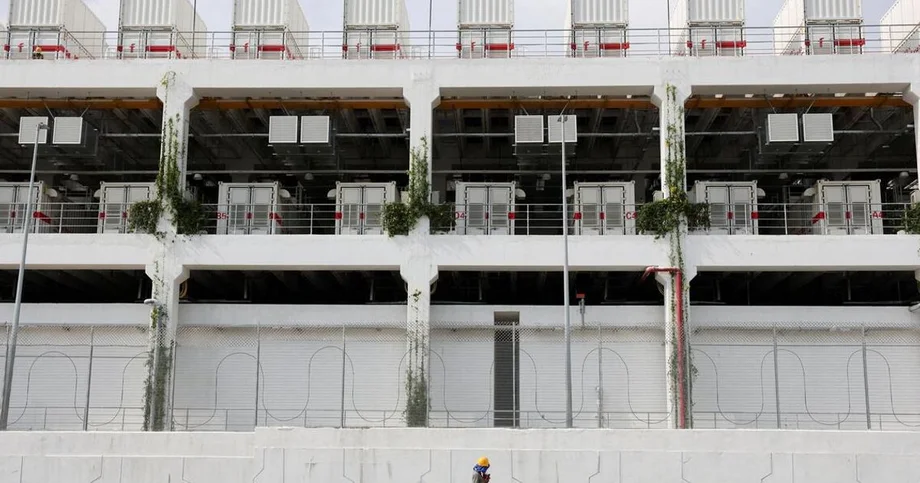
Electricity meter readings show why the distinction matters. Tenaga Nasional Bhd's 2025 annual report recorded 35 data centre projects with about 4.5 GW connected to its grid by December 2025. Those customers were drawing 850 megawatts (MW), equivalent to a utilisation rate of 19%. Connected capacity describes the amount made available through the network, while the metered figure shows how much power was actually being used.
By August 2026, data centres had contracted for 2,346 MW and active facilities were using 1,374 MW, or 58.6%, Deputy Prime Minister Datuk Seri Fadillah Yusof told Parliament on Oct 28. The two sets of figures cover different dates and categories, so they do not provide a direct comparison of utilisation over time. Both demonstrate that connected or contracted capacity can substantially exceed present consumption.
New grid rules are intended to curb what the ministry calls phantom demand. Operators seeking access must submit staggered projections covering 10 years, sign binding Electricity Supply Agreements and take capacity in phases. Investment, Trade and Industry Minister Datuk Seri Johari Abdul Ghani gave Parliament a simple example on Oct 15: an operator reserving 200 MW but using only 100 MW would still have the unused reservation included in its charge. Licences under the new grid rules are due by Feb 17, 2027.
Investment is large, but metered demand is the test
Malaysia's ambition to become a regional artificial intelligence hub has attracted Oracle, Amazon and Alphabet's Google. Google plans to spend US$15 billion (S$19 billion) expanding its data centre and cloud operations in Malaysia over two years. The government has also set a minimum renewable energy requirement of 30% for data centres, with implementation guidelines still being developed. Johari said states facing water shortages should refrain from accepting new data centre developments, protecting supplies needed by residents and existing industries.
United States technology restrictions could affect the pace of expansion. Concern that Nvidia chips are being smuggled to China through Southeast Asia has prompted Washington to blacklist some companies in the region. Malaysia has pledged to instruct data centre operators not to host those firms, lease space to them or provide them with services. Malaysia also announced plans in November for a separate wholesale electricity market for large consumers, including data centres, to safeguard supply for households and factories.
On Oct 24, Prime Minister Datuk Seri Anwar Ibrahim announced the US$50 billion investment proposal covering artificial intelligence, new technology and data centres in Kuching and Peninsular Malaysia. The proposal, valued at about RM204.3 billion, exceeded the RM144.4 billion in approved data centre investment recorded from 2021 to the first half of 2025, although the newer proposal also covers other technologies. The investor's identity, financing, construction schedule and finalisation status were not disclosed. Bank Negara Malaysia separately estimated the direct contribution of data centres to gross domestic product at RM14.1 billion in 2025, up from RM0.9 billion in 2021.
YTL Power illustrates the commercial exposure created by building before demand arrives. It has invested RM13.5 billion in data centres and plans a 1,200 MW park at Kulai in Johor, of which 298 MW is contracted. Its data centre segment earned RM139.5 million before tax in the September quarter, compared with RM1.05 million a year earlier. Financing has also become more selective: a US$480 million loan to buy Nvidia processors for a facility serving ByteDance has halted, a US$488 million syndication for a Johor campus has slipped, and Damac Digital forfeited deposits on an RM200.9 million Johor site.
What the 2040 nuclear scenario means
Petra's initial planning scenario, discussed at JPPPET Meeting No. 1/2026, envisages nuclear power entering the Peninsular generation mix in phases by 2040. It could provide approximately 2% of electricity generation, equivalent to around 2.0 GW, during the period through 2050. Nuclear and natural gas are being considered as strategic replacements for coal in supplying baseload power, the steady electricity needed around the clock regardless of sunlight or weather.
The ministry made clear that the figures remain conditional on work by MyPOWER, the organisation responsible for implementing the nuclear energy programme. Its written answer stated:
The actual capacity requirements and the details of nuclear energy's contribution to the generation mix in the Peninsular are subject to a comprehensive feasibility study being led by MyPOWER as the Nuclear Energy Programme Implementing Organisation (NEPIO).
No completion date for that comprehensive study was given. The parliamentary answer also did not select a reactor vendor, construction site or project cost. Small modular reactors are among the options attracting attention because units of roughly 250 MW to 300 MW could be added gradually, with factory production potentially reducing construction time and initial financing pressure. Safety, fuel supply, cooling water, regulation and the relatively limited operating experience with newer designs still require evaluation.
Coal retirements set the replacement task
The National Energy Transition Roadmap (NETR), released in July 2023, targets 40% renewable energy by 2040 and 70% by 2050, alongside a complete coal phaseout by 2045. About 7 GW of coal fired generating capacity is scheduled to retire between 2029 and 2033, with the remaining 5 GW due to retire by 2044. Natural gas is expected to provide baseload generation with lower emissions during the transition.
The initial nuclear scenario equals about one sixth of the roughly 12 GW covered by that coal retirement schedule. Renewable generation, storage, gas and the electricity network would therefore carry much of the replacement task even if nuclear power enters as envisaged. Presenting the 13th Malaysia Plan, Anwar also said the renewable energy share should reach 35% by 2030, compared with about 29% at present.
The 13th Malaysia Plan for 2026 to 2030, known as RMK13, formally includes nuclear power as a clean energy option, but it does not set a nuclear capacity target. An earlier deployment assessment discussed two to four small modular reactors by 2031, totalling 750 MW to 1,200 MW. Those figures remain exploratory and differ from the latest parliamentary planning marker of phased entry by 2040 and approximately 2 GW through 2050.
Malaysia's earlier nuclear programme and its revival
Malaysia first established a Nuclear Power Development Steering Committee in 2008. Then prime minister Najib Razak announced plans for a small reactor in 2009, and the Malaysia Nuclear Power Corporation was created in 2011 as the programme implementing organisation. A budget of US$7.69 million was allocated from 2010 to 2012. TNB signed an agreement with Korea Electric Power Corporation in 2009 and later worked with Électricité de France on a nuclear roadmap.
Legal and regulatory studies conducted between 2011 and 2014 produced a Nuclear Power Regulatory Infrastructure Development Plan. The corporation was dissolved in 2018 after Najib left office, and his successor, Tun Dr Mahathir Mohamad, said Malaysia would not pursue nuclear power. The policy changed again in November 2024, when then economy minister Rafizi Ramli confirmed that the Cabinet and National Energy Council had approved nuclear power's inclusion in RMK13.
RMK13 designated MyPOWER as the implementing organisation on July 31, 2025, with responsibilities covering infrastructure, skills, research, public communication and international cooperation in line with International Atomic Energy Agency standards. An early feasibility study conducted by MyPOWER from June to December 2024 produced 24 findings and 22 recommendations. Fadillah said it found nuclear power technically viable and a potential option for the energy mix. Malaysia also signed a strategic civil nuclear memorandum with the United States in July 2025 and a nondisclosure agreement with Russia's Rosatom in June 2025.
Selangor scouts sites and trains specialists
Selangor is examining coastline locations from Kuala Langat to Sabak Bernam for a possible nuclear plant, Menteri Besar Datuk Seri Amirudin Shari told the State Legislative Assembly on Nov 20. He was responding to Kota Damansara assemblyman Muhammad Izuan Ahmad Kasim, who had asked about sites, allocations and the state's nuclear plans. Coastal locations are being reviewed because reactors require substantial amounts of water for cooling. No site has been finalised.
Worldwide Holdings Bhd, a subsidiary owned by the state, has formed a committee and task force intended to accelerate physical development work from 2030. Introducing the preliminary arrangements, Amirudin said:
Worldwide Holdings Bhd has established a special committee to look into the requirements and preliminary preparations.
A Selangor Nuclear Council comprising academics and industry participants is preparing a roadmap. The state's talent framework for 2025 to 2030 includes nuclear engineering studies at Harbin Engineering University and Tsinghua University in China. Three students began their studies in September 2026 and are expected to continue until 2029, with another 22 planned for 2027. China General Nuclear provided RM3.7 million in scholarships covering bachelor's, master's and doctoral programmes, and the state is prepared to support study through the doctoral level. Selangor is examining development models in China, France and Türkiye, as well as Kazakhstan's use of expertise from several countries.
Professor Dr Nahrul Khair Alang Md Rashid, a nuclear and energy engineering specialist at Universiti Teknologi Malaysia, said Malaysia's changing electricity requirements and decarbonisation commitments had made nuclear power an option worth considering. Site selection, federal approvals, financing and the national feasibility study remain open, and Selangor has not announced a final construction decision.
Solar capacity in three states
Petra supplied a separate oral answer to Datuk Mumtaz Md Nawi, the MP for Tumpat, who asked how Kelantan, Terengganu and Perlis would benefit from renewable energy investment through the LSS6 and Corporate Renewable Energy Supply Scheme programmes. The figures provided covered solar projects implemented under LSS 1 to LSS 5+.
Terengganu has 11 projects with a combined capacity of 874 MW. Kelantan has nine projects totalling 533 MW, while Perlis has five projects with 124 MW. Together, the three states account for 25 projects and 1,531 MW. That is 25.4% of Malaysia's total LSS capacity of 6,028 MW, meaning roughly one quarter of the capacity covered by those bidding rounds is located in the three states.
The answer did not provide a corresponding project total for LSS6. Its figures therefore describe established capacity under the earlier rounds rather than the future distribution of every new solar project.
CRESS lets developers choose sites, with grid charges
The Corporate Renewable Energy Supply Scheme (CRESS) operates on a willing buyer, willing seller basis. A renewable energy developer and a participating corporate consumer agree to transact with each other, while electricity continues to travel through the common grid. Developers may choose suitable locations for solar farms and are not required by the government to build in a particular state.
Consumers using the network must pay the applicable system access charges. Petra said the charging arrangement was intended to allocate the cost of grid use and additional system requirements fairly:
This approach is important to prevent the costs of usage and additional system requirements from being unfairly transferred to other electricity users.
For companies, CRESS offers another way to contract renewable supply without requiring the solar farm and the customer's premises to be in the same place. For other consumers, the access charge is meant to ensure that the wires and system services supporting those transactions are not financed through unfair transfers to their electricity bills.
Grid spending and consumer protection
The NETR estimates that Malaysia will require RM1.2 trillion to RM1.3 trillion of energy transition investment by 2050. The 2027 Budget, tabled on Oct 9, said TNB would invest RM15 billion to strengthen the national grid. That commitment is linked to the utility's RM42.8 billion regulated capital expenditure programme for 2025 to 2027, which included RM12 billion for 2025.
Transmission is essential because a new power station cannot serve an industrial park unless the network can carry its output there. TNB's renewable energy capacity reached 4,681 MW in 2025, and the company aims to raise it to 10 GW by 2030. Solar generation stops at night, so the expansion also requires storage and other generation capable of maintaining a stable supply.
Under the GEAR-uP programme, six investment companies linked to the government have committed RM120 billion in domestic direct investment from 2024 to 2028, including support for infrastructure and the energy transition. KWAP's RM1 billion Dana Iklim+ fund provides another financing channel for renewable energy and emissions reduction. Green and sustainable technology tax incentives have been extended until Dec 31, 2030.
Households have a more immediate interest in reliable supply and manageable bills. New generation and transmission costs must be financed without making electricity unaffordable, while dependable power allows factories and services to keep operating and expanding. The government also offers rebates of up to RM200 under the Nur Madani scheme for energy efficient air conditioners and refrigerators, reducing electricity use at the consumer end of the system.
Key dates through 2050
The next few years contain regulatory deadlines and investment decisions that will test whether projected demand becomes metered consumption. Later milestones will determine how Malaysia replaces coal while adding new sources of supply.
- Feb 17, 2027: Licences under the new data centre grid rules are due.
- 2027: Selangor plans to send another 22 nuclear engineering students to China, bringing the total to 25.
- 2029 to 2033: About 7 GW of coal fired capacity is scheduled to retire.
- 2030: Malaysia targets a 35% renewable energy share, TNB aims for 10 GW of renewable capacity, and Selangor intends to accelerate physical development work.
- 2040: The initial JPPPET scenario allows for phased nuclear entry, while the NETR targets 40% renewable energy.
- 2044 and 2045: The remaining 5 GW in the stated coal retirement schedule is due by 2044, ahead of the full coal phaseout target in 2045.
- 2050: Peninsular demand is projected at 49.8 GW, data centres at 21% of demand, renewable energy at 70%, and the national net zero target is due.
Key Points
- Peninsular electricity demand is forecast to rise from 22.6 GW in 2027 to 49.8 GW in 2050, adding 27.2 GW.
- Data centres are projected to increase from 11% to 21% of demand, but Petra has given conflicting timelines of 2030 and 2050 for the 21% share.
- TNB's figures show that connected and contracted data centre capacity can greatly exceed the electricity actually drawn.
- The initial nuclear scenario envisages phased entry by 2040 and about 2.0 GW, or 2% of generation, through 2050.
- MyPOWER's comprehensive feasibility study will determine the actual nuclear capacity requirement; no completion date was given.
- Selangor is reviewing coastal sites from Kuala Langat to Sabak Bernam, but no location or final construction decision has been announced.
- Terengganu, Kelantan and Perlis have 25 LSS solar projects totalling 1,531 MW, or 25.4% of national capacity under LSS 1 to LSS 5+.
- CRESS allows developers to choose project locations while grid access charges are intended to prevent unfair cost transfers to other consumers.