A busy start to December for household budgets
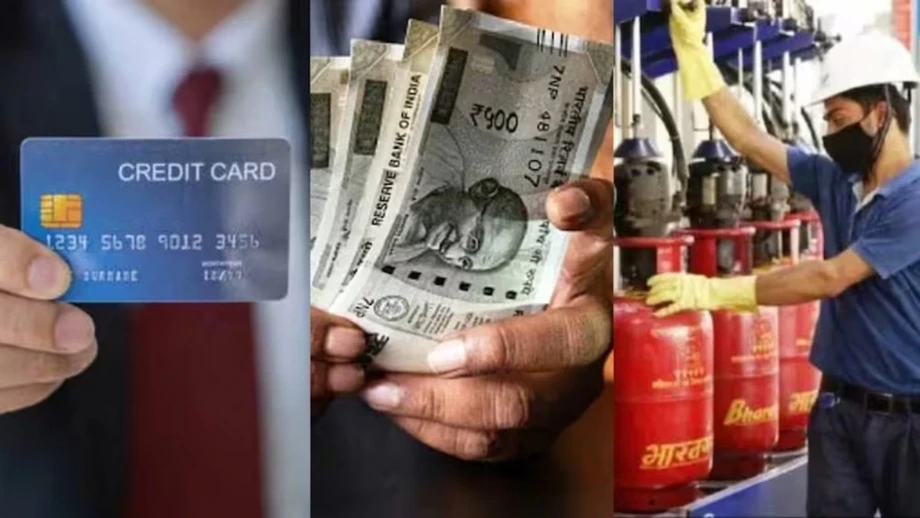
India enters December 2026 with changes affecting credit card bills, car prices, commodity trading and GST registration. From 1 December, SBI Card will charge 1% on certain transportation payments above ₹30,000 and on fuel spending above ₹50,000 in a billing cycle. Tata Motors Passenger Vehicles will raise vehicle prices by an average of 0.5%, while commodity derivatives traders will face minimum initial margins of 6%, 8% or 10%.
Contents
- A busy start to December for household budgets
- How will the new SBI Card fees work?
- What changes for commodity derivatives traders?
- Why are Tata vehicle prices rising again?
- What should cooking gas consumers and airlines watch?
- How does the GST registration cancellation process change?
- What else is in the GST Council package?
- What changes for overseas investors and NRI accounts?
- Which deadlines should households and taxpayers mark?
- Could the RBI decision change loan EMIs?
- Key dates for December 2026
- The Bottom Line
Oil marketing companies will also conduct their monthly review of cooking gas and aviation fuel prices on 1 December. Beyond that date, eligible overseas investors gain a remote identity verification option on 3 December, the Reserve Bank of India announces an interest rate decision on 4 December, and taxpayers face important deadlines on 15 and 31 December. Central government pensioners have an earlier task: submitting their annual life certificate by 30 November.
How will the new SBI Card fees work?
SBI Card disclosed the changes in a customer notice dated 27 October. For transportation, the 1% fee applies to each eligible transaction exceeding ₹30,000, rather than to the cardholder's total transportation spending for the month. Applicable taxes are additional. A payment of exactly ₹30,000 attracts no fee under this rule, while a ₹35,000 payment attracts ₹350 and a ₹50,000 payment attracts ₹500.
Eligibility depends on Merchant Category Codes, or MCCs. These are numerical labels used by card networks to identify the type of business accepting a payment. The transportation charge covers transactions identified under MCCs 4111, 4784 and 4131. SBI Card has also stated that network partners define these codes and can change them without requiring separate intimation to customers.
Fuel follows a different calculation. The card issuer will add up eligible fuel transactions during one billing cycle. If the total exceeds ₹50,000, the 1% fee applies to the entire fuel spend, not merely the amount above the threshold. A billing cycle is the period covered by a card statement and does not necessarily run from the first to the last day of a calendar month. The relevant fuel MCCs are 5172, 5541, 5542 and 5983.
- Eligible fuel spending of ₹50,000 in a billing cycle results in no fee under this rule.
- Fuel spending of ₹50,001 produces a fee of ₹500.01 before applicable taxes.
- Spending of ₹55,000 produces ₹550, while ₹60,000 produces ₹600 and ₹70,000 produces ₹700.
These transaction charges are separate from existing card joining and renewal fees. Across SBI Card's listed travel and fuel cards, joining fees range from ₹500 to ₹9,999 and annual renewal fees from ₹499 to ₹9,999. Some cards waive the renewal fee after sufficient annual spending, ranging from ₹1 lakh for the BPCL SBI Card to ₹15 lakh for the SBI Card MILES ELITE. Customers with questions about the December charges can call 1860 180 1290 or 39 02 02 02, adding the local STD code before the second number.
What changes for commodity derivatives traders?
The Securities and Exchange Board of India revised its margin framework for agricultural and non-agricultural commodity derivatives in a circular dated 17 November. From 1 December, the minimum initial margin is 6% for commodities with low price volatility, 8% for those with medium volatility and 10% for those with high volatility. Volatility describes how sharply and frequently a price moves.
An initial margin is the financial cushion a trader must maintain to open and hold a position. The minimum Margin Period of Risk, which sets the period of possible price movement that must be covered, will be two days for commodities with low or medium volatility and three days for those with high volatility. A trader in a more volatile commodity may therefore need substantially more funds with the broker. Actual requirements can be higher under the applicable risk framework. The revised requirements apply for one year from the date of the circular.
Why are Tata vehicle prices rising again?
Tata Motors Passenger Vehicles announced on 24 November that prices across its cars and sport utility vehicles would rise by an average of 0.5% from 1 December. The revision covers petrol and diesel models as well as electric vehicles. The precise increase will vary by model and variant, so the company has not provided one rupee amount that applies to every buyer.
The company said raw material costs remained elevated and that the revision would recover only part of the continuing increase in costs. It said it was bearing a large share of the burden itself while passing some of the impact to customers.
This is the company's fourth price increase announcement in the 2026 to 2027 financial year. It raised prices of petrol and diesel vehicles by a weighted average of 0.5% from 1 April, increased prices of those vehicles and electric models by up to 1.5% from 1 July, and raised vehicle prices by up to ₹25,000 from 1 September. Customers planning a December purchase will need the revised price for their chosen variant to calculate the effect on the final bill.
What should cooking gas consumers and airlines watch?
Oil marketing companies review LPG prices on the first day of every month, making 1 December the next date for possible changes in domestic and commercial cylinder rates. Prices of the 14 kilogram domestic cylinder have remained stable for a long period, while the 19 kilogram commercial cylinder has already seen revisions. Aviation turbine fuel rates may also be announced. Any actual increase or reduction will become clear when the companies publish their new prices.
Domestic LPG customers using Indane, HP Gas or Bharat Gas have also been asked to check their Aadhaar biometric verification status before booking a cylinder in December. Customers who have completed the verification can continue with regular bookings and receive subsidies for which they are eligible. This verification issue is separate from the monthly decision on cylinder prices.
How does the GST registration cancellation process change?
The Central Board of Indirect Taxes and Customs notified amendments to the Central GST Rules, 2017 on 25 November. Under the revised online process, eligible applications to cancel a GST registration can be disposed of electronically through the GST portal. Cases involving pending returns or outstanding dues will be sent to the concerned officer for examination instead of moving through the automatic route.
The policy trail began at the 57th GST Council meeting in New Delhi on 8 October, chaired by Union Finance and Corporate Affairs Minister Nirmala Sitharaman. The 57th meeting recommendations set out a two phase system for applications submitted in FORM GST REG-16. In both phases, pending returns must be filed and dues paid before the system accepts an application automatically.
Phase 1 covers taxpayers who have not passed on input tax credit exceeding ₹2.5 lakh in any month since registration. Input tax credit is the credit for GST already paid on business purchases. Phase 1 also covers a taxpayer who crossed that monthly level but filed the final return in FORM GSTR-10 within the specified period. Phase 2 extends automatic acceptance to all cancellation applications once the return and payment conditions are met. FORM GST REG-16 will also be amended so that GSTR-10 details can be supplied within the application.
For cancellations started by tax officers, the Council recommended removing certain grounds under rule 21. It also recommended amendments to rules 21A and 22 and the insertion of rule 23A. These changes create a system for cancellation and restoration of registration after failures to file returns or furnish bank account details, followed by compliance within the specified period.
What else is in the GST Council package?
Several recommendations address disputes and smaller businesses. A proposed amendment to rule 86A would let a taxpayer object to an amount being blocked in the electronic credit ledger and receive a personal hearing before the proper officer decides. The Council also recommended waiving late fees for delayed returns under section 39(1) where annual turnover in the preceding financial year was up to ₹5 crore, provided the delayed return is filed by the end of the month in which it was due.
An optional Annual Return Quarterly Payment scheme received approval in principle for taxpayers with turnover of up to ₹5 crore who exclusively serve unregistered consumers. No December start date was announced for that scheme. Other recommendations treat temporary and permanent transfers of title in intellectual property rights uniformly as services, and clarify that used vehicle sellers under the margin scheme can claim input tax credit on items such as spares, repairs, technology, rent and advertising. The restriction remains on tax paid for the used vehicles themselves.
Passenger transport and motor vehicle rental services supplied with an operator using an electric vehicle may receive an option to pay GST at 5% with restricted input tax credit when battery charging is included in the price. The official release explains how the broader package acquires legal force:
The same would be given effect through the relevant circulars/ notifications/ law amendments which alone shall have the force of law.
Taxpayers therefore need to follow the notification and commencement date attached to each measure rather than treating every October recommendation as part of the December cancellation procedure.
What changes for overseas investors and NRI accounts?
From 3 December, eligible Non Resident Indians, Overseas Citizens of India and foreign nationals living in jurisdictions compliant with the Financial Action Task Force can complete Know Your Customer formalities remotely with intermediaries registered with SEBI. KYC is the identity and verification process required before receiving financial services. SEBI announced the relaxation on 14 August 2026, allowing eligible investors to complete the process without travelling to India for physical verification, subject to the prescribed eligibility and checks.
ICICI Bank is also revising charges for NRI savings accounts from 1 December. Beyond the applicable free limits, cash transaction charges rise from ₹3.50 to ₹4 for every ₹1,000, with a minimum fee of ₹150. The second and third failures of an Electronic Clearing Service debit in a month will each attract a ₹550 penalty. ECS is commonly used for recurring payments, making sufficient account balances especially important for customers with scheduled debits.
Which deadlines should households and taxpayers mark?
Aadhaar holders can add or update an email address without paying the usual ₹75 fee until 31 December 2026. The Unique Identification Authority of India introduced the six month waiver through a June office memorandum, with effect from 1 July. It applies only to email updates completed through the official Aadhaar mobile application, not to every Aadhaar correction or update service. Regular charges may apply after the waiver expires.
Central government pensioners must submit their annual life certificate by 30 November to avoid delays or interruption in pension payments. The certificate confirms that the pensioner remains eligible to receive payments. It can be submitted digitally through Jeevan Pramaan, the Digital Life Certificate service, or through other authorised methods. This is an existing annual requirement rather than a rule created for December.
Eligible taxpayers must pay at least 75% of their estimated annual tax liability cumulatively by 15 December as the third advance tax instalment. On 31 December, the window closes for belated income tax returns for the 2025 to 2026 financial year. Late filing attracts a fee of ₹1,000 or ₹5,000, depending on the taxpayer's income.
Could the RBI decision change loan EMIs?
The Reserve Bank of India's Monetary Policy Committee meets from 2 to 4 December, with its policy decision scheduled for 4 December. The repo rate entered December at 5.50%, following a 25 basis point increase in October 2026. One basis point is one hundredth of a percentage point, so that increase amounted to 0.25 percentage point. The repo rate influences the cost at which banks obtain funds and, through them, borrowing and deposit rates.
State Bank of India has argued for another 25 basis point increase rather than a 50 basis point move. Its position is that a more aggressive increase could risk capital outflows, currency instability and pressure on economic growth amid global uncertainty and movements in the rupee. It considers the smaller increase sufficient given the present inflation path. The decision rests with the Monetary Policy Committee.
Borrowers should watch the announcement rather than expect an automatic change in instalments on 1 December. Loans linked to external benchmarks can respond to a repo rate decision, but the timing and manner depend on the loan agreement and the lender's rate reset process. Any effect on home or personal loan EMIs will therefore follow the decision and its transmission by banks.
Key dates for December 2026
The following dates separate the new charges from deadlines and events that merely fall during the month:
- 30 November: Deadline for central government pensioners to submit annual life certificates.
- 1 December: SBI Card fees, SEBI margins, Tata vehicle prices and ICICI Bank's revised NRI account charges begin. LPG and aviation fuel rates are reviewed, and the revised GST cancellation process takes effect.
- 2 to 4 December: The RBI Monetary Policy Committee holds its meeting.
- 3 December: Remote KYC becomes available to eligible overseas investors.
- 4 December: The RBI announces its monetary policy decision.
- 15 December: Deadline for the third advance tax instalment, bringing cumulative payment to at least 75% of estimated annual liability.
- 31 December: The free Aadhaar email update facility ends, and belated returns for the 2025 to 2026 financial year reach their final filing deadline.
The Bottom Line
- SBI Card will charge 1% on each eligible transportation transaction above ₹30,000, with applicable taxes extra.
- Eligible fuel spending above ₹50,000 in a billing cycle triggers a 1% charge on the entire fuel amount.
- Commodity derivatives minimum initial margins become 6%, 8% or 10%, depending on price volatility.
- Tata vehicle prices rise by an average of 0.5%, with the exact increase varying by model and variant.
- New LPG and aviation fuel prices were not yet known; oil companies will announce any changes on 1 December.
- Eligible GST cancellation applications can move electronically once return and payment conditions are satisfied.
- Remote KYC starts on 3 December for eligible overseas investors, while new ICICI Bank NRI account charges begin on 1 December.
- Pension, Aadhaar, advance tax and belated return deadlines fall on 30 November, 15 December and 31 December.
- The RBI announces its rate decision on 4 December, and any change in loan EMIs depends on subsequent transmission by lenders.