The first minute of television changes at the power button
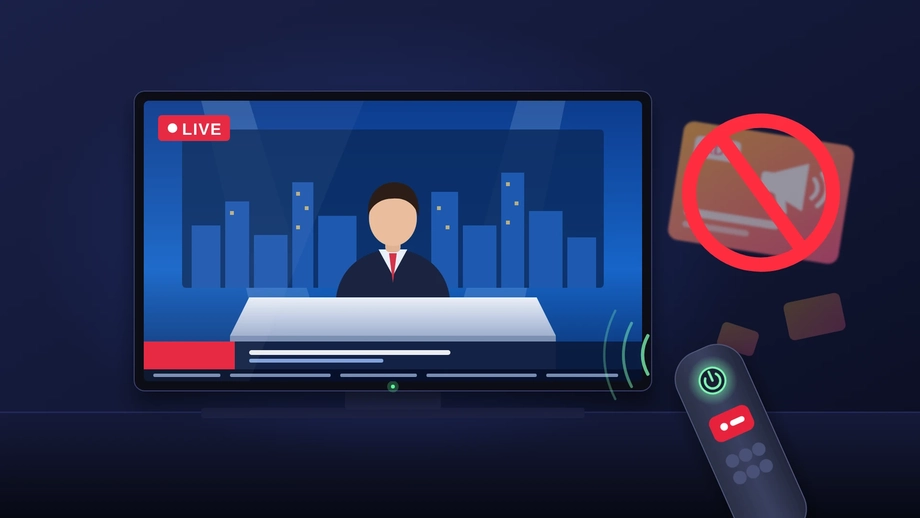
On November 27, anyone in China who switches on a cable set-top box or a telecom IPTV box should see a full-screen live broadcast channel instead of a video advertisement. Two departmental rules from the National Radio and Television Administration took effect that day: Order No. 17, the Regulations on the Administration of Cable Broadcasting and Television Operation Services, and Order No. 18, the Interim Regulations on the Administration of Interactive Internet Protocol Television Operation Services.
Contents
- The first minute of television changes at the power button
- The numbers that pushed the regulator to act
- Two orders, two kinds of television
- What the rules require, line by line
- How much an operator pays for ignoring it
- The gap: the television's own firmware
- Hotels and group subscribers are covered too
- A 2011 rule finally catching up with IPTV
- What a viewer can do if an advertisement still appears
- Key Points
The rules turn a practice the regulator had already been pushing through campaigns into binding regulation. Live channels get priority, the box opens straight into full-screen live television, a channel replay entry has to be available, and no advertisement may be played at startup.
The scale is large. Cable television had about 205 million subscribing households at the end of June, and IPTV more than 400 million, according to figures reported from the industry. The administration has said that by October more than 284 million cable and IPTV users had already been moved to a startup screen that goes straight to live television with no advertisement, and that paid packages have been cut by more than 70%.
Those 284 million converted users are slightly less than half of the roughly 605 million cable and IPTV subscriptions counted in June, which shows how much of the work was finished before the rules took effect and how much depends on enforcement now.
For a household, the change is smaller than a headline and larger than it sounds. It removes a step that used to sit between the remote control and the programme, and it does so by law rather than by a setting buried in a menu.
The numbers that pushed the regulator to act
A 2022 survey by the China Home Appliance Network, of 1,191 elderly respondents, found that 49.6% could not reach the programme they wanted directly after switching on, and 28% said they had too many devices and did not know how to switch between them. The national daily rate of televisions being switched on fell from around 70% in 2016 to 30.2%.
Younger viewers drifted away for reasons that live outside the television set, in phones and streaming apps. Older viewers often stopped watching because the gateway on the screen was too complicated. Writing "live television at startup" into a regulation lowers the difficulty of the first step, and it means someone who is not good at hunting through layered menus can press one button and see a picture.
The rules also carry a clause that is easy to miss: a user complaint must be answered within 10 working days. The 2011 regulation that preceded the new orders already set the same deadline for cable operators, so this is a duty the administration is keeping rather than inventing.
Two orders, two kinds of television
The two documents divide the market by the network that carries the signal. Order No. 17 covers cable broadcasting and television operation services: the cable line into a home, a broadcaster's set-top box, or a smart television connected to a cable signal. Order No. 18 covers interactive IPTV operation services, meaning the broadband set-top box supplied by a telecom carrier.
Both define their scope broadly, covering services provided directly or indirectly to individual users, household users and group users such as hotels. Both put the obligation on the operator, the company running the service, not on the viewer.
Order No. 18 is the more consequential of the two in regulatory terms. Until now, the ban on startup advertising sat in a rule written for cable operators, which left the fast-growing IPTV business outside its reach. A single set of obligations now covers both.
What the rules require, line by line
- Live television first: operators must implement full-screen live television at startup, provide a channel replay entry, and not play startup advertising.
- Smart televisions must support presenting live channels first and offer a convenient settings entry, so a viewer can choose whether the set opens into live television or into the interactive homepage.
- The interactive homepage, including its pages, navigation bar, status bar and recommendation slots, must meet the requirements of the State Council department in charge of broadcasting.
- A free section must be set up on the first page of the interactive interface, with good free content recommended, the number of paid columns reduced, programme prices clearly stated, and app sections and order and payment management brought under control.
- Terminals must be optimised to shorten startup time, and operators are encouraged to use voice remotes, phone remotes and artificial intelligence to improve the experience.
- Remote control operation must be simplified so that one button on the remote switches to the live signal source.
- Hotel and other group users must also put live television first and comply with the administration's requirements.
The free section requirement answers a complaint that viewers have made for years, that the first screen of a paid television service is a wall of subscription offers. Reducing the number of paid columns and stating prices clearly is aimed at the practice known in China as nested fees, where one subscription sits inside another.
How much an operator pays for ignoring it
An operator that fails to put live television first, does not deliver full-screen live television at startup, or plays startup advertising faces an order to correct the breach from the broadcasting authority at county level or above, a warning and a public criticism notice. In serious cases the fine runs from 10,000 to 100,000 yuan.
The older rules carried smaller penalties. The 2011 regulation set fines of 10,000 to 30,000 yuan for the most serious breaches of duties such as reporting channel changes and protecting user information, and fines of 5,000 to 20,000 yuan for others. The ceiling on the new orders is more than three times higher.
The gap: the television's own firmware
A viewer whose smart television connects directly to the public internet through its own operating system sits outside both orders. That setup, known as OTT (over the top), covers televisions from brands such as Xiaomi, Hisense, TCL and Skyworth, and boxes such as Xiaomi's and Tmall's Magic Box. Advertising that a manufacturer's firmware plays before the set-top box signal appears comes from the television maker, not from the cable or IPTV operator.
For manufacturers, the rules ask only that a smart television support presenting live channels first and offer a convenient settings entry. The phrase forbidding startup advertising, written for operators, does not appear in the manufacturer clause. The same living room can therefore have two startup screens, and the rules have closed the one that runs through the operator's box.
About 93% of smart television models had already added a one button switch to close startup advertising, which leaves the viewer to dismiss the advertisement rather than the operator to remove it. The distance between a button that closes an advertisement and a rule that forbids it is the difference between a choice and an obligation.
No date has been published for extending the same ban to manufacturer firmware, and the two orders set no timetable for it. What the rules do settle is the order of work: the box side has a named operator, a penalty clause and a complaint channel, which makes it the end that can be enforced first.
Hotels and group subscribers are covered too
Group users, which in practice means hotels, hospitals and other institutions that buy television service in bulk, must also follow the live first principle. A traveller who switches on a hotel television will be covered by the same obligation as a family at home, because the duty sits with the operator that supplies the service to the building.
That detail matters for the tourism industry, where the startup screen is often the first thing a guest sees in a room and is often the most heavily sold advertising slot in the building.
A 2011 rule finally catching up with IPTV
The regulation now being replaced was published as Order No. 67 of the then State Administration of Radio, Film and Television on December 2, 2011, signed by its director Cai Fuchao, and took effect on March 1, 2012. It was revised on March 23, 2021, under a decision by the National Radio and Television Administration amending a second batch of departmental rules.
The old text already barred cable operators from playing startup advertising and already required them to open into full-screen live television. It also required operators to give users a convenient settings entry to choose between live television and an interactive homepage, set a 10 working day deadline for answering complaints, required 24 hour booking of a repair visit, and set repair deadlines of 24 hours for urban faults and 72 hours for rural or hard to reach areas, with 48 hours for major faults. One clause protected a basic service even during a payment dispute: while a subscription is suspended, an operator may not cut the China Central Television first channel signal.
What the old rule did not do was address IPTV startup advertising, and it did not oblige smart televisions to present live channels first. Order No. 17 and Order No. 18 close both gaps, and the repair and complaint standards now carry over to IPTV operators as well.
The rules also write in elderly, minor and accessibility modes, and require reduced fees for households on minimum living guarantees and for people in extreme poverty, extending protections that the 2011 text had set for disabled and elderly users and low income households.
What a viewer can do if an advertisement still appears
If a cable or IPTV box still shows an advertisement on startup, the route the rules provide runs through the operator first. A viewer can record a short video, call the operator's customer service line, and expect an answer within 10 working days. If no answer comes, the next stop is the local broadcasting and television authority, which is also the body that issues the warning and the fine.
City level broadcasting authorities are the ones that receive complaints and carry out inspections, with county level and above authorities empowered to order corrections. The administration also runs service quality evaluations and spot checks, and publishes the results, which gives viewers a second way to compare operators.
One simple test tells a household which rule applies to it. Unplug the set-top box, switch the television on, and look at what appears; plug the box back in and switch on again. The difference between the two screens is the difference between the operator's startup screen, now covered by the ban, and the manufacturer's, which is not.
Key Points
- National Radio and Television Administration Orders No. 17 and No. 18 took effect on November 27, covering cable television and IPTV operation services.
- Operators must open into full-screen live television, offer a channel replay entry and stop playing startup advertising.
- Serious breaches draw a warning, a public criticism notice and a fine of 10,000 to 100,000 yuan, up from a top of 30,000 yuan in the 2011 rules.
- Cable television had about 205 million subscribers at the end of June, IPTV more than 400 million; more than 284 million users had already been converted to a live-first startup by October.
- Paid packages have been cut by more than 70%, and 93% of smart television models already offer a one button switch to close startup advertising.
- Smart televisions connected directly to the internet, and OTT boxes from brands such as Xiaomi and Tmall, fall outside the two orders; manufacturers are only asked to support live channels first.
- Hotels and other group subscribers are covered by the live first requirement.
- Complaints must be answered within 10 working days, with unresolved cases going to the local broadcasting authority.
- A 2022 survey of 1,191 elderly viewers found 49.6% could not reach the programme they wanted after switching on, and the national daily television switch-on rate had fallen to 30.2%.