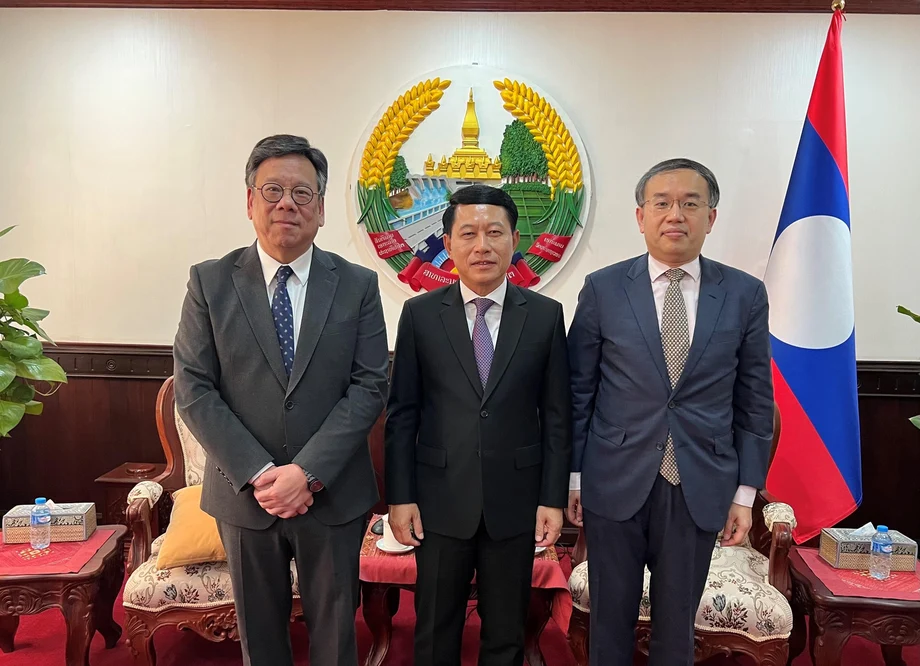
A Visit Carrying Three Jobs
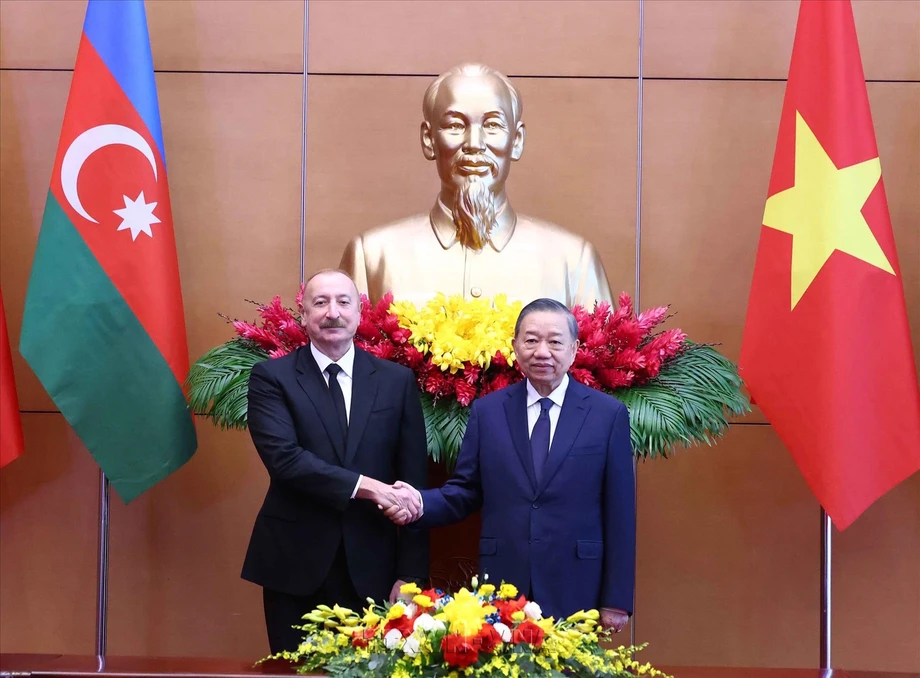
Lao Prime Minister Saleumxay Kommasith and his spouse will arrive in Vietnam on November 27 for an official visit that runs through November 28, then join two Mekong summits in Hanoi. The trip is his first official visit to Vietnam as government leader and his first bilateral overseas visit since the 10th Lao National Assembly elected him prime minister in early October. Vietnam's Prime Minister Le Minh Hung and his spouse sent the invitation. The calendar gives the visit three jobs at once: review the Vietnam-Laos relationship, turn earlier leaders' agreements into projects, and show support for Vietnam as host of CLMV-12 and ACMECS-11.
Contents
- A Visit Carrying Three Jobs
- What the Two Summits Are Designed to Do
- How Big Has Vietnam-Laos Trade Become?
- Which Roads, Rails and Ports Are Moving?
- What Does Energy Cooperation Add?
- What Do Schools and Identity Systems Do for Ties?
- What Is Laos Asking the Summits to Deliver?
- Why the Mekong River Is Part of Every Deal
- How Vietnam and Laos Coordinate Beyond Trade
- What Comes After the Visit?
- Key Points
The timing follows Le Minh Hung's official visit to Laos on October 8 and 9, his first official foreign trip after taking office. Saleumxay's choice of Vietnam as his first bilateral destination is unusual in diplomatic terms because it signals which relationship Hanoi and Vientiane place at the top of their lists. Vietnam and Laos use a formal phrase for this bond: great friendship, special solidarity, comprehensive cooperation and strategic cohesion. In plain language, they want political trust, regional support and business projects to move together.
Vietnamese Ambassador to Laos Nguyen Minh Tam described the visit as:
one of particular diplomatic significance and strategic importance to bilateral relations, while also contributing to Mekong sub-regional cooperation.
The ambassador's point is practical. A formal visit gives ministers a reason to check which agreements have moved, which have stalled and which new projects need signatures. It also places Laos beside Vietnam at two meetings where river, road, trade and energy questions are discussed by the same group of governments.
Several dated steps explain the timing:
- October 8 to 9: Le Minh Hung visited Laos, where more than 10 cooperation documents were expected to be signed or exchanged and an investment conference was planned for about 1,000 officials and business representatives.
- October 12 to 13: Deputy Prime Ministers Saleumxay Kommasith and Ho Duc Phoc met in Vientiane to press transport, rail, port and investment work.
- November 26: Vietnamese Deputy Minister of Foreign Affairs Nguyen Minh Hang outlined summit plans at a news conference in Hanoi.
- November 27 to 28: Saleumxay's official visit takes place.
- November 28: CLMV-12 and ACMECS-11 bring Mekong leaders together in Hanoi.
What the Two Summits Are Designed to Do
Vietnam will chair CLMV in 2026 and host the 12th Cambodia-Laos-Myanmar-Vietnam Summit in Hanoi on November 28. It will cohost the 11th Ayeyawady-Chao Phraya-Mekong Economic Cooperation Strategy Summit with Myanmar, which chairs ACMECS. Leaders expected include Le Minh Hung, Myanmar President Min Aung Hlaing, Cambodian Prime Minister Hun Manet, Saleumxay, Thai Prime Minister Anutin Charnvirakul and ASEAN Secretary-General Kao Kim Hourn, along with representatives of partners and international organisations.
Nguyen Minh Hang, Vietnam's deputy minister of foreign affairs, said Mekong countries want the meetings to shift priorities into delivery. She described the mood in one sentence:
All Mekong sub-regional countries attach great importance to and have high expectations for the summits.
Hang gave the CLMV theme as "Connecting CLMV - Harnessing Potential - Building a Prosperous Future" and the ACMECS theme as "Strengthening Socio-Economic Development Toward Smart and Sustainable ACMECS". A Ministry of Foreign Affairs announcement used "Unlocking Potential" in the CLMV theme and phrased the ACMECS theme as "Socio-Economic Growth and Development Towards a Smart and Sustainable ACMECS". The wording points to the same task: link economies that sit at different income levels and make cooperation deliver goods, jobs and services.
CLMV began in 2004 with Cambodia, Laos, Myanmar and Vietnam. Its eight priority areas cover trade and investment, agriculture, industry, energy, information and communications technology, transport, tourism and human resource development. The ASEAN Secretariat put average annual gross domestic product per capita growth in the four CLMV countries at 10 percent from 2000 to 2024, against 6.3 percent for ASEAN-6, the six earliest members of ASEAN. Gross domestic product per capita means economic output per person. In 2025, their combined trade with the world reached about US$1.04 trillion, or 23.8 percent of ASEAN's total global trade, up from 23 percent in 2024.
ACMECS began in 2003 and brings together Cambodia, Laos, Myanmar, Thailand and Vietnam. It is the only regional framework inside the Mekong that includes all five governments. Partners include the United States, China, India, Japan and South Korea, and New Zealand has been mentioned as a new ACMECS partner. Leaders are expected to review progress and develop a new ACMECS Master Plan for the next phase.
How Big Has Vietnam-Laos Trade Become?
Bilateral trade reached nearly US$3 billion in 2025, up 32.7 percent from 2024 and the highest recorded between the two countries. In the first nine months of 2026, trade exceeded US$1.88 billion and kept growing. Vietnamese businesses also started 24 new projects in Laos during those nine months, with registered capital of US$670 million, 1.7 times the same period in 2025.
Vietnam has 441 investment projects in Laos with total registered capital of about US$12.7 billion. The stated goal is US$10 billion in annual bilateral trade and US$20 billion in total investment capital by 2030. A figure attached to Le Minh Hung's October trip put the trade ambition more broadly at US$5 billion to US$10 billion over the next few years. The 2030 target would require annual trade to more than triple the 2025 level. Reaching US$20 billion in investment would add about US$7.3 billion to the registered capital already in place.
Nguyen Minh Tam set out four areas for a push during 2026 to 2030: strategic infrastructure links, stronger energy cooperation and connected production value chains, better institutions, and movement into new fields such as science and technology, digital transformation and human resources. A production value chain means the steps that turn raw material into a finished product, such as growing rubber, processing it and making goods from it. The idea is for Laos and Vietnam to share more of those steps instead of only trading finished items.
Which Roads, Rails and Ports Are Moving?
Saleumxay and Vietnamese Deputy Prime Minister Ho Duc Phoc met in Vientiane on November 12 and 13 and pushed agencies to speed up joint projects. Their list was not abstract. It included the Vientiane-Hanoi expressway, a Laos-Vietnam railway, Vung Ang seaport and investment issues involving a potassium salt mine in Khammuan province and a rubber plantation run by Vietnam Rubber Group.
The expressway will have two main parts. One is a 126 kilometre stretch from Nongpaen village in Vientiane to Pakxan district. The other runs from Pakxan to the Laos-Vietnam border in Xaychamphon district, Bolikhamxay province. An expressway is a road designed for faster, controlled traffic, and this one would give Laos a stronger road route toward Hanoi and Vietnam's ports.
The railway would link Vientiane with Vung Ang seaport in Vietnam's Ha Tinh province. Because Laos has no coastline, a rail link to a seaport matters: it lowers the cost and uncertainty of moving goods to ships. The two governments also reviewed Vung Ang Port projects 1, 2 and 3, which are meant to expand cargo capacity. Petroleum storage facilities and a pipeline across the border were also named among priority infrastructure links.
Both sides said ministries should keep close contact and monitor projects. They also discussed To Lam's state visit to Laos, his participation in the 50th anniversary of the National Day of Laos and the next meeting between the two Politburos. Laos was also preparing to host the 48th Vietnam-Laos intergovernmental committee meeting later in 2026.
What Does Energy Cooperation Add?
Energy is the other large piece of the economic agenda. Earlier coverage of Laos's power export programme described 47 electricity projects with a combined capacity of 8,260 megawatts intended for Vietnam. Thirteen plants were operating, 34 were expected before 2030, and 16 more projects totalling about 10,618 megawatts were at feasibility study stage. A megawatt measures how much power a plant can produce at a given moment.
Vietnam Electricity put imports from Laos at 2.92 billion kilowatt-hours in the first quarter of 2026, compared with 1.33 billion in the same quarter of 2025. A kilowatt-hour is the energy used by a one kilowatt appliance running for one hour. The two governments agreed in January 2025 on a minimum import target of 8,000 megawatts from Laos by 2030, higher than the earlier 5,000 megawatt goal. Electricity trading, grid connections and wind projects make the relationship more practical but also require transmission lines and stable payment arrangements.
Investment interest is rising with energy. The VLE investment proposal from Viet Lao Energy Investment and Development Joint Stock Company and its affiliates put a possible US$10 billion to US$15 billion into Laos over five years. The company sought faster approvals and tax incentives for major investors, saying some procedures could be shortened by three to six months. A decision on those requests and a detailed spending schedule were not announced.
Laos needs that capital. The country mobilised about 274.4 trillion kip, equivalent to US$12.2 billion, during 2021 to 2025. Its projected investment requirement for 2026 to 2030 is 636.178 trillion kip, about 132 percent above the total from the previous five years. Domestic private investors and foreign direct investment are expected to supply about 410 trillion kip. Laos plans to graduate from the least developed countries group in late 2026 and pass through a transition lasting three years to 2029, so outside finance and reliable projects will matter during that change.
What Do Schools and Identity Systems Do for Ties?
Vietnam is also using smaller, visible projects to support the relationship. During Le Minh Hung's October visit, he announced funding for two schools in Houaphanh and Champasak provinces worth a combined US$2 million. Vietnam provided 1,300 scholarships for Lao students to study in Vietnam in 2026. The CLMV scholarship programme gives 20 scholarships each year to students from Cambodia, Laos and Myanmar.
Education projects matter because they create skills that businesses and governments need. A scholarship pays for a student to study, often at a university or training school. In a country building roads, power plants and digital services, trained engineers, teachers, nurses and technicians are as necessary as concrete and steel.
Vietnam also handed Laos a population management and citizen identification system built with the two ministries of public security. In simple terms, such a system helps a government keep reliable records of residents and issue proof of identity. The two sides are also promoting tourism under a model called One Journey - Two Destinations, which encourages visitors to travel across both countries in one trip. Youth exchanges, culture and education were named as ways to keep the relationship familiar to younger generations.
What Is Laos Asking the Summits to Deliver?
Lao Ambassador to Vietnam Khamphao Ernthavanh said the visit should produce results in both the bilateral relationship and the two summit frameworks. She described Laos as the transport coordinator within CLMV and a focal country under one ACMECS pillar. Vietnam coordinates areas including information and communications technology, trade and investment, and human resource development under CLMV.
For the summits, Laos plans to propose operationalising the ACMECS Development Fund and securing predictable, stable financing for priority projects. Operationalising a fund means turning it from a promise into a working pot of money with rules for approval and payment. Laos also wants closer alignment between the ACMECS Master Plan, the CLMV cooperation framework, joint plans with partners and ASEAN Community priorities.
Priority items include infrastructure links, simpler customs steps, the digital economy, green and sustainable development, human resource development, tourism, agriculture and energy. Laos wants a stronger ACMECS Secretariat and CLMV coordination mechanisms, especially for monitoring, supervision and evaluation. It also plans to work with development partners, including New Zealand, and continue implementing the CLMV Economic Action Plan for 2025-2026. The practical benefits already cited from these frameworks include scholarships, training, technical help, border trade projects and tourism and hospitality skills.
Why the Mekong River Is Part of Every Deal
Mekong water management sits beside roads and trade because the river crosses countries and supports farms, fisheries and cities. Vietnam and Laos have pledged to share information, exchange experience and coordinate with other basin countries to balance interests. The goal is to protect water and food security, support people's livelihoods and narrow development gaps across the subregion.
The conditions around those talks are hard. Officials pointed to climate change, natural disasters, water and energy security, cybercrime and volatility in the global economy. Climate change can mean hotter weather, heavier rain or longer droughts. When the river rises or falls in unusual ways, farmers may lose crops, fish routes may shift, and towns may face drinking water problems.
Sustainability is not an abstract slogan for a household. It means electricity that does not fail during heat, a river with enough water for rice fields, and roads that let farm goods reach market before they spoil.
How Vietnam and Laos Coordinate Beyond Trade
Vietnam and Laos also plan to coordinate foreign policy at three levels: Party-to-Party diplomacy, State diplomacy and people-to-people diplomacy. Party-to-Party links connect the ruling parties, State links connect governments, and people-to-people links connect students, businesses, cities and communities. The aim is to turn political trust into specific programmes in defence, security and socioeconomic affairs.
Inside ASEAN, both countries want stronger unity, respect for international law and the ASEAN Charter, and peaceful settlement of disputes. They also want members to carry out the ASEAN Community Vision 2045, which puts subregional cooperation among its priorities. At the United Nations, Vietnam and Laos plan to speak together on independence, sovereignty, territorial integrity, noninterference in internal affairs and shared responses to climate change, epidemics, cybersecurity and transnational crime.
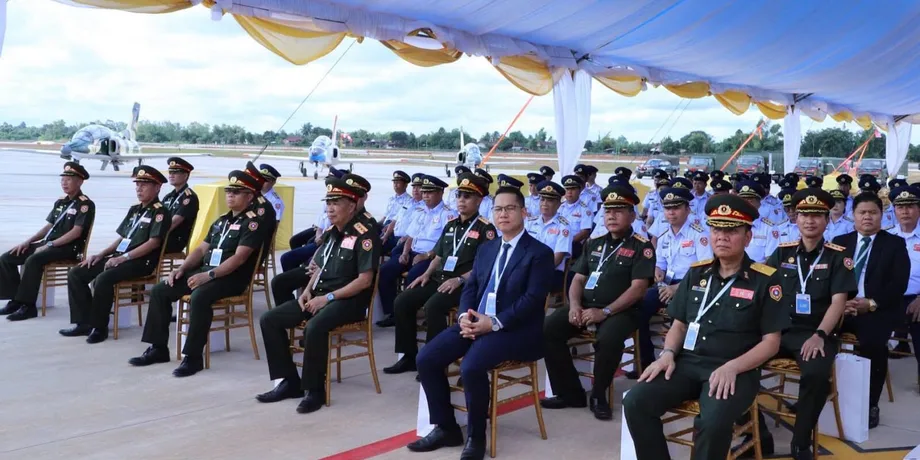
The regional setting makes this coordination more than ceremony. Ban Keun air facility, about 50 kilometres north of Vientiane, opened as a China-Laos training and logistics centre. China's Ministry of National Defense said the centre would be jointly maintained and operated and would help Laos train air force pilots. The ministry also gave a public assurance about its purpose:
not directed against any third party
The ministry said the centre would contribute to regional peace and stability. The statement did not give staffing numbers, a detailed equipment list or the terms governing Chinese access. Those details would shape how Vietnam and other neighbours judge security uncertainty around Laos. For Laos, the same facility offers training that a small air force would struggle to provide alone. The Vietnam-Laos visit gives both governments another channel for consultation.
What Comes After the Visit?
The 2027 calendar is already crowded. Laos and Vietnam will mark the 65th anniversary of diplomatic relations on September 5, 2027, counting from September 5, 1962. They will also mark 50 years since the July 18, 1977 signing of the Vietnam-Laos Treaty of Amity and Cooperation, also described as the Treaty of Friendship and Cooperation, on July 18, 2027. A Vietnam-Laos Year of Solidarity and Friendship will frame those events.
The 48th Vietnam-Laos intergovernmental committee meeting is expected later in 2026, and the 49th meeting is scheduled for early 2027. Officials say the October documents and talks between the two prime ministers will help prepare that agenda. The final summit statements and a full list of signed projects were not available before the meetings, so the immediate test will be whether the themes on paper become dated projects with owners, budgets and deadlines.
Key Points
- Saleumxay Kommasith will make his first official visit to Vietnam as Lao prime minister on November 27 and 28.
- The visit includes talks and attendance at CLMV-12 and ACMECS-11 in Hanoi on November 28.
- Bilateral trade reached nearly US$3 billion in 2025, and the 2030 trade target is US$10 billion.
- Vietnam has 441 projects in Laos worth about US$12.7 billion, with a 2030 investment target of US$20 billion.
- Road, rail, port, power and grid links are central to the agenda.
- Laos wants summit action on financing, transport, customs, digital growth, human resources and Mekong water management.
- The 2027 anniversary calendar and the 49th intergovernmental committee meeting will test follow through.