Nepal's Tourism Trade Sees a Double in the Delhi Deals
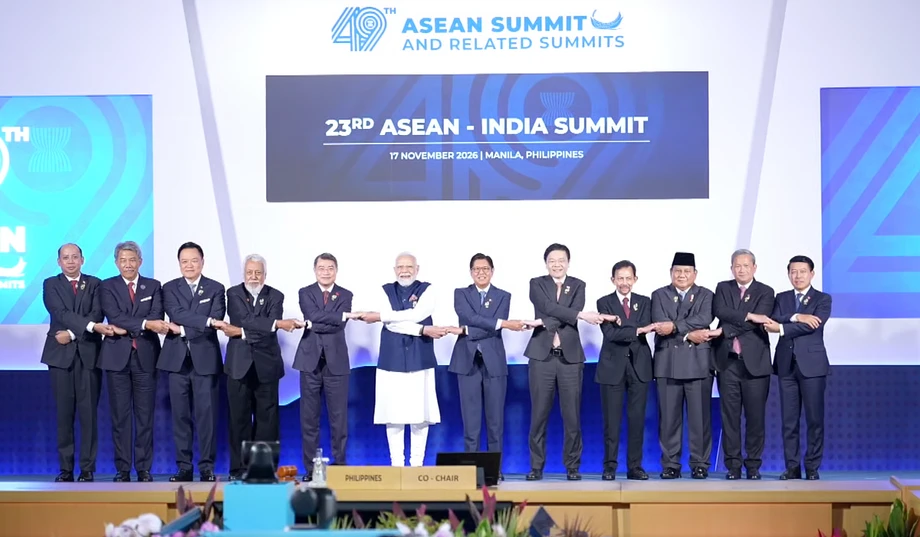
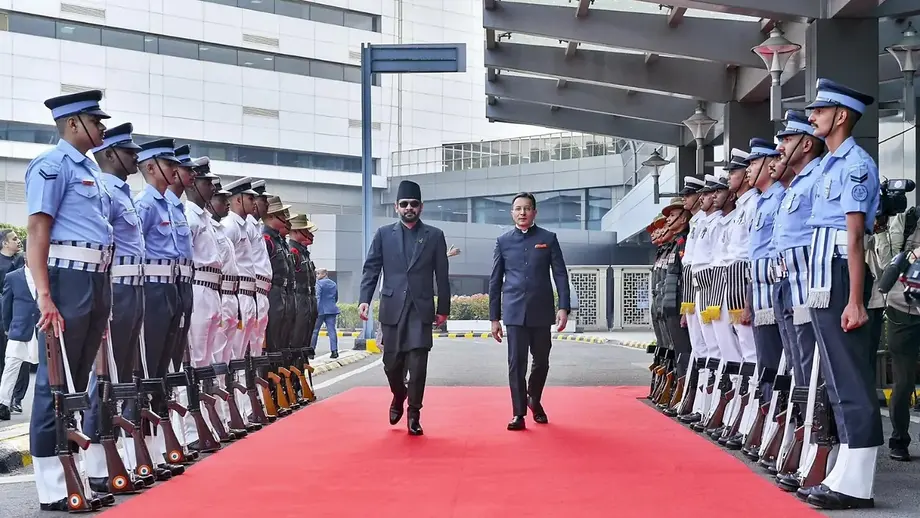
Nepal's three largest tourism associations issued a joint statement in Kathmandu on Tuesday saying the agreements reached during Prime Minister Balendra Shah's state visit to India could double the number of Indian tourists arriving in Nepal. The signatories were Binayak Shah, president of the Hotel Association Nepal, Sagar Pandey, president of the Trekking Agencies' Association of Nepal, and Bharat Jung Pandey, president of the Nepal Association of Tour and Travel Agents. All three travelled to New Delhi inside the prime minister's delegation.
Contents
- Nepal's Tourism Trade Sees a Double in the Delhi Deals
- The Train: 604 Kilometres, 19 Hours, Once a Week
- The Air Route: Minutes That Decide Whether a Flight Pays
- Fog at Bhairahawa and the Altitude Nobody Has Fixed
- The Money: Grants, Credit and a 2015 Precedent
- Ports, Pipelines and a Railway Survey
- What Was Left Off the Table
- The Industry's Own To-Do List
- The Questions Waiting in Kathmandu
- Key Points
Their case rests on things a traveller can already inspect: a weekly passenger train between Ayodhya in Uttar Pradesh and Janakpurdham in Nepal, and an agreement to make the B345 air route through Kathmandu, Bhairahawa and Lucknow work in both directions rather than one. Around those sit a vision document with 10 pillars, eight memorandums of understanding and a development package worth INR 15,000 crores, or NPR 24,000 crores, which India has called its largest ever for Nepal.
The visit was short. Shah, 36, arrived in New Delhi on Sunday, November 22, and was back in Kathmandu on the evening of Monday, November 23, having spent about 25 hours on Indian soil. He took office in March, after protests led by young Nepalis brought down his predecessor, and his Rashtriya Swatantra Party went on to win a large majority. The tourism presidents used their statement to welcome the fact that their organisations were in his delegation at all.
For a trade that has argued for years that its Indian market is held back by transport rather than appetite, doubling is a large claim. It rests most of all on pilgrimage, because the two cities the new train joins are the settings of the most widely told story in the region. Ayodhya is revered as the birthplace of Ram, Janakpur as the birthplace of Sita, his wife in the Ramayana.
The Train: 604 Kilometres, 19 Hours, Once a Week
The Sarayu-Kamala Express left Ayodhya Dham at 12:30 pm on Monday as an inaugural special numbered 04295, carrying invited dignitaries and railway officials. It reached Janakpurdham at 10:00 am on Tuesday. The return working, 04296, departed the same day and pulled into Ayodhya Dham at 08:10 am on Wednesday, November 25. Two days earlier, Indian Railways had set out the Ayodhya-Janakpur timetable, including the long customs halt the route requires.
Behind the ceremonial run sits a commercial timetable of roughly 604 kilometres and about 19 hours, worked by 17 coaches, with one departure a week in each direction. Train 15595 leaves Janakpurdham at 1:10 pm every Saturday and reaches Ayodhya Cantt at 8:10 am on Sunday. Train 15596 leaves Ayodhya Cantt at 5:50 pm every Monday. Regular running was set to begin with the first departure from Janakpur on Saturday, November 28, and the first return from Ayodhya on Monday, November 30.
The train halts at 10 stations on the way:
- Mankapur, Basti and Gorakhpur in Uttar Pradesh
- Narkatiaganj, where the locomotive changes, and Raxaul in Bihar
- Sitamarhi, Shisho Halt, Madhubani and Jaynagar, the last station before the border
Jaynagar does the border work. The train waits an hour there for customs and immigration, from 06:30 to 07:30 Indian time on the northbound run, which is 06:45 to 07:45 in Nepal, where clocks run 15 minutes ahead. Officials of the Samastipur division of Indian Railways treated the first run as an event in itself. R. K. Singh, the division's public relations officer, described the arrangements to reporters as the train passed through Bihar.
The train running today is an 'Inaugural Special'. We are taking you all along, joined by several dignitaries who have been invited. They will travel to Nepal, where they will engage in the arrangements established through our tie-up with the Nepalese government. Moving forward, this will be a weekly service, running once a week from Ayodhya to Janakpurdham and back to Ayodhya Dham.
Narendra Modi, speaking after talks with Shah at Hyderabad House, tied the service to the flow of pilgrims through Ayodhya and to a line he used during a 2018 visit to Janakpur.
In 2025 alone, around 30 crore pilgrims from across the country and the world visited Ayodhya. With the launch of the Saryu-Kamala Express train service today, we are adding a new dimension to this sacred bond. This will now make it easier for pilgrims visiting Ayodhya to travel to Janakpur to seek blessings of Mata Sita.
Modi also repeated his 2018 formulation that without Nepal, India's dhams and its Ram are incomplete. The railway ministry puts the distance at about 604 kilometres, and the service is the first direct passenger train linking the two cities, removing the need for pilgrims to change trains on the border.
The Air Route: Minutes That Decide Whether a Flight Pays
For nearly two decades, aircraft arriving in Nepal from the west have had a single door: Simara. A flight from Qatar, the United Arab Emirates, Saudi Arabia, Kuwait or Turkey, or from Delhi, Mumbai and Bengaluru, had to enter Indian airspace and then swing through Simara, far east of Kathmandu, before turning back west. Jets bound for Bhairahawa or Pokhara flew roughly 200 to 300 kilometres further than needed, according to Rajkumar Kshetri, a former director general of the Civil Aviation Authority of Nepal.
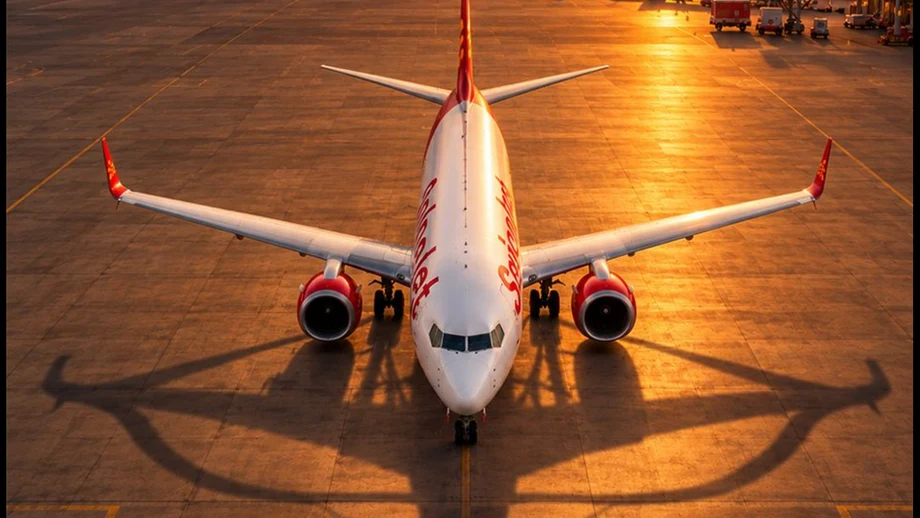
Under the agreement, the existing B345 route between Kathmandu, Bhairahawa and Lucknow becomes two way, and the two sides will hold technical consultations to fix the procedures. A senior CAAN official calculated the gain at about 17 minutes for flights reaching Bhairahawa through Lucknow and Bhairahawa, and about 14 minutes for Pokhara, compared with the Simara approach. Kshetri put the saving at up to 15 minutes for wide body and narrow body jets arriving from the Middle East and West Asia, time that converts directly into fuel, crew allowances and lower fares. Nepal records about 100 to 115 international arrivals and departures a day.
Money follows the minutes. Aircraft pay navigation and route fees to whichever country's airspace they use, and until now a jet from the Gulf has paid India for a long stretch and Nepal only for the short hop from Simara to Kathmandu. Kshetri estimates that dropping about 10 minutes of flying over Indian territory between Bhairahawa and Simara removes a fee Nepal's carriers and foreign airlines pay to India, while adding distance flown inside Nepal.
Regional traffic gains too. Buddha Air already flies Kathmandu to Varanasi, leaving Nepali airspace through Bhairahawa but forced to return the long way through Simara. A two way route makes both legs short. Officials expect easier connection of Bhairahawa and Pokhara to Indian religious, tourist and business cities, which matters for pilgrims heading to Lumbini.
Fog at Bhairahawa and the Altitude Nobody Has Fixed
Bhairahawa airport sits about 5 kilometres from the Indian border, which is why a functioning entry route is worth more there than anywhere else. A CAAN technical official says the two countries must agree the altitude at which Indian controllers hand an aircraft to Nepali controllers, and sign an agreement on it. Long haul jets coming in over Bhairahawa need to enter Nepali airspace reasonably low. If India sets a high entry level, aircraft must circle over Nepal to descend and the time saving disappears.
The prize is the instrument landing system at Bhairahawa. Once aircraft can approach the airport over Indian territory, the system can be used, allowing takeoffs and landings in dense winter fog that currently forces diversions and cancellations. The official said enough data already exists from departures through Bhairahawa for the route to be activated quickly, since it would rest on operations already flown. After the technical teams finish, both sides notify the International Civil Aviation Organization, and the route opens once CAAN publishes a pre flight information bulletin. No date has been given for that.
India refused this entry point for years, citing the security of the Gorakhpur air base. Civil aviation did not feature in Modi's public remarks, and the route deal does not appear among the signed agreements, which has left room for doubt about delivery.
The Money: Grants, Credit and a 2015 Precedent
The package announced in Delhi splits into INR 3,500 crores of grants, about NPR 5,600 crores or $377 million, for reconstruction and new infrastructure, and a rupee denominated line of credit of INR 11,500 crores, about NPR 18,400 crores or $1.24 billion, for energy projects. Specific projects and the way the money is drawn will be settled in later consultations. Foreign Secretary Vikram Misri described the total as the largest ever package of financial assistance from India to Nepal, a point first reported when the $1.6 billion package was announced.
The bill it is meant to answer is large. On August 26, an avalanche of ice and rock near the Lhende river on the Chinese side of the Himalaya sent a surge of water and debris down the Bhote Koshi and Trishuli rivers into Rasuwa and Nuwakot districts. The government counts more than 1,400 dead with thousands still missing, while Nepali authorities have cited about 1,500 dead and more than 5,200 missing. Rebuilding is estimated at $4.8 billion. The UN fund for responding to loss and damage set aside $20 million for Nepal in October, the first allocation it has made to any country and roughly one two-hundred-and-fortieth of the bill.
Nepal had asked for about $2 billion, and officials had briefed that roughly $1.5 billion was likely. The precedent that worries Kathmandu is 2015, when India pledged $1 billion after the earthquake and much of the soft loan went unused. Under a September 2016 agreement with the Export-Import Bank of India, $750 million in concessional loans came with $250 million in grants and conditions requiring at least 75 per cent of materials, equipment and services, and 50 per cent of civil works materials, to be sourced from India. Indian officials say $550 million of that credit was used. Shankar Sharma, an economist and former Nepali ambassador to India, says sending the new loans mainly to large hydropower plants and transmission lines may make them easier to execute, while conditions on materials and labour could still cause delays.
Energy is the centre of the deal. Nepal now sells India about 1,200 megawatts, against a shared target of 10,000 megawatts by 2030, and the floods cut generation by about a tenth and stopped exports for a time. The two leaders laid the foundation stone for the 669 megawatt Lower Arun hydroelectric project and welcomed joint ventures for high capacity transmission lines between Inaruwa in Nepal and New Purnea in India, and between Dodhara and Bareilly.
Ports, Pipelines and a Railway Survey
A landlocked country pays for every extra border it must cross, and Nepal has depended on Kolkata, Haldia and Visakhapatnam for trade with third countries. India has now opened transit trade through Deendayal Port at Kandla in Gujarat, with Paradip in Odisha to follow once infrastructure is ready. Trade bodies say the benefit will depend on rail links, tariffs and customs procedures, including amendments to the transit treaty and the rail services agreement and new arrangements for the Sirsiya dry port at Birgunj.
On the same day, the leaders dedicated the second phase of the Motihari-Amlekhgunj petroleum pipeline to Nepal, laid the foundation stone for a petroleum terminal at Jhapa and called for early work on a Siliguri to Jhapa pipeline. They agreed to study gas pipelines. They inaugurated a motorable bridge between Dharchula in India and Darchula in Nepal, laid the foundation stone for an integrated check post at Banbasa and reviewed progress at Bhairahawa, Sunauli and Dodhara-Chandani, where three check posts are already running.
Railway work advanced on paper elsewhere. The two governments announced completion of the field location survey for the Raxaul to Kathmandu electrified broad gauge line and agreed to work together on Nepal's East West Railway, starting with the Bardibas to Nijgadh and Birgunj to Nijgadh sections. The final stretches of the Jaynagar to Bijalpura to Bardibas line and the Jogbani to Biratnagar line are to be finished soon. Modi announced an offshore campus of the Indian Institute of Technology in Nepal, naming IIT Kanpur, alongside a startup incubator and an innovation hub, though the location, programmes and start date remain undecided, as set out when the offshore IIT campus was first announced.
What Was Left Off the Table
Nepal wanted more air doors than it got. The bid for the L626 entry point via Mahendranagar, which Nepali officials say could cut up to 30 minutes off flights from the west to Kathmandu and Pokhara, went unanswered. So did a request for direct flights between Pokhara and Indian cities. India's embassy in Kathmandu had sent Nepal's tourism and foreign ministries a proposal to use Nepali airspace for standard instrument departures at Bagdogra airport in West Bengal, where aircraft leaving the runway need protected airspace nearby. Anil Trigunayat, a veteran Indian diplomat, points to the politics behind the caution about Pokhara, which was built with a Chinese loan, and Bhairahawa, where a Chinese firm worked.
The airport in Pokhara can pose certain security challenges for India, so it is a more complicated issue to resolve.
Govind Pokharel, a former vice chairman of Nepal's National Planning Commission, sees the bidirectional route as the most useful single gain from the trip for the two new airports, which have fallen short of traffic expectations since they opened.
Nepal invested a huge amount of money in those airports. It fell short of expectations, but the bidirectional route is a breakthrough.
The border dispute over Lipulekh, Limpiyadhura and Kalapani was acknowledged in the joint statement and left to the foreign secretaries, without a word about it in the two leaders' public remarks. In May, Shah had suggested China and Britain could help settle it, and New Delhi rejected any third party role within days. Both governments also set aside the decade old Eminent Persons' Group report on the boundary, with officials calling it a thing of the past. Vijaya Kant Karna, a former senior Nepali diplomat, calls the assistance a significant amount that can steady a relationship that has often been uneasy, while warning that deferring hard questions carries its own cost. Pokharel puts the political bargain plainly.
Right now you can go home and convince the young Nepalis that it will be handled later, but if they don't deal with these issues in the future, there will be criticism.
The Industry's Own To-Do List
Tourism leaders are not treating the train as an end in itself. Arrivals at Janakpur will not pay for hotels in Pokhara unless someone sells them a route, and the three associations asked federal and provincial governments to work with private operators on packages, transport, accommodation and itineraries that pull train passengers onward to Kathmandu, Pokhara, Muktinath, Chitwan and Lumbini. They also want both governments to speed up the Bhairahawa flight arrangement, improve border crossings and push the wider agenda further.
Government plans run in the same direction. Nepal is preparing air services from Janakpur to other cities, including Pokhara, so that pilgrims arriving by rail can continue across the country. The vision document commits the two sides to building three religious circuits: Janakpur and Ayodhya for the Ramayana, Lumbini with Bodh Gaya, Sarnath and Kushinagar for Buddhist sites, and Kathmandu's Pashupatinath with Varanasi for the Shiva and Shakti tradition. It also provides for a Nalanda Centre at Lumbini Buddhist University and exchanges of travel influencers.
Underneath the promises sits a monitoring arrangement, because delivery has been the weak link in earlier rounds. A group led by Nepal's foreign secretary and India's ambassador to Nepal is to meet at least every six months and report to the Joint Commission of the two foreign ministers, whose next meeting is set for 2027. A 2026 to 2030 action plan is meant to carry the 10 pillars forward, and the two governments agreed to consider reviewing existing agreements, including the 1950 Treaty of Peace and Friendship, by mutual consent.
The Questions Waiting in Kathmandu
Foreign Minister Shisir Khanal met reporters at Tribhuvan International Airport when the prime minister landed and framed the trip as a repair job on a relationship that had been strained for years.
We believe that, after a long interval, this visit has restored Nepal-India relations to a positive and promising path.
Not everyone at home is satisfied. Pradeep Poudel, general secretary of the Nepali Congress, used a press briefing at his party's headquarters in Sanepa to demand an itemised public account of what was agreed, starting with whether the money is a loan or a grant, a question sharpened by a package described in both terms at once. His party has pressed the point since Nepali Congress's demand was first made public.
What did the Prime Minister do in India? Who did he meet? What was discussed? What agreements were signed? What processes have moved forward? Is the assistance that was announced a loan or a grant? The Prime Minister must tell the Nepali people all of these things officially.
The reconstruction money carries the most immediate weight for families in Rasuwa and Nuwakot, where homes, roads and hydropower stations are still down and the monsoon is months away. For the airports at Bhairahawa and Pokhara, the gain depends on controllers in two countries agreeing a number on a screen, and on a bulletin that has not yet been published.
Key Points
- Nepal's hotel, trekking and travel agent associations say the Delhi agreements could double Indian tourist arrivals.
- India announced INR 15,000 crores (NPR 24,000 crores) for Nepal, split into INR 3,500 crores of grants and an INR 11,500 crore line of credit for energy.
- The Sarayu-Kamala Express began with an inaugural run from Ayodhya on November 23, covering about 604 kilometres to Janakpurdham in roughly 19 hours.
- The service runs once a week in each direction, with regular departures from Janakpur on Saturdays and from Ayodhya on Mondays.
- The B345 route through Kathmandu, Bhairahawa and Lucknow becomes two way, saving an estimated 14 to 17 minutes on some approach paths.
- Implementation depends on agreed handover altitudes, an ICAO notification and a CAAN bulletin, and no date has been set.
- Nepal gained transit trade access at Kandla and a promise of Paradip, plus an inaugurated Dharchula-Darchula bridge and a new check post at Banbasa.
- The Mahendranagar air entry point, direct Pokhara flights and the Lipulekh, Limpiyadhura and Kalapani boundary question remain unresolved.