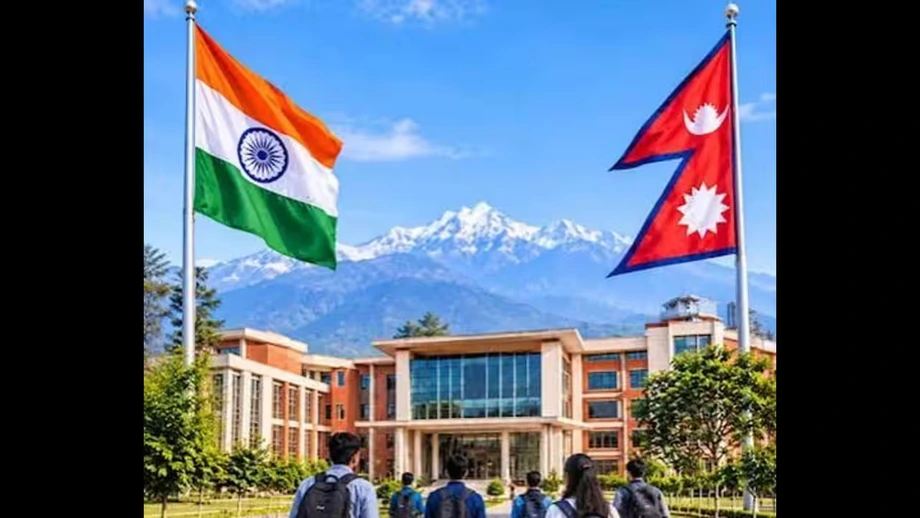
A package built around young people
Prime Minister Narendra Modi announced on Monday, November 23, 2026, that India will establish an offshore campus of the Indian Institute of Technology in Nepal, together with a startup incubator and an innovation hub. The announcement came after talks in New Delhi with Nepal Prime Minister Balendra Shah, whose state visit began on November 22 and ended on November 23. The two governments said the campus would strengthen Nepal's education sector, create jobs and give young people more ways to study and work in technology. It was Shah's first bilateral visit to India since taking office in March.
Contents
- A package built around young people
- The IIT plan has firm words and open questions
- What students and founders could gain
- What Nepal can learn from Zanzibar and Abu Dhabi
- How large is the assistance package?
- Which links were launched or moved forward?
- What energy and water projects were named?
- How does flood recovery shape the agreement?
- What agreements and mechanisms were created?
- What changes for tourism, health, sport and farming?
- What happens next
- Key Points
The plan sits inside a wider package. India and Nepal issued a Joint Vision Document titled "Viksit Bharat and Samunnat Nepal: Re-imagining the Partnership", setting out 10 areas of cooperation. Modi called it a blueprint for shared development. Viksit Bharat refers to India's goal of becoming a developed economy by 2047, while Samunnat Nepal expresses Nepal's own prosperity goal. The outcome caps Shah's India visit, which began with talks still being settled over aid, flood reconstruction and possible agreements.
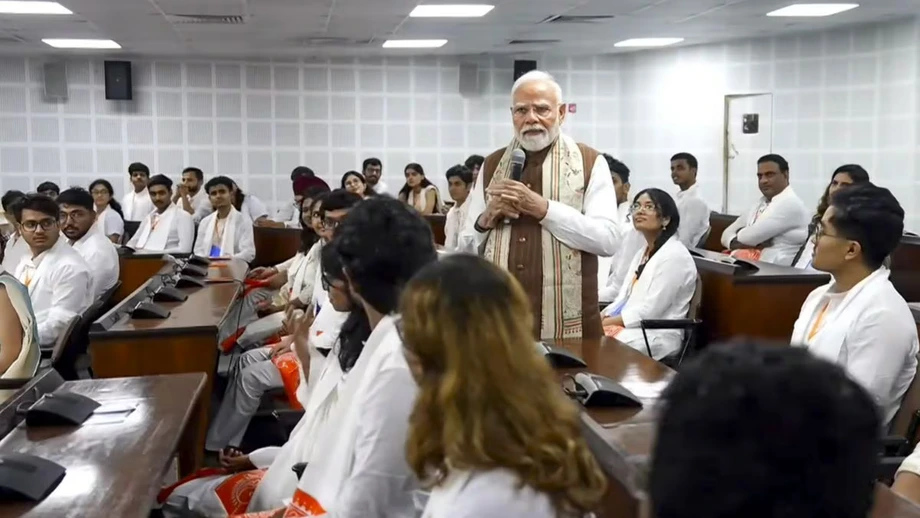
Modi used the joint appearance at Hyderabad House to present the education plan as a promise to Nepal's younger generation. He said India would partner with their ambitions.
Friends, Nepal's youth generation is full of talent, energy, and big dreams. India is fully committed to partnering in making their dreams a reality. To realise this resolve, we will establish a startup incubator, an innovation hub, and an offshore campus of the Indian Institute of Technology in Nepal.
Shah welcomed investment and argued for stronger academic exchange and direct flights. He said Indian investors should see Nepal as a place to share in growth.
Friends, on this occasion, I warmly welcome Indian investors to Nepal to partner in the economic prosperity of our two countries.
Modi praised the election mandate of Shah's Rashtriya Swatantra Party government, which came to power after a youth movement last year, saying it reflected the hopes of Nepal's younger generation. He described India and Nepal's relationship as one built on close kinship and unbreakable trust.
The IIT plan has firm words and open questions
The joint statement said the campus would act as a force multiplier in Nepal's education sector and promote job creation. A force multiplier is something that makes existing efforts more effective. In this case, the idea is that one IIT campus could train students, support teachers, attract technology work and help build a local startup culture.
Modi's remarks at the joint briefing named IIT Kanpur, while Foreign Secretary Vikram Misri said India would work on establishing an offshore IIT campus in Nepal. The formal announcements did not settle the specific institute responsible, the campus location, the academic programmes, admission rules or a launch date. No date was given for the first intake of students.
Those gaps matter because IITs are public technical universities in India known for competitive admissions. An offshore campus may follow different rules, but Nepal's students, parents and universities cannot yet know how seats, fees, faculty, degrees or accreditation would work. The joint vision document only says the two countries will explore branches of reputed Indian higher education institutions in Nepal, beginning with an IIT.
What students and founders could gain
For a Nepali student, the clearest change would be the chance to study technology closer to home. Modi also said India would expand scholarships for Nepali students in law and technology. The number of scholarships, eligibility conditions, institutions involved and start date were not announced.
A startup incubator helps young companies in their first years with mentors, office space, training and links to investors. An innovation hub is a place where students, researchers and businesses test new ideas. The wider vision document goes further, setting out a Startup Centre of Excellence in Kathmandu, a Digital Nomads and Innovation Hub in Pokhara, digital parks and data centres in Nepal, and cooperation on artificial intelligence, including a large language model for the Nepali language linked to India's Bhashini initiative.
A large language model is software trained to understand and generate human language. Building one for Nepali would aim to make digital tools work better in the language people use at home. India will also host a large Nepali contingent at the WAVES summit, where young creators from both countries are expected to work on films, modern technology and new media.
What Nepal can learn from Zanzibar and Abu Dhabi
Nepal would become the third country to host an offshore IIT campus if the plan goes ahead, after Tanzania's Zanzibar and the United Arab Emirates' Abu Dhabi. Those campuses are small compared with the main IIT system in India, so they give a practical sense of scale rather than a promise of immediate mass enrolment.
- IIT Madras in Zanzibar opened in 2023. It has graduated 35 students with MTech degrees, technology qualifications at master's level, and has more than 100 students in BS programmes, or bachelor of science degrees.
- IIT Delhi in Abu Dhabi opened in 2024. It offers nine undergraduate, postgraduate and doctoral courses, with 171 students in the 2025 to 2026 academic year.
Those numbers show how an offshore IIT can begin with a narrow academic offer and grow slowly. Nepal's leaders have not announced an enrolment target, a fee structure or a list of degrees for their campus.
How large is the assistance package?
India put its development assistance for Nepal at INR 15,000 crore, or 150 billion Indian rupees, about NPR 24,000 crore. One crore equals 10 million. The total is made up of INR 3,500 crore in grants for reconstruction and infrastructure after disasters, and INR 11,500 crore as a credit line in rupees for energy projects. A grant does not have to be repaid. A credit line is a loan facility that can be used for approved projects.
The package follows severe floods in Nepal in August, including glacial flooding on August 26 that damaged hydropower projects. Modi said the aim was to help affected families return to normal life, create new opportunities and strengthen Nepal's capacity to face future disasters. Indian officials described the package as the largest assistance commitment India has announced for Nepal, and said nearly all of the money would be spent on energy.
Nepal and India had earlier set a target of India importing 10,000 megawatts of electricity from Nepal by 2030. India currently imports 1,200 megawatts. Officials also said that $550 million of an earlier $750 million credit line offered in 2015 had been used. Megawatts measure the amount of power produced or moved at a given moment.
Which links were launched or moved forward?
The leaders flagged off the inaugural Sarayu-Kamala Express rail service between Ayodhya in India and Janakpur in Nepal. The route serves a region tied to Hindu and Buddhist pilgrimage, and the two governments said similar links could support religious tourism.
A motorable bridge between Dharchula in India and Darchula in Nepal was inaugurated virtually. The foundation stone was laid for an integrated check post at Banbasa, and leaders reviewed work on check posts at Bhairahawa, Sunauli, Dodhara and Chandani. An integrated check post is a border facility where customs, immigration and other checks are handled in one place. Three such posts are already operational between the two countries.
The Final Location Survey for a railway link between Raxaul and Kathmandu has been completed. Such a survey fixes the route before detailed engineering and land work begin. Both sides agreed to cooperate on Nepal's east to west railway network, giving priority to sections between Bardibas and Nijgadh and between Birgunj and Nijgadh. Nepal also gained transit trade access through Deendayal Port at Kandla in Gujarat, with Paradip Port in Odisha to be added once the required infrastructure is ready.
Aviation and payments were included as well. The Kathmandu, Bhairahawa and Lucknow route is to become bidirectional, meaning aircraft can operate in both directions rather than only on one leg. The two governments also agreed to speed up retail payment services between the two countries after India's Unified Payments Interface was linked with Nepal's national payment system. UPI is the digital payment system that lets people send money instantly between bank accounts through a phone.
What energy and water projects were named?
The leaders laid the foundation stone for the 669 megawatt Lower Arun Hydroelectric Project. They also instructed the Pancheshwar Development Authority and water resource bodies to speed up the Pancheshwar Multipurpose Project, delayed for years, and advance studies for the Saptakoshi and Sunkoshi projects. Multipurpose projects usually combine electricity generation with irrigation, flood control or water supply.
India dedicated Phase II of the Motihari-Amlekhgunj petroleum pipeline to Nepal and laid the foundation stone for a petroleum terminal in Jhapa. Both governments agreed to explore a gas pipeline between the two countries. Those projects would give Nepal more ways to import fuel and reduce dependence on road transport.
How does flood recovery shape the agreement?
Climate resilience sits at the centre of the new partnership because Nepal suffered deadly floods and debris flows in the basin around Rasuwa and Trishuli in August. Shah thanked India for humanitarian and search and rescue assistance. The two sides agreed to continue support for reconstruction and to set up immediate sharing of weather and river data in both directions, including glacial lake monitoring and early warnings.
Joint disaster response exercises, training and work on agriculture that can better withstand climate shocks were also agreed. India will offer training for Nepali professionals in environmental policy, forestry and risk mapping, and share expertise in reviving lakes and other water bodies and managing groundwater. A pilot green hydrogen project in Nepal is planned. Green hydrogen is made using electricity from sources that produce little carbon and can be used as a fuel or industrial input.
Shah linked climate action to the rivers that flow from the Himalayas into the Ganga. The Indian side said it was still awaiting details of the Himalayan Climate Resilience Mechanism that Shah had announced at the United Nations General Assembly. No timetable for that mechanism was given.
What agreements and mechanisms were created?
The visit produced 21 outcomes and eight memorandums of understanding. A memorandum of understanding is a written statement of intent; it records areas where governments plan to work together. The eight agreements cover forensic science, police training, civil service capacity building, Ayurveda and other traditional medicine, satellite communications, sustainable urban development, health, livestock and fisheries.
The Joint Vision Document sets out 10 pillars of cooperation:
- economic and development partnership;
- physical and digital connectivity;
- energy, water resources and climate resilience;
- good governance;
- technology, space and innovation;
- education and skill development;
- sports;
- culture and tourism;
- health;
- agriculture.
The two prime ministers also agreed to work toward an updated legal framework. Existing agreements, including the 1950 Treaty of Peace and Friendship, can be reviewed by mutual consent. Issues involving water resources, energy, trade, commerce and the boundary are to be handled through dialogue. Officials set aside the boundary report prepared by a group of eminent persons about ten years ago as "a thing of the past" and irrelevant. The two foreign secretaries were directed to work on the outstanding boundary issue.
The border question has been sensitive. It involves Lipulekh, Limpiyadhura and Kalapani, which India says are part of Uttarakhand. Tensions rose in May after Shah sought involvement by China and the United Kingdom. New Delhi rejected any outside role, saying India and Nepal have a bilateral mechanism. The new framework does not give a date for a boundary settlement.
Implementation will be watched through a High-Level Monitoring Group led by Nepal's Foreign Secretary and India's Ambassador to Nepal. It is due to meet at least every six months. The next meeting of the joint commission between India and Nepal is scheduled for 2027.
What changes for tourism, health, sport and farming?
Religious tourism circuits will link Janakpur with Ayodhya, Lumbini with Bodh Gaya, Sarnath and Kushinagar, and Pashupatinath in Kathmandu with Varanasi. An annual youth cultural festival will alternate between Nepal and India. Nalanda University and Lumbini Buddhist University will work together through a Nalanda Centre at Lumbini Buddhist University.
India will support a national cricket coaching and training academy in Nepal, cricket infrastructure at national and provincial levels, and player training. Training in badminton, tennis, shooting and athletics will also be explored. Shah had earlier welcomed Indian students studying at an IIT in Nepal; the sports plan is aimed at a different group of young people who need facilities and coaches.
On health, India will help build health posts, birthing centres and hospitals, upgrade Nepal's National Medical Laboratory, establish Jan Aushadhi Kendras in Nepal for affordable medicines and expand medical research and training. Jan Aushadhi Kendras are outlets that sell generic medicines at lower prices. In agriculture, India will provide grant assistance for an Agro-Industrial Park in Chitwan, where Nepali farm products can be processed and packaged so they keep more value at home.
What happens next
The IIT campus remains the most visible promise, but it is still at the planning stage. The next formal steps are to name the responsible institute, choose a site, design courses, set admission and fee rules, and announce an opening date. Those decisions will need to be reflected in agreements between the two governments and the IIT involved.
For the wider package, specific projects and implementation methods will be settled through consultation. The High-Level Monitoring Group gives both sides a regular meeting point, and the 2027 joint commission offers a later checkpoint. For now, the announcements change the direction of the relationship more clearly than they change a student's options tomorrow: the money, buildings, seats and timetables still have to be put in place.
Key Points
- India announced an offshore IIT campus in Nepal, plus a startup incubator and an innovation hub, during Balendra Shah's visit on November 22 and 23.
- Modi named IIT Kanpur in remarks, while formal documents left the institute, location, courses, admissions and launch date undecided.
- India announced INR 15,000 crore in assistance: INR 3,500 crore in grants and INR 11,500 crore in rupee credit for energy projects.
- The Joint Vision Document sets out 10 pillars, including connectivity, energy, technology, education, health and agriculture.
- Transport steps included the Ayodhya to Janakpur express train, a bridge between Dharchula and Darchula, railway surveys and port access for Nepal's trade.
- The 1950 Treaty of Peace and Friendship and other agreements may be reviewed by mutual consent, with a monitoring group meeting at least every six months.
- Details such as the IIT campus site, scholarship numbers and project schedules are still to be announced.