The gap begins before treatment starts
About 30% of cancer patients in Japan receive radiation therapy, compared with around 60% in Europe and the United States. The gap persists even though radiation is an established way to cure some cancers, relieve symptoms and preserve organs or bodily functions that surgery can remove or alter.
Contents
- The gap begins before treatment starts
- What radiation therapy can offer
- Why surgery still shapes the first response
- What happens when no radiation specialist is in the room
- Demand rises nationally while access fragments locally
- New forms of radiation widen the choices
- A lung cancer study tests a better conversation
- What shared decision making changes for patients
- Key Points
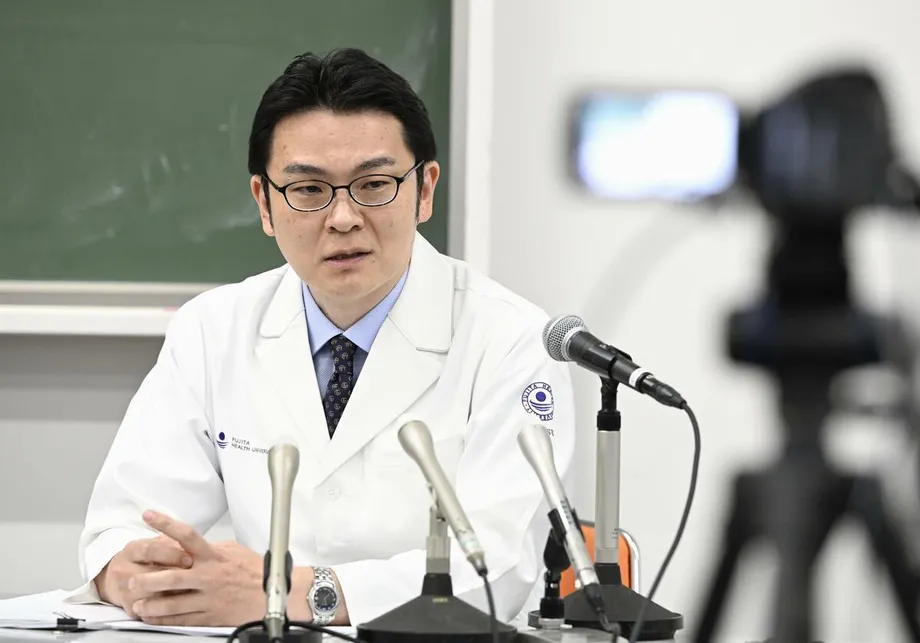
Yuki Wada, a radiation oncologist and associate professor at Akita University Hospital, says some patients may lose the chance to consider radiation therapy at all. A person might learn about treatment at a hospital without a radiation oncologist, or assume that surgery is the only curative option. In either situation, the choice can narrow before the patient understands what was available.
Wada, 39, brought that message to a Tokyo seminar about helping patients choose treatment with confidence. He connected the need for wider use of radiation therapy to an expected increase in older cancer patients and to rapid technological progress. His argument joins two tasks that are often separated: teaching the public about radiation and building a medical system that can consistently offer it.
What radiation therapy can offer
Surgery, radiation therapy and chemotherapy are commonly described as the three pillars of cancer treatment, with immunotherapy now added. For many cancers being treated with the aim of a cure, a local treatment must control the tumor where it sits. Surgery removes it, while radiation damages cancer cells with beams usually directed from outside the body. Drug treatments work differently and may act throughout the body.
A radiation session typically takes about 15 minutes, although a complete course can require repeated visits. More precise targeting has developed with advances in technology. Because treatment does not require an incision, it can preserve an organ and its function. Its relatively light physical burden also allows many patients to attend as outpatients, including some older people who cannot easily undergo surgery. Others can continue working, caring for relatives or raising children while receiving treatment. Radiation is also used in palliative care to ease pain and other symptoms.
Wada summarized its value for suitable patients in simple terms.
Radiation therapy is an important option because it can cure cancer without cutting the body.
Why surgery still shapes the first response
Japan's cancer care developed largely around surgery. Wada says some people assume that a tumor cannot be cured unless it can be removed, while others regard radiation itself as frightening. Radiation oncologists also have limited public recognition, and visiting a radiotherapy department simply to discuss possible treatment has not become routine.
Akita University Hospital provides a measure of what changed when it combined treatment with public education. About 600 patients received radiation therapy there in 2016. The annual figure gradually rose to about 1,100 in 2025, an increase of roughly 83% calculated from those two totals. During the same period, the hospital worked to inform residents about the treatment.
Wada credits that awareness effort with helping more patients reach his department.
There is no doubt that the number of patients receiving treatment increased as people learned that radiation therapy was an option.
Four dates frame the hospital's experience, the research into patient choices and the national demand forecast:
- 2016: Akita University Hospital treated about 600 radiation therapy patients.
- 2025: Its annual total reached about 1,100. This is also the baseline year for the national treatment demand projections.
- 23 October 2026: A Japanese pilot study of an online decision aid for lung cancer treatment was published.
- 2040: Ministry projections show radiation demand rising even as some local areas lose population and need fewer treatments.
What happens when no radiation specialist is in the room
Just over 1,400 radiation oncologists serve a country where one in two people is expected to develop cancer during their lives. These specialists assess whether radiation is appropriate, design treatment and oversee its delivery. Wada believes their limited involvement in deciding treatment policy for every cancer patient is one reason national use has grown slowly.
Clinical guidelines provide direction, but some cases fall close to a difficult boundary. Wada says a radiation oncologist might recognize a way to treat such a patient when surgeons or physicians working without that specialist input could judge radiation to be outside the applicable criteria. He presents this as a risk built into the decision process, particularly where no radiation oncologist participates in the discussion.
A hospital without the necessary specialist and equipment also cannot provide the treatment itself. Staff or the patient must find another hospital, adding referrals and travel to an already stressful period. Wada says the result can be a longer wait before treatment begins. His proposed answer starts with easier professional consultation.
When doctors at hospitals without radiation oncologists want to provide radiation therapy, or are unsure whether they can, they need to be able to consult a radiation oncologist easily. Coordination is essential.
Demand rises nationally while access fragments locally
Materials from Japan's Ministry of Health, Labour and Welfare project that the number of cancer patients will increase by about 3% toward 2040. For local treatment, the ministry expects demand for surgery to be 5% lower than in 2025, while demand for radiation therapy rises by 24%. Wada connects that outlook with the growing number of older patients and the need for treatments that can preserve function without an operation.
The national totals conceal sharply different local conditions. Demand is estimated to increase in every prefecture, yet population decline means that about 20% of Japan's secondary medical care areas will have fewer people who need radiation therapy. These areas are regional units used to plan hospital services, and their needs can move in a different direction from the prefecture surrounding them.
Installing and maintaining radiation equipment is expensive. A hospital with few patients may be unable to recover those costs, leaving residents farther from treatment even when national demand is growing. Wada calls for cooperation among medical institutions, together with help for travel and accommodation costs. He says that support will require work with government bodies and private insurers so that distant patients can realistically reach a treatment center.
Regional access is also being tested in surgery. In Aomori Prefecture, five colorectal cancer patients safely underwent operations in Japan's first clinical study of remote robotic surgery, which linked Hirosaki University Hospital with Tsugaru General Hospital about 30 kilometers away. The project sought to bring specialist skills to places with fewer experienced surgeons, with further operations planned through March before equipment approval and insurance arrangements. Radiation therapy would require its own referral and treatment network, but Wada's proposals address the same practical problem of distance between patients and specialists.
No national budget, timetable or starting date was given for the travel and accommodation support he proposed.
New forms of radiation widen the choices
At the Tokyo seminar, Wada described several technologies alongside conventional radiation treatment. Heavy particle therapy irradiates cancer cells with carbon ions. Boron neutron capture therapy, known as BNCT, involves administering a drug and then applying neutron radiation to destroy cancer cells. Artificial intelligence can assist with image analysis and other work used to improve irradiation accuracy.
These developments give specialists more ways to shape treatment around a tumor and the surrounding tissue. They also make the initial consultation increasingly consequential. A patient who never reaches a radiation oncologist may learn little about either established radiation treatment or newer techniques available at equipped hospitals. Technology therefore sits beside, rather than replaces, the need for specialist judgment, referrals and machines that hospitals can afford to operate.
A lung cancer study tests a better conversation
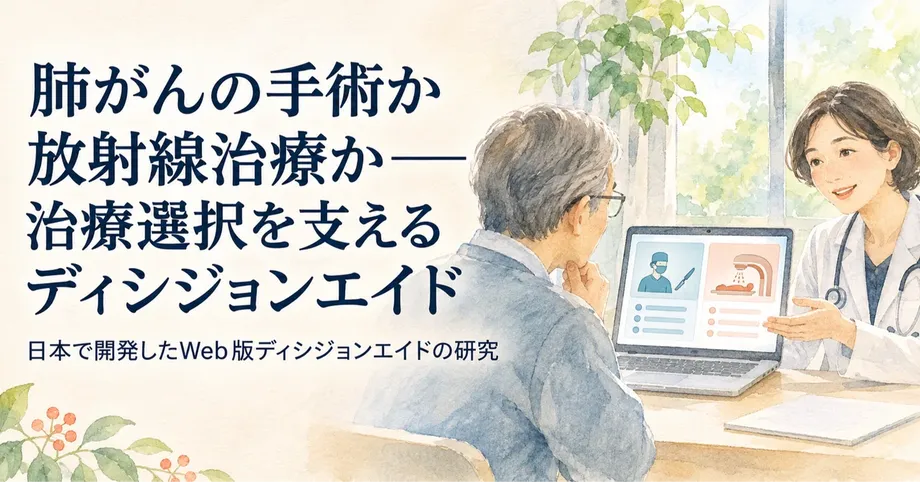
A study published on 23 October 2026 in Respiratory Investigation examined whether an online decision aid could help people choosing between surgery and radiation for early stage lung cancer. Surgery is the standard treatment for early stage non-small cell lung cancer, but stereotactic body radiation therapy, or SBRT, can also be an option depending on a patient's physical condition and preferences. SBRT concentrates radiation on the cancer and differs from an operation in both the treatment process and the physical burden.
The prospective pilot study involved 26 participants at two Japanese hospitals. They had stage I non-small cell lung cancer or suspected primary lung cancer, and both surgery and SBRT were candidates for their treatment. Participants used the aid before making a final choice and then discussed that choice with medical professionals. They could use it at home or in the hospital, with staff support available.
The final tool contained a comparison table for surgery and SBRT, together with questions designed to help patients identify what mattered most to them. Kazuhiro Nakayama, a co-author and co-researcher who provided professional advice during development, connects that structure with his O-Chi-Ta-Ka approach: compare the options, examine their advantages and disadvantages, and clarify the patient's values.
All 24 participants who completed the evaluation said their knowledge and understanding had improved. Twenty-three, or 95.8%, described the aid as useful, while 18, or 75%, said their anxiety had decreased.
Treatment preferences could be analyzed for 21 participants. Eight had initially been undecided between surgery and SBRT; five subsequently chose SBRT and three chose surgery. Among participants who already had a preference, only two changed it. Nakayama interpreted this pattern as evidence that the aid may primarily help undecided patients work through a choice, rather than push people away from their original preference.
Nakayama said the tool was intended to prepare patients for clinical discussions, not take their place.
A decision aid does not replace discussions with medical professionals. It is a tool for patients to understand the options, compare the pros and cons of each, and communicate their wishes and concerns to medical professionals.
The researchers describe the work as a small pilot. Everyone received the aid, so there was no comparison group using usual decision support alone. A scale measuring decisional conflict, meaning difficulty or distress surrounding a choice, was used only once and after treatment selection. The next research step is a study with a comparison group to measure changes associated with the aid and its effect on shared decision making. No date was given for that research.
The paper appeared as article 101525 in volume 64, issue 6, with the DOI 10.1016/j.resinv.2026.101525. Its full text was due to remain freely available until 12 December 2026. Nakayama also explains the O-Chi-Ta-Ka framework and the development of decision aids in his 2026 book Decision Support and Decision Aids, published by Nihon Iji Shinpo Sha.
What shared decision making changes for patients
Shared or collaborative decision making, often abbreviated as SDM, means that patients and clinicians consider the medical options alongside the patient's priorities. Those priorities might include preserving an organ, avoiding an operation, maintaining a daily routine or reducing the burden of travel. The lung cancer aid offers one example of how a hospital can organize information and questions before that conversation.
For a patient facing a possible choice between surgery and radiation, Wada's concerns translate into several practical questions:
- Has a radiation oncologist reviewed whether radiation is suitable for my cancer?
- If surgery and radiation are both possible, how do they differ in organ preservation, treatment time and effects on daily life?
- If this hospital cannot provide radiation, how will a referral affect when treatment can start?
Wada also encourages people to consider their values before illness forces decisions to be made quickly.
It is important to have an opportunity to think, while you are healthy, about what treatments would be available if you developed cancer and what you yourself want to prioritize.
An informed review can still end with a patient choosing surgery or declining radiation. Wada's aim is that the decision follows a genuine comparison. Akita's rising patient numbers show the value he places on awareness, while the workforce shortage and regional forecasts show why awareness must be matched by consultation, hospital cooperation and practical support for reaching treatment.
Key Points
- About 30% of Japanese cancer patients receive radiation therapy, compared with around 60% in Europe and the United States.
- Radiation can treat cancer without an incision, preserve organ function, relieve symptoms and often be delivered to outpatients in sessions lasting about 15 minutes.
- Akita University Hospital's annual radiation patient total rose from about 600 in 2016 to about 1,100 in 2025 alongside public education efforts.
- Japan has just over 1,400 radiation oncologists, and Wada says limited specialist involvement can restrict options or delay referrals.
- Toward 2040, the health ministry projects 3% more cancer patients, 5% less demand for surgery and 24% more demand for radiation than in 2025.
- Carbon ion therapy, BNCT and AI assistance are advancing, while equipment costs and population decline threaten access in some regions.
- In a 26-person lung cancer pilot study, 23 of 24 evaluators found an online decision aid useful and 18 reported less anxiety; larger comparative research is still needed.