A family coverage rule comes under review
Japan's Ministry of Health, Labour and Welfare began discussions on November 17 about whether dependent family members should contribute toward public health insurance premiums, opening a review of a system that currently covers eligible relatives without charging them separate premiums.
Contents
- A family coverage rule comes under review
- How family coverage works today
- Who qualifies as a dependent?
- Why work and unpaid care are central to the debate
- Income rules are already changing
- Insurers already check who should receive coverage
- A parallel pension review has a different timetable
- What families need to watch
- Key Points
The ministry presented the issue to a panel of the Social Security Council as more households have two earners who both pay premiums. Under employee health insurance, an insured worker's premium is based on pay, rather than how many eligible relatives receive coverage through that worker.
The discussion reaches beyond spouses working limited hours. Dependents can include children, parents and other relatives whose living expenses are mainly supported by an insured employee. For many spouses younger than 60, the usual annual income requirement is below ¥1.3 million, alongside other conditions.
The ministry is considering whether the existing division of costs is fair across different working arrangements and family structures. Council members expressed support for removing rules that discourage married women from working more, while others urged care in assessing unpaid work such as raising children and looking after relatives.
No decision has been announced on whether to introduce a charge, how much it might be, or which dependents would be covered. The ministry has given no deadline for reaching a conclusion on the health insurance issue.
How family coverage works today
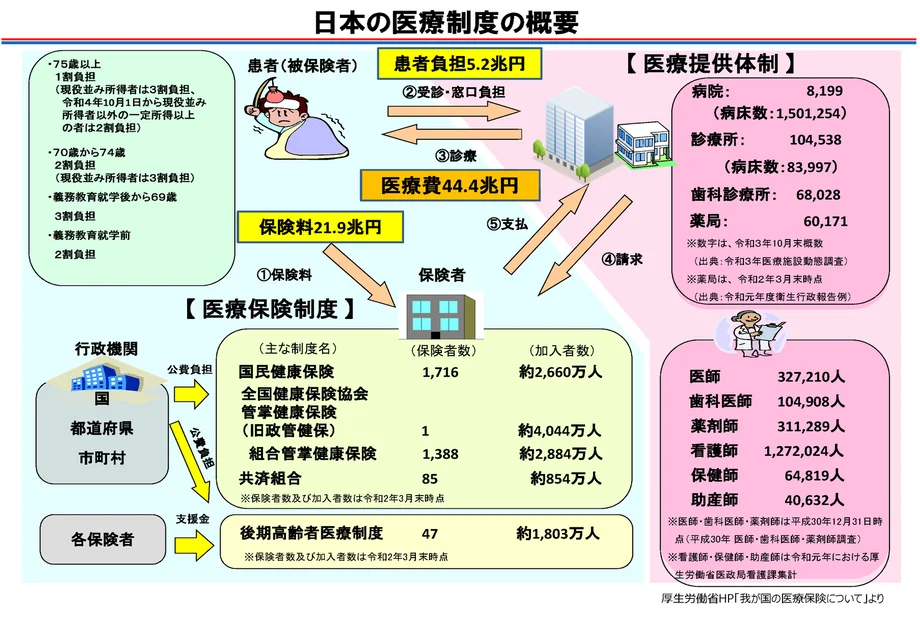
The EY Japan Health Insurance Society's premium payment guidance explains the current arrangement: premiums are charged to the insured person, while eligible dependent relatives also receive health insurance benefits.
The society states:
The insurance premium does not change according to the number of dependents.
A worker's premium is calculated using a standard monthly salary and a standard bonus amount. These are the pay amounts used for insurance calculations. Adding an eligible spouse or child does not itself raise that worker's premium.
For example, two employees with the same salary and bonus under the same premium rules can pay the same amount even if one has no dependents and the other supports several. A couple in which both partners are insured employees each contributes according to their own pay.
That is the comparison at the heart of the council's discussion. The current arrangement protects relatives who rely on an employee's income. The review asks whether the way contributions are shared still fits households with different numbers of earners and dependents.
The EY society distinguishes this employee insurance arrangement from National Health Insurance, which has different contribution rules. Its FAQ also says that the number of dependents does not change the insured person's long term care insurance premium.
Who qualifies as a dependent?
Health insurance dependent status requires certification. Being related to an insured employee, or being treated as a dependent for tax purposes, is not enough by itself.
The EY Japan Health Insurance Society's dependent eligibility guidance sets out tests covering family relationships, income, residence and financial support. Spouses, children, grandchildren, siblings, parents and grandparents can qualify without necessarily living with the insured person. Some other relatives must share the same home.
The usual annual income ceiling is below ¥1.3 million. It is below ¥1.8 million for people aged 60 or older and qualifying people with disabilities. A newer exception allows income below ¥1.5 million for people aged 19 to 22, excluding the insured person's spouse.
Financial dependence also matters. The EY guidance generally requires the relative's income to be less than half the insured person's income. For relatives living separately, their income must be lower than the financial support sent by the insured person.
Income includes more than wages. Pensions, business earnings, certain benefits, rent, interest and other continuing receipts can enter the calculation. Families therefore need to check the relevant insurer's rules rather than look only at a person's salary.
Why work and unpaid care are central to the debate
The ministry framed its discussion around building social security arrangements that treat different ways of working and different family structures neutrally. In plain terms, the question is how to avoid giving households a financial reason to choose one work pattern over another.
A spouse approaching the dependent income limit may weigh extra earnings against the cost of entering insurance in their own name. Council members supporting a review argued that institutional factors discouraging married women from working should be removed, along with unreasonable differences arising from a spouse's circumstances.
Other members called for a broader assessment that properly values unpaid childcare and care for relatives. A dependent spouse may have limited paid employment because time is being spent on work at home that brings in no salary.
Any additional premium would change household budgets, so the details would matter: whose coverage attracts a payment, how it is calculated, and how families with limited income or substantial care responsibilities are treated. Those design choices remain part of the discussion.
The debate also concerns people who already pay through their own employment. Shorter hours do not automatically mean someone can remain a dependent. At the time of the November discussion, employees working at least 20 hours a week at companies with more than 50 employees were generally outside dependent coverage when the applicable enrollment conditions were met.
For those workers, the practical issue is their own insurance enrollment, rather than simply whether annual earnings fall below ¥1.3 million. The income ceiling and workplace enrollment requirements both affect a family's position.
Income rules are already changing
The broader premium review comes alongside specific changes to dependent certification. Since October 1, 2025, qualifying relatives aged at least 19 but younger than 23 have been allowed annual income below ¥1.5 million, rather than the usual ¥1.3 million.
The increase is ¥200,000, about 15.4 percent above ¥1.3 million. The EY society says this age category excludes spouses and does not require the relative to be a student. Age is assessed as of December 31 of the year in which certification falls.
From April 1, 2026, the EY guidance says annual income assessments will use estimated earnings calculated from employment documents, including hourly pay, working hours and working days. Where documents confirming employment terms are unavailable, evidence such as pay slips or employer income estimates will continue to be used.
Families must submit updated documents when a contract is renewed or working conditions change. The guidance also allows eligibility to be reconsidered where actual annual income substantially exceeds the applicable ceiling and the wage stated in the contract was unreasonably understated.
Temporary extra earnings receive separate treatment. A dependent whose income rises because of additional working hours caused by labor shortages may retain eligibility if the employer provides the required certification.
The EY society says this can normally apply for up to two consecutive years for the same person. If earnings exceed the limit for three consecutive years, procedures to remove dependent status are required. Freelancers and people who are self employed generally cannot use this measure.
Insurers already check who should receive coverage
The Takeda Health Insurance Society's dependent certification rules explain why eligibility checks matter to the finances of employee insurance. Covering an ineligible relative uses premium funds to pay medical costs and places costs on employers and other insured people.
Takeda says it certifies dependents under health insurance laws, regulations and official notices, checking whether the employee is the main provider of the relative's livelihood and can continue in that role. It also reviews dependent eligibility annually.
Residence is another condition. Since April 1, 2020, dependents have generally needed to live in Japan. Exceptions include people temporarily studying abroad and family members accompanying an insured employee posted overseas, where their livelihood is considered to remain based in Japan.
Relatives living apart may need evidence of regular financial support. The EY society requires verifiable remittances and says cash handed over in person, shared accounts and declarations alone are insufficient evidence. It generally expects continuing support about once a month.
Families also have a duty to report changes. Employment, a change in financial support or enrollment in another insurance plan can require removal from dependent coverage. Both societies describe prompt notification requirements, generally within five days, with their detailed procedures governing certification dates.
Failure to update eligibility can have a direct financial consequence. The societies warn that dependent certification can be canceled retrospectively and that medical expenses paid during an ineligible period can be reclaimed.
A parallel pension review has a different timetable
The government is also examining the public pension system's Category III insured person arrangement. Under that system, qualifying spouses supported by employees can receive pension coverage without paying contributions individually.
The ministry began considering a narrower scope for Category III in September. The government intends to reflect the results in pension reforms planned for 2030.
Health insurance dependents form a broader group, including eligible parents and children as well as spouses. The health insurance discussion therefore reaches a different set of family relationships, even though both debates concern how contributions are shared between households.
The main dates show how the discussions fit alongside changes already made to eligibility:
- April 1, 2020: A general residence requirement in Japan took effect for health insurance dependents, with exceptions.
- September: The ministry began examining a narrower scope for Category III pension coverage.
- October 1, 2025: The income ceiling rose to below ¥1.5 million for qualifying dependents aged 19 to 22, excluding spouses.
- November 17: The Social Security Council panel began discussing whether dependent health insurance contributions should be reviewed.
- April 1, 2026: The income assessment approach described by the EY society changes to place greater weight on employment contract terms.
- 2030: The government plans to reflect the Category III review in pension reform.
What families need to watch
Employees supporting relatives still need to follow their insurer's existing certification rules while the council considers the premium question. The immediate practical checks concern income, employment enrollment, continuing financial support and any changes that must be reported.
The council's task is broader: deciding whether coverage without a separate dependent premium should continue in its current form. Its discussions bring together two concrete concerns, the contributions made by households where both partners work and the finances of families whose members provide unpaid care or depend on another person's earnings.
A workable decision will need to address both who pays and how eligible relatives retain medical coverage. For families, those details will determine the effect on monthly spending and choices about paid work.
Key Points
- Japan's health ministry opened discussions on November 17 about contributions for dependent family members.
- Eligible dependents currently receive employee health insurance benefits without separate premiums.
- An insured employee's premium is based on pay, not the number of dependents.
- The usual dependent income ceiling is below ¥1.3 million, with exceptions based on age and disability.
- Council members raised both barriers to paid work and the value of unpaid childcare and care for relatives.
- No health insurance decision or conclusion deadline has been announced.
- A parallel pension review is intended to inform reforms planned for 2030.