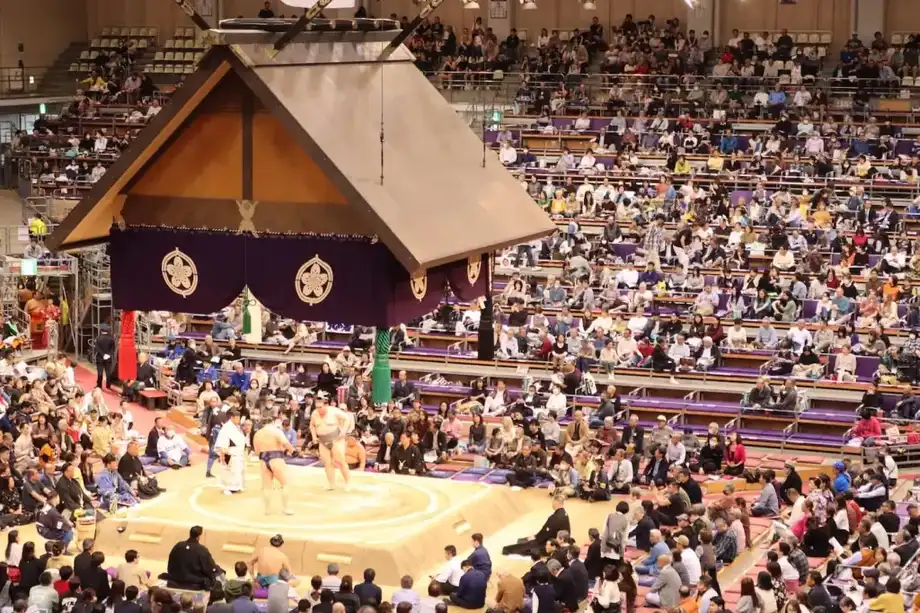
A low attack turns an 82.9kg disadvantage into victory
Fifteen-year-old Shinmichi, weighing just 57kg, defeated 139.9kg Honda at the Kyushu Grand Sumo Tournament in Fukuoka, securing his first victory in the jonokuchi division with a swift grab of his opponent's left leg.
Contents
- A low attack turns an 82.9kg disadvantage into victory
- How Shinmichi got past Honda's opening attack
- Two teenagers next to each other in the rankings
- A second victory against an even heavier opponent
- The short sequence behind the breakthrough
- A background in jiu-jitsu and mixed martial arts
- Why the weight gap caught viewers' attention
- Key Points
The bout at Fukuoka Kokusai Center brought together two wrestlers of the same age but very different sizes. Shinmichi, from Takadagawa stable, stood 165cm tall. Honda, from Shikoroyama stable, stood 190cm, giving him a height advantage of 25cm as well as an extra 82.9kg.
Honda initially pushed the smaller wrestler away at the opening charge. Shinmichi stayed low, kept pressing forward and, near the edge of the raised clay ring, gathered Honda's left leg into his arms and forced him outside.
The winning technique was ashitori, a leg pick. The result on the tournament's eighth day, November 15, gave Shinmichi a record of one win and three losses. Honda fell to four losses without a win.
Shinmichi was described as the lightest active professional sumo wrestler. His success drew attention because the physical gap was so easy to see: Honda weighed almost two and a half times as much, yet the smaller wrestler found a way to decide the contest.
How Shinmichi got past Honda's opening attack
Honda's first push created an immediate problem for Shinmichi. To reach a leg, the smaller wrestler had to get close enough while avoiding being driven out himself. He responded by maintaining a low position and continuing to move into his opponent.
Shinmichi then reached underneath Honda's upper body and seized the left leg near the boundary. Taking away one of Honda's supports allowed him to move the larger wrestler out of the ring.
In simple terms, ashitori works by catching an opponent's leg and upsetting his balance. A wrestler standing on one foot has fewer ways to resist a change of direction. Shinmichi's finish combined that loss of balance with pressure toward the edge.
The opening push and the final leg pick made the bout a short lesson in positioning. Honda had the greater reach and mass. Shinmichi found his opportunity close to the ground, where he could reach a leg rather than continue meeting his opponent's upper body.
The accounts of the finish describe Honda being taken outside the ring. In sumo, forcing an opponent out is one route to victory; making an opponent touch the ground with any part of the body other than the soles of the feet is another.
Two teenagers next to each other in the rankings
Shinmichi entered the contest ranked west jonokuchi No. 20, one place above Honda at west jonokuchi No. 21. Jonokuchi is professional sumo's lowest ranked division, where newcomers begin building their competitive records.
The west designation is part of sumo's ranking system. The close ranking positions placed the two teenagers near each other on the tournament list, even though their measurements were far apart.
Both wrestlers were 15. Their meeting therefore paired athletes at a similar age and early stage of their sumo careers, rather than a young newcomer against an established senior.
Shinmichi had lost his opening three bouts before beating Honda. His first success changed his tournament record to 1-3, while Honda's fourth consecutive defeat left him at 0-4. For the smaller wrestler, the result supplied a concrete breakthrough after a difficult start.
A second victory against an even heavier opponent
Shinmichi reportedly followed the Honda win with another victory on November 16, the tournament's ninth day. His opponent this time was Kagiayakonosato, a 48-year-old wrestler weighing 180.1kg.
The size gap was larger again. Kagiayakonosato weighed about 3.16 times Shinmichi's 57kg, a difference of 123.1kg. The age gap was 33 years.
Kagiayakonosato reportedly secured a grip on Shinmichi's mawashi, the belt worn by sumo wrestlers, and threatened a throw. Shinmichi stayed in the contest, moved behind his opponent when an opening appeared and won with a push from the rear.
The two finishes used different routes. Against Honda, Shinmichi took a leg near the boundary. Against Kagiayakonosato, he reportedly escaped the danger of a belt grip and reached a position behind the heavier man. The second result would take his tournament record to two wins and three losses.
The short sequence behind the breakthrough
Shinmichi's attention attracting run followed three defeats. The sequence matters because the Honda bout was his first jonokuchi victory, while the reported success against Kagiayakonosato extended that breakthrough into consecutive wins.
- Opening three bouts: Shinmichi lost each contest, beginning his tournament at 0-3.
- November 15, day eight: He defeated Honda by ashitori, moving to 1-3.
- November 16, day nine: He reportedly beat Kagiayakonosato with a push from behind for a second consecutive victory.
The day numbers refer to the tournament's calendar, rather than the number of bouts Shinmichi had fought. Wrestlers in the lower divisions compete on selected days, so he had completed four matches by the eighth day.
A background in jiu-jitsu and mixed martial arts
Shinmichi comes from Tsukuba in Ibaraki Prefecture. Before entering sumo, he trained in Brazilian jiu-jitsu and mixed martial arts, experience that attracted attention alongside his unusually light build.
He reportedly began those activities in his sixth year of elementary school and continued through his third year of middle school. Brazilian jiu-jitsu places considerable attention on grips, balance and controlling an opponent's body. Mixed martial arts combines several forms of striking and grappling.
Those activities gave him experience of close physical contests before his sumo debut. His win over Honda required a grip on a moving leg, while the reported victory the next day involved surviving a dangerous position and moving around an opponent.
Shinmichi was also reported to have gained entry to professional sumo through an assessment recognizing his athletic ability, despite falling below the stated physical entry benchmarks of 167cm and 67kg. At his listed measurements, he was 2cm shorter and 10kg lighter than those figures.
The benchmarks come from the Japan Sumo Association's official guidance, "How to Become a Sumo Wrestler," which sets the usual minimum height at 167cm and weight at 67kg. For the March tournament's new-recruit examination only, applicants expecting to graduate from middle school face lower minimums of 165cm and 65kg.
The guidance also states that applicants who do not meet the physical standards at the time of examination may take the new-recruit athletic-ability assessment. If their athletic ability is judged sufficient, they may then take the new-recruit examination. The athletic assessment includes a 50m sprint, handball throw, repeated side steps, sit-ups, standing long jump, grip strength and back strength.
Shinmichi reportedly passed the athletic-ability assessment on August 3, 2026. At the new-recruit examination on September 4, he recorded back strength of 153kg.
Why the weight gap caught viewers' attention
Viewers watching the ABEMA broadcast reacted with surprise and praise to Shinmichi's appearance, determination and leg pick. A digest of the Honda bout was also shared through ABEMA's official sumo account on X.
The measurements help explain the reaction. Honda's 139.9kg compared with Shinmichi's 57kg meant the teenager faced an opponent almost 2.5 times his weight. The reported meeting with Kagiayakonosato increased that ratio to more than three to one.
Professional sumo divisions are organized by rank rather than weight class. A wrestler's place in the rankings can therefore bring him into competition with someone much heavier, as happened in both of Shinmichi's matches.
Shinmichi's two finishes show the concrete challenge behind those striking numbers. He had to get past Honda's pushing attack in one contest and respond to Kagiayakonosato's belt grip in the next. The decisive movements came from different positions, first underneath an opponent and then behind one.
The Honda victory also gave both teenagers a sharply different result from the same encounter. Shinmichi left with his first win after three defeats. Honda, despite his considerable size advantage, was still seeking his first victory of the tournament.
Key Points
- Shinmichi, 15, defeated fellow teenager Honda at the Kyushu tournament in Fukuoka with an ashitori leg pick.
- Shinmichi weighed 57kg and stood 165cm tall; Honda weighed 139.9kg and stood 190cm.
- The November 15 victory moved Shinmichi to 1-3 and left Honda at 0-4.
- Shinmichi reportedly won again on November 16 against 180.1kg Kagiayakonosato, a wrestler 33 years older.
- The newcomer from Tsukuba trained in Brazilian jiu-jitsu and mixed martial arts before entering sumo.